Results by title
421 books match the query 'Evolution' and 11 start with r

Race, Culture, and Evolution
Essays in the History of AnthropologyGeorge W. Stocking, Jr
University of Chicago Press, 1982

Radio Content in the Digital Age
The Evolution of a Sound MediumEdited by Angeliki Gazi, Guy Starkey, and Stanislaw Jedrzejewski
Intellect Books, 2011
The traditional radio medium has seen significant changes in recent years as part of the current global shift toward multimedia content, with both digital and FM making significant use of new technologies, including mobile communications and the Internet. This book focuses on the important role these new technologies play—and will play as radio continues to evolve. This series of essays by top academics in the field examines new options for radio technology as well as a summary of the opportunities and challenges that characterize academic and professional debates around radio today.

Reading Darwin in Arabic, 1860-1950
Marwa Elshakry
University of Chicago Press, 2013
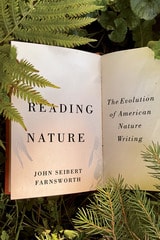
Reading Nature
The Evolution of American Nature WritingJohn Seibert Farnsworth
Michigan State University Press, 2025

Relativistic Astrophysics, 2
The Structure and Evolution of the UniverseYa. B. Zel'dovich and I. D. Novikov
University of Chicago Press, 1983
This second volume of Relativistic Astrophysics provides a remarkably complete picture of the present state of cosmology. It is a synthesis of the theoretical foundations of contemporary cosmology, which are derived from work in relativity, plasma theory, thermodynamics, hydrodynamics, and particle physics. It presents the theoretical work that explains, describes, and predicts the nature of the universe, the physical process that occur in it, the formation of galaxies, the synthesis of the light elements, and the cosmological singularity and the theory of gravitation.
This book, long and eagerly awaited, is essential for everyone whose work is related to cosmology and astrophysics.
Relentless Evolution
John N. Thompson
University of Chicago Press, 2013
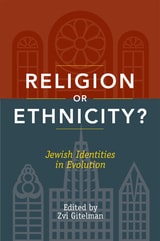
Religion or Ethnicity?
Jewish Identities in EvolutionGitelman, Zvi
Rutgers University Press, 2009
In Religion or Ethnicity? fifteen leading scholars trace the evolution of Jewish identity. The book examines Judaism from the Greco-Roman age, through medieval times, modern western and eastern Europe, to today. Jewish identity has been defined as an ethnicity, a nation, a culture, and even a race. Religion or Ethnicity? questions what it means to be Jewish. The contributors show how the Jewish people have evolved over time in different ethnic, religious, and political movements. In his closing essay, Gitelman questions the viability of secular Jewishness outside Israel but suggests that the continued interest in exploring the relationship between Judaism's secular and religious forms will keep the heritage alive for generations to come.
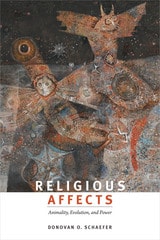
Religious Affects
Animality, Evolution, and PowerDonovan O. Schaefer
Duke University Press, 2015
Reproductive Success
Studies of Individual Variation in Contrasting Breeding SystemsEdited by T. H. Clutton-Brock
University of Chicago Press, 1988
"A must read for anyone interested in evolution, mating/social systems, and population ecology."—John L. Koprowski, IJournal of Insect Behavior
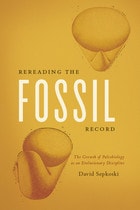
Rereading the Fossil Record
The Growth of Paleobiology as an Evolutionary DisciplineDavid Sepkoski
University of Chicago Press, 2012
Rereading the Fossil Record presents the first-ever historical account of the origin, rise, and importance of paleobiology, from the mid-nineteenth century to the late 1980s. Drawing on a wealth of archival material, David Sepkoski shows how the movement was conceived and promoted by a small but influential group of paleontologists and examines the intellectual, disciplinary, and political dynamics involved in the ascendency of paleobiology. By tracing the role of computer technology, large databases, and quantitative analytical methods in the emergence of paleobiology, this book also offers insight into the growing prominence and centrality of data-driven approaches in recent science.
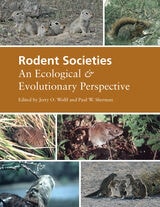
Rodent Societies
An Ecological and Evolutionary PerspectiveEdited by Jerry O. Wolff and Paul W. Sherman
University of Chicago Press, 2007
Rodent Societies synthesizes and integrates the current state of knowledge about the social behavior of rodents, providing ecological and evolutionary contexts for understanding their societies and highlighting emerging conservation and management strategies to preserve them. It begins with a summary of the evolution, phylogeny, and biogeography of social and nonsocial rodents, providing a historical basis for comparative analyses. Subsequent sections focus on group-living rodents and characterize their reproductive behaviors, life histories and population ecology, genetics, neuroendocrine mechanisms, behavioral development, cognitive processes, communication mechanisms, cooperative and uncooperative behaviors, antipredator strategies, comparative socioecology, diseases, and conservation. Using the highly diverse and well-studied Rodentia as model systems to integrate a variety of research approaches and evolutionary theory into a unifying framework, Rodent Societies will appeal to a wide range of disciplines, both as a compendium of current research and as a stimulus for future collaborative and interdisciplinary investigations.