Results by title
375 books match the query 'Excavations (Archaeology)' and 11 start with r
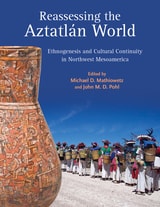
Reassessing the Aztatlán World
Ethnogenesis and Cultural Continuity in Northwest MesoamericaEdited by Michael D. Mathiowetz and John M. D. Pohl
University of Utah Press, 2024
Volume contributors show how those responsible for the Aztatlán tradition were direct ancestors of diverse Indigenous peoples such as the Náayeri (Cora), Wixárika (Huichol), O’dam (Tepehuan), Caz’ Ahmo (Caxcan), Yoeme (Yaqui), Yoreme (Mayo), and others who continue to reside across the former Aztatlán region and its frontiers. The prosperity of the Aztatlán tradition was achieved through long-distance networks that fostered the development of new ritual economies and integrated peoples in Greater Mesoamerica with those in the U.S. Southwest/Mexican Northwest.
Recent Developments in Southeastern Archaeology
From Colonization to ComplexityDavid G. Anderson
University Press of Colorado, 2012
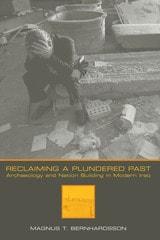
Reclaiming a Plundered Past
Archaeology and Nation Building in Modern IraqBy Magnus T. Bernhardsson
University of Texas Press, 2006
The looting of the Iraqi National Museum in April of 2003 provoked a world outcry at the loss of artifacts regarded as part of humanity's shared cultural patrimony. But though the losses were unprecedented in scale, the museum looting was hardly the first time that Iraqi heirlooms had been plundered or put to political uses. From the beginning of archaeology as a modern science in the nineteenth century, Europeans excavated and appropriated Iraqi antiquities as relics of the birth of Western civilization. Since Iraq was created in 1921, the modern state has used archaeology to forge a connection to the ancient civilizations of Mesopotamia and/or Islamic empires and so build a sense of nationhood among Iraqis of differing religious traditions and ethnicities.
This book delves into the ways that archaeology and politics intertwined in Iraq during the British Mandate and the first years of nationhood before World War II. Magnus Bernhardsson begins with the work of British archaeologists who conducted extensive excavations in Iraq and sent their finds to the museums of Europe. He then traces how Iraqis' growing sense of nationhood led them to confront the British over antiquities law and the division of archaeological finds between Iraq and foreign excavators. He shows how Iraq's control over its archaeological patrimony was directly tied to the balance of political power and how it increased as power shifted to the Iraqi government. Finally he examines how Iraqi leaders, including Saddam Hussein, have used archaeology and history to legitimize the state and its political actions.
Reconstructing Tascalusa's Chiefdom
Pottery Styles and the Social Composition of Late Mississippian Communities along the Alabama RiverAmanda L. Regnier
University of Alabama Press, 2014
Religion, History, and Place in the Origin of Settled Life
Ian Hodder
University Press of Colorado, 2018
Contributors argue that the long-term social relationships characteristic of delayed-return agricultural systems must be based on historical ties to place and to ancestors. They define different forms of history-making, including nondiscursive routinized practices as well as commemorative memorialization. They consider the timing in the Neolithic of an emerging concern with history-making in place in relation to the adoption of farming and settled life in regional sequences. They explore whether such correlations indicate the causal processes in which history-making, ritual practices, agricultural intensification, population increase, and social competition all played a role.
Religion, History, and Place in the Origin of Settled Life takes a major step forward in understanding the adoption of farming and a settled way of life in the Middle East by foregrounding the roles of history-making and religious ritual. This work is relevant to students and scholars of Near Eastern archaeology, as well as those interested in the origins of agriculture and social complexity or the social role of religion in the past.
Contributors: Kurt W. Alt, Mark R. Anspach, Marion Benz, Lee Clare, Anna Belfer-Cohen, Morris Cohen, Oliver Dietrich, Güneş Duru, Yilmaz S. Erdal, Nigel Goring-Morris, Ian Hodder, Rosemary A. Joyce, Nicola Lercari, Wendy Matthews, Jens Notroff, Vecihi Özkaya, Feridun S. Şahin, F. Leron Shults, Devrim Sönmez, Christina Tsoraki, Wesley Wildman
Remembering the Dead in the Ancient Near East
Recent Contributions from Bioarchaeology and Mortuary ArchaeologyBenjamin W. Porter
University Press of Colorado, 2016
Remembering the Dead in the Ancient Near East is among the first comprehensive treatments to present the diverse ways in which ancient Near Eastern civilizations memorialized and honored their dead, using mortuary rituals, human skeletal remains, and embodied identities as a window into the memory work of past societies.
In six case studies teams of researchers with different skillsets—osteological analysis, faunal analysis, culture history and the analysis of written texts, and artifact analysis—integrate mortuary analysis with bioarchaeological techniques. Drawing upon different kinds of data, including human remains, ceramics, jewelry, spatial analysis, and faunal remains found in burial sites from across the region’s societies, the authors paint a robust and complex picture of death in the ancient Near East.
Demonstrating the still underexplored potential of bioarchaeological analysis in ancient societies, Remembering the Dead in the Ancient Near East serves as a model for using multiple lines of evidence to reconstruct commemoration practices. It will be of great interest to students and scholars of ancient Near Eastern and Egyptian societies, the archaeology of death and burial, bioarchaeology, and human skeletal biology.
Remote Sensing in Archaeology
An Explicitly North American PerspectiveEdited by Jay K. Johnson
University of Alabama Press, 2006
In this volume, eleven archaeologists reveal how the broad application of remote sensing, and especially geophysical techniques, is altering the usual conduct of dirt archaeology. Using case studies that both succeeded and failed, they offer a comprehensive guide to remote sensing techniques on archaeological sites throughout North America. Because this new technology is advancing on a daily basis, the book is accompanied by a CD intended for periodic update that provides additional data and illustrations.
Return To Babylon
B Fagan
University Press of Colorado, 2007
Revisiting McKeithen Weeden Island
Complexity, Ritual, and PotteryPrudence M. Rice
University of Alabama Press, 2024
Reassesses the ancient Indigenous McKeithen site in northern Florida in light of new data, analyses, and theories
Revisiting McKeithen Weeden Island further illuminates an Indigenous Late Woodland (ca. AD 200–900) mound-and-village community in northern Florida that was first excavated in the late 1970s. Since then, some artifacts received additional analyses, and the topic of prechiefdom societies has been broadly reconsidered in anthropology and archaeology. These developments allow new perspectives on McKeithen’s history and significance.
Prudence M. Rice, a Mayanist who began her career at the University of Florida, revisits what is known about McKeithen and recontextualizes the 1970s excavations. Weeden Island and McKeithen are best known through mortuary mounds and mortuary ritual, mainly involving unusual pottery bird effigies. Rice discusses current theoretical trends in studies of ritual and belief systems and their relation to mound-building at McKeithen in early stages of developing societal complexity.
Revisiting McKeithen Weeden Island serves as a masterful example of an esteemed archaeologist advancing the field through rethought and updated interpretations of the site and its significance, primarily through its pottery. Rice’s case study ultimately also fosters understanding of later Mississippian society and other civilizations around the world at this time period. Archaeologists, anthropologists, and social historians as well as students and avocational readers will welcome Rice’s insight.
Ritual and Economy in a Pre-Columbian Chiefdom
The El Cajón Region of HondurasKenneth Hirth
University Press of Colorado, 2023
As part of the ritual economy, a large quantity of jade and marble artifacts were deposited as offerings in the ritual architecture of the El Cajón region’s central community of Salitrón Viejo. Over 2,800 of these high-value items were recovered from their original ritual contexts, making Salitrón Viejo one of the largest in situ collections of these materials ever recovered in the New World. These materials are well dated and tremendously varied and provide a cross-section of all jade-carving lapidary traditions in use across eastern Mesoamerica between AD 250 and 350.
With a complementary website providing extensive additional description, visualization, and analysis (https://journals.psu.edu/opa/issue/view/3127), Ritual and Economy in a Pre-Columbian Chiefdom is a new and original contribution that employs an “economy of ritual approach” to the study of chiefdom societies in the Americas. It is a foundational reference point for any scholar working in Mesoamerica and Central America, especially those engaged in Maya research, as well as archaeologists working with societies at this scale of complexity in Latin America and around the world.
Rituals of the Past
Prehispanic and Colonial Case Studies in Andean ArchaeologySilvana Rosenfeld
University Press of Colorado, 2017
Rituals of the Past explores the various approaches archaeologists use to identify ritual in the material record and discusses the influence ritual had on the formation, reproduction, and transformation of community life in past Andean societies. A diverse group of established and rising scholars from across the globe investigates how ritual influenced, permeated, and altered political authority, economic production, shamanic practice, landscape cognition, and religion in the Andes over a period of three thousand years.
Contributors deal with theoretical and methodological concerns including non-human and human agency; the development and maintenance of political and religious authority, ideology, cosmologies, and social memory; and relationships with ritual action. The authors use a diverse array of archaeological, ethnographic, and linguistic data and historical documents to demonstrate the role ritual played in prehispanic, colonial, and post-colonial Andean societies throughout the regions of Peru, Chile, Bolivia, and Argentina. By providing a diachronic and widely regional perspective, Rituals of the Past shows how ritual is vital to understanding many aspects of the formation, reproduction, and change of past lifeways in Andean societies.
Contributors: Sarah Abraham, Carlos Angiorama, Florencia Avila, Camila Capriata Estrada, David Chicoine, Daniel Contreras, Matthew Edwards, Francesca Fernandini, Matthew Helmer, Hugo Ikehara, Enrique Lopez-Hurtado, Jerry Moore, Axel Nielsen, Yoshio Onuki, John Rick, Mario Ruales, Koichiro Shibata, Hendrik Van Gijseghem, Rafael Vega-Centeno, Verity Whalen