Results by title
366 books match the query 'Family & Relationships' and 12 start with r
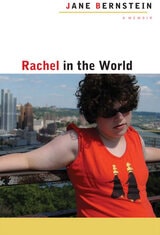
Rachel in the World
A MemoirJane Bernstein
University of Illinois Press, 2010
What happens when love is no longer enough? Jane Bernstein thought that learning to accept her daughter’s disabilities meant her struggles were over. But as Rachel grew up and needed more than a parent’s devotion, both mother and daughter were confronted with formidable obstacles. Rachel in the World, which begins in Rachel’s fifth year and ends when she turns twenty-two, tells of their barriers and successes with the same honesty and humor that made Loving Rachel, Bernstein’s first memoir, a classic in its field. The linked accounts in part 1 center on family issues, social services, experiences with caregivers, and Rachel herself--difficult, charming, hard to fathom, eager for her own independence. The second part of the book chronicles Bernstein’s attempt to find Rachel housing at a time when over 200,000 Americans with mental retardation were on waiting lists for residential services. As Rachel prepares to leave her mother’s constant protection, Bernstein invites the reader to share the frustrations and unexpected pleasures of finding a place for her daughter, first in her family, and then in the world.
Radical Family
Trailblazing Lesbian Moms Tell Their StoriesEdited by Margaret Mooney
Wisconsin Historical Society Press, 2025
A powerful collection of personal essays from lesbian moms who fought for the right to raise children
For generations, lesbians across the United States were systematically denied opportunities to raise children and build families, opportunities that were readily available to straight people. Radical Family honors the history-making struggles and triumphs of lesbian families in Madison, Wisconsin, who raised children in the 1980s, ’90s, and early 2000s—a time when lesbian motherhood was widely considered extreme and unnatural. In a collection of nine profoundly personal essays, the contributors recount their diverse paths to parenthood, as well as the hopes and challenges each family experienced. While the stories in Radical Family are unique, they all share a common thread: the mothers’ resilience and the risks they took, both small and sweeping, to defend their family’s right to exist.
For lesbians, the desire to raise children has historically been met with vilification and legal and social prejudice. Adoption agencies consistently rejected applications from out lesbians. Doctors and clinics refused to provide fertility treatments and other medical options to help them get pregnant. Lesbians who were able to raise children commonly lost custody to estranged spouses or grandparents.
Trailblazing lesbian mothers—and their children—fought to defy and, ultimately, shift this paradigm. Lesbian parents, like those in Radical Family, created informal networks in their local communities, where they could share survival strategies and find acceptance among other families that looked like theirs. With no rule book to guide them, and few laws to protect them, lesbian mothers created a new—some might even say radical—standard for what it means to be a family.
Over and over, the stories in Radical Family show how families fought back against hatred and homophobia with love, resilience, commitment, and creativity. Their stories deepen our understanding of what it means to be a mother—while showing how safety, belonging, and acceptance are universal human needs.
Read and Tell Stories
For parents, grandparents, aunts, uncles, and other loving adultsRosie Cutrer
Parkhurst Brothers, Inc., 2020
Reading Adoption
Family and Difference in Fiction and DramaMarianne Novy
University of Michigan Press, 2005
Marianne Novy is Professor of English and Women's Studies at the University of Pittsburgh. She is author or editor of numerous books, including Imagining Adoption: Essays on Literature and Culture.
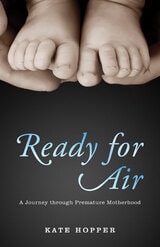
Ready for Air
A Journey through Premature MotherhoodKate Hopper
University of Minnesota Press, 2013
For Kate Hopper, pregnancy is downright unpleasant. She is tired and heavy and worried, and she wants her wine and caffeine back. But then, at a routine checkup, her doctor frowns at her chart and says, “I’m worried about a couple of things”—and unpleasant suddenly seems like paradise. What follows is a harrowing, poignant, and occasionally hysterical journey through premature motherhood, from the starting point of “leaking a little protein” to the early delivery of her tiny daughter because of severe preeclampsia and the beginning of a new chapter of frightful, lifelong love.
Half a million babies are born prematurely in the United States every year—almost one every minute—each with a unique story, and Hopper eloquently gives a voice to what their parents share: the shock, the scares, the lonely nights in the neonatal intensive care unit, the fierce attention to detail that makes for sanity and craziness, the light of faith, the warmth of family, and the terrifying attachment. Through it all runs the power of words to connect us to one another, as Hopper draws on her gifts as a writer first to help her navigate this uncertain territory and then to tell her story. With candor, grace, and a healthy dose of humor, she takes us into the final weeks of her pregnancy, the this-was-not-part-of-the-plan first weeks of little Stella’s life, and the isolated world she and her husband inhabited when they took their daughter home at the onset of a cold Minnesota winter. Finally, frankly, Hopper ventures into the complicated question of whether to have another child. Down-to-earth and honest about the hard realities of having a baby, as well as the true joys, Ready for Air is a testament to the strength of motherhood—and stories—to transform lives.
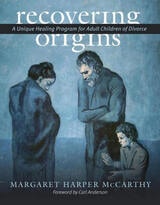
Recovering Origins
A Unique Healing Program for Adult Children of DivorceMargaret Harper McCarthy
Catholic University of America Press, 2021
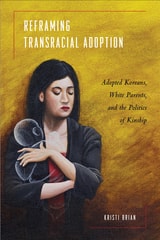
Reframing Transracial Adoption
Adopted Koreans, White Parents, and the Politics of KinshipKristi Brian
Temple University Press, 2012
Until the late twentieth century, the majority of foreign-born children adopted in the United States came from Korea. In the absorbing book Reframing Transracial Adoption, Kristi Brian investigates the power dynamics at work between the white families, the Korean adoptees, and the unknown birth mothers. Brian conducts interviews with adult adopted Koreans, adoptive parents, and adoption agency facilitators in the United States to explore the conflicting interpretations of race, culture, multiculturalism, and family.
Brian argues for broad changes as she critiques the so-called "colorblind" adoption policy in the United States. Analyzing the process of kinship formation, the racial aspects of these adoptions, and the experience of adoptees, she reveals the stifling impact of dominant nuclear-family ideologies and the crowded intersections of competing racial discourses.
Brian finds a resolution in the efforts of adult adoptees to form coherent identities and launch powerful adoption reform movements.
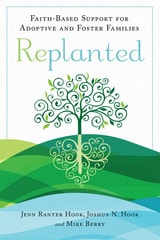
Replanted
Faith-Based Support for Adoptive and Foster FamiliesJenn Ranter Hook
Templeton Press, 2019
Many people embark on the journey of adoption and foster care but are unprepared for the challenges that await them along the way. Replanted takes an honest look at the joys and hardships that come with choosing this journey and provides a model of faith-based support made up of three parts to help families thrive: Soil, Sunlight, and Water.
- Soil, or emotional support, addresses the need for grace-filled settings where families can connect with other families who understand their experience.
- Sunlight, or informational support, focuses on obtaining helpful training to raise children who may have unique needs or challenges.
- Water, or tangible support, deals with concrete resources such as medical care, child care, and financial support.
Throughout the book, the Replanted model is brought to life by stories and examples based on the clinical work and personal experiences of the authors. Their candid insight will serve families who are actively involved in adoption or foster care, as well as people who are eager to help support those families.
Replanted affirms that with the right support system in place, parents can answer this sacred call not only with open hearts but also with their eyes wide open.

Rethinking the Youth Question
Education, Labour, and Cultural StudiesPhil Cohen
Duke University Press, 1999
With a preface that contextualizes Cohen’s essays for an American audience, Rethinking the Youth Question reflects his tenure as a community organizer and activist in inner-city London and includes ethnographic, theoretical, and historical studies of Britain’s urban youth. Cohen offers an enlightening analysis of British educational policy, develops historical and structural accounts of generational and gendered divisions of labor, and discusses such topics as racism and the rise of the New Right. Also exploring broader questions such as the theoretical and sociological significance of youth as a category, this book is a model of useful methodology and engaged cultural reflection.
With empirical research that combines biographical, autobiographical, critical, cultural, and social elements, Rethinking the Youth Question is sure to impact debates surrounding the pedagogical value of cultural studies and the nature and future of this field in both the United States and Britain. This collection will be informative reading for students and scholars of cultural studies, sociologists, and others interested in the category of youth.
Returning to My Father's Kitchen
EssaysMonica Macansantos
Northwestern University Press, 2025
Feeling untethered after her beloved poet father passes away while she is living abroad, Monica Macansantos decides to return to the Philippines to regain her bearings. But with her father gone and her adult life rooted in the United States and New Zealand, can the land of her birth still serve as a place of healing?
In fifteen richly felt essays, Macansantos considers her family’s history in the Philippines, her own experiences as an exile, and the parent who was the heart of her family’s kitchen, whether standing at the stove to prepare dinner or sitting at the table to scribble in his notebook. Macansantos finds herself remaking her father’s chicken adobo, but also closely rereading his poems. As she reckons with his identity as an artist, she also comes into her own as a writer, and she invites us to consider whether it is possible to carry our homes with us wherever we go.
Risky Behavior among Youths
An Economic AnalysisEdited by Jonathan Gruber
University of Chicago Press, 2001
This important volume provides both a key data source for public policy makers and a clear affirmation of the usefulness of economic analysis to our understanding of risky behavior.
Rituals and Patterns in Children's Lives
Edited by Kathy Merlock Jackson
University of Wisconsin Press, 2005
Trick-or-treating. Flower girls. Bedtime stories. Bar and bat mitvah. In a nation of increasing ethnic, familial, and technological complexity, the patterns of children's lives both persist and evolve. This book considers how such events shape identity and transmit cultural norms, asking such questions as:
* How do immigrant families negotiate between old traditions and new?
* What does it mean when children engage in ritual insults and sick jokes?
* How does playing with dolls reflect and construct feelings of racial identity?
* Whatever happened to the practice of going to the Saturday matinee to see a Western?
* What does it mean for a child to be (in the words of one bride) "flower-girl material"? How does that role
cement a girl's bond to her family and initiate her into society?
* What is the function of masks and costumes, and why do children yearn for these accoutrements of disguise?
Rituals and Patterns in Children's Lives suggests the manifold ways in which America's children come to know their society and themselves.