Results by title
77 books match the query 'Fieldwork' and 5 start with r
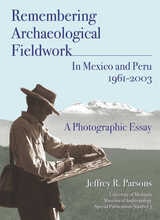
Remembering Archaeological Fieldwork in Mexico and Peru, 1961-2003
A Photographic EssayJeffrey R. Parsons
University of Michigan Press, 2019
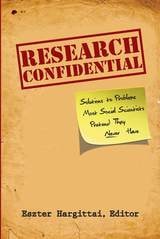
Research Confidential
Solutions to Problems Most Social Scientists Pretend They Never HaveEszter Hargittai
University of Michigan Press, 2009
"We all know that the actual process of empirical research is a messy, complicated business that at best only approximates the models we impart to students. Research Confidential pulls back the curtain on this process, laying bare the sordid details of the research process, but doing so in a way that respects the ideals of social research and that provides useful lessons for young scholars. It should be required reading for our research methods courses."
---Michael X. Delli Carpini, Dean, Annenberg School for Communication, University of Pennsylvania
"In this impressive volume, some of the brightest young lights in social research have taken us backstage to share what they learned from their innovative projects. Besides providing a wealth of help with methodological concerns, the book includes theoretical and career issues to consider when doing research. Anyone doing research should benefit from reading it."
---Caroline Hodges Persell, Professor of Sociology, New York University
"Research Confidential complements existing methods literature by providing refreshingly honest accounts of key challenges and decision forks-in-the-research-road. Each chapter enlightens and entertains."
---Kirsten Foot, Associate Professor of Communication, University of Washington
"A must-read for researchers embarking on new projects. Rather than the abstract descriptions of most methods textbooks, this volume provides rich accounts of the firsthand experiences of actual researchers. An invaluable resource of practical advice. Critically, it will make new researchers aware of the actual challenges that they are likely to face in their work."
---Christopher Winship, editor of Sociological Methods and Research and Professor of Sociology, Harvard University
This collection of essays aims to fill a notable gap in the existing literature on research methods in the social sciences. While the methods literature is extensive, rarely do authors discuss the practical issues and challenges they routinely confront in the course of their research projects. As a result, editor Eszter Hargittai argues, each new cohort is forced to reinvent the wheel, making mistakes that previous generations have already confronted and resolved. Research Confidential seeks to address this failing by supplying new researchers with the kind of detailed practical information that can make or break a given project. Written in an informal, accessible, and engaging manner by a group of prominent young scholars, many of whom are involved in groundbreaking research in online contexts, this collection promises to be a valuable tool for graduate students and educators across the social sciences.
Eszter Hargittai is Associate Professor of Communication Studies at Northwestern University and Fellow at the Berkman Center for Internet & Society at Harvard University.
Cover art courtesy of Dustin Gerard
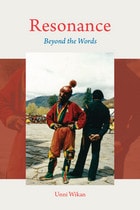
Resonance
Beyond the WordsUnni Wikan
University of Chicago Press, 2012
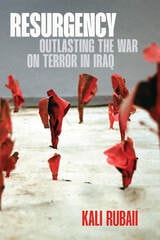
Resurgency
Outlasting the War on Terror in IraqKali Rubaii
Duke University Press, 2026
In Resurgency, Kali Rubaii offers detailed ethnographic insight into how decades of war have affected everyday life in Iraq. Drawing on fieldwork in Anbar province and Iraqi Kurdistan in 2014–15 and 2021–24, Rubaii foregrounds the practices of displaced people who stubbornly outlast their occupiers, returning to homes that feel estranging, repairing war-damaged land, and surviving into futures to which they have been disinvited. Following Anbari farmers in their struggle to counter the social and environmental fallout from toxic military waste, depleted ecosystems, and transformed political economies, Resurgency expands the temporal and descriptive categories of what war is—and what resistance looks like. By asking what actions and dispositions make sense when conditions of survival are diminished, and when today may be better than tomorrow, Rubaii offers new methods and insights to those concerned about the possibilities of life amid environmental devastation, mass displacement, and the slow violence of the forever wars.
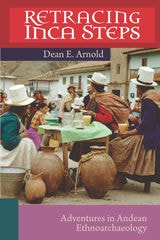
Retracing Inca Steps
Adventures in Andean EthnoarchaeologyDean E. Arnold
University of Utah Press, 2021
This first-person narrative reveals the challenges of living and working in another culture and the many obstacles one can encounter while doing field research. Arnold shares how his feelings of frustration and perceived failure led him to refocus his project, a shift that ultimately led to an entirely new perspective on pottery production in the Andes. Masterfully weaving details about Peru’s geography, ecology, history, prehistory, and culture into his story, he chronicles his change from small-town Midwesterner to a person of much broader vision, newly aware of his North American views and values.
Retracing Inca Steps is an excellent read for the lay person wishing to learn about the environment, prehistory, history, and culture of Peru as well as for students wanting to know more about the joys and rigors of fieldwork.