Results by title
279 books match the query 'Film & Video' and 9 start with r
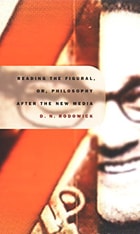
Reading the Figural, or, Philosophy after the New Media
D. N. Rodowick
Duke University Press, 2001
To fully comprehend the emergence of the figural requires a genealogical critique of the aesthetic, Rodowick claims. Seeking allies in this effort to deconstruct the opposition of word and image and to create new concepts for comprehending the figural, he journeys through a range of philosophical writings: Thierry Kuntzel and Marie-Claire Ropars-Wuilleumier on film theory; Jacques Derrida on the deconstruction of the aesthetic; Siegfried Kracauer and Walter Benjamin on the historical image as a utopian force in photography and film; and Gilles Deleuze and Michel Foucault on the emergence of the figural as both a semiotic regime and a new stratagem of power coincident with the appearance of digital phenomena and of societies of control.
Scholars of philosophy, film theory, cultural criticism, new media, and art history will be interested in the original and sophisticated insights found in this book.
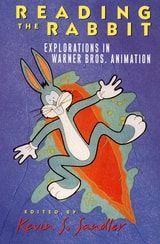
Reading the Rabbit
Explorations in Warner Bros. AnimationSandler, Kevin S
Rutgers University Press, 1998
"A wide-ranging inquiry into an important area of contemporary scholarly interest, and also an engaging, well written and intelligently conceived collection." -Eric Smoodin, author of Animating Culture: Hollywood Cartoons From the Sound Era
Despite the success of Bugs Bunny, Daffy Duck, and their Looney cohorts, Warner Bros. animation worked in the shadow of Disney for many years. The past ten years have seen a resurgence in Warner Bros. animation as they produce new Bugs Bunny cartoons and theatrical features like Space Jam as well as television shows like Tiny Toon Adventures and Animaniacs. While Disney's animation plays it safe and mirrors traditional cinema stories, Warner Bros. is known for a more original and even anarchistic style of narration, a willingness to take risks in story construction, a fearlessness in crossing gender lines with its characters, and a freedom in breaking boundaries. This collection of essays looks at the history of Warner Bros. animation, compares and contrasts the two studios, charts the rise and fall of creativity and daring at Warner's, and analyzes the ways in which the studio was for a time transgressive in its treatment of class, race, and gender. It reveals how safety and commercialization have, in the end, triumphed at Warner Bros. just as they much earlier conquered Disney.
The book also discusses fan parodies of Warner Bros. animation on the Internet today, the Bugs Bunny cross-dressing cartoons, cartoons that were censored by the studio, and the merchandising and licensing strategies of the Warner Bros. studio stores. Contributors are Donald Crafton, Ben Fraser, Michael Frierson, Norman M. Klein, Terry Lindvall, Bill Mikulak, Barry Putterman, Kevin S. Sandler, Hank Sartin, Linda Simensky, Kirsten Moana Thompson, Gene Walz, and Timothy R. White.

Recording Memories from Political Violence
A Film-maker's JourneyCahal McLaughlin
Intellect Books, 2010
Based on work the author has carried out with survivor groups in Northern Ireland and South Africa, Recording Memories from Political Violence draws on written and audiovisual texts to describe and analyze the use of documentary filmmaking in recording experiences of political conflict. A variety of issues relevant to the genre are addressed at length, including the importance of ethics in the collaboration between the filmmaker and the participant and the effect of location on the accounts of participants. Cahal McLaughlin draws on the diverse fields of film and cultural studies, as well as nearly twenty years of production experience, in this informed and instructive contribution to documentary filmmaking and post-conflict studies.
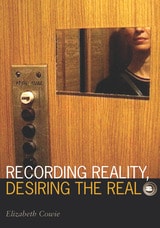
Recording Reality, Desiring the Real
Elizabeth Cowie
University of Minnesota Press, 2010
Cowie claims that, as a radical film form, documentary has been a way for filmmakers to acknowledge historical and contemporary realities by presenting images of these realities. If documentary is the desire to know reality through its images and sounds, she asks, what kind of speaking (and speaking about) emerges in documentary, and how are we engaged by it? In considering this and other questions, Cowie examines a range of noteworthy films, including Spike Lee’s When the Levees Broke, John Huston’s Let There Be Light, and Milica Tomic’s Portrait of My Mother.
Recording Reality, Desiring the Real stakes documentary’s central place in cinema as both an art form and a form of social engagement, which together create a new understanding of spectatorship.
Reframing Berlin
Architecture, Memory-Making and Film LocationsChristopher S. Wilson and Gul Kacmaz Erk
Intellect Books, 2024
Concerned with the connection between the built environment and the passage of time, Reframing Berlin uses film locations in the city to reveal the influence that urban transformation has on memory-making. Covering the city’s history since the beginning of cinema, the book proposes the term urban strategy to understand the range of consequential actions taken by politicians, developers, and other powerful figures to shape the nature and future of buildings, streets, and districts. Organizing these strategies from demolition to memorialization, the authors study the ways these actions forget or recall aspects of place. Using cinematic representations of Berlin as an audiovisual archive, the study details how the city has adjusted to its traumatic twentieth-century history through architectural transformations. Two dissimilar case studies frame each strategy, indicating that an approach that works for one building may not be sufficient for another.
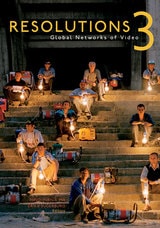
Resolutions 3
Global Networks of VideoMing-Yuen S. Ma
University of Minnesota Press, 2012
Resolutions 3 explores the wide-ranging implications of video art and video-based production in contemporary media culture. It is the third volume in a series composed of Resolution: A Critique of Video Art (1986) and Resolutions: Contemporary Video Practices (1996). While Resolution was one of the first critical texts on video art in the United States, Resolutions was one of the first books to address video as a medium across disciplines from theoretical, activist, and transnational perspectives.
Resolutions 3 articulates this legacy as a challenge to reengage with the explosive viral reach of moving image–based content and its infiltration into and impact on culture and everyday life. The contributors to this work analyze what is now a fourth decade of video practices as marked within and outside the margins of art production, networked interventions, projected spectacle, museum entombment, or 24/7 streaming. Intending to broaden, contest, and amplify the mediated space that was defined by its two predecessors, this volume investigates the ever-changing state of video’s deployment as examiner, tool, journal reportage, improvisation, witness, riff, leverage, and document.
Contributors: Kathleen Ash-Milby, Smithsonian National Museum of the American Indian; Myriam-Odile Blin, Rouen U, France; Nancy Buchanan, California Institute of the Arts; Derek A. Burrill, U of California, Riverside; Sean Cubitt, U of Melbourne; Faisal Devji, New York U; Jennifer Doyle, U of California, Riverside; Jennifer Friedlander, Pomona College; Kathy High, Rensselaer Polytechnic Institute; Lucas Hilderbrand, U of California, Irvine; Nguyen Tan Hoang, Bryn Mawr College; Kathy Rae Huffman; Amelia Jones, McGill U; David Joselit, Yale U; Alexandra Juhasz, Pitzer College; Jessica Lawless, Santa Fe Community College; Hea Jeong Lee; Jesse Lerner, Pitzer College; Akira Mizuta Lippit, U of Southern California; Lionel Manga; Laurence A. Rickels, U of California, Santa Barbara; Kenneth Rogers, U of California, Riverside; Michael Rush, Eli and Edythe Broad Art Museum, Michigan State U; Freya Schiwy, U of California, Riverside; Beverly R. Singer, U of New Mexico; Yvonne Spielmann, U of the West of Scotland; Catherine Taft, Getty Research Institute; Holly Willis, U of Southern California.
Rhetoric of Modern Death in American Living Dead Films
Outi Hakola
Intellect Books, 2015
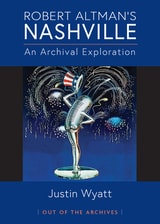
Robert Altman's Nashville
An Archival ExplorationJustin Wyatt
University of Michigan Press, 2026
This book explores Robert Altman’s classic film from a variety of critical perspectives inspired by the archival materials from the Altman archive in the Screen Arts Mavericks and Makers collection at the University of Michigan Special Collections Research Center. Each chapter is centered around materials on Nashville from the Altman archive: stills, contact sheets, advertising artwork (used and unused), Jean Pagliuso photo shoots, Joan Tewkesbury script drafts, contracts, reviews, internal accounting memos, and the Altman scrapbooks. (Each of his films has a scrapbook of reviews, interviews, and notes from fans.) Using these sources as a starting point, the book seeks to explain the relevance and importance of Nashville after more than half a century.
Rosebud Sleds and Horses' Heads
50 of Film's Most Evocative Objects - An Illustrated JourneyScott Jordan Harris
Intellect Books, 2013
Rosebud Sleds and Horses’ Heads presents incisive discussion of fifty of the most significant objects in cinema history and explores their importance within their films and within the popular imagination. With original full color illustrations, this book surveys objects from a range of genres, from the birth of cinema to the present day.
Curated and written by a prominent film critic who routinely writes for some of the leading publications in the English language, as well as broadcasts for the BBC, Rosebud Sleds and Horses’ Heads is the only book of its kind. With a fascinating, original, and instantly understandable concept, it will find grateful audiences in film buffs around the world.