Results by title
126 books match the query 'Friends and associates' and 3 start with r
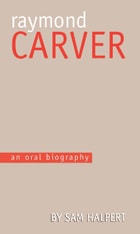
Raymond Carver
An Oral BiographySam Halpert
University of Iowa Press, 1995
Raymond Carver has become a literary icon for our time. When he died in 1988 at the age of fifty, he was acclaimed as the greatest influence on the American short story since Hemingway. Carver's friends were the stuff of legend as well. In this rich collection—greatly expanded from the earlier When We Talk about Raymond Carver—of interviews with close companions, acquaintances, and family, Sam Halpert has chronologically arranged the reminiscences of Carver's adult life, recalling his difficult “Bad Raymond” days through his second life as a recovering alcoholic and triumphantly successful writer. The result is a spirited Irish wake—toasts, anecdotes, lies, songs, confessions, laments—all beautifully orchestrated by Halpert into a very readable and moving narrative.
These funny, poignant, intensely remembered interviews juxtapose personal anecdotes and enlightening criticism. Memory mixes with analysis, and a lively picture of Carver emerges as we hear different stories about him—of the same story told from different viewpoints. He is here presented as hero, victim, and even villain—Carver's readers will recognize the woof and warp of his stories in these affectionate narratives.
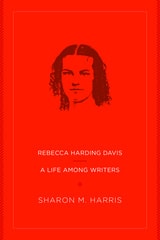
Rebecca Harding Davis
A Life Among WritersSharon M. Harris
West Virginia University Press, 2019
2018 Choice Outstanding Academic Title
This accessible treatment of Davis’s life, based on deep research in archival sources, provides new perspective on topics ranging from sectional tensions in the border South to the gendered world of nineteenth-century publishing. It promises to be the authoritative treatment of an important figure in the literary history of West Virginia and the wider world.
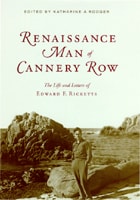
Renaissance Man of Cannery Row
The Life and Letters of Edward F. RickettsEdward F. Ricketts, edited by Katharine A. Rodger
University of Alabama Press, 2002
This portrait of one of John Steinbeck's closest friends illuminates the life and work of a figure central to the development of scientific and literary thought in the 20th century.
Marine biologist Edward F. Ricketts is perhaps best known as the inspiration for John Steinbeck's most empathic literary characters Doc in Cannery Row, Slim in Of Mice and Men, Jim Casy in The Grapes of Wrath, and Lee in East of Eden. The correspondence of this accomplished scientist, writer, and philosopher reveals the influential exchange of ideas he shared with such prominent thinkers and artists as Henry Miller, Joseph Campbell, Ellwood Graham, and James Fitzgerald, in addition to Steinbeck, all of whom were drawn to Ricketts's Monterey Bay laboratory, a haven of intellectual discourse and Bohemian culture in the 1930s and 1940s.
The 125 previously unpublished letters of this collection, housed at the Stanford University Library, document the broad range of Ricketts's interests and accomplishments during the last 12 and most productive years of his life. His handbook on Pacific marine life, Between Pacific Tides, is still in print, now in its fifth edition. The biologist's devotion to ecological conservation and his evolving philosophy of science as a cross-disciplinary, holistic pursuit led to the publication of The Sea of Cortez. Many of Ricketts's letters discuss his studies of the Pacific littoral and his theories of “phalanx” and transcendence. Epistles to family members, often tender and humorous, add dimension and depth to Steinbeck's mythologized depictions of Ricketts. Katharine A. Rodger has enriched the correspondence with an introductory biographical essay and a list of works cited.