Results by title
56 books match the query 'Government, Resistance to' and 10 start with r
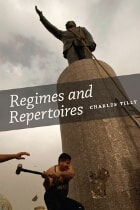
Regimes and Repertoires
Charles Tilly
University of Chicago Press, 2006
The means by which people protest—that is, their repertoires of contention—vary radically from one political regime to the next. Highly capable undemocratic regimes such as China's show no visible signs of popular social movements, yet produce many citizen protests against arbitrary, predatory government. Less effective and undemocratic governments like the Sudan’s, meanwhile, often experience regional insurgencies and even civil wars. In Regimes and Repertoires, Charles Tilly offers a fascinating and wide-ranging case-by-case study of various types of government and the equally various styles of protests they foster.
Using examples drawn from many areas—G8 summit and anti-globalization protests, Hindu activism in 1980s India, nineteenth-century English Chartists organizing on behalf of workers' rights, the revolutions of 1848, and civil wars in Angola, Chechnya, and Kosovo—Tilly masterfully shows that such episodes of contentious politics unfold like loosely scripted theater. Along the way, Tilly also brings forth powerful tools to sort out the reasons why certain political regimes vary and change, how the people living under them make claims on their government, and what connections can be drawn between regime change and the character of contentious politics.

Repertoires and Cycles of Collective Action
Mark Traugott, editor
Duke University Press, 1995
The significance of repertoires—recurrent forms or tactics of social protest— is explored in an essay on eighteenth- and nineteenth-century Britain by the originator of the concept, Charles Tilly. Sidney Tarrow, whose work has most directly linked the concept of repertoires with that of cycles—the recurrent peaks and troughs in the historical incidence of collective action—contributes an essay that focuses on twentieth-century Italy. Other essays investigate the rhythms and logic of social change in contexts as diverse as sixteenth- through nineteenth-century Japan, nineteeth-century Europe, and twentieth-century America. Through inquiries into the consequences of violent repression for social mobilization, the struggle to control the linguistic terms of social conflict, the unacknowledged antecedents of contemporary movements, and the importance of "movement families," this volume demonstrates the usefulness of these two concepts and defines the relationship between them.
Collected from past issues of Social Science History, with a new introduction and two new essays, Repertoires and Cycles of Collective Action will reward an interdisciplinary audience of readers with the extraordinary vitality that emerges from this rich blend of historical perspectives.
Contributors. Charles Brockett, Craig Calhoun, Doug McAdam, Marc Steinberg, Sidney Tarrow, Charles Tilly, Mark Traugott, James White
Replace the State
How to Change the World When Elections and Protests FailSasha Davis
University of Minnesota Press, 2025
A practical call to action against oppression
Across the globe, millions of people have participated in protests and marches, donated to political groups, or lobbied their representatives with the aim of creating lasting social change, overturning repressive laws, or limiting environmental destruction. Yet very little seems to improve for those affected by rapacious governments. Replace the State brings new hope for social justice movements by looking to progressive campaigns that have found success by unconventional, and more direct, means.
Sasha Davis, an activist and scholar of radical environmental advocacy, focuses on the strategies of movements, many of them Indigenous, that have occupied contested sites and demonstrated their effectiveness at managing or governing them. Including case studies of resistance to development on Indigenous lands in Hawai‘i, nuclear testing in the Nevada desert, and the U.S. military occupation of Okinawa, he offers insight and direction for activists, students, academics, and others dedicated to protecting and improving the well-being of their communities and beyond.
It would be easy to succumb to pessimism and political apathy in the face of governing institutions that are increasingly unresponsive to calls for change and repressive in response to protest, even as they violate human rights, ignore existential climate catastrophes, and concentrate power into fewer and fewer hands. Instead, Davis finds inspiration for genuine political change through social movements that are successfully “replacing the state” and taking over the day-to-day governance of threatened places. From contesting environmental abuse to reasserting Indigenous sovereignty, these social movements demonstrate how people can collectively wrest control over their communities from oppressive governments and manage them with a more egalitarian ethics of care.
Retail e-book files for this title are screen-reader friendly with images accompanied by short alt text and/or extended descriptions.
Repression And Mobilization
Christian Davenport
University of Minnesota Press, 2005
Brings together leading scholars from political science and sociology
Recent events—from the collapse of Leninist regimes in Eastern Europe to the democratization of South Asian and South American states—have profoundly changed our ways of understanding and studying contentious politics, particularly the relationship between state repression and political mobilization.
With case studies that range from Germany to the Philippines, the United States to Japan, Guatemala to China, the authors take up topics as varied as the dynamic interactions between protesters and policing agents, distinctions between “hard” and “soft” repression, the impact of media on our understanding of political contention, the timing and shape of protest and resistance cycles, and how measurements of social and geographic control influence states’s responses to insurgencies. Together these essays synthesize what we know about repression and mobilization and provide thoughtful insight for the future.
Contributors: Patrick Ball, Science and Human Rights Program of the American Association for the Advancement of Science; Vince Boudreau, City College of New York; Myra Marx Ferree, U of Wisconsin; Ronald A. Francisco, U of Kansas; Ruud Koopmans, Free U Amsterdam; Mark Lichbach, U of Maryland; John D. McCarthy, Pennsylvania State U; Clark McPhail, U of Illinois, Urbana-Champaign; Patricia Steinhoff, U of Hawaii; Charles Tilly, Columbia U; Gilda Zwerman, SUNY, Old Westbury.

Resist the Punitive State
Grassroots Struggles Across Welfare, Housing, Education and PrisonsEmily Luise Hart
Pluto Press, 2019

Resist the Punitive State
Grassroots Struggles Across Welfare, Housing, Education and PrisonsEmily Luise Hart
Pluto Press, 2019

Resistance against the Third Reich
1933-1990Edited by Michael Geyer and John W. Boyer
University of Chicago Press, 1994
Contributors include Geoffrey Cocks, Werner G. Jeanrond, Tony Judt, Claudia Koonz, Hans Mommsen, and Frank Trommler.
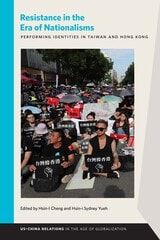
Resistance in the Era of Nationalisms
Performing Identities in Taiwan and Hong KongHsin-I Cheng
Michigan State University Press, 2023
Rhythms of the Pachakuti
Indigenous Uprising and State Power in BoliviaRaquel Gutiérrez Aguilar
Duke University Press, 2014
"In Rhythms of the Pachakuti we can sense the reverberations of an extraordinary historical process that took place in Bolivia at the start of the twenty-first century. The book is the product of Raquel Gutiérrez Aguilar's political engagement in that historical process. . . . Though of Mexican nationality, [she] was intimately involved in Bolivian politics for many years and acquired a quasi-legendary status there as an intense, brilliant activist and radical intellectual. . . . [Her account is] . . . itself a revolutionary document. . . . Rhythms of the Pachakuti deserves to stand as a key text in the international literature of radicalism and emancipatory politics in the new century."—Sinclair Thomson, from the foreword

Rural Unrest during the First Russian Revolution
Kursk Province, 1905-1906Burton Richard Miller
Central European University Press, 2013