511 books match the query 'Government policy' and 30 start with r

cover of REGULATED ENTERPRISE: NATURAL GAS PIPELINES AND NORTHEASTERN M

REGULATED ENTERPRISE

NATURAL GAS PIPELINES AND NORTHEASTERN M

CHRISTOPHER J. CASTANEDA

The Ohio State University Press, 1992
[more]
cover of Race and the Politics of Welfare Reform

Race and the Politics of Welfare Reform

Sanford F. Schram, Joe Soss, and Richard C. Fording, Editors

University of Michigan Press, 2003

It's hard to imagine discussing welfare policy without discussing race, yet all too often this uncomfortable factor is avoided or simply ignored. Sometimes the relationship between welfare and race is treated as so self-evident as to need no further attention; equally often, race in the context of welfare is glossed over, lest it raise hard questions about racism in American society as a whole. Either way, ducking the issue misrepresents the facts and misleads the public and policy-makers alike.
Many scholars have addressed specific aspects of this subject, but until now there has been no single integrated overview. Race and the Politics of Welfare Reform is designed to fill this need and provide a forum for a range of voices and perspectives that reaffirm the key role race has played--and continues to play--in our approach to poverty.
The essays collected here offer a systematic, step-by-step approach to the issue. Part 1 traces the evolution of welfare from the 1930s to the sweeping Clinton-era reforms, providing a historical context within which to consider today's attitudes and strategies. Part 2 looks at media representation and public perception, observing, for instance, that although blacks accounted for only about one-third of America's poor from 1967 to 1992, they featured in nearly two-thirds of news stories on poverty, a bias inevitably reflected in public attitudes. Part 3 discusses public discourse, asking questions like "Whose voices get heard and why?" and "What does 'race' mean to different constituencies?" For although "old-fashioned" racism has been replaced by euphemism, many of the same underlying prejudices still drive welfare debates--and indeed are all the more pernicious for being unspoken. Part 4 examines policy choices and implementation, showing how even the best-intentioned reform often simply displaces institutional inequities to the individual level--bias exercised case by case but no less discriminatory in effect. Part 5 explores the effects of welfare reform and the implications of transferring policy-making to the states, where local politics and increasing use of referendum balloting introduce new, often unpredictable concerns. Finally, Frances Fox Piven's concluding commentary, "Why Welfare Is Racist," offers a provocative response to the views expressed in the pages that have gone before--intended not as a "last word" but rather as the opening argument in an ongoing, necessary, and newly envisioned national debate.
Sanford Schram is Visiting Professor of Social Work and Social Research, Bryn Mawr Graduate School of Social Work and Social Research.
Joe Soss teaches in the Department of Government at the Graduate school of Public Affairs, American University, Washington, D.C.
Richard Fording is Associate Professor in the Department of Political Science, University of Kentucky.
[more]
cover of Race, Place, and Reform in Mexican Los Angeles: A Transnational Perspective, 1890-1940

Race, Place, and Reform in Mexican Los Angeles

A Transnational Perspective, 1890-1940

Stephanie Lewthwaite

University of Arizona Press, 2009

Beginning near the end of the nineteenth century, a generation of reformers set their sights on the growing Mexican community in Los Angeles. Experimenting with a variety of policies on health, housing, education, and labor, these reformers—settlement workers, educationalists, Americanizers, government officials, and employers—attempted to transform the Mexican community with a variety of distinct and often competing agendas.

In Race, Place, and Reform in Mexican Los Angeles, Stephanie Lewthwaite presents evidence from a myriad of sources that these varied agendas of reform consistently supported the creation of racial, ethnic, and cultural differences across Los Angeles. Reformers simultaneously promoted acculturation and racialization, creating a “landscape of difference” that significantly shaped the place and status of Mexican immigrants and Mexican Americans from the Progressive era through the New Deal.

The book journeys across the urban, suburban, and rural spaces of Greater Los Angeles as it moves through time and examines the rural–urban migration of Mexicans on both a local and a transnational scale. Part 1 traverses the world of Progressive reform in urban Los Angeles, exploring the link between the region’s territorial and industrial expansion, early campaigns for social and housing reform, and the emergence of a first-generation Mexican immigrant population. Part 2 documents the shift from official Americanization and assimilation toward nativism and exclusion. Here Lewthwaite examines competing cultures of reform and the challenges to assimilation from Mexican nationalists and American nativists. Part 3 analyzes reform during the New Deal, which spawned the active resistance of second-generation Mexican Americans.

Race, Place, and Reform in Mexican Los Angeles achieves a full, broad, and nuanced account of the various—and often contradictory—efforts to reform the Mexican population of Los Angeles. With a transnational approach grounded in historical context, this book will appeal to students of history, cultural studies, and literary studies
[more]
cover of Radical Hospitality: American Policy, Media, and Immigration

Radical Hospitality

American Policy, Media, and Immigration

Nour Halabi

Rutgers University Press, 2022

Radical Hospitality: American Policy, Media, and Immigration re-imagines the ethical relationship of host societies towards newcomers by applying the concept of hospitality to two specific realms that impact the lives of immigrants in the United States: policy and media. The book calls attention to the moral responsibility of the host in welcoming a stranger. It sets the stage for the analysis with a historical background of the first host-guest diads of American hospitality, arguing that the early history of American hospitality was marked by the degeneration of the host-guest relationship into one of host-hostage, normalizing a racial discrimination that continues to plague immigration hospitality to this day. Author Nour Halabi presents a historical policy and media discourse analysis of immigration regulation and media coverage during three periods of US history: the 1880s and the Chinese Exclusion Act, the 1920s and the National Origins Act and the 2000s and the Muslim travel ban. In so doing, it demonstrates how U.S. immigration hospitality, from its peaks in the post-Independence period to its nadir in the Muslim travel ban, has fallen short of true hospitality in spite of the nation’s oft-touted identity as a “nation of immigrants.” At the same time, the book calls attention to how a discourse of hospitality, although fraught, may allow a radical reimagining of belonging and authority that unsettles settler-colonial assumptions of belonging and welcome a restorative outlook to immigration policy and its media coverage in society.
[more]
cover of Ramparts of Resistance: Why Workers Lost Their Power, and How to Get It Back

Ramparts of Resistance

Why Workers Lost Their Power, and How to Get It Back

Sheila Cohen

Pluto Press, 2006

Ramparts of Resistance examines the experience of British and U.S. workers during the last three decades to offer a broad analysis of the need for a new independent politics of trade unionism. Recent years have seen great changes in the trade union movement, from waves of strikes in the 1970s to a battery of employer and state onslaughts, culminating in the anti-union legislation of the 1980s and 1990s. Looking at grassroots labor struggles, Sheila Cohen explores issues of reformism, trade union democracy, and the political meaning of ordinary workplace resistance, and puts forward ideas for change. Ramparts of Resistance examines the failure of the union movement to rise to the neoliberal challenge and calls for a new politics of independent unionism and an explicitly class-based renewal of "workers' power." Coming at a time when union activity and membership involvement continues despite the odds, this book is an inspiring guide to the direction that unionism should take.
[more]
cover of Realizing Equality in Policy

Realizing Equality in Policy

Edited by Alexander Kaufman

University of Michigan Press, 2025

Economic and social inequality have become defining features of the world economy in the late twentieth and early twenty-first centuries. While increased inequality has been particularly pronounced in the United States, a similar phenomenon of increasing inequality of incomes and wealth has emerged in the economies of most major western European states. Realizing Equality in Policy brings together leading scholars to address current issues relating to rising inequality as it affects policy in the areas of education, health care, anti-poverty, employment, and economic policy. 

With contributions from scholars of both luck and relational egalitarianism, the essays reexamine a number of basic assumptions regarding social and economic policy from an egalitarian perspective. They explore gender-based discrimination, international justice, and the possibility for engagement between socialist and left-liberal thought. Rather than focusing on the subtle distinctions that divide egalitarian views, this volume shows that both views have the potential to offer important insights about how differences might be overcome and gaps might be closed. In offering new directions for solving wealth inequality through policy, Realizing Equality in Policy contributes to ongoing conversations in political theory, economic theory, and moral philosophy.

[more]
cover of Red Tape: Bureaucracy, Structural Violence, and Poverty in India

Red Tape

Bureaucracy, Structural Violence, and Poverty in India

Akhil Gupta

Duke University Press, 2012

Red Tape presents a major new theory of the state developed by the renowned anthropologist Akhil Gupta. Seeking to understand the chronic and widespread poverty in India, the world's fourth largest economy, Gupta conceives of the relation between the state in India and the poor as one of structural violence. Every year this violence kills between two and three million people, especially women and girls, and lower-caste and indigenous peoples. Yet India's poor are not disenfranchised; they actively participate in the democratic project. Nor is the state indifferent to the plight of the poor; it sponsors many poverty amelioration programs.

Gupta conducted ethnographic research among officials charged with coordinating development programs in rural Uttar Pradesh. Drawing on that research, he offers insightful analyses of corruption; the significance of writing and written records; and governmentality, or the expansion of bureaucracies. Those analyses underlie his argument that care is arbitrary in its consequences, and that arbitrariness is systematically produced by the very mechanisms that are meant to ameliorate social suffering. What must be explained is not only why government programs aimed at providing nutrition, employment, housing, healthcare, and education to poor people do not succeed in their objectives, but also why, when they do succeed, they do so unevenly and erratically.

[more]
cover of Redefining Science: Scientists, the National Security State, and Nuclear Weapons in Cold War America

Redefining Science

Scientists, the National Security State, and Nuclear Weapons in Cold War America

Paul Rubinson

University of Massachusetts Press, 2016

The Cold War forced scientists to reconcile their values of internationalism and objectivity with the increasingly militaristic uses of scientific knowledge. For decades, antinuclear scientists pursued nuclear disarmament in a variety of ways, from grassroots activism to transnational diplomacy and government science advising. The U.S. government ultimately withstood these efforts, redefining science as a strictly technical endeavor that enhanced national security and deeming science that challenged nuclear weapons on moral grounds “emotional” and patently unscientific. In response, many activist scientists restricted themselves to purely technical arguments for arms control. When antinuclear protest erupted in the 1980s, grassroots activists had moved beyond scientific and technical arguments for disarmament. Grounding their stance in the idea that nuclear weapons were immoral, they used the “emotional” arguments that most scientists had abandoned.

Redefining Science shows that the government achieved its Cold War “consensus” only by active opposition to powerful dissenters and helps explain the current and uneasy relationship between scientists, the public, and government in debates over issues such as security, energy, and climate change.

[more]
cover of Rediscovering National Parks in the Spirit of John Muir

Rediscovering National Parks in the Spirit of John Muir

Michael Frome

University of Utah Press, 2015

As a journalist, advocate, and professor, Michael Frome has spent decades engaged with conservation topics and has taken particular interest in America’s national parks. He draws on this experience and knowledge to address what remains to be done in order to truly value and preserve these special places. Part memoir, part history, and part broadside against those who would diminish this heritage, Rediscovering National Parks in the Spirit of John Muir, through thoughtful reflections and ruminations, bears witness to the grandeur of our parks and to the need for a renewed sense of appreciation and individual responsibility for their care.

In recollections of his encounters and conversations with key people in national park history, Frome discusses park politics, conflicts between use and preservation, and impacts of commercialization. He proposes a dedicated return to the true spirit in which the parks were established, in the manner of John Muir. He advocates maintaining these lands as wild sanctuaries, places where we can find inspiration, solitude, silence, balance, and simplicity, reminding us why we must preserve our national treasures and why we need to connect with the deeper values they hold. 

[more]
cover of Refuge in the Lord

Refuge in the Lord

Lawrence J. McAndrews

Catholic University of America Press, 2015

Rather than helping to overcome the growing political divide over immigration in the country and the church, Catholics on the outer edges of the issue contributed to it. By eschewing compromise in favor of confrontation, Catholic legislators from both parties too often helped prevent Congress from giving the presidents, and the public, most of what they wanted on immigration reform. By forsaking political reality in the name of religious purity, Catholic immigration advocates frequently antagonized the presidents whose goals they largely shared, and ultimately disappointed the immigrants they so badly wanted to help.
[more]
cover of Regional Governance and the Politics of Housing in the San Francisco Bay Area

Regional Governance and the Politics of Housing in the San Francisco Bay Area

Paul G. Lewis and Nicholas J. Marantz

Temple University Press, 2023

The San Francisco Bay Area is generally considered the most expensive regional housing market in the country. Because the region added jobs and residents at a faster rate than housing, rents and home prices escalated. Moreover, small municipalities, common in the most job-rich parts of the Bay Area, have strong political incentives to resist development of new multifamily housing. Regional Governance and the Politics of Housing in the San Francisco Bay Area explains how a decentralized, localistic structure of government shapes land-use politics in ways that exacerbate housing shortages and inequalities. 
 
The authors evaluate six potential reforms, arguing that targeted changes to local and regional institutions could generate durable improvements to the region’s housing opportunities. The main lesson from the case of the San Francisco Bay Area is the need to focus on governance when addressing the housing challenge. As the authors effectively illustrate, leaving a solution up to individual cities is unlikely to lead to increased housing supply.  

 
[more]
cover of Regreening the National Parks

Regreening the National Parks

Michael Frome

University of Arizona Press, 1992

What has happened to our national parks?

Overcrowding and commercialization are commonplace, and with the increase in visitation has come not only congestion but crime. Yet visitor enjoyment seems to be a higher priority of those who manage the parks than the protection and perpetuation of natural systems. How could this have happened? Michael Frome, one of the most outspoken and highly regarded observers of our national parks, here shows how the original mission of the National Park Service has been undermined by politicization and bureaucratization.

Regreening the National Parks tells how the Park Service has been transformed from a professional to a political agency and in the process has betrayed its own values by emphasizing recreation and "short-order wilderness served like fast food" rather than the preservation of the nation's natural heritage. Frome has drawn on both official documents and personal interviews to examine the policies--and personalities--behind the scenes at the National Park Service. He cites instances of personnel being forbidden to criticize public policy in which they found a conflict with conservation principles, and contends that, as the Park Service has become more bureaucratic, those for whom the environment deeply matters scarcely rise within its ranks. In considering the environmental abuse rampant today, Frome sees national parks as models of respect for nature and concludes his book with a ten-point program toward realizing that ideal.
[more]
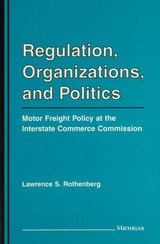
cover of Regulation, Organizations, and Politics: Motor Freight Policy at the Interstate Commerce Commission

Regulation, Organizations, and Politics

Motor Freight Policy at the Interstate Commerce Commission

Lawrence S. Rothenberg

University of Michigan Press, 1994

Regulation, Organizations, and Politics examines the evolution of regulation at the Interstate Commerce Commission (ICC). The ICC has probably had the most profound impact on any federal agency on the way social scientists view politics. From a perspective based in modern political economy, the author develops an analysis that improves our understanding of the determinants of bureaucratic performance and clarifies the conditions under which organizations are likely to have a substantial influence.   Employing a variety of techniques, Regulation, Organizations, and Politics explains how motor carriers, particularly the larger truckers who controlled the American Trucking Association, were unable to control public policy once the chief executive decided to expand substantial political resources on reforming the motor carrier system. The author shows that this failure was rooted in the carriers' inability to offer the requisite rewards and sanctions required to influence those with power over the outcome. This work thus demonstrates that an integrated approach to the intersections of rational, if often incompletely informed, actors can help us to understand phenomena that seem puzzling at first consideration.
[more]
cover of Reign of Virtue: Mobilizing Gender in Vichy France

Reign of Virtue

Mobilizing Gender in Vichy France

Miranda Pollard

University of Chicago Press, 1998

In Reign of Virtue, Miranda Pollard explores the effects of military defeat and Nazi occupation on French articulations of gender in wartime France.

Drawing on governmental archives, historical texts, and propaganda, Pollard explores what most historians have ignored: the many ways in which Vichy's politicians used gendered images of work, family, and sexuality to restore and maintain political and social order. She argues that Vichy wanted to return France to an illustrious and largely mythical past of harmony, where citizens all knew their places and fulfilled their responsibilities, where order prevailed. The National Revolution, according to Pollard, replaced the ideals of liberty, equality, and fraternity with work, family, and fatherland, making the acceptance of traditional masculine and feminine roles a key priority. Pollard shows how Vichy's policies promoted the family as the most important social unit of a new France and elevated married mothers to a new social status even as their educational, employment, and reproductive rights were strictly curtailed.
[more]
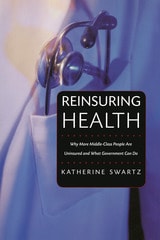
cover of Reinsuring Health: Why More Middle-Class People Are Uninsured and What Government Can Do

Reinsuring Health

Why More Middle-Class People Are Uninsured and What Government Can Do

Katherine Swartz

Russell Sage Foundation, 2006

America's current system of health insurance, which relies almost exclusively on employer-sponsored coverage, is in danger of collapse, and this problem is not limited to the poor and working class. An increasing number of middle class Americans do not have employer-provided insurance and—due to skyrocketing premiums—cannot afford to purchase coverage for themselves. Reinsuring Health, by economist Katherine Swartz, examines this growing national crisis and outlines a concrete plan to make health insurance accessible and affordable for all Americans. Reinsuring Health documents why the number of uninsured Americans—now 45.5 million people—has grown in the last twenty-five years. Swartz focuses on how labor market changes—such as the decline of domestic manufacturing, decreased unionization, and the growth of non-standard work arrangements—have led U.S. employers to retreat from providing health insurance for their workers. These trends, combined with the increasing costs of medical care, have led to an explosion in health insurance premiums and a decline in coverage, particularly among the middle-class. Since those who seek insurance as individuals are generally most likely to need health care, private insurers charge higher premiums in the individual (non-group) markets than to people who obtain group insurance. This makes individual health insurance less attractive to the young and increasingly unaffordable for middle-class Americans. Similarly, insurers charge higher per person (or per family) premiums to small firms than to large companies, so many small firms do not sponsor coverage for their employees. Reinsuring Health shows how these problems can be overcome if the federal government provides a new reinsurance program which would protect insurance companies that provide small group and individual health insurance against the possibility that their policy-holders will incur very high medical expenses. By assuming some of the risk that people will face extremely costly medical bills, the government will make insurers less hesitant to offer coverage to high-risk individuals, and will help drive down premiums for others. Reinsuring Health demonstrates that this form of government reinsurance has worked in the past, helping to establish smooth running private markets for catastrophe insurance and secondary mortgages. Today, growing numbers of middle class Americans lack health insurance. Protection against the possibility of falling ill or getting hurt and having to pay extraordinary health care bills should not be a luxury available only to the very rich and the very poor. Reinsuring Health proposes a straightforward solution that would bring health insurance back within the reach of the increasing ranks of the uninsured, particularly those who are in the middle class.
[more]
cover of Religion and Jewish Identity in the Soviet Union, 1941–1964

Religion and Jewish Identity in the Soviet Union, 1941–1964

Mordechai Altshuler

Brandeis University Press, 2012
This illuminating study explores the role of religious institutions in the makeup of Jewish identity in the former Soviet Union, against the backdrop of the government’s antireligion policies from the 1940s to the 1960s. Foregrounding instances of Jewish public and private activities centered on synagogues and prayer groups—paradoxically the only Jewish institutions sanctioned by the government—Altshuler dispels the commonly held perception of Soviet Jewry as “The Jews of Silence” and reveals the earliest stirrings of Jewish national sentiment that anticipated the liberation movement of the 1960s and 1970s.
[more]
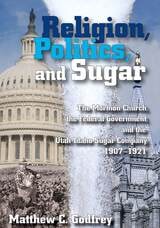
cover of Religion, Politics, and Sugar: The LDS Church, the Federal Government, and the Utah-Idaho Sugar Company, 1907-1927

Religion, Politics, and Sugar

The LDS Church, the Federal Government, and the Utah-Idaho Sugar Company, 1907-1927

Matthew C. Godfrey

Utah State University Press, 2007

Mary Lois Walker Morris was a Mormon woman who challenged both American ideas about marriage and the U.S. legal system. Before the Manifesto provides a glimpse into her world as the polygamous wife of a prominent Salt Lake City businessman, during a time of great transition in Utah. This account of her life as a convert, milliner, active community member, mother, and wife begins in England, where her family joined the Mormon church, details her journey across the plains, and describes life in Utah in the 1880s. Her experiences were unusual as, following her first husband's deathbed request, she married his brother as a plural wife in the Old Testament tradition of levirate marriage.

Mary Morris's memoir frames her 1879 to 1887 diary with both reflections on earlier years and passages that parallel entries in the day book, giving readers a better understanding of how she retrospectively saw her life. The thoroughly annotated diary offers the daily experience of a woman who kept a largely self-sufficient household, had a wide social network, ran her own business, wrote poetry, and was intellectually curious. The years of "the Raid" (federal prosecution of polygamists) led Mary and Elias Morris to hide their marriage on "the underground," and her to perjury during Elias's trial for unlawful cohabitation. The book ends with Mary Lois's arrival at the Salt Lake Depot after three years in exile in Mexico with a polygamist colony.
[more]
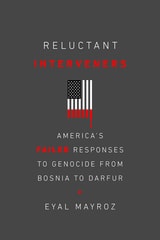
cover of Reluctant Interveners: America's Failed Responses to Genocide from Bosnia to Darfur

Reluctant Interveners

America's Failed Responses to Genocide from Bosnia to Darfur

Eyal Mayroz

Rutgers University Press, 2020

2020 Choice​ Outstanding Academic Title
Featured in the 2020 Association of University Presses Book, Jacket, and Journal Show

Why do we allow our governments to get away with “bystanding” to genocide? How can we, when alerted to the mass slaughter of innocents, still not take a stand? Reluctant Interveners provides the most comprehensive answers yet to these confronting questions, focusing on the complex relationships between the citizenry, the media, the political elites, and institutions in the most powerful nation in the world, the United States of America.

Eyal Mayroz offers a sobering account of the interactions between the governing and the governed, and the dynamics which transformed moral concerns for the lives of faraway “others” into cold political calculations. Exposed are the processes that turned the promise of “never again” to a recurring reality of ever again, the role of the office of the presidency in their advancement, and the resultant image of America as seen by the rest of the world. In a time of ubiquitous social media and populist revival, a greater role for the U.S. citizenry in decision-making on responses to genocide may be in the cards. The question is, in which directions will these trends take American foreign policy?
[more]
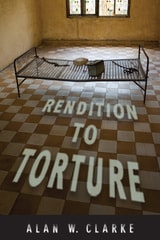
cover of Rendition to Torture

Rendition to Torture

Clarke, Alan W

Rutgers University Press, 2012

Universally condemned and everywhere illegal, torture goes on in democracies as well as in dictatorships. Nonetheless, many Americans were surprised following the attacks of 9/11 at how easily the United States embraced torture as well as the supposedly lesser evil of cruel, inhuman, and degrading treatment. Nothing seemed extreme when it came to questioning real and imagined terrorists. Extraordinary rendition—sending people captured in the “war on terror” to nations long counted among the world’s worst human rights violators—hid from the public eye cruel and bloody interrogations. “Torture lite” or “torture without marks” became the norm for those in American custody.

In Rendition to Torture, Alan W. Clarke explains how the United States adopted torture as a matter of official policy; how and why it turned to extraordinary rendition as a way to outsource more extreme, mutilating forms of torture; and outlines the steps the United States took to hide its abuses. Many adverse consequences attended American use of torture. False information gleaned from torture was used to justify the Iraq war, adding potency to the charge that the war was illegal under international law. Moreover, European nations and Canada aided, abetted, and became thoroughly enmeshed in U.S.-led torture and renditions, thereby spreading both the problem and the blame for this practice. Clarke offers an extended critique of these activities, placing them in historical and legal context as well as in transnational and comparative perspective.

[more]
cover of Repealed: Ireland’s Unfinished Fight for Reproductive Rights

Repealed

Ireland’s Unfinished Fight for Reproductive Rights

Camilla Fitzsimons

Pluto Press, 2021

*Winner of the James S. Donnelly, Sr. Prize 2022*

In Ireland, 2018, a constitutional ban that equated the life of a woman to the life of a fertilized embryo was overturned and abortion was finally legalized. This victory for the Irish feminist movement set the country alight with euphoria. But the celebrations were short-lived - the new legislation turned out to be one of the most conservative in Europe. This book tells the story of the ‘Repeal’ campaign through the lens of the activists.

The authors trace the shocking history of the origins of the eighth amendment, which was drawn up in fear of a tide of liberal reforms across Europe. They draw out the lessons learned through the decades and from the groundbreaking campaign in 2018, which was an inspiring example of modern grassroots activism. They also recount the tensions between a medicalized approach and reproductive justice approach to abortion, as well as the harsh effect of the campaign on the health of activists.

Grounded in a radical feminist politics, this book is an honest and inspirational account of a movement that is only just beginning.

[more]
cover of Reproducing the French Race: Immigration, Intimacy, and Embodiment in the Early Twentieth Century

Reproducing the French Race

Immigration, Intimacy, and Embodiment in the Early Twentieth Century

Elisa Camiscioli

Duke University Press, 2009

In Reproducing the French Race, Elisa Camiscioli argues that immigration was a defining feature of early-twentieth-century France, and she examines the political, cultural, and social issues implicated in public debates about immigration and national identity at the time. Camiscioli demonstrates that mass immigration provided politicians, jurists, industrialists, racial theorists, feminists, and others with ample opportunity to explore questions of French racial belonging, France’s relationship to the colonial empire and the rest of Europe, and the connections between race and national anxieties regarding depopulation and degeneration. She also shows that discussions of the nation and its citizenry consistently returned to the body: its color and gender, its expenditure of labor power, its reproductive capacity, and its experience of desire. Of paramount importance was the question of which kinds of bodies could assimilate into the “French race.”

By focusing on telling aspects of the immigration debate, Camiscioli reveals how racial hierarchies were constructed, how gender figured in their creation, and how only white Europeans were cast as assimilable. Delving into pronatalist politics, she describes how potential immigrants were ranked according to their imagined capacity to adapt to the workplace and family life in France. She traces the links between racialized categories and concerns about industrial skills and output, and she examines medico-hygienic texts on interracial sex, connecting those to the crusade against prostitution and the related campaign to abolish “white slavery,” the alleged entrapment of (white) women for sale into prostitution abroad. Camiscioli also explores the debate surrounding the 1927 law that first made it possible for French women who married foreigners to keep their French nationality. She concludes by linking the Third Republic’s impulse to create racial hierarchies to the emergence of the Vichy regime.
[more]
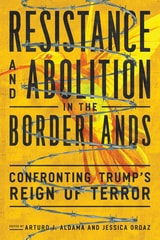
cover of Resistance and Abolition in the Borderlands: Confronting Trump's Reign of Terror

Resistance and Abolition in the Borderlands

Confronting Trump's Reign of Terror

Edited by Arturo J. Aldama and Jessica Ordaz; Foreword by Leo R. Chavez; Afterword by Karma R. Chávez

University of Arizona Press, 2024

While there is a long history of state violence toward immigrants in the United States, the essayists in this interdisciplinary collection tackle head-on the impacts of the Trump administration.

This volume provides a well-argued look at the Trump era. Insightful contributions delve into the impact of Donald Trump’s rhetoric and policies on migrants detained and returned, immigrant children separated from their parents and placed in detention centers, and migrant women subjected to sexual and reproductive abuses, among other timely topics. The chapter authors document a long list in what the book calls “Trump’s Reign of Terror.”

Organized thematically, the book has four sections: The first gathers histories about the Trump years’ roots in a longer history of anti-migration; the second includes essays on artistic and activist responses on the border during the Trump years; the third critiques the normalization of Trump’s rhetoric and actions in popular media and culture; and the fourth envisions the future.

Resistance and Abolition in the Borderlands is an essential reader for those wishing to understand the extent of the damage caused by the Trump era and its impact on Latinx people.

Contributors
Arturo J. Aldama
Rebecca Avalos
Cynthia Bejarano
Tria Blu Wakpa
Renata Carvalho Barreto
Karma R. Chávez
Leo R. Chavez
Jennifer Cullison
Jasmin Lilian Diab
Allison Glover
Jamila Hammami
Alexandria Herrera
Diana J. Lopez
Sergio A. Macías
Cinthya Martinez
Alexis N. Meza
Roberto A. Mónico
José Enrique Navarro
Jessica Ordaz
Eliseo Ortiz
Kiara Padilla
Leslie Quintanilla
J-M Rivera
Heidy Sarabia
Tina Shull
Nishant Upadhyay
Maria Vargas
Antonio Vásquez
[more]
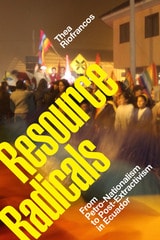
cover of Resource Radicals: From Petro-Nationalism to Post-Extractivism in Ecuador

Resource Radicals

From Petro-Nationalism to Post-Extractivism in Ecuador

Thea Riofrancos

Duke University Press, 2020
In 2007, the left came to power in Ecuador. In the years that followed, the “twenty-first-century socialist” government and a coalition of grassroots activists came to blows over the extraction of natural resources. Each side declared the other a perversion of leftism and the principles of socioeconomic equality, popular empowerment, and anti-imperialism. In Resource Radicals, Thea Riofrancos unpacks the conflict between these two leftisms: on the one hand, the administration's resource nationalism and focus on economic development; and on the other, the anti-extractivism of grassroots activists who condemned the government's disregard for nature and indigenous communities. In this archival and ethnographic study, Riofrancos expands the study of resource politics by decentering state resource policy and locating it in a field of political struggle populated by actors with conflicting visions of resource extraction. She demonstrates how Ecuador's commodity-dependent economy and history of indigenous uprisings offer a unique opportunity to understand development, democracy, and the ecological foundations of global capitalism.
[more]
cover of Rethinking Rental Housing

Rethinking Rental Housing

John Gilderbloom

Temple University Press, 1987

In recent years, almost daily media attention has been focused on the plight of the homeless in cities across the United States. Drawing upon experiences in the U.S. and Europe, John Gilderbloom and Richard Appelbaum challenge conventional assumptions concerning the operation of housing markets and provide policy alternatives directed at the needs of low- and moderate-income families. Rethinking Rental Housing is a ground-breaking analysis that shows the value of applying a broad sociological approach to urban problems, one that takes into account the basic economic, social, and political dimensions of the urban housing crisis.

Gilderbloom and Appelbaum predict that this crisis will worsen in the 1990s and argue that a "supply and demand" approach will not work in this case because housing markets are not competitive. They propose that the most effective approach to affordable housing is to provide non-market alternatives fashioned after European housing programs, particularly the Swedish model.

An important feature of this book is the discussion of tenant movements that have tried to implement community values in opposition to values of development and landlord capital. One of the very few publications on rental housing, it is unique in applying a sociological framework to the study of this topic.

[more]
cover of Rethinking the Political: Gender, Resistance, and the State

Rethinking the Political

Gender, Resistance, and the State

Edited by Barbara Laslett, Johanna Brenner, and Yesim Arat

University of Chicago Press, 1995

This collection of eighteen articles shows how conceptions of the political are expanded and revised when viewed through the lens of gender. Carefully organized to serve scholars and students across the social sciences, this book reexamines such basic notions as citizenship, collectivity, political resistance, and the state, drawing on examples with important historical and national variations.

Section One, "Gender, Citizenship, and Collectivity," includes Nancy Frazer and Linda Gordon's critique of dependency and citizenship; Iris Young on women as a social collective; Ruth Bloch on the feminization of public virtue in revolutionary America; Trisha Franzen on feminism and lesbian community, and Sonia Kruks on de Beauvoir and contemporary feminism.

"Collective Action and Women's Resistance," Section Two, features Louis Tilly's "Paths of Proletarianization"; Temma Kaplan's "Female Consciousness and Collective Action"; and five assessments of women's collective action worldwide: Samira Haj on Palestine, Arlene McLeod on Egypt, Gay Seidman on South Africa, Nancy Sternbach et al. on Latin America, and Anne Walthall on Japan.

Concluding with a section on gender and the state, Rethinking the Political also features Bronwyn Winter on the law and cultural relativism; Sherene Razack on sexual violence; Wendy Luttrell on educational institutions; Patricia Stamp on ethnic conflict in postcolonial Kenya; Elizabeth Schmidt on patriarchy and capitalism in Zimbabwe; and Muriel Nazzari on the "woman question" in post-revolutionary Cuba.
[more]
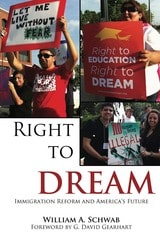
cover of Right to DREAM: Immigration Reform and America’s Future

Right to DREAM

Immigration Reform and America’s Future

William A. Schwab

University of Arkansas Press, 2013
The DREAM Act, bipartisan legislation first introduced in Congress in 2001, would provide conditional residency for undocumented youth brought to the United States as children. It recognizes that undocumented youth have done nothing wrong and that they should be allowed to work, to go to school, and to travel. The bill makes college more affordable through in-state tuition and gives the undocumented a path to citizenship if they graduate from college or serve in the military. Congress has failed to pass the DREAM Act, and fourteen states have filled the gap by implementing their own laws and policies that provide educational benefits to undocumented students. Right to DREAM makes a compelling argument for the DREAM Act and comprehensive immigration reform. William A. Schwab explores the key issues surrounding this legislation: What are the issues that divide? What do the proponents and opponents of the DREAM Act argue? Is there a middle ground? Is compromise possible? Answering these questions, Schwab explains the legal issues surrounding the education of immigrant children, who immigrates and why, how four waves of immigration have shaped the nation, the effects of immigrants on the U.S. economy and culture, and the process of becoming an American. Schwab analyzes the DREAM Act, deferred action, and immigration policy. He weaves personal stories of undocumented youth throughout the book and advocates for the economic, political, and social benefits of the DREAM Act that would bring undocumented youth out of the shadows and into the mainstream of society.
[more]
cover of Risk Management and Political Culture

Risk Management and Political Culture

Sheila Jasanoff

Russell Sage Foundation, 1986

This unique comparative study looks at efforts to regulate carcinogenic chemicals in several Western democracies, including the United States, and finds marked national differences in how conflicting scientific interpretations and competing political interests are resolved. Whether risk issues are referred to expert committees without public debate or debated openly in a variety of forums, patterns of interaction among experts, policy makers, and the public reflect fundamental features of each country's political culture. "A provocative argument....Poses interesting questions for the sociology of science, especially science produced for public debate."—Contemporary Sociology A Volume in the Russell Sage Foundation's Social Science Frontiers Series
[more]
cover of Rivers by Design: State Power and the Origins of U.S. Flood Control

Rivers by Design

State Power and the Origins of U.S. Flood Control

Karen M. O Neill

Duke University Press, 2006

The United States has one of the largest and costliest flood control systems in the world, even though only a small proportion of its land lies in floodplains. Rivers by Design traces the emergence of the mammoth U.S. flood management system, which is overseen by the federal government but implemented in conjunction with state governments and local contractors and levee districts. Karen M. O’Neill analyzes the social origins of the flood control program, showing how the system initially developed as a response to the demands of farmers and the business elite in outlying territories. The configuration of the current system continues to reflect decisions made in the nineteenth century and early twentieth. It favors economic development at the expense of environmental concerns.

O’Neill focuses on the creation of flood control programs along the lower Mississippi River and the Sacramento River, the first two rivers to receive federal flood control aid. She describes how, in the early to mid-nineteenth century, planters, shippers, and merchants from both regions campaigned for federal assistance with flood control efforts. She explains how the federal government was slowly and reluctantly drawn into water management to the extent that, over time, nearly every river in the United States was reengineered. Her narrative culminates in the passage of the national Flood Control Act of 1936, which empowered the Army Corps of Engineers to build projects for all navigable rivers in conjunction with local authorities, effectively ending nationwide, comprehensive planning for the protection of water resources.

[more]
cover of Robert Clifton Weaver and the American City: The Life and Times of an Urban Reformer

Robert Clifton Weaver and the American City

The Life and Times of an Urban Reformer

Wendell E. Pritchett

University of Chicago Press, 2008

From his role as Franklin Roosevelt’s “negro advisor” to his appointment under Lyndon Johnson as the first secretary of Housing and Urban Development, Robert Clifton Weaver was one of the most influential domestic policy makers and civil rights advocates of the twentieth century. This volume, the first biography of the first African American to hold a cabinet position in the federal government, rescues from obscurity the story of a man whose legacy continues to affect American race relations and the cities in which they largely play out.

Tracing Weaver’s career through the creation, expansion, and contraction of New Deal liberalism, Wendell E. Pritchett illuminates his instrumental role in the birth of almost every urban initiative of the period, from public housing and urban renewal to affirmative action and rent control. Beyond these policy achievements, Weaver also founded racial liberalism, a new approach to race relations that propelled him through a series of high-level positions in public and private agencies working to promote racial cooperation in American cities. But Pritchett shows that despite Weaver’s efforts to make race irrelevant, white and black Americans continued to call on him to mediate between the races—a position that grew increasingly untenable as Weaver remained caught between the white power structure to which he pledged his allegiance and the African Americans whose lives he devoted his career to improving. 
[more]
cover of Routing the Opposition: Social Movements, Public Policy, and Democracy

Routing the Opposition

Social Movements, Public Policy, and Democracy

David S. Meyer

University of Minnesota Press, 2005

On one side are the policy makers, on the other, the movements and organizations that challenge public policy. Where and how the two meet is a critical juncture in the democratic process. Bringing together a distinguished group of scholars from several different disciplines in the social sciences, Routing the Opposition connects the substance and content of policies with the movements that create and respond to them. Local antidrug coalitions, the organic agriculture movement, worker's compensation reforms, veterans' programs, prison reform, immigrants' rights campaigns: these are some of the diverse areas in which the contributors to this volume examine the linkages between the practices, organization, and institutional logic of public policy and social movements. The authors engage such topics as the process of involving multiple stakeholders in policy making, the impact of overlapping social networks on policy and social movement development, and the influence of policy design on the increase or decline of civic involvement. Capturing both successes and failures, Routing the Opposition focuses on strategies and outcomes that both transform social movements and guide the development of public policy, revealing as well what happens when the very different organizational cultures of activists and public policy makers interact.
[more]