Results by title
64 books match the query 'Haiti' and 3 start with r
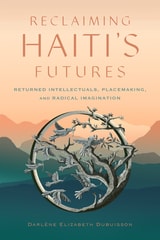
Reclaiming Haiti's Futures
Returned Intellectuals, Placemaking, and Radical ImaginationDarlène Elizabeth Dubuisson
Rutgers University Press, 2025
Winner of the 2024 Annual Book Award from the Society for Latin American and Caribbean Anthropology (SLACA)
Co-winner of the Isis Duarte Book Prize from the Latin American Studies Association
Haiti was once a beacon of Black liberatory futures, but now it is often depicted as a place with no future where emigration is the only way out for most of its population. But Reclaiming Haiti's Futures tells a different story. It is a story about two generations of Haitian scholars who returned home after particular crises to partake in social change. The first generation, called jenerasyon 86, were intellectuals who fled Haiti during the Duvalier dictatorship (1957–1986). They returned after the regime fell to participate in the democratic transition through their political leadership and activism. The younger generation, dubbed the jenn doktè, returned after the 2010 earthquake to partake in national reconstruction through public higher education reform. An ethnography of the future, the book explores how these returned scholars resisted coloniality's fractures and displacements by working toward and creating inhabitability or future-oriented places of belonging through improvisation, rasanblaj (assembly), and radical imagination. By centering on Haiti and the Caribbean, the book offers insights not just into the Haitian experience but also into how fractures have come to typify more aspects of life globally and what we might do about it.
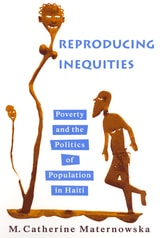
Reproducing Inequities
Poverty and the Politics of Population in HaitiMaternowska, M. Catherine
Rutgers University Press, 2006
Residents of Haiti-one of the poorest and most unstable countries in the world-face a grim reality of starvation, violence, lack of economic opportunity, and minimal health care. For years, aid organizations have sought to alleviate the problems by creating health and family planning clinics, including one modern (and, by local standards, luxurious) center in the heart of Cit Soleil. During its height of service in the 1980s and 1990s, the clinic boasted nineteen staff members, an array of modern contraceptives, an accessible location, and convenient hours-but very few clients.
Why did this initiative fail so spectacularly despite surveys finding that residents would like to have fewer children? Why don't poor women heed the message of family planning, when smaller families seem to be in their best interest? In Reproducing Inequities, M. Catherine Maternowska argues that we too easily overlook the political dynamics that shape choices about family planning. Through a detailed study of the attempt to provide modern contraception in the community of Cit Soleil, Maternowska demonstrates the complex interplay between local and global politics that so often thwarts well-intended policy initiatives.
Medical anthropologists, she argues, have an important role to play in developing new action plans for better policy implementation. Ethnographic studies in desperate, dangerous locations provide essential data that can point the way to solutions for the dilemmas of contraception in poor communities worldwide.
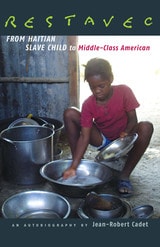
Restavec
From Haitian Slave Child to Middle-Class AmericanAn Autobiography by Jean-Robert Cadet
University of Texas Press, 1998
African slaves in Haiti emancipated themselves from French rule in 1804 and created the first independent black republic in the Western Hemisphere. But they reinstituted slavery for the most vulnerable members of Haitian society—the children of the poor—by using them as unpaid servants to the wealthy. These children were—and still are—restavecs, a French term whose literal meaning of "staying with" disguises the unremitting labor, abuse, and denial of education that characterizes the children's lives.
In this memoir, Jean-Robert Cadet recounts the harrowing story of his youth as a restavec, as well as his inspiring climb to middle-class American life. He vividly describes what it was like to be an unwanted illegitimate child "staying with" a well-to-do family whose physical and emotional abuse was sanctioned by Haitian society. He also details his subsequent life in the United States, where, despite American racism, he put himself through college and found success in the Army, in business, and finally in teaching.