62 books match the query 'Hawaii' and 3 start with r

cover of Raced to Death in 1920s Hawai i: Injustice and Revenge in the Fukunaga Case

Raced to Death in 1920s Hawai i

Injustice and Revenge in the Fukunaga Case

Jonathan Y. Okamura

University of Illinois Press, 2019
On September 18, 1928, Myles Yutaka Fukunaga kidnapped and brutally murdered ten-year-old George Gill Jamieson in Waikîkî. Fukunaga, a nineteen-year-old nisei, or second-generation Japanese American, confessed to the crime. Within three weeks, authorities had convicted him and sentenced him to hang, despite questions about Fukunaga's sanity and a deeply flawed defense by his court-appointed attorneys. Jonathan Y. Okamura argues that officials "raced" Fukunaga to death—first viewing the accused only as Japanese despite the law supposedly being colorblind, and then hurrying to satisfy the Haole (white) community's demand for revenge. Okamura sets the case against an analysis of the racial hierarchy that undergirded Hawai‘ian society, which was dominated by Haoles who saw themselves most threatened by the islands' sizable Japanese American community. The Fukunaga case and others like it in the 1920s reinforced Haole supremacy and maintained the racial boundary that separated Haoles from non-Haoles, particularly through racial injustice. As Okamura challenges the representation of Hawai i as a racial paradise, he reveals the ways Haoles usurped the criminal justice system and reevaluates the tense history of anti-Japanese racism in Hawai i.
[more]
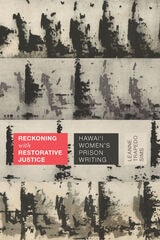
cover of Reckoning with Restorative Justice: Hawai'i Women's Prison Writing

Reckoning with Restorative Justice

Hawai'i Women's Prison Writing

Leanne Trapedo Sims

Duke University Press, 2023
In Reckoning with Restorative Justice, Leanne Trapedo Sims explores the experiences of women who are incarcerated at the Women’s Community Correctional Center, the only women’s prison in the state of Hawai‘i. Adopting a decolonial and pro-abolitionist lens, she focuses particularly on women’s participation in the Kailua Prison Writing Project and its accompanying Prison Monologues program. Trapedo Sims argues that while the writing project served as a vital resource for the inside women, it also remained deeply embedded within carceral logics at the institutional, state, and federal levels. She foregrounds different aspects of these programs, such as the classroom spaces and the dynamics that emerged between performers and audiences in the Prison Monologues. Blending ethnography, literary studies, psychological analysis, and criminal justice critique, Trapedo Sims centers the often-overlooked stories of incarcerated Native Hawaiian and Pacific Islander women in Hawai‘i in ways that resound with the broader American narrative: the disproportionate incarceration of people of color in the prison-industrial complex.
[more]
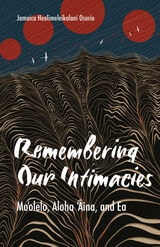
cover of Remembering Our Intimacies: Mo'olelo, Aloha 'Aina, and Ea

Remembering Our Intimacies

Mo'olelo, Aloha 'Aina, and Ea

Jamaica Heolimeleikalani Osorio

University of Minnesota Press, 2021

Recovering Kānaka Maoli (Native Hawaiian) relationality and belonging in the land, memory, and body of Native Hawai’i

Hawaiian “aloha ʻāina” is often described in Western political terms—nationalism, nationhood, even patriotism. In Remembering Our Intimacies, Jamaica Heolimeleikalani Osorio centers in on the personal and embodied articulations of aloha ʻāina to detangle it from the effects of colonialism and occupation. Working at the intersections of Hawaiian knowledge, Indigenous queer theory, and Indigenous feminisms, Remembering Our Intimacies seeks to recuperate Native Hawaiian concepts and ethics around relationality, desire, and belonging firmly grounded in the land, memory, and the body of Native Hawai’i.

Remembering Our Intimacies argues for the methodology of (re)membering Indigenous forms of intimacies. It does so through the metaphor of a ‘upena—a net of intimacies that incorporates the variety of relationships that exist for Kānaka Maoli. It uses a close reading of the moʻolelo (history and literature) of Hiʻiakaikapoliopele to provide context and interpretation of Hawaiian intimacy and desire by describing its significance in Kānaka Maoli epistemology and why this matters profoundly for Hawaiian (and other Indigenous) futures. 

Offering a new approach to understanding one of Native Hawaiians’ most significant values, Remembering Our Intimacies reveals the relationships between the policing of Indigenous bodies, intimacies, and desires; the disembodiment of Indigenous modes of governance; and the ongoing and ensuing displacement of Indigenous people.

[more]