Results by title
165 books match the query 'Health' and 12 start with r

RSF
The Russell Sage Foundation Journal of the Social Sciences: Beyond Deaths of Despair: New Research on the Health and Well-Being of Low- and Moderately-Educated AmericansAnne Case
Russell Sage Foundation, 2026
The term “deaths of despair” was coined in 2015 by economists Anne Case and Agnus Deaton to describe the increasing mortality rate for White Americans without college degrees due to drug overdoses, suicide, and alcoholic liver disease. These deaths were attributed to the despondency experienced by the White working class, who were left behind by changes in the American economy. However, the mortality picture has changed since then. Mortality rates are now rising among both Black and White Americans without a college degree. Nearly all major causes of death are increasing more, or decreasing less, for people without college degrees. The educational gap in mortality has become so severe that, in 2021, adult life expectancy was more than eight years higher among college graduates. In this double issue of RSF, Case, Deaton, sociologist Andrew J. Cherlin, and an interdisciplinary group of contributors move beyond the concept of “deaths of despair” to explore the widening educational gap in mortality.
Issue 1 provides new perspectives on the education gap in mortality as well as new viewpoints on the non-college population. Christopher L. Foote and colleagues show that much of the educational gap in mortality may be due to smoking. One of the most popular explanations for the growing mortality gap is that college unlocks better job opportunities. However, Sam Arenberg and Sam Stripling find that what may matter for longer life expectancy is not so much having a “good” job as having a job at all, as high school dropouts with jobs have lower mortality rates than college graduates without them. Victor Tan Chen and colleagues reveal that people with opioid use disorders experience “precarity chains:” overlapping, connected hazards that combine to put people at increased risk of substance abuse.
Issue 2 also gives new viewpoints on the non-college population and examines geographic and international variation in mortality. Grace Landrum-Hall and colleagues discover that men with health issues repeatedly enter and exit the formal labor force—referred to as “churning”—due to inflexible employer policies and income support program policies. Jennifer Karas Montez and colleagues show that rural areas and small cities have seen increases in mortality, while large urban areas have seen decreases. Iliya Gutin and colleagues find that the educational gap in health and wellbeing is typically larger in the U.S. than in Britian. This may be because education in the U.S.—and the resulting higher salaries—allows for more access to health-promoting resources.
This double issue of RSF provides fascinating insights into the stark and alarming mortality gap between those with and without a college degree in the U.S.
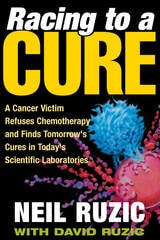
Racing to a Cure
A Cancer Victim Refuses Chemotherapy and Finds Tomorrow's Cures in Today's Scientific LaboratoriesNeil Ruzic
University of Illinois Press, 2003
Although chemotherapy harms the immune system and is increasingly demonstrated to be an ineffective long-term cure for the vast majority of cancers, it remains the standard treatment for most cancer patients. Ruzic, a former scientific magazine publisher and originator of a science center, refused to accept this status quo, and instead plunged into the world of cutting-edge treatments, exploring the frontiers of cancer science with revolutionary results.
Ruzic went on the offensive: visiting scores of laboratories, gathering information, talking to researchers, and effectively becoming his own patient-care advocate. This book presents his findings. A scathing critique of the chemotherapy culture as well as unscientific "alternative" therapies, the book endorses state-of-the-art molecularly based technologies, making it an illuminating and necessary read for anyone interested in cancer research, especially patients and their families and physicians.
Neil Ruzic was expected to die within two years of his initial diagnosis. Five years later he has been declared cancer-free and considers himself cured.
Radical Health
Unwellness, Care, and Latinx Expressive CultureJulie Avril Minich
Duke University Press, 2023
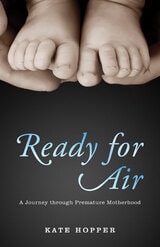
Ready for Air
A Journey through Premature MotherhoodKate Hopper
University of Minnesota Press, 2013
For Kate Hopper, pregnancy is downright unpleasant. She is tired and heavy and worried, and she wants her wine and caffeine back. But then, at a routine checkup, her doctor frowns at her chart and says, “I’m worried about a couple of things”—and unpleasant suddenly seems like paradise. What follows is a harrowing, poignant, and occasionally hysterical journey through premature motherhood, from the starting point of “leaking a little protein” to the early delivery of her tiny daughter because of severe preeclampsia and the beginning of a new chapter of frightful, lifelong love.
Half a million babies are born prematurely in the United States every year—almost one every minute—each with a unique story, and Hopper eloquently gives a voice to what their parents share: the shock, the scares, the lonely nights in the neonatal intensive care unit, the fierce attention to detail that makes for sanity and craziness, the light of faith, the warmth of family, and the terrifying attachment. Through it all runs the power of words to connect us to one another, as Hopper draws on her gifts as a writer first to help her navigate this uncertain territory and then to tell her story. With candor, grace, and a healthy dose of humor, she takes us into the final weeks of her pregnancy, the this-was-not-part-of-the-plan first weeks of little Stella’s life, and the isolated world she and her husband inhabited when they took their daughter home at the onset of a cold Minnesota winter. Finally, frankly, Hopper ventures into the complicated question of whether to have another child. Down-to-earth and honest about the hard realities of having a baby, as well as the true joys, Ready for Air is a testament to the strength of motherhood—and stories—to transform lives.
Realized Religion
Research on the Relationship between Religion and HealthTheodore J. Chamberlain
Templeton Press, 2001
Realized Religion includes research that investigates the impact of spirituality in health and healing, faith healing, religion and mental health, religion and life satisfaction, religion and mental disorders, religion and martial satisfaction, the effect of religion on suicide, and the effect of religion on alcohol use and abuse. This book documents over 300 scientific studies published by reputable scientific journals demonstrating that religion has an ameliorating effect on the survival rate of surgical patients, on depression and anxiety, on suicide rates, and on promotion of a healthy lifestyle.
Realized Religion presents useful and helpful information to researchers and scholars who seek to understand the subtle connection between healing and spirituality. It will be an invaluable resource for libraries and others interested in the emerging field of spirituality and healing.
Reinsuring Health
Why More Middle-Class People Are Uninsured and What Government Can DoKatherine Swartz
Russell Sage Foundation, 2006
Religion, Families, and Health
Population-Based Research in the United StatesEllison, Christopher G
Rutgers University Press, 2010
Remaking the Urban Social Contract
Health, Energy, and the EnvironmentEdited by Michael A. Pagano
University of Illinois Press, 2016
Contributors: Alba Alexander, Megan Houston, Dennis R. Judd, Cynthia Klein-Banai, William C. Kling, Howard A. Learner, David A. McDonald, David C. Perry, Emily Stiehl, Anthony Townsend, Natalia Villamizar-Duarte, and Moira Zellner.
Remission Quest
A Medical Sociologist Navigates CancerVirginia Adams O’Connell
Temple University Press, 2025
In the course of diagnosis, treatment, and recovery, Adams O’Connell lived through theories she had researched and applied her sociological ideas to help make sense of her personal experiences. Remission Quest chronicles how the reality of living with cancer changed her perspective on what she had studied. Adams O’Connell found her knowledge illustrated and enriched her sociological analysis of our medical institutions and that her own illness narrative shone new light on her theories.
With moving prose, Remission Quest captures the emotions of having cancer and dealing with elaborate medical systems, learning how to be a “good patient” while also managing indescribable fear and fatigue, and confronting questions about the meaning of life. Adams O’Connell’s experiences are both personal and universal. They provide inspiration, compassion, and understanding.
Revolutionary Medicine
Health and the Body in Post-Soviet CubaP. Sean Brotherton
Duke University Press, 2012
Rhetoric of Health and Medicine As/Is
Theories and Approaches for the FieldEdited by Lisa Melonçon, S. Scott Graham, Jenell Johnson, John A. Lynch, and Cynthia Ryan
The Ohio State University Press, 2020
With a foreword by Judy Segal and in sections that address interdisciplinary perspectives, representations of health and illness in online spaces, and health activism and advocacy, this volume proceeds in a unique format: essays tackle these key topic areas through case studies ranging from food and its relation to public health, to apps that track fertility, to mental health and disability, to racial disparities that exist in public health campaigns about sudden infant death syndrome (SIDS). The essays within each section are then followed by responses from prominent scholars in the rhetoric of health and medicine—including John Lyne, J. Blake Scott, and Lisa Keränen—who take on the central theme and discuss how the theory or concept under study can and should evolve in the next stages of research. Unifying the essays is a consideration of RHM as a theoretical construct guiding research and thinking alongside the conceptual parameters that constitute what RHM is and can be in practice. In asking questions about the role of rhetoric—both as analytic and productive framework—in health and medicine, this volume engages with broader theoretical and ethical concerns about our current healthcare system and how healthcare and medical issues circulate in all the social, cultural, economic, and political aspects of our world.