Results by title
883 books match the query 'Historical' and 24 start with r
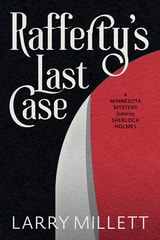
Rafferty's Last Case
A Minnesota Mystery featuring Sherlock HolmesLarry Millett
University of Minnesota Press, 2023
The ninth and final Minnesota mystery, in which Shadwell Rafferty, with the inimitable Sherlock Holmes, may have solved his own murder
Like many mysteries, this one begins with a murder. But in this case the victim happens to be the detective, on the verge of revealing the culprit in an earlier crime. Had Shadwell Rafferty identified his own murderer? When news of Rafferty’s death reaches Sherlock Holmes, in Chicago on the last leg of an American speaking tour, the world’s most famous detective and his redoubtable companion Watson rush to Minnesota to hunt for their friend’s killer.
Set amid the glittering society and sordid underworld of 1928 St. Paul, Larry Millett’s ninth and final Shadwell Rafferty mystery takes readers through the serpentine twists of Rafferty’s fatal investigation, even as Holmes, following in Rafferty’s tracks, may be closing in on the answer to both cases. This ingenious double mystery takes us to every corner of St. Paul, from the city’s most notorious speakeasy to a home for unwed mothers to the mansions of Summit Avenue, and at every turn we find another suspect: an ambitious mayor and his devoted fixer-in-chief, a heartless blackmailer and a police detective mired in city hall connections, a poet-turned-mystery writer with a suspicious coterie, and a priest hiding a terrible secret.
A mysterious woman in Minneapolis who makes certain illicit arrangements and a young man in possession of incriminating documents provide Holmes with vital clues that lead to a final confrontation with an exceptionally devious murderer worthy of the exceptionally devious plot that brings the Minnesota mystery series to a fitting and powerful conclusion.
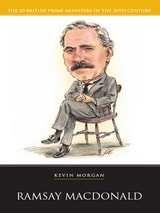
Ramsay Macdonald
Kevin Morgan
Haus Publishing, 2006
Receiving the Bible in faith
historical and theological exegesisDavid M. Williams
Catholic University of America Press, 2004
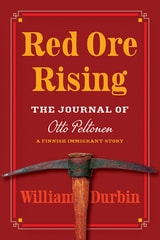
Red Ore Rising
The Journal of Otto Peltonen, a Finnish Immigrant StoryWilliam Durbin
University of Minnesota Press, 2026
A portrait of the Finnish immigrant experience in Minnesota during the early twentieth century
After journeying across the Atlantic with his mother and two sisters, young Otto Peltonen joins his father in the iron ore mines of northern Minnesota, experiencing the harsh labor conditions that were common at the time, as mining companies cared more about making a profit than for their workers’ safety. Writing in his journal about his family’s struggles and the hard life Finnish immigrants endured in the early twentieth century, Otto ultimately strengthens his resolve to find the freedom his family had first sought in America.
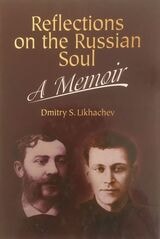
Reflections on the Russian Soul
A MemoirDmitry S. Likhachev
Central European University Press, 2000
This compelling and often traumatic book is the memoir of one of the most important figures in modern Russian history, Dmitry S. Likhachev, revered as ‘a guardian of national culture’. Reflections on the Russian Soul is an incredible account of an intellectual’s turbulent journey through twentieth century Russia. Likhachev re-counts the fortunes of people with whom he came into contact and reproduces the air of passed years in Russia.
Likhachev vividly portrays his childhood years in St. Petersburg and continues into his student life at Leningrad University that led to an agonizing period of imprisonment and near death. He describes how a harmless prank caught the attention of the Secret Police, resulting in his exile and confinement within the infamous prison island of Solovki. He describes his first-hand experience of brutality in prison during the early Stalin years and the incident that not only saved him but also haunted him for the rest of his life.
He reflects on the years after his release from prison and the events leading up to the Second World War. His powerful recollection of the blockade of Leningrad provides the reader with a horrific insight into the harsh effects of war, hunger and survival. Lichachev goes on to describe post-war Russia and how his own livelihood developed from literary editor to a return to Leningrad University as Professor of History. This compelling autobiography finishes with Likhachev’s poignant return to Solovki as a free man.
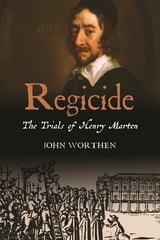
Regicide
The Trials of Henry MartenJohn Worthen
Haus Publishing, 2022
Henry Marten—soldier, member of parliament, organizer of the trial of Charles I, and signatory of the King’s death warrant—is today a neglected figure of the seventeenth century. Yet his life was both extraordinary and emblematic: he was at the fulcrum of English history during the turbulent years of the civil war, the protectorate, and the restoration. Imprisoned in the Tower of London and tried at the Old Bailey, Marten was found guilty of high treason, only to be held captive for years on the equivalent of death row. While he was in prison, his letters to his mistress Mary Ward were stolen and published in an attempt to destroy his reputation. Witty, clever, loving, sardonic, and never despairing, the letters offer a rare and extraordinary insight into the everyday life of a man in the Tower awaiting a sentence of death. The attempt to expose him as immoral revealed him instead as a tender and brave man. In John Worthen’s revelatory biography, Marten emerges from the shadows as a brilliantly clever, lively-minded man, free of the fundamentalist zeal so common in many of his republican contemporaries. Marten never abandoned his beliefs in equality, in a representative parliament under a constitution (which he had helped to write) without a monarch or a House of Lords, and in that way can be seen as a very modern man.
Remember This
Steve Adams
University of Wisconsin Press, 2022
John’s journey to understand the roots of his compulsion to “save” those around him is both aided and thwarted by his relationship with his colleague Jeremy Crawford. Alena’s closest confidant, Jeremy shares an intimacy with her that fuels John's jealousy. Meanwhile, Jeremy finds himself drawn to John and, as his confidant too, participates in the drama of John and Alena’s relationship. As John slowly begins to understand the flawed and wounded experience of love that has followed him through life, he learns how to open himself to true friendship—and to true loss. Set in the midst of cultural upheaval, this powerful novel reverberates across the decades.
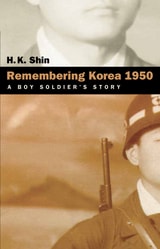
Remembering Korea 1950
A Boy Soldier's StoryH. K. Shin
University of Nevada Press, 2001
Remembering Leningrad
The Story of a GenerationMary McAuley
University of Wisconsin Press, 2019
Remembering Leningrad captures the story of a beautiful city and lifelong friendships. We follow McAuley as she walks through the streets downtown and examines politics in the 1960s, describes the hazards of furnishing an apartment in the 1990s, and learns about the challenges her friends have faced during these turbulent years. By weaving history and anecdotes to create a picture of Russia’s cultural center, McAuley underscores the impact of time and place on the Russian intelligentsia who lived through the transition from Soviet to post-Soviet life. The result is a remarkable group portrait of a generation.
Remembering the Holocaust
Michael E. Stevens
Wisconsin Historical Society Press, 1997
Rethinking Rights
Historical, Political, and Philosophical PerspectivesEdited by Bruce P. Frohnen and Kenneth L. Grasso
University of Missouri Press, 2008
Revolutionary Generation
Harvard Men and the Consequences of IndependenceConrad Edick Wright
University of Massachusetts Press, 2005
Conrad Edick Wright draws on extensive research on the classes that graduated from Harvard immediately before the start of the war to follow their members as they passed through life's common and predictable events from birth and childhood through youth to maturity, careers, marriage, the increasing civic and family responsibilities of midlife, old age, and death. He is also sensitive to his subjects' thoughts and feelings. Unusually articulate and frequently reflective, the men of the Harvard College classes of 1771 through 1774 often revealed their ambitions and concerns through their letters and diaries.
Revolutionary Generation provides the most sustained application of life course and life cycle analysis to be found in any study of late-eighteenth- or early-nineteenth-century America. At the same time, it shows on a personal level through the lives of its subjects many of the most important consequences of the War for Independence.
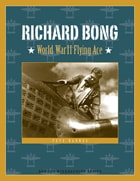
Richard Bong
World War II Flying AcePete Barnes
Wisconsin Historical Society Press, 2009
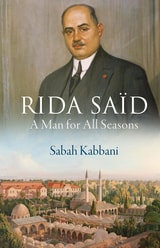
Rida Said
A Man for All SeasonsSabah Kabbani
Haus Publishing, 2018
Now available for the first time in English, Rida Saïd: A Man for All Seasons tells the story of this remarkable life at the heart of a nation in deep conflict. Indeed, Saïd’s story resonates profoundly today as the Syrian people struggle for a future of opportunity and respect.
Rim of Christendom
A Biography of Eusebio Francisco Kino, Pacific Coast PioneerHerbert Eugene Bolton; Foreword by John L. Kessell
University of Arizona Press, 1984
"This is truly an epic work, an absolute standard for any Southwestern collection."—Book Talk
Select maps from the 1984 edition of Rim of Christendom are now available online through the UA Campus Repository.

Riot
Mary Casanova
University of Minnesota Press, 2014
Based on actual events from 1989 in International Falls, Minnesota, Riot tells the story of sixth-grader Bryan, whose family becomes stressed when nonunion labor “rats” are hired by the local paper mill, leaving his father, a union worker, angry and out of a job. Tension erupts into daily fights at school and nightly acts of vandalism with no solution in sight. Already torn between his parents’ opposing viewpoints on how to handle the escalating situation, Bryan’s growing feelings for the daughter of a nonunion worker only complicate matters.
Bryan tries to understand the turmoil affecting his home and his town, but it is becomes harder and harder to separate his friends from his enemies. And when he witnesses a violent act that implicates his father, he must wrestle with family loyalty and telling the truth.
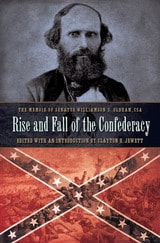
Rise and Fall of the Confederacy
The Memoir of Senator Williamson S. Oldham, CSAEdited & Intro by Clayton E. Jewett
University of Missouri Press, 2006
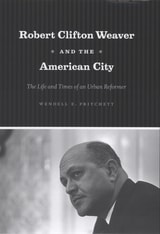
Robert Clifton Weaver and the American City
The Life and Times of an Urban ReformerWendell E. Pritchett
University of Chicago Press, 2008
Tracing Weaver’s career through the creation, expansion, and contraction of New Deal liberalism, Wendell E. Pritchett illuminates his instrumental role in the birth of almost every urban initiative of the period, from public housing and urban renewal to affirmative action and rent control. Beyond these policy achievements, Weaver also founded racial liberalism, a new approach to race relations that propelled him through a series of high-level positions in public and private agencies working to promote racial cooperation in American cities. But Pritchett shows that despite Weaver’s efforts to make race irrelevant, white and black Americans continued to call on him to mediate between the races—a position that grew increasingly untenable as Weaver remained caught between the white power structure to which he pledged his allegiance and the African Americans whose lives he devoted his career to improving.
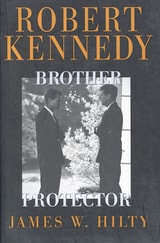
Robert Kennedy
Brother ProtectorJames Hilty
Temple University Press, 2000
The centerpiece of the book is the remarkable political partnership that formed between Robert and John. As the manager of John's political campaigns Robert proved himself "hard as nails" (in his father's admiring words), relentless in securing his brother's victory and unforgiving in overseeing his brother's presidency. Hilty marshals a great deal of evidence to show that while they did not always see eye to eye -- Lyndon Johnson's selection as John's running mate being a notable disagreement -- Robert and John discussed virtually every issue, gauging the likely political effects of every position. Robert was so close to the President that insiders called him "number one and a-half"; their consultations were so intimate that they spoke in a kind of code, barely intelligible to those around them. In Hilty's evocative but unsentimental recounting of the political crises of the Kennedy Administration, Robert and John prove to have been more calculating and astute leaders than today's pundits allow. Theirs was a partnership that was unprecedented and, thanks to an act signed into law by Lyndon Johnson, is never to be equaled.
The Kennedy family's story seems to have been lived in the public eye and Americans apparently never tire of the photographs and familiar anecdotes. Most of the written accounts, however, either highlight the multiple tragedies and scandals, preserve the latter-day Camelot myth, or follow the elusive traces of some conspiracy.
In contrast, Hilty's concern is for historical perspective -- for accuracy, plausibility, and thoroughness. With facts and reasoned conclusions, he challenges the stories about the Kennedys in relation to Marilyn Monroe, J. Edgar Hoover, and Martin Luther King, Jr. that have passed into American folklore. He develops a portrait of Robert Kennedy as a complex public figure, a man of centrist political allegiances and firm moral convictions who easily adapted to the crusader's role in working for Joseph McCarthy or pursuing James Hoffa for racketeering. Hilty's great care in sifting through the evidence and weighing competing theories gives us a sense of Kennedy as a public servant whose dedication to social justice intensified after he was in office and further deepened after his brother's assassination.
Even as he took charge of family matters and supported Jacqueline during the long ordeal of the state funeral, Robert's own crushing pain was evident to the world. It was then that "Bobby" ceased being a disparaging term and became a mark of respect and affection.

Rough-Water Man
Elwyn Blake'S Colorado River ExpeditionsRichard E. Westwood
University of Nevada Press, 2013
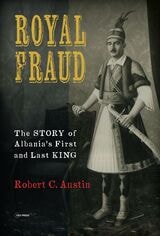
Royal Fraud
The Story of Albania’s First and Last KingRobert Austin
Central European University Press, 2024
Beginning its narrative in 1961, when Albanian King Zog I died in a Paris hospital after 22 years in exile, this book tells the colourful story of this Balkan country's first and only monarch. The road to becoming Europe's youngest president in 1925 and then king of Albania in 1928 was paved with feuds and assassinations, a political career-path common in the region. He craved the throne for several reasons; the Balkans were mostly run by kings, and Zog wanted to impress his mother and also give his six sisters an easy social rise.
Once king, his accomplishments were decidedly meagre. He spent most of his time keeping up appearances as a monarch despite the obvious fraud he had imposed on an illiterate and uninterested population. His one great success was that he had almost all his opponents assassinated, usually in broad daylight abroad.
Zog retained his power until his "friend" Mussolini ousted him in 1939. On the surface a Westernizer, this self-proclaimed ruler left Albania almost as he found it, with almost no roads or trains, thoroughly uneducated and utterly impoverished.
In his book, Robert Austin combines Zog’s adventurous life story with a studious analysis of Albania's political history from the fall of the Ottoman Empire to the threshold of Euro-Atlantic integration.
Rudolf
Marian Pankowski
Northwestern University Press, 1996
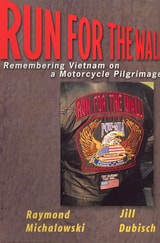
Run For The Wall
Remembering Vietnam on a Motorcycle PilgrimageMichalowski, Raymond J
Rutgers University Press, 2001
Every May, for more than a decade, an ever-increasing number of motorcyclists have made the “Run for the Wall,” a cross-country journey from Southern California to the “Wall,” the Vietnam war memorial in Washington, D.C. While the journey’s avowed purpose is political — to increase public awareness about those who remain either prisoners of war or missing in action in Southeast Asia — it also serves as a healing pilgrimage for its participants and as a “welcome-home” ritual many veterans feel they never received.
Run for the Wall is a highly readable ethnographic account of this remarkable American ritual. The authors, themselves motorcyclists as well as Run participants, demonstrate that the event is a form of secular pilgrimage. Here key concepts in American culture— “freedom,” and “brotherhood,” for example—are constructed and deployed in a variety of rituals and symbols to enable participants to come to terms with the consequences of the Vietnam war. While the focus is the journey itself, the book also explores other themes related to American culture and history, including the nature of community, the Vietnam war, and the creation of American secular ritual.
In moving, first-hand accounts, the book tells how participation in the POW-MIA social movement helps individuals find personal and collective meaning in America’s longest and most divisive conflict. Above all, this is a story of a uniquely American form of political action, ritual, pilgrimage, and the social construction of memory.
Ruta Tannenbaum
A NovelMiljenko Jergovic
Northwestern University Press, 2011
Using their shared Jewish heritage as a starting point, Jergovic constructs a fictional family history populated by historical figures with the precocious Ruta at the center. Stephen Dickey’s translation masterfully captures Jergovic´’s colloquial yet deeply observed style, which animates the tangled and troubled history of persecution and war in Croatia.