Results by title
668 books match the query 'History & Surveys' and 24 start with r
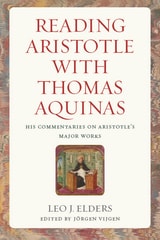
Reading Aristotle with Thomas Aquinas
His Commentaries on Aristotle's Major WorksLeo J. Elders
Catholic University of America Press, 2022
Reading Cusanus
Metaphor and Dialectic in a Conjectural UniverseClyde Lee Miller
Catholic University of America Press, 2019
Reason Fulfilled by Revelation
The 1930s Christian Philosophy Debates in FranceGregory B. Sadler
Catholic University of America Press, 2011
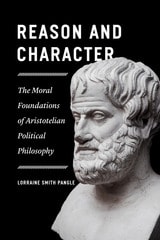
Reason and Character
The Moral Foundations of Aristotelian Political PhilosophyLorraine Smith Pangle
University of Chicago Press, 2020
A close and selective commentary on Aristotle’s Nicomachean Ethics, offering a novel interpretation of Aristotle’s teachings on the relation between reason and moral virtue.
What does it mean to live a good life or a happy life, and what part does reason play in the quest for fulfillment? Lorraine Smith Pangle shows how Aristotle’s arguments for virtue as the core of happiness and for reason as the guide to virtue emerge in response to Socrates’s paradoxical claim that virtue is knowledge and vice is ignorance.
Against Socrates, Aristotle does justice to the effectual truth of moral responsibility—that our characters do indeed depend on our own voluntary actions. But he also incorporates Socratic insights into the close interconnection of passion and judgment and the way passions and bad habits work not to overcome knowledge that remains intact but to corrupt the knowledge one thinks one has. Reason and Character presents fresh interpretations of Aristotle’s teaching on the character of moral judgment and moral choice, on the way reason finds the mean—especially in justice—and on the relation between practical and theoretical wisdom.
Reason, Revelation, and Metaphysics
Montague Brown
Catholic University of America Press, 2021
Recapitulations
Thomas Prufer
Catholic University of America Press, 2018

Reclaiming Truth
Contribution to a Critique of Cultural RelativismChristopher Norris
Duke University Press, 1996
Norris presents his case in a series of closely argued chapters that take issue with the relativist position. He attempts to rehabilitate the value of truth in philosophy of science by restoring a lost distinction between concept and metaphor and argues that theoretical discourse, so far from being an inconsequential activity, has very real consequences, particularly in ethics and politics. This debate has become skewed, he suggests, through the widespread and typically postmodern idea that truth-claims must always go along with a presumptive or authoritarian bid to silence opposing views. On the contrary, there is nothing as dogmatic—or as silencing—as a relativism that acknowledges no shared truth conditions for valid or responsible discourse. Norris also offers a timely reassessment of several thinkers—Althusser and Derrida among them—whose reception history has been distorted by the vagaries of short-term intellectual fashion.
Reclaiming Truth will be welcomed by readers concerned with the uses and abuses of theory at a time when such questions are in urgent need of sustained and serious debate.
Reconstructing Prehistory
Scientific Method in ArchaeologyJames Bell
Temple University Press, 1994
Reevaluating the method of scientific investigation, James A. Bell provides a bold philosophical framework for developing and assessing archaeologists' theories of the past. More informed and judicious decisions, the author asserts, are made when archaeologists explore questions such as:
•How can theories be formulated so that they increase understanding and provide insight, and are theories still useful when they do not?
•
How can theories be adjusted when anomalies are revealed?
•
How can theories be assessed against competing theories?
•
When should theories be abandoned, and when should they be pursued further?
With numerous examples from archaeology as well as comparative examples from the physical and biological sciences, Bell illustrates how exploring the answers to these and related inquiries will lead to improved formulation and testing of theories.
Reexamining Socrates in the Apology
Edited by Patricia Fagan and John Russon
Northwestern University Press, 2009
An oracle was reported to have said, "No one is wiser than Socrates." And in fact it was Socrates’ life’s work to interpret these words, which demanded and defined the practice of philosophy. Each of these original essays attends carefully to the specifics of the Apology, looking to its dramatic details, its philosophic teaching, and its complexity as a work of writing to bring into focus the "Socrates" of the Apology.
Overall, the contributors, distinguished scholars of ancient philosophy, share a belief in the unity of the letter and the spirit of Platonic philosophy: the conviction that the Platonic text cannot be reached except through reading and cannot be read except through thinking. In this way, the readings in this volume mirror Socrates’ own hermeneutical practice of uniting the demands of the mind and the demands of the text—the Socratic "examination." The result, true to the Socratic injunction that the unexamined life is not worth living, continues that practice of examination, here offering a reexamination of Socrates in the Apology.
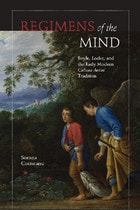
Regimens of the Mind
Boyle, Locke, and the Early Modern Cultura Animi TraditionSorana Corneanu
University of Chicago Press, 2011
Reinterpreting Galileo
William A. Wallace
Catholic University of America Press, 2018
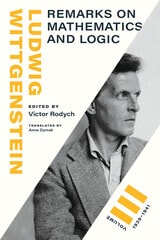
Remarks on Mathematics and Logic
Volume III, 1939–1941Ludwig Wittgenstein
University of Chicago Press, 0
The second of five planned volumes, this book collects Wittgenstein’s unabridged writings on mathematics and logic composed between 1939 and 1941.
In 1956, a significant but abridged portion of Ludwig Wittgenstein’s 1937–1944 writings for a continuation of what became Philosophical Investigations was published as Remarks on the Foundations of Mathematics. Now, in these five German-English facing-page volumes, the writings of Remarks on Mathematics and Logic are presented in full as Wittgenstein wrote them: in chronological order, without editorial omissions, selections, or rearrangements.
Volume III contains materials from 1939 to 1941, including previously unpublished—one manuscript and four manuscript parts—and one manuscript from which selections were made for previous abridgements.
The topics covered in this volume include surveyability and perspicuity in mathematics; Cantor and Gödel; Russellian logicism; geometrical cogency of proofs; consensus as part of the phenomenon of our calculating; rule-following and unwinding; consistency proofs; calculation as invention rather than discovery; superstitious fear of contradictions; why mathematicians cannot philosophize about mathematics; mathematical propositions are overdetermined; the idea of a mathematical reality; the connection between the sense of a mathematical proposition and its use; positioning a proposition in a system; an unproved mathematical proposition as the expression of a problem; the role of mathematical propositions in descriptions (of reality).
This edition will be the authoritative source for Wittgenstein’s writings in their original context.
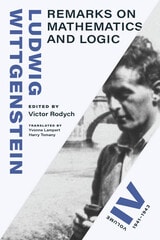
Remarks on Mathematics and Logic
Volume IV, 1941–1943Ludwig Wittgenstein
University of Chicago Press, 0
In 1956, a significant but abridged portion of Ludwig Wittgenstein’s 1937–1944 writings for a continuation of what became Philosophical Investigations was published as Remarks on the Foundations of Mathematics. Now, in the five German-English facing pages volumes of Remarks on Mathematics and Logic, these writings are presented in full as Wittgenstein wrote them: in chronological order, without editorial omissions, selections, or rearrangements.
Volume IV contains materials from 1941 to 1943, including one previously unpublished manuscript and three manuscripts from which selections were made for the previous abridgment. The topics covered in this volume include the philosophy of mathematics, mathematical foundationalism, surveyability in mathematics, language-games and proof-networks, Gödelian undecidability, pictures in mathematics, Cantorian diagonal proofs, applied mathematics without pure mathematics, and mathematics and chess, among others.
This German-English facing pages edition presents Wittgenstein’s writings in their original context—as Wittgenstein wrote them, in chronological order, and without editorial omissions, selections, or rearrangements.
Rereading Aristotle's Rhetoric
Edited by Alan G. Gross and Arthur E. Walzer
Southern Illinois University Press, 2000
In this collection edited by Alan G. Gross and Arthur E. Walzer, scholars in communication, rhetoric and composition, and philosophy seek to “reread” Aristotle’s Rhetoric from a purely rhetorical perspective. So important do these contributors find the Rhetoric, in fact, that a core tenet in this book is that “all subsequent rhetorical theory is but a series of responses to issues raised by the central work.”
The essays reflect on questions basic to rhetoric as a humanistic discipline. Some explore the ways in which the Rhetoric explicates the nature of the art of rhetoric, noting that on this issue, the tensions within the Rhetoric often provide a direct passageway into our own conflicts.
Rereading the Sophists
Classical Rhetoric RefiguredSusan C. Jarratt
Southern Illinois University Press, 1998
This book is a critically informed challenge to the traditional histories of rhetoric and to the current emphasis on Aristotle and Plato as the most significant classical voices in rhetoric. In it, Susan C. Jarratt argues that the first sophists—a diverse group of traveling intellectuals in the fifth century B.C.—should be given a more prominent place in the study of rhetoric and composition. Rereading the ancient sophists, she creates a new lens through which to see contemporary social issues, including the orality/literacy debate, feminist writing, deconstruction, and writing pedagogy.
The sophists’ pleasure in the play of language, their focus on historical contin-gency, and the centrality of their teaching for democratic practice were sufficiently threatening to their successors Plato and Aristotle that both sought to bury the sophists under philosophical theories of language. The censure of Plato and Aris-totle set a pattern for historical views of the sophists for centuries. Following Hegel and Nietzsche, Jarratt breaks the pattern, finding in the sophists a more progressive charter for teachers and scholars of reading and writing, as well as for those in the adjacent disciplines of literary criticism and theory, education, speech communication, and ancient history.
In tracing the historical interpretations of sophistic rhetoric, Jarratt suggests that the sophists themselves provide the outlines of an alternative to history-writing as the discovery and recounting of a set of stable facts. She sees sophistic use of narrative in argument as a challenge to a simple division between orality and literacy, current discussions of which virtually ignore the sophists. Outlining similarities between écriture féminine and sophistic style, Jarratt shows that contemporary feminisms have more in common with sophists than just a style; they share a rhetorical basis for deployment of theory in political action. In her final chapter, Jarratt takes issue with accounts of sophistic pedagogy focusing on technique and the development of the individual. She argues that, despite its employment by powerful demagogues, sophistic pedagogy offers a resource for today’s teachers interested in encouraging minority voices of resistance through language study as the practice of democracy.
Restoring Nature
Essays Thomistic Philosophy & TheologyMichael M. Waddell
St. Augustine's Press, 2023
Rethinking Objectivity
Allan Megill
Duke University Press, 1994
In diverse essays the authors provide fascinating studies of objectivity in such areas as anthropological research, corporate and governmental bureaucracies, legal discourse, photography, and the study and practice of the natural sciences. Taken together, Megill argues, this volume calls for developing a notion of "objectivities." The absolute sense of objectivity--that is, objectivity as a "God's eye view"—must be supplemented, and in part supplanted, by disciplinary, procedural, and dialectical senses of objectivity. This book will be of great interest to a broad range of scholars as it presents current thinking on a topic of fundamental concern across the disciplines in the humanities and social sciences.
Contributors. Barry Barnes, Dagmar Barnouw, Lorraine Code, Lorraine Daston, Johannes Fabian, Kenneth J. Gergen, Mary E. Hawkesworth, Barbara Herrnstein Smith, Evelyn Fox Keller, George Levine, Allan Megill, Peter Miller, Andy Pickering, Theodore M. Porter
Retracing the Platonic Text
John Russon and John Sallis
Northwestern University Press, 1999
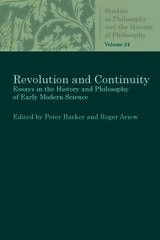
Revolution and Continuity
Peter Barker
Catholic University of America Press, 2018
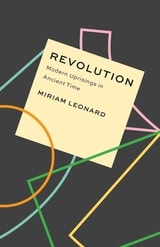
Revolution
Modern Uprisings in Ancient TimeMiriam Leonard
University of Chicago Press, 2025
Despite its Latin etymology, “revolution” in its modern understanding arguably did not exist in antiquity, and revolution as we know it today is considered by many theorists to be a term born in modernity. While they certainly had times of momentous political upheaval, the Greeks and Romans tended to understand such events as part of a narrative of political continuity rather than novelty or rupture. Nevertheless, modern revolutions have repeatedly appropriated tropes of classical discourse, such as freedom, tyranny, tragedy, and fraternity.
With this book, Miriam Leonard offers a conceptual history of revolution, unraveling modernity’s yearning for the new and questioning why ancient concepts continue to play such an important role in political uprisings. Leonard looks at examples of appeals to antiquity during the French and Haitian Revolutions, in anticolonial struggles, and feminist and queer movements and considers works of theorists such as Karl Marx, Hannah Arendt, and Sigmund Freud that foreground an engagement with antiquity.

Rhetoric in Tooth and Claw
Animals, Language, SensationDebra Hawhee
University of Chicago Press, 2017
Yet when you look at ancient and early modern treatises on rhetoric, what you find is surprising: they’re crawling with animals. With Rhetoric in Tooth and Claw, Debra Hawhee explores this unexpected aspect of early thinking about rhetoric, going on from there to examine the enduring presence of nonhuman animals in rhetorical theory and education. In doing so, she not only offers a counter-history of rhetoric but also brings rhetorical studies into dialogue with animal studies, one of the most vibrant areas of interest in humanities today. By removing humanity and human reason from the center of our study of argument, Hawhee frees up space to study and emphasize other crucial components of communication, like energy, bodies, and sensation.
Drawing on thinkers from Aristotle to Erasmus, Rhetoric in Tooth and Claw tells a new story of the discipline’s history and development, one animated by the energy, force, liveliness, and diversity of our relationships with our “partners in feeling,” other animals.
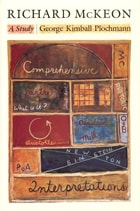
Richard McKeon
A StudyGeorge Kimball Plochmann
University of Chicago Press, 1990
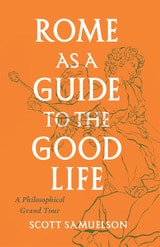
Rome as a Guide to the Good Life
A Philosophical Grand TourScott Samuelson
University of Chicago Press, 2023
This is a guidebook to Rome for those interested in both la dolce vita and what the ancient Romans called the vita beata—the good life. Philosopher Scott Samuelson offers a thinker’s tour of the Eternal City, rooting ideas from this philosophical tradition within the geography of the city itself. As he introduces the city’s great works of art and its most famous sites—the Colosseum, the Forum, the Campo de’ Fiori—Samuelson also gets to the heart of the knotty ethical and emotional questions they pose. Practicing philosophy in place, Rome as a Guide to the Good Life tackles the profound questions that most tours of Rome only bracket. What does all this history tell us about who we are?
In addition to being a thoughtful philosophical companion, Samuelson is also a memorable tour guide, taking us on plenty of detours and pausing to linger over an afternoon Negroni, sample four classic Roman pastas, or explore the city’s best hidden gems. With Samuelson’s help, we understand why Rome has inspired philosophers such as Lucretius and Seneca, poets and artists such as Horace and Caravaggio, filmmakers like Fellini, and adventurers like Rosa Bathurst. This eclectic guidebook to Roman philosophy is for intrepid wanderers and armchair travelers alike—anyone who wants not just a change of scenery, but a change of soul.
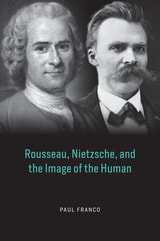
Rousseau, Nietzsche, and the Image of the Human
Paul Franco
University of Chicago Press, 2021
In Rousseau, Nietzsche, and the Image of the Human, Paul Franco examines the relationship between Jean-Jacques Rousseau and Friedrich Nietzsche, arguably the two most influential shapers and explorers of the moral and cultural imagination of late modernity. Both thinkers leveled radical critiques of modern life, but those critiques differed in important respects. Whereas Rousseau focused on the growing inequality of modern society and the hypocrisy, self-division, and loss of civic virtue it spawned, Nietzsche decried the democratic equality he identified with Rousseau and the loss of individual and cultural greatness it entailed. Franco argues, however, that Rousseau and Nietzsche are more than mere critics; they both put forward powerful alternative visions of how we ought to live. Franco focuses specifically on their views of the self and its realization, their understandings of women and the relation between the sexes, and their speculative conceptions of politics. While there are many similarities in their positive visions, Franco argues that it is the differences between them from which we have most to learn.