Results by title
115 books match the query 'Hungary' and 2 start with r
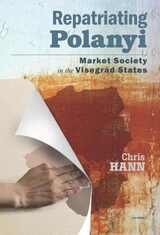
Repatriating Polanyi
Market Society in the Visegrád StatesChris Hann
Central European University Press, 2019
Karl Polanyi’s “substantivist” critique of market society has found new popularity in the era of neoliberal globalization. The author reclaims this polymath for contemporary anthropology, especially economic anthropology, in the context of Central Europe, where Polanyi (1886–1964) grew up. The Polanyian approach illuminates both the communist era, in particular the “market socialist” economy which evolved under János Kádár in Hungary, as well as the post-communist transformations of property relations, civil society and ethno-national identities throughout the region.
Hann’s analyses are based primarily on his own ethnographic investigations in Hungary and South-East Poland. They are pertinent to the rise of neo-nationalism in those countries, which is theorized as a malign countermovement to the domination of the market. At another level, Hann’s adaptation of Polanyi’s social philosophy points beyond current political turbulence to an original concept of “social Eurasia”.
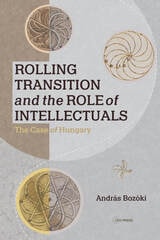
Rolling Transition and the Role of Intellectuals
The Case of HungaryAndrás Bozóki
Central European University Press, 2022
Utilizing a new and original framework for examining the role of intellectuals in countries transitioning to democracy, Bozóki analyses the rise and fall of dissident intellectuals in Hungary in the late 20th century. He shows how that framework is applicable to other countries too as he forensically examines their activities.
Bozóki argues that the Hungarian intellectuals did not become a ‘New Class’. By rolling transition, he means an incremental, non-violent, elite driven political transformation which is based on the rotation of agency, and it results in a new regime. This is led mainly by different groups of intellectuals who do not construct a vanguard movement but create an open network which might transform itself into different political parties. Their roles changed from dissidents to reformers, to movement organizers and negotiators through the periods of dissidence, open network building, roundtable negotiations, parliamentary activities, and new movement politics.
Through the prism of political sociology, the author focuses on the following questions: Who were the dissident intellectuals and what did they want? Under what conditions do intellectuals rebel and what are the patterns of their protest? This book will be of interest to students, researchers, and public intellectuals around the world aiming to promote human rights and democracy.