Results by title
102 books match the query 'Indians' and 3 start with r

Race and Ethnicity in Latin America
Peter Wade
Pluto Press, 2010
For over ten years, Race and Ethnicity in Latin America has been an essential text for students studying the region. This second edition adds new material and brings the analysis up to date.
Race and ethnic identities are increasingly salient in Latin America. Peter Wade examines changing perspectives on Black and Indian populations in the region, tracing similarities and differences in the way these peoples have been seen by academics and national elites. Race and ethnicity as analytical concepts are re-examined in order to assess their usefulness.
This book should be the first port of call for anthropologists and sociologists studying identity in Latin America.
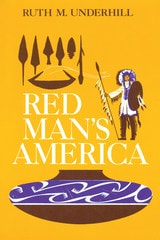
Red Man's America
A History of Indians in the United StatesRuth Murray Underhill
University of Chicago Press, 1971
The material Professor Underhill has gathered from the fields of archaeology, ethnology, and history, together with that drawn from her own experience in the United States Indian Service, produces a fascinating narrative. Red Man's America is an important contribution to our heritage of Indian life and lore.
"A work for which both sociologist and historian will be forever grateful. The author has combined a long period of study with actual field work in the service of the Indian to produce a work that gives a brief, but well written and accurate, sketch of the origins, backgrounds, and customs of the various North American tribes. . . . There is no other modern single volume that contains as much information on the subject."—E.R. Vollmar, The Historical Bulletin
"Liveliness in style and illustration, together with perspicacity in content, makes this book a useful introduction to the civilization of the original inhabitants of the land."—Pacific Historical Review
Romans in a New World
Classical Models in Sixteenth-Century Spanish AmericaDavid A. Lupher
University of Michigan Press, 2006
In the course of this debate, many Spaniards were inspired to think more deeply on their own ethnic ancestry and identity, as Spanish treatment of the New World natives awakened the slumbering memory of Roman treatment of the Iberian tribes whom modern Spaniards were now embracing as their truest ancestors. At the same time, growing awareness of the cultural practices--especially the religious rituals--of the American natives framed a new perspective on both the pre-Christian ancestors of modern Europeans and even on the survival of "pagan" customs among modern Europeans themselves. In this incisive study, David A. Lupher addresses the increasingly debated question of the impact the discovery of the New World had upon Europeans' perceptions of their identity and place in history.
Romans in a New World holds much to interest both classicists and students of the history and culture of early modern Europe--especially, though not exclusively, historians of Spain. David A. Lupher's concern with the ideology of imperialism and colonization and with cross-cultural negotiations will be useful to students of cultural studies, as well.
David A. Lupher is Professor of Classics, University of Puget Sound.