Results by title
174 books match the query 'Indigenous peoples' and 12 start with r
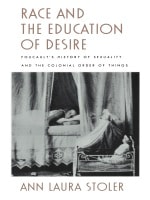
Race and the Education of Desire
Foucault's History of Sexuality and the Colonial Order of ThingsAnn Laura Stoler
Duke University Press, 1995
Drawing on Foucault’s little-known 1976 College de France lectures, Stoler addresses his treatment of the relationship between biopower, bourgeois sexuality, and what he identified as “racisms of the state.” In this critical and historically grounded analysis based on cultural theory and her own extensive research in Dutch and French colonial archives, Stoler suggests how Foucault’s insights have in the past constrained—and in the future may help shape—the ways we trace the genealogies of race.
Race and the Education of Desire will revise current notions of the connections between European and colonial historiography and between the European bourgeois order and the colonial treatment of sexuality. Arguing that a history of European nineteenth-century sexuality must also be a history of race, it will change the way we think about Foucault.
Racial Blackness and the Discontinuity of Western Modernity
Edited by Justin A. Joyce, Dwight A. McBride, and John Carlos Rowe
University of Illinois Press, 2013
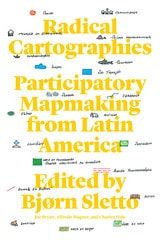
Radical Cartographies
Participatory Mapmaking from Latin AmericaEdited by Bjørn Sletto, Joe Bryan, Alfredo Wagner, and Charles Hale
University of Texas Press, 2020
Cartography has a troubled history as a technology of power. The production and distribution of maps, often understood to be ideological representations that support the interests of their developers, have served as tools of colonization, imperialism, and global development, advancing Western notions of space and place at the expense of Indigenous peoples and other marginalized communities. But over the past two decades, these marginalized populations have increasingly turned to participatory mapping practices to develop new, innovative maps that reassert local concepts of place and space, thus harnessing the power of cartography in their struggles for justice.
In twelve essays written by community leaders, activists, and scholars, Radical Cartographies critically explores the ways in which participatory mapping is being used by Indigenous, Afro-descendant, and other traditional groups in Latin America to preserve their territories and cultural identities. Through this pioneering volume, the authors fundamentally rethink the role of maps, with significant lessons for marginalized communities across the globe, and launch a unique dialogue about the radical edge of a new social cartography.
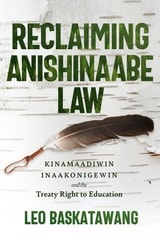
Reclaiming Anishinaabe Law
Kinamaadiwin Inaakonigewin and the Treaty Right to EducationLeo Baskatawang
University of Manitoba Press, 2023
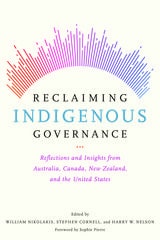
Reclaiming Indigenous Governance
Reflections and Insights from Australia, Canada, New Zealand, and the United StatesEdited by William Nikolakis, Stephen Cornell, and Harry W. Nelson; Foreword by Sophie Pierre and Gwen Phillips
University of Arizona Press, 2019
Indigenous governance is dynamic, an ongoing relationship between Indigenous peoples and settler-states. The relationship may be vigorously contested, but it is often fragile—one that ebbs and flows, where hard-won gains can be swiftly lost by the policy reversals of central governments. The legacy of colonial relationships continues to limit advances in self-government.
Yet Indigenous peoples in the CANZUS countries are no strangers to setbacks, and their growing movement provides ample evidence of resilience, resourcefulness, and determination to take back control of their own destiny. Demonstrating the struggles and achievements of Indigenous peoples, the chapter authors draw on the wisdom of Indigenous leaders and others involved in rebuilding institutions for governance, strategic issues, and managing lands and resources.
This volume brings together the experiences, reflections, and insights of practitioners confronting the challenges of governing, as well as researchers seeking to learn what Indigenous governing involves in these contexts. Three things emerge: the enormity of the Indigenous governance task, the creative agency of Indigenous peoples determined to pursue their own objectives, and the diverse paths they choose to reach their goal.
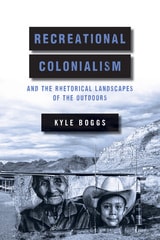
Recreational Colonialism and the Rhetorical Landscapes of the Outdoors
Kyle Boggs
The Ohio State University Press, 2025
In Recreational Colonialism and the Rhetorical Landscapes of the Outdoors, Kyle Boggs chronicles the struggle between Indigenous peoples who have rooted religious and cultural ties to outdoor sites across the US and elsewhere and the settlers who claim the right to freely recreate in those same places. Synthesizing theories of rhetoric, environmental studies, and settler colonialism, Boggs confronts the ways that settler colonial experiences and expectations have been narrated through rhetorical practices on these so-called public lands. Fusing journalism and personal narrative with scholarly research, Boggs’s argument comes to bear on his central case study of a northern Arizona ski development on a mountain held sacred by at least thirteen Indigenous tribes. In illuminating the striking ways that settler imaginaries are accommodated, performed, and sustained in the everyday, Boggs offers a powerful reminder that even during leisure activities (in this case, sports such as ultrarunning, rock climbing, and skiing), complex webs of power control who can access resources and land and who has the right to protect histories and cultures.
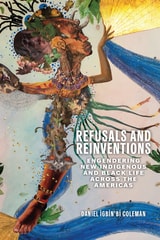
Refusals and Reinventions
Engendering New Indigenous and Black Life across the AmericasDaniel Ìgbín’bí Coleman
The Ohio State University Press, 2024
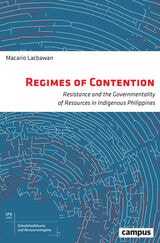
Regimes of Contention
Resistance and the Governmentality of Resources in Indigenous PhilippinesMacario Lacbawan
Campus Verlag, 2021
The notion of indigeneity in the Philippines is politically fraught. Most who live on the archipelago are descendants of aboriginal peoples, whether they claim tribal affiliation or not, and those who do enact traditional identities share little else in common. As a result, the term “indigenous” remains unstable and malleable seventy-five years after independence. Connecting insights from Tillian and Foucauldian social theory, Regimes illuminates how the ever-changing Philippine state, from the 1970s through today, constructs artificial subjectivities that Indigenous peoples must embody to access ancestral resources held by the federal government. What emerges is a lucid illustration of how governmentality is entangled with indigeneity in the Philippines.
Resurgent Voices in Latin America
Indigenous Peoples, Political Mobilization, and Religious ChangeCleary, Edward L.
Rutgers University Press, 2004
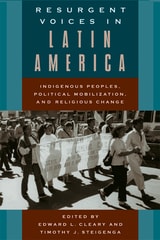
After more than 500 years of marginalization, Latin America’s forty million Indians have recently made major strides in gaining political recognition and civil rights. In this book, social scientists explore the important role of religion in indigenous activism, showing the ways that religion has strengthened indigenous identity and contributed to the struggle for indigenous rights in the region.
Drawing on case studies from Bolivia, Peru, Guatemala, Ecuador, Paraguay, and Mexico, the contributors explore four key questions. How have traditional religions interacted with Christianity to produce new practices and beliefs? What resources, motivations, and ideological legitimacies do religious institutions provide for indigenous social movements? How effective are these movements in achieving their goals? Finally, as new religious groups continue to compete for adherents in the region, how will individuals’ religious choices affect political outcomes?
Resurgent Voices in Latin America offers new insight into the dynamics of indigenous social movements and into the complex and changing world of Latin American religions. The essays show that religious beliefs, practices, and institutions have both affected and been affected by political activism.
Rewriting American Architecture
Contesting the Myths of National CultureEdited by Charles L. Davis II, Kathryn E. Holliday, and Joanna Merwood-Salisbury
University of Texas Press, 2026
A critical reassessment of nineteenth‑century American architecture that uncovers how race, settler colonialism, and contested national identities shaped the built environment and its historiography.
Rewriting American Architecture offers a revisionist riposte to the canonical story of nineteenth-century American architecture. Drawing on new archival research and revisionist historiography, the essays in this volume reveal how American architecture was shaped not by inevitable progress toward a unified national culture but by the turbulent realities of race, labor, settler colonialism, and territorial expansion. Rather than treating architecture as an apolitical aesthetic expression, the contributors expose it as an active arena in which the meanings of nationhood were constructed, contested, and often violently enforced. From Indigenous spatial practices and Black institutional building to transnational exchanges and the racial politics embedded in professionalization, this collection reframes the built environment as central to the competing cultural, political, and geographic claims that defined the United States during this period.
Rhetorical Mediator
Understanding Agency in Indigenous Translation and Interpretation through Indigenous Approaches to UXNora K. Rivera
Utah State University Press, 2023
In places where Indigenous language translation and interpretation are greatly needed, Indigenous language mediators often lack adequate systems to professionalize their field while withstanding Western practices that do not align with their worldviews. Through a “design thinking” methodology based on her work organizing and participating in an Indigenous-focused interpreter and translator conference, Rivera examines testimonios and semi-structured interviews conducted with Indigenous interpreters and translators to emphasize dialogue and desahogo (emotional release) as Indigenous communication practices.
The Rhetorical Mediator advocates for Indigenous language practices that have been sidelined by Western scholarship and systems, helping to create more equitable processes to directly benefit Indigenous individuals and other underrepresented groups. This book benefits specialists, including UX researchers, technical and professional communicators, interpreters and translators, and Indigenous professionals, as well as academics teaching graduate and undergraduate methods, Indigenous rhetoric and translation, and UX courses.
Rising Up, Living On
Re-Existences, Sowings, and Decolonial CracksCatherine E. Walsh
Duke University Press, 2023