Results by title
748 books match the query 'Influence' and 35 start with r
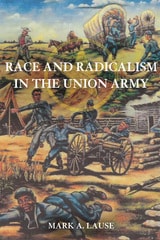
Race and Radicalism in the Union Army
Mark A. Lause
University of Illinois Press, 2013
In this compelling portrait of interracial activism, Mark A. Lause documents the efforts of radical followers of John Brown to construct a triracial portion of the Federal Army of the Frontier. Mobilized and inspired by the idea of a Union that would benefit all, black, Indian, and white soldiers fought side by side, achieving remarkable successes in the field. Against a backdrop of idealism, racism, greed, and the agonies and deprivations of combat, Lause examines links between radicalism and reform, on the one hand, and racialized interactions among blacks, Indians, and whites, on the other.
Lause examines how this multiracial vision of American society developed on the Western frontier. Focusing on the men and women who supported Brown in territorial Kansas, Lause examines the impact of abolitionist sentiment on relations with Indians and the crucial role of nonwhites in the conflict. Through this experience, Indians, blacks, and whites began to see their destinies as interdependent, and Lause discusses the radicalizing impact of this triracial Unionism upon the military course of the war in the upper Trans-Mississippi.
The aftermath of the Civil War destroyed much of the memory of the war in the West, particularly in the Indian Territory (now Oklahoma). The opportunity for an interracial society was quashed by the government's willingness to redefine the lucrative field of Indian exploitation for military and civilian officials and contractors.
Assessing the social interrelations, ramifications, and military impact of nonwhites in the Union forces, Race and Radicalism in the Union Army explores the extent of interracial thought and activity among Americans in this period and greatly expands the historical narrative on the Civil War in the West.
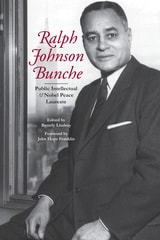
Ralph Johnson Bunche
Public Intellectual and Nobel Peace LaureateEdited by Beverly Lindsay; Foreword by John Hope Franklin
University of Illinois Press, 2007
Nobel Peace Prize winner Ralph Johnson Bunche (1904-71) was one of the twentieth century’s foremost diplomats and intellectuals. In the wake of centennial celebrations of his birth, leading scholars and diplomats assess Bunche’s historical importance and enduring impact on higher education, public policy, and international politics. Their essays reveal not only the breadth of Bunche’s influence, such as his United Nations work to broker peace during times of civil war in Africa, the Middle East, and Asia, but also the depth of his intellectual perspectives on race, civil rights, higher education, and international law. Probing his publications, speeches, and public policy initiatives, the volume offers telling insights into the critical roles of universities, public intellectuals, and diplomats in working together to find solutions to domestic and international problems through public and scholarly engagement. In this way, the volume highlights the very connections that Bunche exhibited as an academic, intellectual, and diplomat.
Contributors include Lorenzo DuBois Baber, John Hope Franklin, Jonathan Scott Holloway, Charles P. Henry, Ben Keppel, Beverly Lindsay, Princeton Lyman, Edwin Smith, and Hanes Walton Jr.
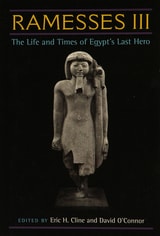
Ramesses III
The Life and Times of Egypt's Last HeroEdited by Eric H. Cline and David O'Connor
University of Michigan Press, 2012
Reaction to World News Events and the Influence of Mass Media in an Indian Village
Thomas Poffenberger and Shirley B. Poffenberger
University of Michigan Press, 1971
Reading after Actium
Vergil's Georgics, Octavian, and RomeChristopher Nappa
University of Michigan Press, 2005
Reading after Actium is a study of Vergil's Georgics, a didactic poem ostensibly about farming but in fact a brilliant exercise challenging readers to develop a broader perspective on the basic problems and the dangers of human life. Octavian is treated as one of the poet's students and given the opportunity to learn lessons in handling power, in controlling Rome's vast resources, and in preventing the bloody cycle of civil war from beginning again. Most of all the Georgics asks Octavian to consider what is involved in assuming godlike power over his fellow citizens.
Reading after Actium provides an introduction to the history of scholarship surrounding the Georgics and the political questions surrounding Octavian and his career. Nappa gives a book by book analysis of the entire poem, and a conclusion that draws together the themes of the whole. Reading after Actium will appeal to students and critics of Vergil and other Augustan Literature as well as those of didactic poetry and its traditions. Students of Roman history and politics should read this as well.
Christopher Nappa is Assistant Professor of Classics at the University of Minnesota.
Realizing Metaphors
Alexander Pushkin and the Life of the PoetDavid M. Bethea
University of Wisconsin Press, 1998
Readers often have regarded with curiosity the creative life of the poet. In this passionate and authoritative new study, David Bethea illustrates the relation between the art and life of nineteenth-century poet Alexander Pushkin, the central figure in Russian thought and culture. Bethea shows how Pushkin, on the eve of his two-hundredth birthday, still speaks to our time. He indicates how we as modern readers might "realize"— that is, not only grasp cognitively, but feel, experience—the promethean metaphors central to the poet's intensely "sculpted" life. The Pushkin who emerges from Bethea's portrait is one who, long unknown to English-language readers, closely resembles the original both psychologically and artistically.
Bethea begins by addressing the influential thinkers Freud, Bloom, Jakobson, and Lotman to show that their premises do not, by themselves, adequately account for Pushkin's psychology of creation or his version of the "life of the poet." He then proposes his own versatile model of reading, and goes on to sketches the tangled connections between Pushkin and his great compatriot, the eighteenth-century poet Gavrila Derzhavin. Pushkin simultaneously advanced toward and retreated from the shadow of his predecessor as he created notions of poet-in-history and inspiration new for his time and absolutely determinative for the tradition thereafter.
Reconstructing Dixie
Race, Gender, and Nostalgia in the Imagined SouthTara McPherson
Duke University Press, 2003
Illuminating crucial connections between understandings of race, gender, and place on the one hand and narrative and images on the other, McPherson reads a number of representations of the South produced from the 1930s to the present. These are drawn from fiction, film, television, southern studies scholarship, popular journalism, music, tourist sites, the internet, and autobiography. She examines modes of affect or ways of "feeling southern" to reveal how these feelings, along with the narratives and images she discusses, sanction particular racial logics. A wide-ranging cultural studies critique, Reconstructing Dixie calls for vibrant new ways of thinking about the South and for a revamped and reinvigorated southern studies.
Reconstructing Dixie will appeal to scholars in American, southern, and cultural studies, and to those in African American, media, and women’s studies.
Reconstructing Tascalusa's Chiefdom
Pottery Styles and the Social Composition of Late Mississippian Communities along the Alabama RiverAmanda L. Regnier
University of Alabama Press, 2014
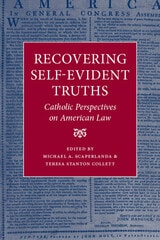
Recovering Self-Evident Truths
Catholic Perspectives on American LawMichael A. Scaperlanda
Catholic University of America Press, 2007
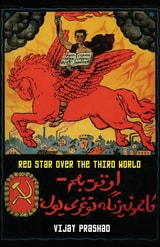
Red Star Over the Third World
Vijay Prashad
Pluto Press, 2019
From Cuba to Vietnam, China to South Africa, the October Revolution of 1917 inspired millions of people beyond the territory of Russia. It proved that the masses could not only overthrow autocratic governments, but that they could also form an opposing government in their own image.
The new idea that the working class and the peasantry could be allied, combined with the clear strength and necessity of a vanguard party, guided multiple revolutions across the globe. Here is much-needed antidote to all the glum histories written on the demise of the Soviet Union. Vijay Prashad throws a spotlight on the way the Russian Revolution was seen and received in the countries colonized by European empires. With Russia as an inspiration and providing support, suddenly workers and peasants, those left out of capitalist prosperity, organized and attempted to create for themselves real socialist revolution. Prashad’s chapters include:
*Eastern Graves
*Red October
*Follow the Path of the Russians
*The Lungs of Russia
*Soviet Asia
*Enemy of Imperialism
*Eastern Marxism
*Colonial Fascism
*Polycentric Communism
*Memories of Communism
The author writes in this Preface, “It has been a quarter-century since the demise of the USSR. And yet, the marks of the October Revolution remain—not just in the territories of the USSR but more so in what used to be known as the Third World. From Cuba to Vietnam, from China to South Africa, the October Revolution remains as an inspiration. After all, that Revolution proved that the working class and the peasantry could not only overthrow an autocratic government but it could form its own government.”
This book explains the power of the October Revolution in the Global South. From Ho Chí Minh to Fidel Castro, reflections on polycentric communism, and collective memories of communism, it shows how, for a brief moment, another world was possible.

Rediscovering National Parks in the Spirit of John Muir
Michael Frome
University of Utah Press, 2015
As a journalist, advocate, and professor, Michael Frome has spent decades engaged with conservation topics and has taken particular interest in America’s national parks. He draws on this experience and knowledge to address what remains to be done in order to truly value and preserve these special places. Part memoir, part history, and part broadside against those who would diminish this heritage, Rediscovering National Parks in the Spirit of John Muir, through thoughtful reflections and ruminations, bears witness to the grandeur of our parks and to the need for a renewed sense of appreciation and individual responsibility for their care.
In recollections of his encounters and conversations with key people in national park history, Frome discusses park politics, conflicts between use and preservation, and impacts of commercialization. He proposes a dedicated return to the true spirit in which the parks were established, in the manner of John Muir. He advocates maintaining these lands as wild sanctuaries, places where we can find inspiration, solitude, silence, balance, and simplicity, reminding us why we must preserve our national treasures and why we need to connect with the deeper values they hold.
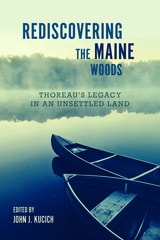
Rediscovering the Maine Woods
Thoreau's Legacy in an Unsettled LandJohn J. Kucich
University of Massachusetts Press, 2019
Inspired partly by this expedition, the accessible and engaging essays here offer valuable new perspectives on conservation, the cultural ties that connect Native communities to the land, and the profound influence the geography of the Maine Woods had on Thoreau and writers and activists who followed in his wake. Together, these essays offer a rich and multifaceted look at this special place and the ways in which Thoreau's Maine experiences continue to shape understandings of the environment a century and a half later.
Contributors include the volume editor, Kathryn Dolan, James S. Finley, James Francis, Richard W. Judd, Dale Potts, Melissa Sexton, Chris Sockalexis, Stan Tag, Robert M. Thorson, and Laura Dassow Walls.
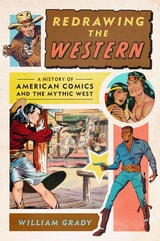
Redrawing the Western
A History of American Comics and the Mythic WestWilliam Grady
University of Texas Press, 2024
2025 Best Single Author Book, Midwest Popular Culture Association
2025 Longlist, Reading the West Book Award in Nonfiction, Mountains & Plains Independent Booksellers Association
A history of American Western genre comics and how they interacted with contemporaneous political and popular culture.
Redrawing the Western charts a history of the Western genre in American comics from the late 1800s through the 1970s and beyond. Encompassing the core years in which the genre was forged and prospered in a range of popular media, Grady engages with several key historical timeframes, from the origins of the Western in the nineteenth-century illustrated press; through fin de siècle anxieties with the closing of the frontier, and the centrality of cowboy adventure across the interwar, postwar, and high Cold War years; to the revisions of the genre in the wake of the Vietnam War and the Western’s continued vitality in contemporary comics storytelling.
In its study of stories about vengeance, conquest, and justice on the contested frontier, Redrawing the Western highlights how the “simplistic” conflicts common in Western adventure comics could disguise highly political undercurrents, providing young readers with new ways to think about the contemporaneous social and political milieu. Besides tracing the history, forms, and politics of American Western comics in and around the twentieth century, William Grady offers an original reassessment of the important role of comics in the development of the Western genre, ranking them alongside popular fiction and film in the process.
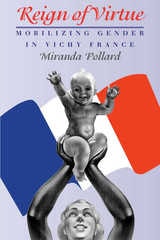
Reign of Virtue
Mobilizing Gender in Vichy FranceMiranda Pollard
University of Chicago Press, 1998
Drawing on governmental archives, historical texts, and propaganda, Pollard explores what most historians have ignored: the many ways in which Vichy's politicians used gendered images of work, family, and sexuality to restore and maintain political and social order. She argues that Vichy wanted to return France to an illustrious and largely mythical past of harmony, where citizens all knew their places and fulfilled their responsibilities, where order prevailed. The National Revolution, according to Pollard, replaced the ideals of liberty, equality, and fraternity with work, family, and fatherland, making the acceptance of traditional masculine and feminine roles a key priority. Pollard shows how Vichy's policies promoted the family as the most important social unit of a new France and elevated married mothers to a new social status even as their educational, employment, and reproductive rights were strictly curtailed.
Reimagining A Raisin in the Sun
Four New PlaysRebecca Ann Rugg
Northwestern University Press, 2012
Winner, 2011 Pulitzer Prize for Drama
Winner, 2012 Tony Award for Best Play
Winner, 1974 National Book Award for Philosophy and Religion
In 1959, Lorraine Hansberry’s A Raisin in the Sun energized the conversation about how Americans live together across lines of race and difference. In Reimagining “A Raisin in the Sun,” Rebecca Ann Rugg and Harvey Young bring together four contemporary plays—including 2011 Pulitzer Prize for Drama winner Clybourne Park—that, in their engagement with Hansberry’s play, illuminate the tensions and anxieties that still surround neighborhood integration.
Although the plays—Robert O’Hara’s Etiquette of Vigilance, Gloria Bond Clunie’s Living Green, Branden Jacobs-Jenkins’s Neighbors, and Bruce Norris’s Clybourne Park—are distinct from one another in terms of style and perspective on their predecessor, they commonly feature characters who are forced to closely examine, and sometimes revise or abandon, their ideas concerning race and their notions of social and economic justice. Above all, the plays use the lenses of neighborliness, privacy, and community to engage the large question of America’s common purpose. Each play is accompanied by an interview with the playwright about the influence of Hansberry’s landmark work. The afterword includes an interview with George C. Wolfe, whose play The Colored Museum laid the groundwork for the titles in this collection.
The conversation around A Raisin in the Sun has continued unabated since its premiere fifty years ago. Rugg and Young’s book will serve as a valuable resource to fans, scholars, and students alike.
Reinventing Cinema
Movies in the Age of Media ConvergenceTryon, Chuck
Rutgers University Press, 2009
Reinventing Cinema examines film culture at the turn of this century, at the precise moment when digital media are altering our historical relationship with the movies. Spanning multiple disciplines, Chuck Tryon addresses the interaction between production, distribution, and reception of films, television, and other new and emerging media.Through close readings of trade publications, DVD extras, public lectures by new media leaders, movie blogs, and YouTube videos, Tryon navigates the shift to digital cinema and examines how it is altering film and popular culture.
Religion, Media, and the Marketplace
Clark, Lynn Schofield
Rutgers University Press, 2007
Religion is infiltrating the arena of consumer culture in increasingly visible ways. We see it in a myriad of forms-in movies, such as Mel Gibson's The Passion of the Christ, on Internet shrines and kitschy Web "altars," and in the recent advertising campaign that attacked fuel-guzzling SUVs by posing the question: What would Jesus drive?
In Religion, Media, and the Marketplace, scholars in history, media studies, and sociology explore this intersection of the secular and the sacred. Topics include how religious leaders negotiate between the competing aims of the mainstream and the devout in the commercial marketplace, how politics and religious beliefs combine to shape public policy initiatives, how the religious "other" is represented in the media, and how consumer products help define the practice of different faiths.
At a time when religious fundamentalism in the United States and throughout the world is inseparable from political aims, this interdisciplinary look at the mutual influences between religion and the media is essential reading for scholars from a wide variety of disciplines.
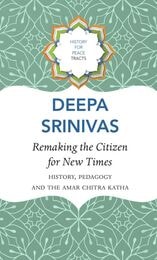
Remaking the Citizen for New Times
History, Pedagogy and the Amar Chitra KathaDeepa Sreenivas
Seagull Books, 2024
How does orthodoxy maintain its power over culture? In Remaking the Citizen for New Times, Deepa Sreenivas explores how the Amar Chitra Katha, a widely read comic series started in 1967 in India, influenced the historical and national consciousness of young readers in a conservative direction. Tacitly blaming Nehruvian welfarism of the time for the moral decline of the nation, the Amar Chitra Katha emerged as a literary articulation of the Indian right’s Hindu-nationalist ideology in a modern, bourgeois guise. To renew Hindutva hegemony, the comic series gave orthodox ideas a new sheen, both in its form and content, merging Western comic styles with Indian visual storytelling traditions on the one hand, and combining mythological characters with political figureheads into harmonious narratives on the other—making it difficult to sift history from myths and legends. Sreenivas deftly argues that these mythological-political tales emphasized the instructive rather than the informative potential of history, encouraging neoliberal values such as merit and hard work while ignoring caste or class as systemic issues.
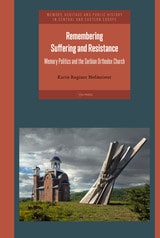
Remembering Suffering and Resistance
Memory Politics and the Serbian Orthodox ChurchKarin Roginer Hofmeister
Central European University Press, 2024
Assessing issues related to the Orthodox Church from an academic, secular point of view is a sensitive matter. However, by tracing and interpreting the engagement of the Serbian Church with the memory of Serbian heroic victimhood in World War II through a kind of “methodological agnosticism,” this volume has managed to tackle the subtle topic in a very delicate and value-neutral way. Arguing that the search for a collective memory is particularly urgent in the face of societal uncertainty and that religious institutions often use their memory potential to reaffirm their public relevance, the book examines the motivations, forms, strategies, and outcomes of a wide range of mnemonic activities the Serbian Orthodox Church engaged in following the upheavals caused by the collapse of Yugoslav socialism, the violent dissolution of the country, and the fall of the Milošević regime. These activities, taking place within the memory fields framed by the post-socialist, post-conflict, and post-secular horizons, took liturgical and non-liturgical forms, often involving a hybrid fusion of the two. As a result of this mnemonic endeavor, the author argues, the Church was successful in reasserting its power and legitimacy in the public sphere of post-2000 Serbia.
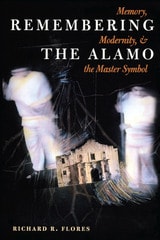
Remembering the Alamo
Memory, Modernity, and the Master SymbolBy Richard R. Flores
University of Texas Press, 2002
"Remember the Alamo!" reverberates through Texas history and culture, but what exactly are we remembering? Over nearly two centuries, the Mexican victory over an outnumbered band of Alamo defenders has been transformed into an American victory for the love of liberty. Why did the historical battle of 1836 undergo this metamorphosis in memory and mythology to become such a potent master symbol in Texan and American culture?
In this probing book, Richard Flores seeks to answer that question by examining how the Alamo's transformation into an American cultural icon helped to shape social, economic, and political relations between Anglo and Mexican Texans from the late nineteenth to the mid-twentieth centuries. In the first part of the book, he looks at how the attempts of heritage society members and political leaders to define the Alamo as a place have reflected struggles within Texas society over the place and status of Anglos and Mexicans. In the second part, he explores how Alamo movies and the transformation of Davy Crockett into an Alamo hero/martyr have advanced deeply racialized, ambiguous, and even invented understandings of the past.
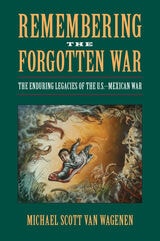
Remembering the Forgotten War
The Enduring Legacies of the U.S.-Mexican WarMichael Scott Van Wagenen
University of Massachusetts Press, 2012
On February 2, 1848, representatives of the United States and Mexico signed the Treaty of Guadalupe Hidalgo, officially ending hostilities between the two countries and ceding over one-half million square miles of land to the northern victors. In Mexico, this defeat has gradually moved from the periphery of dishonor to the forefront of national consciousness. In the United States, the war has taken an opposite trajectory, falling from its once-celebrated prominence into the shadowy margins of forgetfulness and denial.
Why is the U.S.–Mexican War so clearly etched in the minds of Mexicans and so easily overlooked by Americans? This book investigates that issue through a transnational, comparative analysis of how the tools of collective memory—books, popular culture, historic sites, heritage groups, commemorations, and museums—have shaped the war's multifaceted meaning in the 160 years since it ended. Michael Van Wagenen explores how regional, ethnic, and religious differences influence Americans and Mexicans in their choices of what to remember and what to forget. He further documents what happens when competing memories clash in a quest for dominance and control.
In the end, Remembering the Forgotten War addresses the deeper question of how remembrance of the U.S.–Mexican War has influenced the complex relationship between these former enemies now turned friends. It thus provides a new lens through which to view today's cross-border rivalries, resentments, and diplomatic pitfalls.
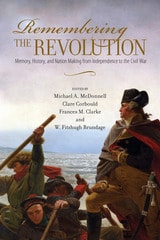
Remembering the Revolution
Memory, History, and Nation Making from Independence to the Civil WarMichael A. McDonnell
University of Massachusetts Press, 2013
In today's United States, the legacy of the American Revolution looms large. From presidential speeches to bestselling biographies, from conservative politics to school pageants, everybody knows something about the Revolution. Yet what was a messy, protracted, divisive, and destructive war has calcified into a glorified founding moment of the American nation. Disparate events with equally diverse participants have been reduced to a few key scenes and characters, presided over by well-meaning and wise old men.
Recollections of the Revolution did not always take today's form. In this lively collection of essays, historians and literary scholars consider how the first three generations of American citizens interpreted their nation's origins. The volume introduces readers to a host of individuals and groups both well known and obscure, from Molly Pitcher and “forgotten father” John Dickinson to African American Baptists in Georgia and antebellum pacifists. They show how the memory of the Revolution became politicized early in the nation's history, as different interests sought to harness its meaning for their own ends. No single faction succeeded, and at the outbreak of the Civil War the American people remained divided over how to remember the Revolution.
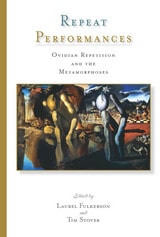
Repeat Performances
Ovidian Repetition and the <i>Metamorphoses<i/>Edited by Laurel Fulkerson and Tim Stover
University of Wisconsin Press, 2016
A shared vision of the possibilities of Latin epic poetry unites the essays, as does a series of attempts to realize those opportunities. Some of the pieces represent a traditional vein of allusion and intertextuality; others are more innovative in their approaches. Each, in a sense, stands as a placeholder for a methodology of theorizing the repetitive practices of poetry, of epic, and of Ovid in particular.
Contributors: Antony Augoustakis, Neil W. Bernstein, Barbara Weiden Boyd, Andrew Feldherr, Peter Heslin, Stephen Hinds, Sharon L. James, Alison Keith, Peter E. Knox, Darcy Krasne
Rereading the Renaissance
Petrarch, Augustine, and the Language of HumanismCarol Everhart Quillen
University of Michigan Press, 1998
Carol Quillen argues that the essential role of Augustine's words and authority in the expression of Petrarch's humanism is best grasped through a study of the complex textual practices exemplified in the writings of both men. Petrarch's reliance on Augustine is most evident in his ways of reading and in his strategies of argument. Secondly, she maintains that Petrarch's appropriation of Augustine's words is only intelligible in light of his struggle to legitimate his cultural ideals in the face of compelling opposition. Finally, Quillen shows how Petrarch's uses of Augustine can simultaneously uphold his humanist ideals and challenge the legitimacy of the assumptions on which those ideals were founded.
Interdisciplinary in scope and method, this volume speaks to important debates that span the humanities. Scholars of literary and historical studies, as well as those in the fields of classical studies, patristics, and comparative literature, will find in Rereading the Renaissance a solid contribution to their interests.
Carol Everhart Quillen is Associate Professor of History, Rice University.
Restoring Nature
Essays Thomistic Philosophy & TheologyMichael M. Waddell
St. Augustine's Press, 2023
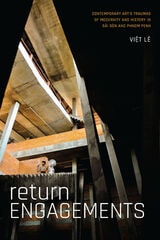
Return Engagements
Contemporary Art's Traumas of Modernity and History in Sài Gòn and Phnom PenhViet Lê
Duke University Press, 2021
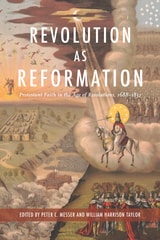
Revolution as Reformation
Protestant Faith in the Age of Revolutions, 1688–1832Edited by Peter C. Messer and William Harrison Taylor
University of Alabama Press, 2021
Essays that explore how Protestants responded to the opportunities and perils of revolution in the transatlantic age
Revolution as Reformation: Protestant Faith in the Age of Revolutions, 1688–1832 highlights the role that Protestantism played in shaping both individual and collective responses to revolution. These essays explore the various ways that the Protestant tradition, rooted in a perpetual process of recalibration and reformulation, provided the lens through which Protestants experienced and understood social and political change in the Age of Revolutions. In particular, they call attention to how Protestants used those changes to continue or accelerate the Protestant imperative of refining their faith toward an improved vision of reformed religion.
The editors and contributors define faith broadly: they incorporate individuals as well as specific sects and denominations, and as much of “life experience” as possible, not just life within a given church. In this way, the volume reveals how believers combined the practical demands of secular society with their personal faith and how, in turn, their attempts to reform religion shaped secular society.
The wide-ranging essays highlight the exchange of Protestant thinkers, traditions, and ideas across the Atlantic during this period. These perspectives reveal similarities between revolutionary movements across and around the Atlantic. The essays also emphasize the foundational role that religion played in people’s attempts to make sense of their world, and the importance they placed on harmonizing their ideas about religion and politics. These efforts produced novel theories of government, encouraged both revolution and counterrevolution, and refined both personal and collective understandings of faith and its relationship to society.
Rewriting Crusoe
The Robinsonade across Languages, Cultures, and MediaJakub Lipski
Bucknell University Press, 2020
Published by Bucknell University Press. Distributed worldwide by Rutgers University Press.
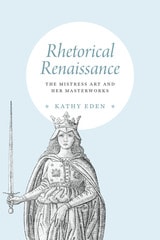
Rhetorical Renaissance
The Mistress Art and Her MasterworksKathy Eden
University of Chicago Press, 2022
Kathy Eden explores the intersection of early modern literary theory and practice. She considers the rebirth of the rhetorical art—resulting from the rediscovery of complete manuscripts of high-profile ancient texts about rhetoric by Plato, Aristotle, Cicero, Quintilian, and Tacitus, all unavailable before the early fifteenth century—and the impact of this art on early modern European literary production. This profound influence of key principles and practices on the most widely taught early modern literary texts remains largely and surprisingly unexplored.
Devoting four chapters to these practices—on status, refutation, similitude, and style—Eden connects the architecture of the most widely read classical rhetorical manuals to the structures of such major Renaissance works as Petrarch’s Secret, Castiglione’s Book of the Courtier, Erasmus’s Antibarbarians and Ciceronianus, and Montaigne’s Essays. Eden concludes by showing how these rhetorical practices were understood to work together to form a literary masterwork, with important implications for how we read these texts today.
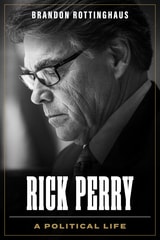
Rick Perry
A Political LifeBrandon Rottinghaus
University of Texas Press, 2024
How Rick Perry navigated and shaped Texas politics as the state’s longest serving governor.
Rick Perry, the charming rancher, pilot, and politician from West Texas who was governor from 2000 to 2015, is one of the most important but polarizing figures in the state's history. Over the nearly forty years he spent in the political arena, his political instincts served as a radar primed to sense future political opportunities. Hugging the arc of Texas political change, he shifted from a rural, “blue dog” Democrat to one of the most conservative politicians the state had elected up to that time, overseeing the enactment of controversial redistricting, voting, and abortion measures. Yet his evolution was complicated and incomplete, as his stands on such topics as immigration, vaccine requirements, and the use of state funds to attract business ran into opposition from a growing and ever-more conservative wing of the Republican Party in Texas—and the nation.
Rick Perry is both a biography of Perry as a politician and a study of the shifts in state politics that took place during his time in office. Demonstrating that Perry ranks among the most consequential governors in Texas history, Brandon Rottinghaus chronicles the profound ways he accumulated power and shaped the governorship.

Rimsky-Korsakov's Harmonic Theory
Practical Manual of Harmony, Its Sources, History, and TraditionsLarisa P. Jackson
University of North Texas Press, 2022

Riot Report and the News
How the Kerner Commission Changed Media Coverage of Black AmericaHrach Thomas J
University of Massachusetts Press, 0
Robert Frost and Feminine Literary Tradition
Karen L. Kilcup
University of Michigan Press, 1998
Robert Frost and the Challenge of Darwin
Robert Faggen
University of Michigan Press, 2001
Combining both intellectual history and detailed analysis of Frost's poems, Robert Faggen shows how Frost's reading of Darwin reflected the significance of science in American culture from Emerson and Thoreau, through James and pragmatism. He provides fresh and provocative readings of many of Frost's shorter lyrics and longer pastoral narratives as they illustrate the impact of Darwinian thought on the concept of nature, with particular exploration of man's relationship to other creatures, the conditions of human equality and racial conflict, the impact of gender and sexual differences, and the survival of religion.
The book shows that Frost was neither a pessimist lamenting the uncertainties of the Darwinian worldview, nor a humanist opposing its power. Faggen draws on Frost's unpublished notebooks to reveal a complex thinker who willingly engaged with the difficult moral and epistemological implications of natural science, and showed their consonance with myths and traditions stretching back to Milton, Lucretius, and the Old Testament. Frost emerges as a thinker for whom poetry was not only artistic expression, but also a forum for the trial of ideas and their impact on humanity.
Robert Frost and the Challenge of Darwin provides a deeper understanding not only of Frost and modern poetry, but of the meaning of Darwin in the modern world, the complex interrelations of literature and science, and the history of American thought.
"A forceful, appealing study of the Frost-Darwin relation, which has gone little noted by previous scholars, and a fresh explanation of Frost's ambivalent relation to modernism, which he scorned but also influenced" --William Howarth, Princeton University
Robert Faggen is Associate Professor of Literature, Claremont McKenna College and Adjunct Associate Professor, Claremont Graduate School.
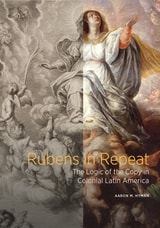
Rubens in Repeat
The Logic of the Copy in Colonial Latin AmericaAaron M. Hyman
J. Paul Getty Trust, The, 2021
Winner of the Latin American Studies Association's 2022 Best Book in Colonial Latin American Studies.
This book examines the reception in Latin America of prints designed by the Flemish artist Peter Paul Rubens, showing how colonial artists used such designs to create all manner of artworks and, in the process, forged new frameworks for artistic creativity.
Peter Paul Rubens (1577–1640) never crossed the Atlantic himself, but his impact in colonial Latin America was profound. Prints made after the Flemish artist’s designs were routinely sent from Europe to the Spanish Americas, where artists used them to make all manner of objects.
Rubens in Repeat is the first comprehensive study of this transatlantic phenomenon, despite broad recognition that it was one of the most important forces to shape the artistic landscapes of the region. Copying, particularly in colonial contexts, has traditionally held negative implications that have discouraged its serious exploration. Yet analyzing the interpretation of printed sources and recontextualizing the resulting works within period discourse and their original spaces of display allow a new critical reassessment of this broad category of art produced in colonial Latin America—art that has all too easily been dismissed as derivative and thus unworthy of sustained interest and investigation. This book takes a new approach to the paradigms of artistic authorship that emerged alongside these complex creative responses, focusing on the viceroyalties of New Spain and Peru in the seventeenth and eighteenth centuries. It argues that the use of European prints was an essential component of the very framework in which colonial artists forged ideas about what it meant to be a creator.