Results by title
593 books match the query 'Jews' and 20 start with r
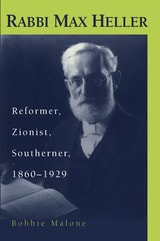
Rabbi Max Heller
Reformer, Zionist, Southerner, 1860-1929Barbara S. Malone
University of Alabama Press, 1997
Max Heller was a man of both passionate conviction and inner contradiction. He sought to be at the center of current affairs, not as a spokesperson of centrist opinion, but as an agitator or mediator, constantly struggling to find an acceptable path as he confronted the major issues of the day--racism and Jewish emancipation in eastern Europe, nationalism and nativism, immigration and assimilation. Heller's life experience provides a distinct vantage point from which to view the complexity of race relations in New Orleans and the South and the confluence of cultures that molded his development as a leader. A Bohemian immigrant and one of the first U.S.-trained rabbis, Max Heller served for 40 years as spiritual leader of a Reform Jewish congregation in New Orleans--at that time the largest city in the South. Far more than a congregational rabbi, Heller assumed an activist role in local affairs, Reform Judaism, and the Zionist movement, maintaining positions often unpopular with his neighbors, congregants, and colleagues. His deep concern for social justice led him to question two basic assumptions that characterized his larger social milieu--segregation and Jewish assimilation.
Heller, a consummate Progressive with clear vision and ideas substantially ahead of their time, led his congregation, his community, Reform Jewish colleagues, and Zionist sympathizers in a difficult era.
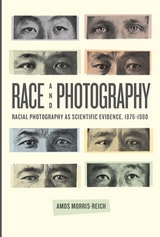
Race and Photography
Racial Photography as Scientific Evidence, 1876-1980Amos Morris-Reich
University of Chicago Press, 2015
Exploring the development of racial photography wherever it took place, including countries like France and England, Morris-Reich pays special attention to the German and Jewish contexts of scientific racism. Through careful reconstruction of individual cases, conceptual genealogies, and patterns of practice, he compares the intended roles of photography with its actual use in scientific argumentation. He examines the diverse ways it was used to establish racial ideologies—as illustrations of types, statistical data, or as self-evident record of racial signs. Altogether, Morris-Reich visits this troubling history to outline important truths about the roles of visual argumentation, imagination, perception, aesthetics, epistemology, and ideology within scientific study.
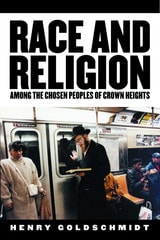
Race and Religion Among the Chosen People of Crown Heights
Goldschmidt, Henry
Rutgers University Press, 2006
In August of 1991, the Brooklyn neighborhood of Crown Heights was engulfed in violence following the deaths of Gavin Cato and Yankel Rosenbaum—a West Indian boy struck by a car in the motorcade of a Hasidic spiritual leader and an orthodox Jew stabbed by a Black teenager. The ensuing unrest thrust the tensions between the Lubavitch Hasidic community and their Afro-Caribbean and African American neighbors into the media spotlight, spurring local and national debates on diversity and multiculturalism. Crown Heights became a symbol of racial and religious division. Yet few have paused to examine the nature of Black-Jewish difference in Crown Heights, or to question the flawed assumptions about race and religion that shape the politics—and perceptions—of conflict in the community.
In Race and Religion among the Chosen Peoples of Crown Heights, Henry Goldschmidt explores the everyday realities of difference in Crown Heights. Drawing on two years of fieldwork and interviews, he argues that identity formation is particularly complex in Crown Heights because the neighborhood’s communities envision the conflict in remarkably diverse ways. Lubavitch Hasidic Jews tend to describe it as a religious difference between Jews and Gentiles, while their Afro-Caribbean and African American neighbors usually define it as a racial difference between Blacks and Whites. These tangled definitions are further complicated by government agencies who address the issue as a matter of culture, and by the Lubavitch Hasidic belief—a belief shared with a surprising number of their neighbors—that they are a “chosen people” whose identity transcends the constraints of the social world.
The efforts of the Lubavitch Hasidic community to live as a divinely chosen people in a diverse Brooklyn neighborhood where collective identities are generally defined in terms of race illuminate the limits of American multiculturalism—a concept that claims to celebrate diversity, yet only accommodates variations of certain kinds. Taking the history of conflict in Crown Heights as an invitation to reimagine our shared social world, Goldschmidt interrogates the boundaries of race and religion and works to create space in American society for radical forms of cultural difference.
Rachel's Daughters
Newly Orthodox Jewish WomenKaufman, Debra Renee
Rutgers University Press, 1991
Debra Kaufman writes about ba'alot teshuva women who have returned to Orthodox Judaism, a form of Judaism often assumed to be oppressive to women. She addresses many of the most challenging issues of family, feminism, and gender. Why, she asks, have these women chosen an Orthodox lifestyle? What attracts young, relatively affluent, well-educated, and highly assimilated women to the most traditional, right-wing, patriarchal, and fundamentalist branch of Judaism? The answers she discovers lead her beyond an analysis of religious renewal to those issues all women and men confront in public and private life.
Kaufman interviewed and observed 150 ba'alot teshuva. She uses their own stories, in their own words, to show us how they make sense of the choices they have made. Lamenting their past pursuit of individual freedom over social responsibility, they speak of searching for shared meaning and order, and finding it in orthodoxy.
The laws and customs of Orthodox Judaism have been formulated by men, and it is men who enforce those laws and control the Orthodox community. The leadership is dominated by men. But the women do not experience theologically-imposed subordination as we might expect. Although most ba'alot teshuva reject feminism or what they perceive as feminism, they maintain a gender consciousness that incorporates aspects of feminist ideology, and often use feminist rhetoric to explain their lives.
Kaufman does not idealize the ba'alot teshuva world. Their culture does not accommodate the non-Orthodox, the homosexual, the unmarried, the divorced. Nor do the women have the mechanisms or political power to reject what is still oppressive to them. They must live within the authority of a rabbinic tradition and social structure set by males. Like other religious right women, their choices reinforce authoritarian trends current in today's society. Rachel's Daughters provides a fascinating picture of how newly orthodox women perceive their role in society as more liberating than oppressive.
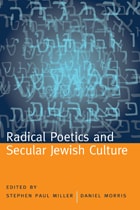
Radical Poetics and Secular Jewish Culture
Edited by Stephen Paul Miller and Daniel Morris
University of Alabama Press, 2009
--Franz Kafka
Kafka's quip--paradoxical, self-questioning, ironic--highlights vividly some of the key issues of identity and self-representation for Jewish writers in the 20th century. No group of writers better represents the problems of Jewish identity than Jewish poets writing in the American modernist tradition--specifically secular Jews: those disdainful or suspicious of organized religion, yet forever shaped by those traditions.
This collection of essays is the first to address this often obscured dimension of modern and contemporary poetry: the secular Jewish dimension. Editors Daniel Morris and Stephen Paul Miller asked their contributors to address what constitutes radical poetry written by Jews defined as "secular," and whether or not there is a Jewish component or dimension to radical and modernist poetic practice in general. These poets and critics address these questions by exploring the legacy of those poets who preceded and influenced them--Stein, Zukofsky, Reznikoff, Oppen, and Ginsberg, among others.
While there is no easy answer for these writers about what it means to be a Jew, in their responses there is a rich sense of how being Jewish reflects on their aesthetics and practices as poets, and how the tradition of the avant-garde informs their identities as Jews. Fragmented identities, irony, skepticism, a sense of self as "other" or "outsider," distrust of the literal, and belief in a tradition that questions rather than answers--these are some of the qualities these poets see as common to themselves, the poetry they make, and the tradition they work within.
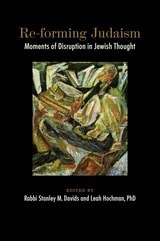
Re-forming Judaism
Moments of Disruption in Jewish ThoughtRabbi Stanley M. Davids and Leah Hochman, PhD
Central Conference of American Rabbis, 2023
Throughout Jewish history, revolutionary events and subversive ideas have burst forth, repeatedly transforming Jewish experience. Re-forming Judaism seeks to explore these ideas—and the individuals behind them—by delving into historical disruptions that led to lasting change in Jewish thought. A distinguished array of scholars take us on a journey from the disruptive prophets of ancient times, through rational, mystical, and extremist medievalists, to the impact of Haskalah and early Reform thought in modernity. Contemporary innovations such as changes in liturgy and music, feminism, and post-Holocaust theology are included, as are insights into Sephardic and North African experiences. By showing how Judaism forms—then re-forms, and re-forms again—the contributors demonstrate that tensions between continuity and change have always been part of Jewish life, helping us to both understand the past and contemplate the future.
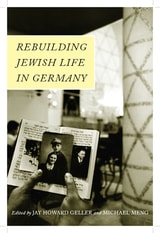
Rebuilding Jewish Life in Germany
Jay Howard Geller
Rutgers University Press, 2020
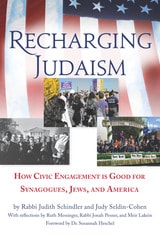
Recharging Judaism
How Civic Engagement Is Good for Synagogues, Jews, and AmericaRabbi Judith Schindler and Judy Seldin-Cohen
Central Conference of American Rabbis, 2018
Recharging Judaism is the essential and timely guide for every synagogue and community seeking to strengthen the bonds of Jewish communal life through advocating for social justice. This volume delves into the enriching civic engagement and acts of righteousness already undertaken by Jews and Jewish communities across the country, and further explores the positive differences we can all affect upon the future of America. There are a myriad of ways in which advocating for social justice and participating in civic engagement can create lasting change. Those inspired to affect such change will find new meaning in the texts and history of our tradition. Using real examples from both small and large congregations across the country, Recharging Judaism offers a framework to guide us through our journey of civic responsibility and social duty and into a brighter future for our country.
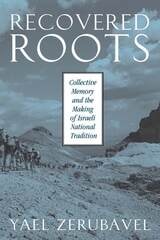
Recovered Roots
Collective Memory and the Making of Israeli National TraditionYael Zerubavel
University of Chicago Press, 1995
In the years leading to the birth of Israel, Zerubavel shows, Zionist settlers in Palestine consciously sought to rewrite Jewish history by reshaping Jewish memory. Zerubavel focuses on the nationalist reinterpretation of the defense of Masada against the Romans in 73 C.E. and the Bar Kokhba revolt of 133-135; and on the transformation of the 1920 defense of a new Jewish settlement in Tel Hai into a national myth. Zerubavel demonstrates how, in each case, Israeli memory transforms events that ended in death and defeat into heroic myths and symbols of national revival.
Drawing on a broad range of official and popular sources and original interviews, Zerubavel shows that the construction of a new national tradition is not necessarily the product of government policy but a creative collaboration between politicans, writers, and educators. Her discussion of the politics of commemoration demonstrates how rival groups can turn the past into an arena of conflict as they posit competing interpretations of history and opposing moral claims on the use of the past. Zerubavel analyzes the emergence of counter-memories within the reality of Israel's frequent wars, the ensuing debates about the future of the occupied territories, and the embattled relations with Palestinians.
A fascinating examination of the interplay between history and memory, this book will appeal to historians, sociologists, anthropologists, political scientists, and folklorists, as well as to scholars of cultural studies, literature, and communication.
Red, Black, and Jew
New Frontiers in Hebrew LiteratureBy Stephen Katz
University of Texas Press, 2009
Between 1890 and 1924, more than two million Jewish immigrants landed on America's shores. The story of their integration into American society, as they traversed the difficult path between assimilation and retention of a unique cultural identity, is recorded in many works by American Hebrew writers. Red, Black, and Jew illuminates a unique and often overlooked aspect of these literary achievements, charting the ways in which the Native American and African American creative cultures served as a model for works produced within the minority Jewish community.
Exploring the paradox of Hebrew literature in the United States, in which separateness, and engagement and acculturation, are equally strong impulses, Stephen Katz presents voluminous examples of a process that could ultimately be considered Americanization. Key components of this process, Katz argues, were poems and works of prose fiction written in a way that evoked Native American forms or African American folk songs and hymns. Such Hebrew writings presented America as a unified society that could assimilate all foreign cultures. At no other time in the history of Jews in diaspora have Hebrew writers considered the fate of other minorities to such a degree. Katz also explores the impact of the creation of the state of Israel on this process, a transformation that led to ambivalence in American Hebrew literature as writers were given a choice between two worlds.
Reexamining long-neglected writers across a wide spectrum, Red, Black, and Jew celebrates an important chapter in the history of Hebrew belles lettres.
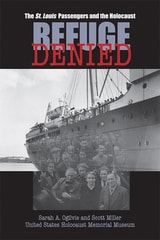
Refuge Denied
The St. Louis Passengers and the HolocaustSarah A. Ogilvie and Scott Miller
University of Wisconsin Press, 2006
Although the episode of the St. Louis is well known, the actual fates of the passengers, once they disembarked, slipped into historical obscurity. Prompted by a former passenger’s curiosity, Sarah Ogilvie and Scott Miller of the United States Holocaust Memorial Museum set out in 1996 to discover what happened to each of the 937 passengers. Their investigation, spanning nine years and half the globe, took them to unexpected places and produced surprising results. Refuge Denied chronicles the unraveling of the mystery, from Los Angeles to Havana and from New York to Jerusalem.
Some of the most memorable stories include the fate of a young toolmaker who survived initial selection at Auschwitz because his glasses had gone flying moments before and a Jewish child whose apprenticeship with a baker in wartime France later translated into the establishment of a successful business in the United States. Unfolding like a compelling detective thriller, Refuge Denied is a must-read for anyone interested in the Holocaust and its impact on the lives of ordinary people.
Religion and Jewish Identity in the Soviet Union, 1941–1964
Mordechai Altshuler
Brandeis University Press, 2012
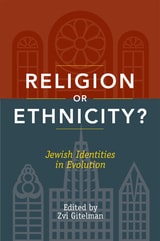
Religion or Ethnicity?
Jewish Identities in EvolutionGitelman, Zvi
Rutgers University Press, 2009
In Religion or Ethnicity? fifteen leading scholars trace the evolution of Jewish identity. The book examines Judaism from the Greco-Roman age, through medieval times, modern western and eastern Europe, to today. Jewish identity has been defined as an ethnicity, a nation, a culture, and even a race. Religion or Ethnicity? questions what it means to be Jewish. The contributors show how the Jewish people have evolved over time in different ethnic, religious, and political movements. In his closing essay, Gitelman questions the viability of secular Jewishness outside Israel but suggests that the continued interest in exploring the relationship between Judaism's secular and religious forms will keep the heritage alive for generations to come.
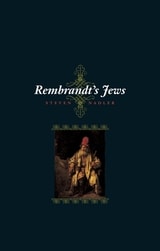
Rembrandt's Jews
Steven Nadler
University of Chicago Press, 2004
Rembrandt's Jews puts this myth to the test as it examines both the legend and the reality of Rembrandt's relationship to Jews and Judaism. In his elegantly written and engrossing tour of Jewish Amsterdam—which begins in 1653 as workers are repairing Rembrandt's Portuguese-Jewish neighbor's house and completely disrupting the artist's life and livelihood—Steven Nadler tells us the stories of the artist's portraits of Jewish sitters, of his mundane and often contentious dealings with his neighbors in the Jewish quarter of Amsterdam, and of the tolerant setting that city provided for Sephardic and Ashkenazic Jews fleeing persecution in other parts of Europe. As Nadler shows, Rembrandt was only one of a number of prominent seventeenth-century Dutch painters and draftsmen who found inspiration in Jewish subjects. Looking at other artists, such as the landscape painter Jacob van Ruisdael and Emmanuel de Witte, a celebrated painter of architectural interiors, Nadler is able to build a deep and complex account of the remarkable relationship between Dutch and Jewish cultures in the period, evidenced in the dispassionate, even ordinary ways in which Jews and their religion are represented—far from the demonization and grotesque caricatures, the iconography of the outsider, so often found in depictions of Jews during the Middle Ages and the Renaissance.
Through his close look at paintings, etchings, and drawings; in his discussion of intellectual and social life during the Dutch Golden Age; and even through his own travels in pursuit of his subject, Nadler takes the reader through Jewish Amsterdam then and now—a trip that, under ever-threatening Dutch skies, is full of colorful and eccentric personalities, fiery debates, and magnificent art.
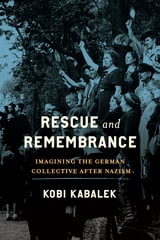
Rescue and Remembrance
Imagining the German Collective after NazismKobi Kabalek
University of Wisconsin Press, 2025
Kabalek argues that such simplistic depictions of the majority versus minority obscure the complex motivations and situations that led people in Nazi Germany to help persecuted Jews. Against the view that the rescuers were “forgotten” after the war, he shows that portrayals and interpretations of helping Jews appeared in various media and social discourses in East, West, and unified Germany and were used to actively debate questions of collective morality. Rescue and Remembrance analyzes the varied and changing depictions of rescue in the distinct German politics from the Nazi period, examining how the very notions of “majority” and “collective” were articulated and reformulated.
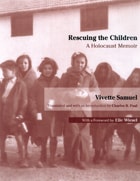
Rescuing the Children
A Holocaust MemoirVivette Samuel; Translated and with an introduction by Charles B. Paul; With a foreword by Elie Wiesel
University of Wisconsin Press, 2002

Respecting the Wicked Child
A Philosophy of Secular Jewish Identity and EducationMitchell Silver
University of Massachusetts Press, 1998
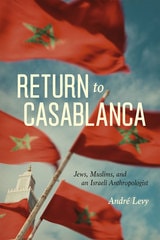
Return to Casablanca
Jews, Muslims, and an Israeli AnthropologistAndré Levy
University of Chicago Press, 2015
Levy visits a host of sites and historical figures to assemble a compelling history of social change, while seamlessly interweaving his study with personal accounts of his returns to his homeland. Central to this story is the massive migration of Jews out of Morocco. Levy traces the institutional and social changes such migrations cause for those who choose to stay, introducing the concept of “contraction” to depict the way Jews deal with the ramifications of their demographic dwindling. Turning his attention outward from Morocco, he goes on to explore the greater complexities of the Jewish diaspora and the essential paradox at the heart of his adventure—leaving Israel to return home.
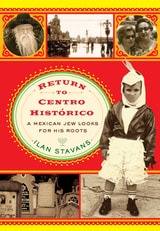
Return to Centro Histórico
A Mexican Jew Looks for His RootsStavans, Ilan
Rutgers University Press, 2012
After a stirring e-mail exchange with his father, awardwinning essayist and cultural commentator Ilan Stavans decided to do something bizarre: revisit his hometown, Mexico City, accompanied by a tourist guide. But rather than seeking his roots in the neighborhood where he grew up, he headed to the Centro Histórico, the downtown area at the heart of the world’s largest metropolis. It was there that conversos, the hidden Jews escaping the might of the Holy Office of the Inquisition, were burned at the stake. And, centuries later, it was the same section where Jewish immigrants, both Yiddish-speaking Ashkenazim and Sephardim from the Ottoman Empire, made their homes as peddlers. In a sense, Centro Histórico is to Mexico what the Lower East Side is to the United States: a platform for reinventing one’s self in the New World.
With the same linguistic verve and insight that has made him one of the most distinguished voices in American literature today, Ilan Stavans invites readers along for a personal journey that is not only his own, but that of an entire culture. In Return to Centro Histórico he makes it possible to understand the intimate role that Jews have played in the development of Hispanic civilization.
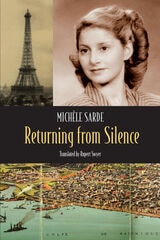
Returning from Silence
Jenny’s StoryMichèle Sarde
Swan Isle Press, 2022
Born in Brittany on the threshold of World War II, novelist Michèle Sarde had long been silent about her origins. After her mother, Jenny, finally shared their family history, Sarde decided to reconstruct Jenny’s journey, including her exile from Salonica, move to Paris in 1921, and assimilation in France. The Nazi occupation then forced her and her family to hide and conceal their Jewish identity, and in this retelling, Sarde shows how Jenny fights with everything she has to survive the Holocaust and protect her daughter.
Returning from Silence is a powerful saga that reaches deep into Jewish history, opening with the Expulsion of the Jews from Spain in 1492 and their settlement in a more tolerant Ottoman Empire. Sephardi culture and language flourished in Salonica for four centuries, but with the fall of the Ottoman Empire in the 1920s, and the sense of troubling times to come, Jenny’s family felt impelled to leave their much-loved city and rebuild their lives in France. Their years in France led to change that none could have fully expected, and then, the Holocaust. The trauma lasts well into the post-war period, silencing both mother and daughter in unanticipated ways.
Through this family history, Sarde sensitively raises questions about identity, migration, and assimilation while weaving fiction together with history, research, and testimony to bring the characters’ stories to life.