Results by title
645 books match the query 'Judaism' and 36 start with r
Rabbi Esriel Hildesheimer and the Creation of a Modern Jewish Orthodoxy
David Ellenson
University of Alabama Press, 1990
Tradition, Modernity, and the Making of Modern Orthodoxy.
For many histories of Modern Orthodox Judaism, Rabbi Samson Raphael Hirsch stands as the primary architect of the movement's encounter with modernity. In Rabbi Esriel Hildesheimer and the Creation of a Modern Jewish Orthodoxy, distinguished scholar David Ellenson expands that narrative by recovering the life, thought, and enduring influence of one of Hirsch's most important contemporaries. Through a careful examination of Rabbi Esriel Hildesheimer's writings, leadership, educational initiatives, and responses to the social and intellectual challenges of nineteenth-century Europe, Ellenson demonstrates how Hildesheimer helped forge a model of Orthodoxy that remained firmly committed to Jewish tradition while engaging constructively with the modern world.
Set against a period of profound cultural, political, and religious transformation, this volume explores the tensions confronting European Jewry as modernization, secular education, religious pluralism, and changing political realities reshaped Jewish communal life. Ellenson shows how Hildesheimer addressed these challenges not through rigid isolation but through a pragmatic and intellectually sophisticated approach that balanced fidelity to halakhah with openness to selected aspects of modern culture and scholarship. His vision helped establish a framework for Modern Orthodoxy that continues to influence contemporary Jewish thought and practice.
Beyond its biographical focus, the study provides broader insights into the emergence of Modern Orthodoxy as a religious and intellectual movement. By illuminating Hildesheimer's efforts to integrate traditional scholarship with contemporary realities, Ellenson offers readers a deeper understanding of how Judaism has negotiated the relationship between heritage and change. The result is both a compelling portrait of an influential rabbinic figure and an important examination of the forces that shaped modern Jewish religious identity.
Rabbi Esriel Hildesheimer and the Creation of a Modern Jewish Orthodoxy is essential reading for scholars and students of Jewish studies, religious studies, theology, European history, intellectual history, and modern Judaism. It will also appeal to rabbis, educators, and general readers seeking to understand the historical roots of contemporary Orthodox Jewish life and the ongoing dialogue between tradition and modernity.
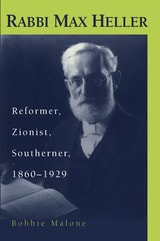
Rabbi Max Heller
Reformer, Zionist, Southerner, 1860-1929Barbara S. Malone
University of Alabama Press, 1997
Max Heller was a man of both passionate conviction and inner contradiction. He sought to be at the center of current affairs, not as a spokesperson of centrist opinion, but as an agitator or mediator, constantly struggling to find an acceptable path as he confronted the major issues of the day--racism and Jewish emancipation in eastern Europe, nationalism and nativism, immigration and assimilation. Heller's life experience provides a distinct vantage point from which to view the complexity of race relations in New Orleans and the South and the confluence of cultures that molded his development as a leader. A Bohemian immigrant and one of the first U.S.-trained rabbis, Max Heller served for 40 years as spiritual leader of a Reform Jewish congregation in New Orleans--at that time the largest city in the South. Far more than a congregational rabbi, Heller assumed an activist role in local affairs, Reform Judaism, and the Zionist movement, maintaining positions often unpopular with his neighbors, congregants, and colleagues. His deep concern for social justice led him to question two basic assumptions that characterized his larger social milieu--segregation and Jewish assimilation.
Heller, a consummate Progressive with clear vision and ideas substantially ahead of their time, led his congregation, his community, Reform Jewish colleagues, and Zionist sympathizers in a difficult era.
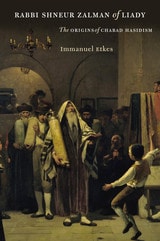
Rabbi Shneur Zalman of Liady
The Origins of Chabad HasidismImmanuel Etkes
Brandeis University Press, 2014

Rabbi's Manual
David Polish
Central Conference of American Rabbis, 1988
Rabbinic Authority
Elliot L. Stevens
Central Conference of American Rabbis, 1982
Rabbinic Literature
Tal Ilan
SBL Press, 2022
This volume in the Bible and Women series is devoted to rabbinic literature from late Jewish antiquity to the early Middle Ages. Fifteen contributions feature different approaches to the question of biblical women and gender and encompass a wide variety of rabbinic corpora, including the Mishnah-Tosefta, halakhic and aggadic midrashim, Talmud, and late midrash. Some essays analyze biblical law and gender relations as they are reflected in the rabbinic sages’ argumentation, while others examine either the rabbinic portrayal of a certain woman or a group of women or the role of biblical women in a specific rabbinic context. Contributors include Judith R. Baskin, Yuval Blankovsky, Alexander A. Dubrau, Cecilia Haendler, Tal Ilan, Gail Labovitz, Moshe Lavee, Lorena Miralles-Maciá, Ronit Nikolsky, Susanne Plietzsch, Natalie C. Polzer, Olga I. Ruiz-Morell, Devora Steinmetz, Christiane Hannah Tzuberi, and Dvora Weisberg.
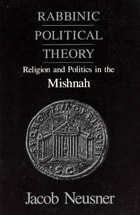
Rabbinic Political Theory
Religion and Politics in the MishnahJacob Neusner
University of Chicago Press, 1991
Neusner begins his study with a modification of Weber's categories for a theory of politics: myth, institutions, administration, passion, responsibility, and proportion. Detailing the Mishnah's conception of politics, Neusner considers what he calls the stable and static structure and system through comparison with Aristotle. Although Aristotle's Politics and the Mishnah share a common economic theory based on the fundamental unit of the householder, they diverge in their conceptions of political structure and order. Aristotle embeds economics within political economy, while, Neusner argues, the Mishnah presents the anomaly of an economics separated from politics.
Using modern political terms, this study explicates the complicated politics developed by the philosopher-theologians of the Mishnah. It is a first-rate contribution to our understanding of the intersection of politics, political philosophy, and the Mishnaic system.
Radical Poetics and Secular Jewish Culture
Edited by Stephen Paul Miller and Daniel Morris
University of Alabama Press, 2009
--Franz Kafka
Kafka's quip--paradoxical, self-questioning, ironic--highlights vividly some of the key issues of identity and self-representation for Jewish writers in the 20th century. No group of writers better represents the problems of Jewish identity than Jewish poets writing in the American modernist tradition--specifically secular Jews: those disdainful or suspicious of organized religion, yet forever shaped by those traditions.
This collection of essays is the first to address this often obscured dimension of modern and contemporary poetry: the secular Jewish dimension. Editors Daniel Morris and Stephen Paul Miller asked their contributors to address what constitutes radical poetry written by Jews defined as "secular," and whether or not there is a Jewish component or dimension to radical and modernist poetic practice in general. These poets and critics address these questions by exploring the legacy of those poets who preceded and influenced them--Stein, Zukofsky, Reznikoff, Oppen, and Ginsberg, among others.
While there is no easy answer for these writers about what it means to be a Jew, in their responses there is a rich sense of how being Jewish reflects on their aesthetics and practices as poets, and how the tradition of the avant-garde informs their identities as Jews. Fragmented identities, irony, skepticism, a sense of self as "other" or "outsider," distrust of the literal, and belief in a tradition that questions rather than answers--these are some of the qualities these poets see as common to themselves, the poetry they make, and the tradition they work within.
Re-forming Judaism
Moments of Disruption in Jewish ThoughtRabbi Stanley M. Davids and Leah Hochman, PhD
Central Conference of American Rabbis, 2023
Throughout Jewish history, revolutionary events and subversive ideas have burst forth, repeatedly transforming Jewish experience. Re-forming Judaism seeks to explore these ideas—and the individuals behind them—by delving into historical disruptions that led to lasting change in Jewish thought. A distinguished array of scholars take us on a journey from the disruptive prophets of ancient times, through rational, mystical, and extremist medievalists, to the impact of Haskalah and early Reform thought in modernity. Contemporary innovations such as changes in liturgy and music, feminism, and post-Holocaust theology are included, as are insights into Sephardic and North African experiences. By showing how Judaism forms—then re-forms, and re-forms again—the contributors demonstrate that tensions between continuity and change have always been part of Jewish life, helping us to both understand the past and contemplate the future.
Reading Biblical Texts Together
Pursuing Minoritized Biblical CriticismTat-Siong Benny Liew
SBL Press, 2022
A solid and suggestive foundation for the future of ethnic-racial minority biblical criticism
This volume, edited by Tat-siong Benny Liew and Fernando F. Segovia, expands the work begun in They Were All Together in One Place? Toward Minority Biblical Criticism (2009) by focusing on specific texts for scholarly engagement and exchange. Essays by scholars of racial/ethnic minoritized criticism of the Bible highlight the various factors and dynamics at play in the formation of power relations within and through four biblical texts: two from the Hebrew Bible (Genesis 21 and 1 Kings 12) and two from the New Testament (John 4 and Revelation 18). Contributors include Ahida Calderón Pilarski, Ronald Charles, Stephanie Buckhanon Crowder, Lynne St. Clair Darden, Steed Vernyl Davidson, Mary F. Foskett, Jione Havea, Tat-siong Benny Liew, Roberto Mata, Henry W. Morisada Rietz, Raj Nadella, Miranda N. Pillay, David Arthur Sánchez, Timothy J. Sandoval, Fernando F. Segovia, Mitzi J. Smith, Angeline M. G. Song, Linzie M. Treadway, Nasili Vaka’uta, Demetrius K. Williams, and Gale A. Yee. Each essay expands our understandings of minoritization from a global perspective.
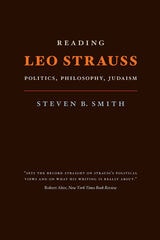
Reading Leo Strauss
Politics, Philosophy, JudaismSteven B. Smith
University of Chicago Press, 2006
Smith asserts that this philosophical skepticism defined Strauss’s thought. It was as a skeptic, Smith argues, that Strauss considered the seemingly irreconcilable conflict between reason and revelation—a conflict Strauss dubbed the “theologico-political problem.” Calling this problem “the theme of my investigations,” Strauss asked the same fundamental question throughout his life: what is the relation of the political order to revelation in general and Judaism in particular? Smith organizes his book with this question, first addressing Strauss’s views on religion and then examining his thought on philosophical and political issues.
In his investigation of these philosophical and political issues, Smith assesses Strauss’s attempt to direct the teaching of political science away from the examination of mass behavior and interest group politics and toward the study of the philosophical principles on which politics are based. With his provocative, lucid essays, Smith goes a long way toward establishing a distinctive form of Straussian liberalism.
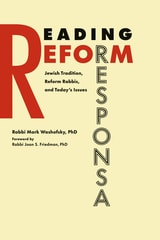
Reading Reform Responsa
Jewish Tradition, Reform Rabbis, and Today's IssuesRabbi Mark Washofsky, PhD
Central Conference of American Rabbis, 2024
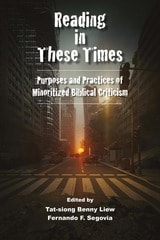
Reading in These Times
Purposes and Practices of Minoritized Biblical CriticismTat-siong Benny Liew
SBL Press, 2024
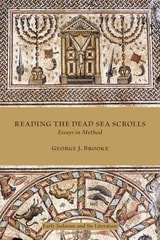
Reading the Dead Sea Scrolls
Essays in MethodGeorge J. Brooke
SBL Press, 2013
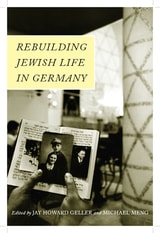
Rebuilding Jewish Life in Germany
Jay Howard Geller
Rutgers University Press, 2020
Recent Reform Responsa - PDF Electronic Version
Rabbi Solomon B. Freehof
Central Conference of American Rabbis, 1963
Can women serve as pall-bearers? Is it appropriate to refer to God as YHVE? May a bar mitzvah take place on Shabbat Shuvah? What are acceptable medical uses of a fetus? What names are to be avoided? Can a convicted accountant serve as a congregational officer? Must a sperm donor be Jewish in order for the fetus to be Jewish? These are some of the questions dealt with in this collection. Originally published in 1963, many of these questions are still relevant today.
Recharging Judaism
How Civic Engagement Is Good for Synagogues, Jews, and AmericaRabbi Judith Schindler and Judy Seldin-Cohen
Central Conference of American Rabbis, 2018
Recharging Judaism is the essential and timely guide for every synagogue and community seeking to strengthen the bonds of Jewish communal life through advocating for social justice. This volume delves into the enriching civic engagement and acts of righteousness already undertaken by Jews and Jewish communities across the country, and further explores the positive differences we can all affect upon the future of America. There are a myriad of ways in which advocating for social justice and participating in civic engagement can create lasting change. Those inspired to affect such change will find new meaning in the texts and history of our tradition. Using real examples from both small and large congregations across the country, Recharging Judaism offers a framework to guide us through our journey of civic responsibility and social duty and into a brighter future for our country.
Reel Kabbalah
Jewish Mysticism and Neo-Hasidism in Contemporary CinemaBrian Ogren
Rutgers University Press, 2024
Reform Responsa - PDF Electronic Version
Rabbi Solomon B. Freehof
Central Conference of American Rabbis, 1960
This volume of Responsa, originally published in 1960, answers such questions as: May a memorial service be held on Shabbat? What is the role of a stepfather at a bar mitzvah? Can a congregational gift shop be open on Shabbat? Must an Ark be centered on the bima? Is it acceptable to marry an apostate daughter of a Jewish mother? Should a dying patient be informed of his condition? What to do when a body is lost at sea? These questions and more shed light on the issues of concern to the Jewish community when this book was first published, and still provide insight today.
Reform Responsa for Our Time - PDF Electronic Version
Rabbi Solomon B. Freehof
Central Conference of American Rabbis, 1977
Originally published in 1977, this back-in-print classic offers a historic look at the concerns of an earlier generation. The questions and answers in this book deal with issues of Jewish ritual observance, holidays, life cycle events, synagogue life, birth, death, medical ethics, abortion, and much more. Though some issues are dated, this volume offers timeless wisdom and unique insights into Jewish thought.
Reform Responsa for the Twenty-First Century, Volume 1
Sh'eilot Ut'shuvotRabbi Mark Washofsky, PhD
Central Conference of American Rabbis, 2010
Reform Responsa for the Twenty-First Century: Sh'eilot Ut'shuvot is the latest in an ongoing series of Reform Responsa. Drawing from the breadth of traditional and modern Jewish texts, law, and ideology, this two volumes set addresses over seventy contemporary topics, including conversion of adopted children, fertility treatments, patrilineal descent, issues of synagogue management, social justice activism, interfaith marriage, and rituals of death and mourning.
Reform Responsa for the Twenty-First Century, Volume 2
Sh'eilot Ut'shuvotRabbi Mark Washofsky, PhD
Central Conference of American Rabbis, 2010
Reform Responsa for the Twenty-First Century: Sh'eilot Ut'shuvot is part of an ongoing series of Reform Responsa. Drawing from the breadth of traditional and modern Jewish texts, law, and ideology, this two volumes set addresses over seventy contemporary topics, including conversion of adopted children, fertility treatments, patrilineal descent, issues of synagogue management, social justice activism, interfaith marriage, and rituals of death and mourning.
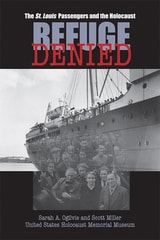
Refuge Denied
The St. Louis Passengers and the HolocaustSarah A. Ogilvie and Scott Miller
University of Wisconsin Press, 2006
Although the episode of the St. Louis is well known, the actual fates of the passengers, once they disembarked, slipped into historical obscurity. Prompted by a former passenger’s curiosity, Sarah Ogilvie and Scott Miller of the United States Holocaust Memorial Museum set out in 1996 to discover what happened to each of the 937 passengers. Their investigation, spanning nine years and half the globe, took them to unexpected places and produced surprising results. Refuge Denied chronicles the unraveling of the mystery, from Los Angeles to Havana and from New York to Jerusalem.
Some of the most memorable stories include the fate of a young toolmaker who survived initial selection at Auschwitz because his glasses had gone flying moments before and a Jewish child whose apprenticeship with a baker in wartime France later translated into the establishment of a successful business in the United States. Unfolding like a compelling detective thriller, Refuge Denied is a must-read for anyone interested in the Holocaust and its impact on the lives of ordinary people.
Reimagining Apocalypticism
Apocalyptic Literature in the Dead Sea Scrolls and Related WritingsLorenzo DiTommaso
SBL Press, 2023
Reincarnation in Philo of Alexandria
Sami Yli-Karjanmaa
SBL Press, 2015
The best current research on Philo's allegorical exegesis of Scripture
The strong element of Greek philosophy in Philo's thought has been recognized since antiquity, but his relation to the Pythagorean-Platonic tenet of reincarnation has been a neglected, even avoided, topic in research. This book confirms the view common in the seventeenth to nineteenth centuries that Philo accepted the doctrine of reincarnation even though he preferred not to speak openly about it. The book shows how allegorization enabled Philo to give a reincarnational interpretation to very different scriptural passages.
Features:
- Highlights the importance of reading Philonic parallel passages together for fuller understanding of Philo s message
- Discusses the difference between protological and universal allegory in Philo's exegesis of the first chapters of Genesis
- Introduces new concepts to Philonic research such as the corporealization of the mind (the result of transgression and a driving force for reincarnation) and monadization (the human soul's transformation into pure mind upon salvation)
Religion and Economic Justice
edited by Michael Zweig
Temple University Press, 1992
As Eastern European economies move to capitalism, many people there hope for a better life. But capitalism is no guarantee of prosperity. Economic deprivation, war, social marginalization, and powerlessness mark the lives of millions and spark social movements for economic justice aimed at correcting these conditions. Often these movements are based in religious communities, their activists motivated by religious commitment to human dignity and the need for personal empowerment. Although the new theology contains an economic critique, little dialogue has taken place between the religious and economic communities on matters of economic analysis. Religion and Economic Justice seeks to develop this exchange.
This book contains original essays by distinguished contributors from economics, religious ethics, and biblical studies. The authors provide a powerful critique of the individualism which underlies mainstream economic analysis and which fragments our communities, a critique that extends to the values implicit in the market system. The authors also show how social marginalization and economic deprivation are the consequences of economic organization, not simply the failings of individuals.
Religious Competition in the Greco-Roman World
Nathaniel P. DesRosiers
SBL Press, 2016
Essays that broaden the historical scope and sharpen the parameters of competitive discourses
Scholars in the fields of late antique Christianity, neoplatonism, New Testament, art history, and rabbinics examine issues related to authority, identity, and change in religious and philosophical traditions of late antiquity. The specific focus of the volume is the examination of cultural producers and their particular viewpoints and agendas in an attempt to shed new light on the religious thinkers, texts, and material remains of late antiquity. The essays explore the major creative movements of the era, examining the strategies used to develop and designate orthodoxies and orthopraxies. This collection of essays reinterprets dialogues between individuals and groups, illuminating the mutual competition and influence among these ancient thinkers and communities.
Features:
- Essays feature competitive discourse as the central organizing theme
- Articles present unique theoretical models that are adaptable to different contexts and highly applicable to religious discourses before and after the Late Antique Period
- Scholars cover a much wider range of traditions including Judaism, Christianity, paganism, and philosophy in order to provide the most complete portrait of the religious landscape
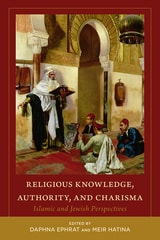
Religious Knowledge, Authority, and Charisma
Islamic and Jewish PerspectivesDaphna Ephrat
University of Utah Press, 2014
The issue of religious authority has long fascinated and ignited scholars across a range of disciplines: history, anthropology, the sociology of religion, and political science. Religious Knowledge, Authority, and Charisma juxtaposes religious leadership in premodern and modern Islam with examples from the Judaic tradition. By illustrating various iterations of authority in numerous historical and cultural contexts, this volume offers fresh insights into the nature of institutions of learning and other systems of establishing and disseminating authority, the mechanisms for cultivating committed adherents, and the processes by which religious leadership is polarized and fragmented.

Religious Objects as Psychological Structures
Moshe Halevi Spero
University of Chicago Press, 1992
By constructing a halakhic metapsychology within which psychological phenomena can be given specific halakhic identities, Spero arrives at a unique perspective on the development of religious objects and God representations. He traces two lines of development: one for relationships between humans, anthropocentric, and another for relationships between God and humans, deocentric. The second aspect of his argument is that these two distinct but parallel lines allow one to conceptualize the revolutionary possibility of transference displacements—the shift of religious symbology—not only from interpersonal relationships onto the God concept (Freud's model) but also from an objective human-God relationship onto interpersonal relationships. Filled with clinical as well as theoretical illustrations, Spero's work is a rich resource for both the religious patient and the religious therapist.
In the last few decades, a great deal of literature has been written on the relationship between theology and psychotherapy; none of this work, however, has addressed its subject using Judaism as a point of reference. Spero successfully takes up the task of bridging this gap in previous scholarship.
Reproducing Jews
A Cultural Account of Assisted Conception in IsraelSusan Martha Kahn
Duke University Press, 2000
In this ethnographic study of the new reproductive technologies in Israel, Susan Martha Kahn explores the cultural meanings and contemporary rabbinic responses to artificial insemination, in-vitro fertilization, egg donation, and surrogacy. Kahn draws on fieldwork with unmarried Israeli women who are using state-subsidized artificial insemination to get pregnant and on participant-observation in Israeli fertility clinics. Through close readings of traditional Jewish texts and careful analysis of Israeli public discourse, she explains how the Israeli embrace of new reproductive technologies has made Jewish beliefs about kinship startlingly literal. Kahn also reveals how a wide range of contemporary Israelis are using new reproductive technologies to realize their reproductive futures, from ultraorthodox infertile married couples to secular unmarried women.
As the first scholarly account of assisted conception in Israel, this multisited ethnography will contribute to current anthropological debates on kinship studies. It will also interest those involved with Jewish studies.

Respecting the Wicked Child
A Philosophy of Secular Jewish Identity and EducationMitchell Silver
University of Massachusetts Press, 1998
Rethinking Modern Judaism
Ritual, Commandment, CommunityArnold M. Eisen
University of Chicago Press, 1998
"Fascinating . . . an insightful entrance point to understanding the evolution of the theologies of America's largest Jewish denominations."—Tikkun
"I know of no other treatment of these issues that matches Eisen's talents for synthesizing a wide variety of historical, philosophical, and social scientific sources, and bringing them to bear in a balanced and open-minded way on the delicate questions of why modern Jews relate as they do to the practices of Judaism."—Joseph Reimer, Boston Book Review
"At once an incisive survey of modern Jewish thought and an inquiry into how Jews actually live their religious lives, Mr. Eisen's book is an invaluable addition to the study of American Judaism."—Elliott Abrams, Washington Times
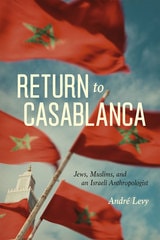
Return to Casablanca
Jews, Muslims, and an Israeli AnthropologistAndré Levy
University of Chicago Press, 2015
Levy visits a host of sites and historical figures to assemble a compelling history of social change, while seamlessly interweaving his study with personal accounts of his returns to his homeland. Central to this story is the massive migration of Jews out of Morocco. Levy traces the institutional and social changes such migrations cause for those who choose to stay, introducing the concept of “contraction” to depict the way Jews deal with the ramifications of their demographic dwindling. Turning his attention outward from Morocco, he goes on to explore the greater complexities of the Jewish diaspora and the essential paradox at the heart of his adventure—leaving Israel to return home.
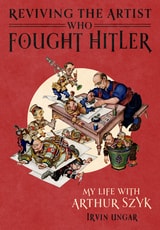
Reviving the Artist Who Fought Hitler
My Life with Arthur SzykIrvin Ungar
University of Texas Press, 2026
The intertwining story of a noted anti-Nazi artist and the former rabbi who revived his reputation.
During World War II, the Polish-Jewish immigrant Arthur Szyk became America’s leading anti-Nazi artist. His art was so effective that Adolf Hitler reportedly put a bounty on his head while the US military declared him a “citizen-soldier” of the free world. Szyk steadfastly fought for the rescue of European Jewry during the Holocaust, creating artworks like De Profundis, which imagines Jesus sharing the suffering of countless lifeless Jews. His civil rights art challenged segregation and his illuminated Declaration of Independence resides in the Library of Congress. Szyk’s masterwork, an illustrated Passover Haggadah, is considered by many to be one of the most beautiful books ever produced by human hands.
Once world-famous, Arthur Szyk was all but forgotten after his death in 1951. Reviving the Artist Who Fought Hitler recounts Irvin Ungar's decades-long journey to restore Szyk to public consciousness, and become the principal collector, dealer, scholar, and promoter of Szyk’s art in the United States, Europe, and Israel. Richly illustrated and full of forgotten history, this memoir is an inspiring story of artistic passion and an invitation to commune with a heroic advocate for all humanity.
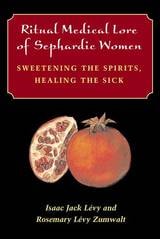
Ritual Medical Lore of Sephardic Women
Sweetening the Spirits, Healing the SickIsaac Jack Lévy and Rosemary Lévy Zumwalt
University of Illinois Press, 2002
Winner of the Ellii Kongas-Maranda Prize from the Women's Section of the American Folklore Society, 2003.
Ritual Medical Lore of Sephardic Women preserves the precious remnants of a rich culture on the verge of extinction while affirming women's pivotal role in the health of their communities. Centered around extensive interviews with elders of the Sephardic communities of the former Ottoman Empire, this volume illuminates a fascinating complex of preventive and curative rituals conducted by women at home--rituals that ensured the physical and spiritual well-being of the community and functioned as a vital counterpart to the public rites conducted by men in the synagogues.
Isaac Jack Lévy and Rosemary Lévy Zumwalt take us into the homes and families of Sephardim in Turkey, Israel, Greece, the former Yugoslavia, and the United States to unravel the ancient practices of domestic healing: the network of blessings and curses tailored to every occasion of daily life; the beliefs and customs surrounding mal ojo (evil eye), espanto (fright), and echizo (witchcraft); and cures involving everything from herbs, oil, and sugar to the powerful mumia (mummy) made from dried bones of corpses.
For the Sephardim, curing an illness required discovering its spiritual cause, which might be unintentional thought or speech, accident, or magical incantation. The healing rituals of domesticated medicine provided a way of making sense of illness and a way of shaping behavior to fit the narrow constraints of a tightly structured community. Tapping a rich and irreplaceable vein of oral testimony, Ritual Medical Lore of Sephardic Women offers fascinating insight into a culture where profound spirituality permeated every aspect of daily life.

River Jordan
The Mythology of a Dividing LineRachel Havrelock
University of Chicago Press, 2011
As the site of several miracles in the Jewish and Christian traditions, the Jordan is one of the world’s holiest rivers. It is also the major political and symbolic border contested by Israelis and Palestinians. Combining biblical and folkloric studies with historical geography, Rachel Havrelock explores how the complex religious and mythological representations of the river have shaped the current conflict in the Middle East.