187 books match the query 'Justice' and 3 start with r

cover of Recovering the Commons: Democracy, Place, and Global Justice

Recovering the Commons

Democracy, Place, and Global Justice

Herbert Reid and Betsy Taylor

University of Illinois Press, 2010

This penetrating work culls key concepts from grassroots activism to hold critical social theory accountable to the needs, ideas, and organizational practices of the global justice movement. The resulting critique of neoliberalism hinges on place-based struggles of groups marginalized by globalization and represents a brave rethinking of politics, economy, culture, and professionalism.
Providing new practical and conceptual tools for responding to human and environmental crises in Appalachia and beyond, Recovering the Commons radically revises the framework of critical social thought regarding our stewardship of the civic and ecological commons. Herbert Reid and Betsy Taylor ally social theory, field sciences, and local knowledge in search of healthy connections among body, place, and commons that form a basis for solidarity as well as a vital infrastructure for a reliable, durable world. Drawing particularly on the work of philosophers Maurice Merleau-Ponty, John Dewey, and Hannah Arendt, the authors reconfigure social theory by ridding it of the aspects that reduce place and community to sets of interchangeable components. Instead, they reconcile complementary pairs such as mind/body and society/nature in the reclamation of public space.

With its analysis embedded in philosophical and material contexts, this penetrating work culls key concepts from grassroots activism to hold critical social theory accountable to the needs, ideas, and organizational practices of the global justice movement. The resulting critique of neoliberalism hinges on place-based struggles of groups marginalized by globalization and represents a brave rethinking of politics, economy, culture, and professionalism.

[more]
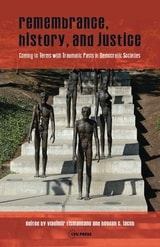
cover of Remembrance, History, and Justice: Coming to terms with traumatic pasts in democratic societies

Remembrance, History, and Justice

Coming to terms with traumatic pasts in democratic societies

Bogdan C. Iacob

Central European University Press, 2015
The twentieth century has left behind a painful and complicated legacy of massive trauma, monstrous crimes, radical social engineering, or collective/individual guilt syndromes that were often the premises for and the specters haunting the process of democratization in the various societies that emerged out of these profoundly de-structuring contexts. The present manuscript is a state of the art reassessment and analysis of how the interplay between memory, history, and justice generates insight that is multifariously relevant for comprehending the present and future of democracy without becoming limited to a Europe-centric framework of understanding. The manuscript is structured on three complementary and interconnected trajectories: the public use of history, politics of memory, and transitional justice. Key words 1. Europe, Eastern—Politics and government—1989– 2. Collective memory—Europe,Eastern. 3. Memory—Political aspects—Europe, Eastern. 4. Democratization—Social aspects—Europe, Eastern. 5. Europe, Eastern—Historiography—Socialaspects. 6. Europe, Eastern—Historiography—Political aspects. 7. Social justice—Europe, Eastern. 8. Post-communism—Europe, Eastern. 9. Fascism—Socialaspects—Europe, Eastern. 10. Dictatorship—Social aspects—Europe, Eastern.
[more]
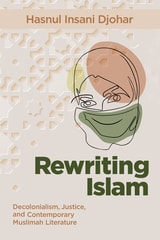
cover of Rewriting Islam: Decolonialism, Justice, and Contemporary Muslimah Literature

Rewriting Islam

Decolonialism, Justice, and Contemporary Muslimah Literature

Hasnul Insani Djohar

The Ohio State University Press, 2024

In Rewriting Islam, Hasnul Insani Djohar examines how women writers of the Ummah, or Muslim religious community, portray Muslim women fighting for gender and social justice while living as minorities in prosperous countries. Focusing on the body of Muslimah writing that has emerged since the US invasion of Iraq in 2003, Djohar considers fiction such as Mohja Kahf’s The Girl in the Tangerine Scarf, Randa Jarrar’s A Map of Home, Laila Lalami’s Hope and Other Dangerous Pursuits, and G. Willow Wilson’s Alif the Unseen. Djohar also examines poetry, memoirs, and short stories. Together, these works depict the diversity of Muslimah identities and cultures worldwide. Operating within postcolonial and Islamic studies frameworks, Djohar investigates how these writers contribute to larger debates around gender and globalization—including justice for immigrants and refugees, who are often blamed for social problems rather than recognized as victims of US imperialism and transnational capitalist globalization. By way of close readings and careful attention to historical, cultural, and religious contexts, Djohar illuminates how Muslimah American writers decolonize justice and white sovereignty by elevating interconnectedness, spirituality, and sisterhood across diverse communities.
[more]