Results by title
100 books match the query 'Kings and rulers' and 4 start with r
Reading Inca History
Catherine Julien
University of Iowa Press, 2002
At the heart of this book is the controversy over whether Inca history can and should be read as history. Did the Incas narrate a true reflection of their past, and did the Spaniards capture these narratives in a way that can be meaningfully reconstructed? In Reading Inca History,Catherine Julien finds that the Incas did indeed create detectable life histories.
The two historical genres that contributed most to sixteenth- and seventeenth-century Spanish narratives about the Incas were an official account of Inca dynastic genealogy and a series of life histories of Inca rulers. Rather than take for granted that there was an Inca historical consciousness, Julien begins by establishing an Inca purpose for keeping this dynastic genealogy. She then compares Spanish narratives of the Inca past to identify the structure of underlying Inca genres and establish the dependency on oral sources. Once the genealogical genre can be identified, the life histories can also be detected.
By carefully studying the composition of Spanish narratives and their underlying sources, Julien provides an informed and convincing reading of these complex texts. By disentangling the sources of their meaning, she reaches across time, language, and cultural barriers to achieve a rewarding understanding of the dynamics of Inca and colonial political history.
Royal Apologetic in the Ancient Near East
Andrew Knapp
SBL Press, 2015
A fresh exploration of apologetic material that pushes beyond form criticism
Andrew Knapp applies modern genre theory to seven ancient Near Eastern royal apologies that served to defend the legitimacy of kings who came to power under irregular circumstances. Knapp examines texts and inscriptions related to Telipinu, Hattusili III, David, Solomon, Hazael, Esarhaddon, and Nabonidus to identify transhistorical common issues that unite each discourse.
Features:
- Compares Hittite, Israelite, Aramean, Assyrian, and Babylonian apologies
- Examination of apologetic as a mode instead of a genre
- Charts and illustrations
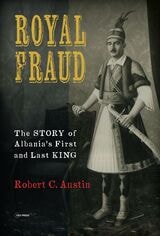
Royal Fraud
The Story of Albania’s First and Last KingRobert Austin
Central European University Press, 2024
Beginning its narrative in 1961, when Albanian King Zog I died in a Paris hospital after 22 years in exile, this book tells the colourful story of this Balkan country's first and only monarch. The road to becoming Europe's youngest president in 1925 and then king of Albania in 1928 was paved with feuds and assassinations, a political career-path common in the region. He craved the throne for several reasons; the Balkans were mostly run by kings, and Zog wanted to impress his mother and also give his six sisters an easy social rise.
Once king, his accomplishments were decidedly meagre. He spent most of his time keeping up appearances as a monarch despite the obvious fraud he had imposed on an illiterate and uninterested population. His one great success was that he had almost all his opponents assassinated, usually in broad daylight abroad.
Zog retained his power until his "friend" Mussolini ousted him in 1939. On the surface a Westernizer, this self-proclaimed ruler left Albania almost as he found it, with almost no roads or trains, thoroughly uneducated and utterly impoverished.
In his book, Robert Austin combines Zog’s adventurous life story with a studious analysis of Albania's political history from the fall of the Ottoman Empire to the threshold of Euro-Atlantic integration.
Royal Hittite Instructions and Related Administrative Texts
Jared L. Miller
SBL Press, 2013