Results by title
486 books match the query 'LGBTQ+' and 13 start with r
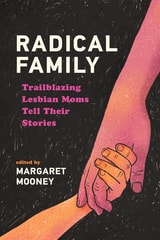
Radical Family
Trailblazing Lesbian Moms Tell Their StoriesEdited by Margaret Mooney
Wisconsin Historical Society Press, 2025
A powerful collection of personal essays from lesbian moms who fought for the right to raise children
For generations, lesbians across the United States were systematically denied opportunities to raise children and build families, opportunities that were readily available to straight people. Radical Family honors the history-making struggles and triumphs of lesbian families in Madison, Wisconsin, who raised children in the 1980s, ’90s, and early 2000s—a time when lesbian motherhood was widely considered extreme and unnatural. In a collection of nine profoundly personal essays, the contributors recount their diverse paths to parenthood, as well as the hopes and challenges each family experienced. While the stories in Radical Family are unique, they all share a common thread: the mothers’ resilience and the risks they took, both small and sweeping, to defend their family’s right to exist.
For lesbians, the desire to raise children has historically been met with vilification and legal and social prejudice. Adoption agencies consistently rejected applications from out lesbians. Doctors and clinics refused to provide fertility treatments and other medical options to help them get pregnant. Lesbians who were able to raise children commonly lost custody to estranged spouses or grandparents.
Trailblazing lesbian mothers—and their children—fought to defy and, ultimately, shift this paradigm. Lesbian parents, like those in Radical Family, created informal networks in their local communities, where they could share survival strategies and find acceptance among other families that looked like theirs. With no rule book to guide them, and few laws to protect them, lesbian mothers created a new—some might even say radical—standard for what it means to be a family.
Over and over, the stories in Radical Family show how families fought back against hatred and homophobia with love, resilience, commitment, and creativity. Their stories deepen our understanding of what it means to be a mother—while showing how safety, belonging, and acceptance are universal human needs.

Rara Avis
Blas Falconer
Four Way Books, 2024
Regally bearing its Latin title, Rara Avis captures in sparse, moving verse both the splendor and the loneliness of what it means to be exceptional — a rarified specimen, a strange bird. A son, a husband, and now a father, seasoned poet Blas Falconer explores the relationships among men — between peers, lovers, parents and children — to consider and question existing models of authority and power. Falconer’s lucid but feeling gaze reveals social complexities with searing and graceful imagery, asking what it means to live outside the heteronormative experience while existing as a man, simultaneously a casualty and a participant in the project of masculinity.
These poems carefully delineate the casual cruelties of queer youth and the beautiful and bitter revelations of adulthood. The wisdom propelling Rara Avis is the knowledge that we are each of us that rare bird; we share our singularity. Everyone has a pancreas, but only one organ matters when Falconer learns his father is afflicted. Alchemized by love, one thing, unlike any other, becomes all things. “All day, everything, / no matter how / small, makes me // think of it” … The bee / crawling in / blossoms // scattered on / the glass/tabletop. The sound of // a pitcher fill- / ing slowly / with water.”
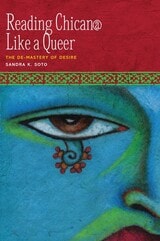
Reading Chican@ Like a Queer
The De-Mastery of DesireBy Sandra K. Soto
University of Texas Press, 2010
A race-based oppositional paradigm has informed Chicano studies since its emergence. In this work, Sandra K. Soto replaces that paradigm with a less didactic, more flexible framework geared for a queer analysis of the discursive relationship between racialization and sexuality. Through rereadings of a diverse range of widely discussed writers—from Américo Paredes to Cherríe Moraga—Soto demonstrates that representations of racialization actually depend on the sexual and that a racialized sexuality is a heretofore unrecognized organizing principle of Chican@ literature, even in the most unlikely texts. Soto gives us a broader and deeper engagement with Chican@ representations of racialization, desire, and both inter- and intracultural social relations.
While several scholars have begun to take sexuality seriously by invoking the rich terrain of contemporary Chicana feminist literature for its portrayal of culturally specific and historically laden gender and sexual frameworks, as well as for its imaginative transgressions against them, this is the first study to theorize racialized sexuality as pervasive to and enabling of the canon of Chican@ literature. Exemplifying the broad usefulness of queer theory by extending its critical tools and anti-heteronormative insights to racialization, Soto stages a crucial intervention amid a certain loss of optimism that circulates both as a fear that queer theory was a fad whose time has passed, and that queer theory is incapable of offering an incisive, politically grounded analysis in and of the current historical moment.
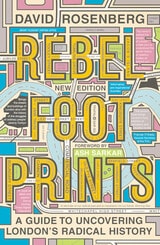
Rebel Footprints
A Guide to Uncovering London's Radical HistoryDavid Rosenberg
Pluto Press, 2019
If you visit London, and you’ve only experienced Buckingham Palace, The Tower of London, and The Millennium Wheel, you’ve missed the true essence of London, and its politically-charged, rebellious history. A truly radical response to conservative heritage tours and banal day trips, Rebel Footprints brings to life the history of social movements in England's capital by providing lively commentary, maps, and walking tours you will not find anywhere else.
David Rosenberg transports readers from well-known landmarks to history-making hidden corners, while telling the story of protest and struggle in London from the early nineteenth to the mid-twentieth century.
From the suffragettes to the socialists, from the chartists to the trade unionists: Rosenberg invites us to step into the footprints of a diverse cast of dedicated fighters for social justice. Individual chapters highlight particular struggles and their participants, from famous faces to lesser-known luminaries. Chapters include:
*Writers and Rioters in the Fleet Street Precinct
*Trailblazers for Democracy in Clerkenwell Green
*The Spark of Rebellion in Bow
*Coming in from the Cold: Immigrant Agitators and Radicals in Spitalfields
*No Gods, No Masters: Radical Bloomsbury
*Life on the Boundary: Fighting for Housing in Bethnal Green and Shoreditch
*Stirrings from the South: The Battersea Four
*peaking Truth to Power: Suffragettes and Westminster
*Not Afraid of the Prison Walls: Rebel Women and Men of Poplar
*People's Power in Bermondsey
Rebel Footprints sets London's radical campaigners against the backdrop of the city's multi-faceted development. Self-directed walks pair with narratives that seamlessly blend history, politics, and geography, while specially commissioned maps and illustrations immerse the reader in the story of the city.
Whether you're visiting London for the first time, or born and raised there, Rosenberg invites you to see London as you never have before—the radical center of the English-speaking world.
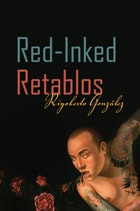
Red-Inked Retablos
Rigoberto González
University of Arizona Press, 2013
In the Mexican Catholic tradition, retablos are ornamental structures made of carved wood framing an oil painting of a devotional image, usually a patron saint. Acclaimed author and essayist Rigoberto González commemorates the passion and the pain of these carvings in his new volume Red-Inked Retablos, a moving memoir of human experience and thought.
This frank new collection masterfully combines accounts from González’s personal life with reflections on writers who have influenced him. The collection offers an in-depth meditation on the development of gay Chicano literature and the responsibilities of the Chicana/o writer.
Widely acclaimed for giving a voice to the Chicano GLBT community, González’s writing spans a wide range of genres: poetry, fiction, nonfiction, and bilingual books for children and young adults. Introduced by Women’s Studies professor Maythee Rojas, Retablos collects thirteen pieces that together provide a narrative of González’s life from his childhood through his career as a writer, critic, and mentor.
In Red-Inked Retablos, González continues to expand his oeuvre on mariposa (literally, “butterfly”) memory, a genre he pioneered in which Chicano/a writers openly address non-traditional sexuality. For González, mariposa memory is important testimony not only about reconfiguring personal identity in relation to masculinity, culture, and religion. It’s also about highlighting values like education, shaping a sex-positive discourse, and exercising agency through a public voice. It’s about making the queer experience a Chicano experience and the Chicano experience a queer one.
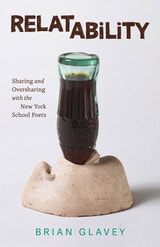
Relatability
Sharing and Oversharing with the New York School PoetsBrian Glavey
University of Chicago Press, 2026
An engaging account of how the New York School poets used art to imagine their queerness as something that might be shared with other people.
How did Frank O’Hara and other New York School poets—a small coterie associated with experimental art and gay culture —become fixtures in today’s culture, quoted on prestige television shows, in teen romances, and at the wedding ceremonies of straight celebrities? How, in other words, did these poets become so relatable? Brian Glavey’s Relatability tells the story of an aesthetic as it traveled from a cluster of mostly queer poets in the middle of the twentieth century to become increasingly central to everyday life in the early twenty-first century.
That the New York School poets are more relatable now than they were during their own lifetime speaks in part to the growing acceptance of same-sex desire in American culture. But Glavey argues that this transformation also tells the story of a shift in the way that aesthetic experience is understood to work. Moving away from forms of modernist impersonality, O’Hara, John Ashbery, James Schuyler, and Joe Brainard made sociability central to the experience of art and literature. Attempting to share their experience of works of art, they were willing to risk the reader’s judgment that they had, perhaps, overshared. Glavey advances an idea of aesthetic judgment that takes seriously its missed connections as well as its successes. Relatability adds a fresh perspective to current conversations around attachment and affect in literary studies.
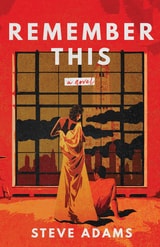
Remember This
Steve Adams
University of Wisconsin Press, 2022
John’s journey to understand the roots of his compulsion to “save” those around him is both aided and thwarted by his relationship with his colleague Jeremy Crawford. Alena’s closest confidant, Jeremy shares an intimacy with her that fuels John's jealousy. Meanwhile, Jeremy finds himself drawn to John and, as his confidant too, participates in the drama of John and Alena’s relationship. As John slowly begins to understand the flawed and wounded experience of love that has followed him through life, he learns how to open himself to true friendship—and to true loss. Set in the midst of cultural upheaval, this powerful novel reverberates across the decades.
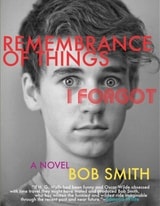
Remembrance of Things I Forgot
A NovelBob Smith
University of Wisconsin Press, 2011
“It’s safe to say your relationship is in trouble if the only way you can imagine solving your problems is by borrowing a time machine.”
In this wickedly comic, cross-country, time-bending journey, John confronts his own—and the nation’s—blunders, learning that a second chance at changing things for the better also brings new opportunities to screw them up. Through edgy humor, time travel, and droll one-liners, Bob Smith examines family dysfunction, suicide, New York City, and recent American history while effortlessly blending domestic comedy with science fiction. Part acidic political satire, part wild comedy, and part poignant social scrutiny, Remembrance of Things I Forgot is an uproarious adventure filled with sharp observations about our recent past.
InSight Out Book Club, featured selection
Bob Smith named one of Instinct magazine’s Leading Men 2011
Winner, Barbara Gittings Literature Award/Stonewall Book Awards, American Library Association
Finalist, Over the Rainbow Selection, American Library Association
Finalist, Green Carnation Prize, international prize for LGBT Literature
Amazon Top Ten Gay & Lesbian Books of 2011
Best Books for General Audiences, selected by the American Association of School Librarians
Best Books for General Audiences, selected by the Public Library Reviewers
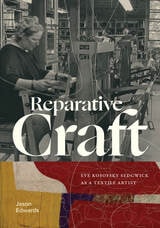
Reparative Craft
Eve Kosofsky Sedgwick as a Textile ArtistJason Edwards
Duke University Press, 2026
Romantic Comedy
James Allen Hall
Four Way Books, 2023
James Allen Hall returns to poetry with Romantic Comedy, a sophomore collection sounding the parameters of genre to subvert cultural notions of literary value and artistic legitimacy. What realities do stories authorize, and which remain untold? “This story,” they profess in “Biography,” “is mine: there was / a wound, then a world.” Rather than playing into the attention economy’s appetite for sensationalism, Hall’s poems resist the formulaic while paying homage to the oeuvre, a formal balancing act that celebrates queer life.The poems create liberatory narratives that break constraints or speak through them. Hall parses music from the blizzard — as when “one year / [they] watched the snow / pile to [their] door / all December, all / January,” “the year [they] wanted / to die,” and, faced with winter’s architecture, “learned / another song. Sang / another way.” Whether grieving the death of their father, documenting the survival of sexual assault, interrogating the scripts of addiction, or revisiting an ’80s crime thriller, Hall’s second collection constantly affirms the ingenuity of self-definition as a technology of survival.

Romantic Sensation
The Queer Lives of Leon A. Belmont, 1853–1927Lizzie Ehrenhalt
University of Minnesota Press, 2026
Exploring gender and sexuality in the Gilded Age through one sensationalized life
Addie Liona Walker. Leon A. Belmont. Nova McClure Carr. Romantic Sensation tells the full story of this one ordinary person’s singular life. Assigned a female sex at birth, Addie was born in Massachusetts in 1853 and lived as a woman for twenty-five years. After transitioning in 1878, Addie became Leon and lived as a man for twenty-four years before making a second gender transition and living as a woman, Nova, for the rest of her life. Placing these milestones within the historical context of the late nineteenth and early twentieth centuries, Lizzie Ehrenhalt traces Belmont’s life, from child laborer to husband, from outlaw to heartthrob, and from stepfather to single mother.
Belmont was a Gilded Age celebrity: he made national news for breaking an ordinance against dressing as the “opposite” sex in Minneapolis, and he inspired a media frenzy when one of his girlfriends told police that he was a woman. While newspapers labeled Belmont a “curious and romantic sensation,” Ehrenhalt shows that he was not much of a sensation after all. Illuminating what his story can tell us about Americans’ developing understandings of sexuality and gender in the 1850s through the 1920s, she reveals how Belmont’s run-ins with police, doctors, courts, and reporters resonate in the evolution of the LGBTQIA+ identities we recognize today.
An empathetic case study of a figure often denied respect in the telling of his story, Romantic Sensation presents Belmont’s gender transitions not as puzzles in need of solving but as acts grounded in the cultural milieu of the Gilded Age. Traversing the dramatic economic upheavals of the second industrial revolution, the Era of Good Stealings, and the Great Railroad Strike of 1922, and spanning the Cult of Domesticity, the invention of sexology, and the rise of New Womanhood, Ehrenhalt uses Belmont’s example to demonstrate how trans, queer, and intersex histories are inseparable from American history.
Retail e-book files for this title are screen-reader friendly with images accompanied by short alt text and/or extended descriptions.
Rudolf
Marian Pankowski
Northwestern University Press, 1996
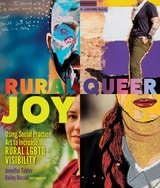
Rural Queer Joy
Using Social Practice Art to Increase Rural LGBTQ+ VisibilityJennifer Tabler
University of Wyoming Press, 2026
Blending social science, fine arts, and the humanities, Rural Queer Joy explores how the telling of rural LGBTQ+ stories affects young rural queer people today. The stories of well-known Wyoming LGBTQ+ people like Matthew Shepard, Sissy Goodwin, and Artemis Langford often center experiences of trauma and hardship, leaving little space for experiences of triumph or joy.
Author Jennifer Tabler and photographer Bailey Russel provided rural LGBTQ+ community members with an opportunity to represent their own experiences through participation in a social practice art project, asking what about being LGBTQ+ brings them joy. They then took the participants’ portraits and invited them to annotate these portraits with paint, markers, paper, or other media. This kind of social practice art provides an opportunity to engage in epistemic activism through the self-empowerment of marginalized voices and perspectives, while also centering visuals of rural queer people that counter existing stereotypes and add nuance to our understanding of rural LGBTQ+ people.
The dynamic artwork and quotes from young rural LGBTQ+ people displayed in this book highlight how their identities are sources of joy and opportunity rather than constraint and hardship. Rural and/or LGBTQ+ people, researchers, and teachers in the fields of community-engaged arts, gender studies, sociology of sexualities, and public humanities will find inspiration in Rural Queer Joy—inspiration to rethink what it means to be rural and LGBTQ+ as well as to use social practice art to increase the visibility of other underserved communities.