Results by title
460 books match the query 'Law and legislation' and 26 start with r
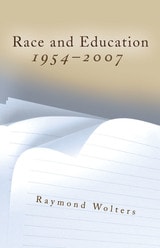
Race and Education, 1954-2007
Raymond Wolters
University of Missouri Press, 2008
In this compelling study, a scholar who has long observed the traumas of school desegregation uncovers the changes and difficulties with which public education has dealt over the last fifty years—and argues that some judicial decisions were ill-advised. Dealing candidly with matters usually considered taboo in academic discourse, Wolters argues that the Supreme Court acted correctly and in accordance with public sentiment in Brown but that it later took a wrong turn by equating desegregation with integration.
Retracing the history of desegregation and integration in America’s schools, Wolters distinguishes between several Court decisions, explaining that while Brown called for desegregation by requiring that schools deal with students on a racially nondiscriminatory basis, subsequent decisions—Green, Swann, Keyes—required actual integration through racial balancing. He places these decisions in the context of educational reform in the 1950s that sought to encourage bright students through advanced placement and honors courses—courses in which African American and Hispanic students were less likely to be enrolled. Then with the racial unrest of the 1960s, the pursuit of academic excellence yielded to concerns for uplifting disadvantaged youths and ensuring the predominance of middle-class peer groups in schools.
Wolters draws on rich historical records to document the devastating consequences of requiring racial balance and sheds new light on America’s legal, social, and cultural landscapes. He reexamines the educational theories of Kenneth Clark and James Coleman, and he challenges statistics that support the results of racial balancing by describing how school desegregation and integration actually proceeded in several towns, cities, and counties.
Race and Education is a bold challenge to political correctness in education and a corrective to the now widely accepted notion that desegregation and racially balanced integration are one and the same. It is essential reading for scholars of law and education and a wake-up call for citizens concerned about the future of America’s schools.
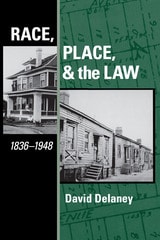
Race, Place, and the Law, 1836-1948
By David Delaney
University of Texas Press, 1998
Black and white Americans have occupied separate spaces since the days of "the big house" and "the quarters." But the segregation and racialization of American society was not a natural phenomenon that "just happened." The decisions, enacted into laws, that kept the races apart and restricted blacks to less desirable places sprang from legal reasoning which argued that segregated spaces were right, reasonable, and preferable to other arrangements.
In this book, David Delaney explores the historical intersections of race, place, and the law. Drawing on court cases spanning more than a century, he examines the moves and countermoves of attorneys and judges who participated in the geopolitics of slavery and emancipation; in the development of Jim Crow segregation, which effectively created apartheid laws in many cities; and in debates over the "doctrine of changed conditions," which challenged the legality of restrictive covenants and private contracts designed to exclude people of color from white neighborhoods. This historical investigation yields new insights into the patterns of segregation that persist in American society today.
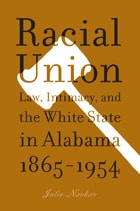
Racial Union
Law, Intimacy, and the White State in Alabama, 1865-1954Julie Novkov
University of Michigan Press, 2008
In November 2001, the state of Alabama opened a referendum on its long-standing constitutional prohibition against interracial marriage. A bill on the state ballot offered the opportunity to relegate the state's antimiscegenation law to the dustbin of history. The measure passed, but the margin was alarmingly slim: more than half a million voters, 40 percent of those who went to the polls, voted to retain a racist and constitutionally untenable law.
Julie Novkov's Racial Union explains how and why, nearly forty years after the height of the civil rights movement, Alabama struggled to repeal its prohibition against interracial marriage---the last state in the Union to do so. Novkov's compelling history of Alabama's battle over miscegenation shows how the fight shaped the meanings of race and state over ninety years. Novkov's work tells us much about the sometimes parallel, sometimes convergent evolution of our concepts of race and state in the nation as a whole.
"A remarkably nuanced account of interlocked struggles over race, gender, class and state power. Novkov's site is Alabama, but her insights are for all America."
---Rogers M. Smith, Christopher H. Browne Distinguished Professor of Political Science, University of Pennsylvania
"Hannah Arendt shocked Americans in the 1950s by suggesting that interracial intimacy was the true measure of a society's racial order. Julie Novkov's careful, illuminating, powerful book confirms Arendt's judgment. By ruling on who may be sexually linked with whom, Alabama's courts and legislators created a racial order and even a broad political order; Novkov shows us just how it worked in all of its painful, humiliating power."
---Jennifer L. Hochschild, Henry LaBarre Jayne Professor of Government, Professor of African and African American Studies, and Harvard College Professor
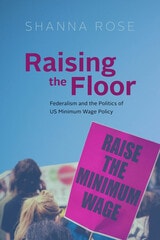
Raising the Floor
Federalism and the Politics of US Minimum Wage PolicyShanna Rose
University of Chicago Press, 2026
A rich history of the development of American minimum wage policy with lessons for today.
Despite broad popular support for robust minimum wage policy, the federal minimum wage is now worth less—in real, inflation-adjusted terms—than at any time since 1949. While some state and local governments have stepped in to fill this void, others have declined to set any minimum wage standard at all. Traversing more than 100 years of history, Raising the Floor examines how interest groups have navigated the highly decentralized American political system to shape the development of federal, state, and local minimum wage laws.
In her analysis, Shanna Rose highlights the importance of American federalism. She argues that because federalism creates multiple arenas for policy change, interest groups have sought out the sites most conducive to their goals, shifting their lobbying efforts as new obstacles and opportunities emerge. Federalism has facilitated minimum wage policymaking by fostering policy experimentation, learning, and diffusion across states and by allowing state and local governments to overcome gridlock and status-quo biases at the national level. Yet, federalism has also been an instrument for containment, enabling those opposed to minimum wage increases to litigate and preempt local-level laws.
With rich historical chapters that illuminate different phases in the development of today’s patchwork of wage standards, Raising the Floor is a deep examination of the past, present, and future of American minimum wage law.
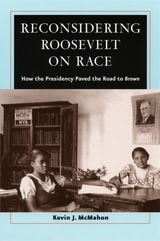
Reconsidering Roosevelt on Race
How the Presidency Paved the Road to BrownKevin J. McMahon
University of Chicago Press, 2003
McMahon shows how FDR's attempt to strengthen the presidency and undermine the power of conservative Southern Democrats dovetailed with his efforts to seek racial equality through the federal courts. By appointing a majority of rights-based liberals deferential to presidential power, Roosevelt ensured that the Supreme Court would be receptive to civil rights claims, especially when those claims had the support of the executive branch.

Recycling Land
Understanding the Legal Landscape of Brownfield DevelopmentElizabeth Glass Geltman
University of Michigan Press, 2000

Refining Child Pornography Law
Crime, Language, and Social ConsequencesEdited by Carissa Byrne Hessick
University of Michigan Press, 2016

Regulating Football
Commodification, Consumption and the LawSteve Greenfield and Guy Osborn
Pluto Press, 2001
Regulation, Organizations, and Politics
Motor Freight Policy at the Interstate Commerce CommissionLawrence S. Rothenberg
University of Michigan Press, 1994
Regulatory Barriers and the Principle of Non-discrimination in World Trade Law
Past, Present, and FutureThomas Cottier and Petros C. Mavroidis, Editors
University of Michigan Press, 2000
Regulatory Justice
Implementing a Wage-Price FreezeRobert A. Kagan
Russell Sage Foundation, 1978
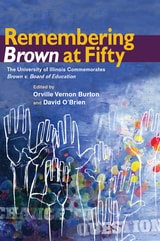
Remembering Brown at Fifty
The University of Illinois Commemorates Brown v. Board of EducationEdited by Orville Vernon Burton and David O'Brien
University of Illinois Press, 2009
Inspired by the University of Illinois's celebration of the Brown v. Board of Education decision's fiftieth anniversary, this collection addresses the significance of Brown in the contributors' lives or work in education and civil rights. Several authors describe their personal roles in the Brown case or similar cases, while others examine and illustrate events, performances, and exhibitions that were part of the anniversary commemoration. The book not only explores the repercussions of the Brown decision, but also stands as a historic document in its own right, preserving the reactions of many prominent intellectuals, artists, and activists fifty years after the decision.
Contributors are Kal Alston, Margaret L. Andersen, Kathryn H. Anthony, Nathaniel C. Banks, Bernice McNair Barnett, Christopher Benson, Ed Blankenheim, Julian Bond, Orville Vernon Burton, Jason Chambers, Constance Curry, Joseph A. De Laine Jr., Mary L. Dudziak, Joe R. Feagin, John Hope Franklin, Ophelia De Laine Gona, Lani Guinier, Darlene Clark Hine, Freeman A. Hrabowski III, John Jennings, Ralph Lemon, George Lipsitz, Jim Loewen, Laughlin McDonald, David O'Brien, James C. Onderdonk, Sekou Sundiata, Christopher Teal, Nicholas Watkins, Carrie Mae Weems, Juan Williams, and Joy Ann Williamson.
Repealed
Ireland’s Unfinished Fight for Reproductive RightsCamilla Fitzsimons
Pluto Press, 2021
*Winner of the James S. Donnelly, Sr. Prize 2022*
In Ireland, 2018, a constitutional ban that equated the life of a woman to the life of a fertilized embryo was overturned and abortion was finally legalized. This victory for the Irish feminist movement set the country alight with euphoria. But the celebrations were short-lived - the new legislation turned out to be one of the most conservative in Europe. This book tells the story of the ‘Repeal’ campaign through the lens of the activists.
The authors trace the shocking history of the origins of the eighth amendment, which was drawn up in fear of a tide of liberal reforms across Europe. They draw out the lessons learned through the decades and from the groundbreaking campaign in 2018, which was an inspiring example of modern grassroots activism. They also recount the tensions between a medicalized approach and reproductive justice approach to abortion, as well as the harsh effect of the campaign on the health of activists.
Grounded in a radical feminist politics, this book is an honest and inspirational account of a movement that is only just beginning.

Reproducing Jews
A Cultural Account of Assisted Conception in IsraelSusan Martha Kahn
Duke University Press, 2000
In this ethnographic study of the new reproductive technologies in Israel, Susan Martha Kahn explores the cultural meanings and contemporary rabbinic responses to artificial insemination, in-vitro fertilization, egg donation, and surrogacy. Kahn draws on fieldwork with unmarried Israeli women who are using state-subsidized artificial insemination to get pregnant and on participant-observation in Israeli fertility clinics. Through close readings of traditional Jewish texts and careful analysis of Israeli public discourse, she explains how the Israeli embrace of new reproductive technologies has made Jewish beliefs about kinship startlingly literal. Kahn also reveals how a wide range of contemporary Israelis are using new reproductive technologies to realize their reproductive futures, from ultraorthodox infertile married couples to secular unmarried women.
As the first scholarly account of assisted conception in Israel, this multisited ethnography will contribute to current anthropological debates on kinship studies. It will also interest those involved with Jewish studies.
Reproductive Justice
The Politics of Health Care for Native American WomenGurr, Barbara
Rutgers University Press, 2015

Reproductive Labor and Innovation
Against the Tech Fix in an Era of HypeJennifer Denbow
Duke University Press, 2024
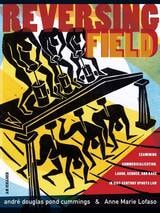
Reversing Field
Examining Commercialization, Labor, Gender, and Race in 21st Century Sports Lawedited by andré douglas pond cummings and Anne Marie Lofaso
West Virginia University Press, 2010
Reversing Field invites students, professionals, and enthusiasts of sport—whether law, management and marketing, or the game itself—to explore the legal issues and regulations surrounding collegiate and professional athletics in the United States. This theoretical and methodological interrogation of sports law openly addresses race, labor, gender, and the commercialization of sports, while offering solutions to the disruptions that threaten its very foundation during an era of increased media scrutiny and consumerism. In over thirty chapters, academics, practitioners, and critics vigorously confront and debate matters such as the Arms Race, gender bias, racism, the Rooney Rule, and steroid use, offering new thought and resolution to the vexing legal issues that confront sports in the 21st century.
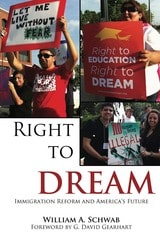
Right to DREAM
Immigration Reform and America’s FutureWilliam A. Schwab
University of Arkansas Press, 2013
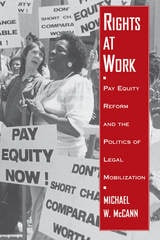
Rights at Work
Pay Equity Reform and the Politics of Legal MobilizationMichael W. McCann
University of Chicago Press, 1994
Rights at Work explores the political strategies in more than a dozen pay equity struggles since the late 1970s, including battles of state employees in Washington and Connecticut, as well as city employees in San Jose and Los Angeles. Relying on interviews with over 140 union and feminist activists, McCann shows that, even when the courts failed to correct wage discrimination, litigation and other forms of legal advocacy provided reformers with the legal discourse—the understanding of legal rights and their constraints—for defining and advancing their cause.
Rights at Work offers new insight into the relation between law and social change—the ways in which grass roots social movements work within legal rights traditions to promote progressive reform.
Rights in the Digital Era
All rights reserved. No part of this publication may be reproduced, stored in a retrieval system, or transmitted in any form or by any means without prior permission from the publisher.
Society of American Archivists, 2015
About Rights in the Digital Era:
MODULE 4Understanding Copyright Law
Heather Briston
Describes the main principles of copyright law and outlines strategies for addressing common issues, special topics, and digital projects.
MODULE 5
Balancing Access and Privacy in Manuscript Collections
Menzi L. Behrnd-Klodt
Introduces basic access and privacy laws, concepts, definitions, and professional ethical standards affecting manuscript materials and private and family papers.
MODULE 6
Balancing Access and Privacy in the Records of Organizations
Menzi L. Behrnd-Klodt
Introduces basic access and privacy laws, concepts, definitions, and professional ethical standards affecting the management of records created by organizations, businesses, agencies, and other entities.
MODULE 7
Managing Rights and Permissions
Aprille C. McKay
Provides practical guidance to help archivists transfer, clear, manage, and track rights information in analog and digital archives.
About Trends in Archives Practice:
This open-ended series by the Society of American Archivists features brief, authoritative treatments—written and edited by top-level professionals—that fill significant gaps in archival literature. The goal of this modular approach is to build agile, user-centered resources. Modules treat discrete topics relating to the practical management of archives and manuscript collections in the digital age. Select modules are clustered together by topic (as they are here) and are available in print or electronic format. Each module also is available separately in electronic format so that readers can mix and match modules that best satisfy their needs and interests. Stay on trend with Trends in Archives Practice!
Rights of Inclusion
Law and Identity in the Life Stories of Americans with DisabilitiesDavid M. Engel and Frank W. Munger
University of Chicago Press, 2003
Although all sixty interviewees had experienced discrimination, none had filed a formal protest or lawsuit. Nevertheless, civil rights played a crucial role in their lives. Rights improved their self-image, enhanced their career aspirations, and altered the perceptions and assumptions of their employers and coworkers-in effect producing more inclusive institutional arrangements. Focusing on these long-term life histories, Engel and Munger incisively show how rights and identity affect one another over time and how that interaction ultimately determines the success of laws such as the ADA.
Rights on Trial
How Workplace Discrimination Law Perpetuates InequalityEllen Berrey, Robert L. Nelson, and Laura Beth Nielsen
University of Chicago Press, 2017
On the surface, America’s commitment to equal opportunity in the workplace has never been clearer. Virtually every company has antidiscrimination policies in place, and there are laws designed to protect these rights across a range of marginalized groups. But, as Ellen Berrey, Robert L. Nelson, and Laura Beth Nielsen compellingly show, this progressive vision of the law falls far short in practice. When aggrieved individuals turn to the law, the adversarial character of litigation imposes considerable personal and financial costs that make plaintiffs feel like they’ve lost regardless of the outcome of the case. Employer defendants also are dissatisfied with the system, often feeling “held up” by what they see as frivolous cases. And even when the case is resolved in the plaintiff’s favor, the conditions that gave rise to the lawsuit rarely change. In fact, the contemporary approach to workplace discrimination law perversely comes to reinforce the very hierarchies that antidiscrimination laws were created to redress.
Based on rich interviews with plaintiffs, attorneys, and representatives of defendants and an original national dataset on case outcomes, Rights on Trial reveals the fundamental flaws of workplace discrimination law and offers practical recommendations for how we might better respond to persistent patterns of discrimination.
Rivers on Fire and Corporate Liars
The Monitoring and Sanctioning of U.S. Water Pollution CrimesJoshua Ozymy
Rutgers University Press, 2026
For over four decades, the US federal government has undertaken efforts to police and prosecute environmental crimes to protect public health and the natural environment. Yet, we still know very little about how US federal agencies have monitored and sanctioned water pollution violations and if these actions actually deter crime. In Rivers on Fire and Corporate Liars, Joshua Ozymy and Melissa Jarrell Ozymy examined over one thousand federal water pollution investigations and prosecutions undertaken by the US EPA and Department of Justice from 1983 to 2023 to answer these questions. Their analysis provides the most comprehensive empirical examination to date of how the criminal enforcement of water pollution has evolved over time, patterns in prosecutions, and how criminals were sanctioned.
Rock This Way
Cultural Constructions of Musical LegitimacyMel Stanfill
University of Michigan Press, 2023
Any and all songs are capable of being remixed. But not all remixes are treated equally. Rock This Way examines transformative musical works—cover songs, remixes, mash-ups, parodies, and soundalike songs—to discover what contemporary American culture sees as legitimate when it comes to making music that builds upon other songs. Through examples of how popular discussion talked about such songs between 2009 and 2018, Mel Stanfill uses a combination of discourse analysis and digital humanities methods to interrogate our broader understanding of transformative works and where they converge at the legal, economic, and cultural ownership levels.
Rock This Way provides a new way of thinking about what it means to re-create and borrow music, how the racial identity of both the reusing artist and the reused artist matters, and the ways in which the law polices artists and their works. Ultimately, Stanfill demonstrates that the extent to which a work is seen as having new expression or meaning is contingent upon notions of creativity, legitimacy, and law, all of which are shaped by white supremacy.

Rules of Origin in International Trade
A Comparative StudyEdwin Vermulst, Jacques Bourgeois, and Paul Waer, Editors
University of Michigan Press, 1994
Ruling Culture
Art Police, Tomb Robbers, and the Rise of Cultural Power in ItalyFiona Greenland
University of Chicago Press, 2021
In 2006, the then-president of Italy declared his country to be “the world’s greatest cultural power.” With Ruling Culture, Fiona Greenland traces how Italy came to wield such extensive legal authority, global power, and cultural influence—from the nineteenth century unification of Italy and the passage of novel heritage laws, to current battles with the international art market. Today, Italy’s belief in its cultural superiority is evident through interactions between citizens, material culture, and the state—crystallized in the Art Squad, the highly visible military-police art protection unit. Greenland reveals the contemporary actors in this tale, taking a close look at the Art Squad and state archaeologists on one side and unauthorized excavators, thieves, and smugglers on the other. Drawing on years in Italy interviewing key figures and following leads, Greenland presents a multifaceted story of art crime, cultural diplomacy, and struggles between international powers.