Results by title
155 books match the query 'Legislators' and 9 start with r
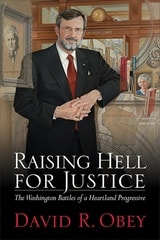
Raising Hell for Justice
The Washington Battles of a Heartland ProgressiveDavid R. Obey
University of Wisconsin Press, 2007
Here, in his autobiography, Obey looks back on his journey in politics beginning with his early years in the Wisconsin Legislature, when Wisconsin moved through eras of shifting balance between Republicans and Democrats. On a national level Obey traces, as few others have done, the dramatic changes in the workings of the U.S. Congress since his first election to the House in 1969. He discusses his own central role in the evolution of Congress and ethics reforms and his view of the recent Bush presidency—crucial chapters in our democracy, of interest to all who observe politics and modern U.S. history.
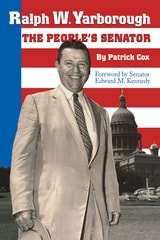
Ralph W. Yarborough, the People's Senator
By Patrick L. Cox
University of Texas Press, 2002
Semifinalist, 22nd Annual Robert F. Kennedy Book Award, 2002
Finalist, Spur Award in western nonfiction biography, Western Writers of America, 2002
Revered by many Texans and other Americans as "the People's Senator," Ralph Webster Yarborough (1903-1996) fought for "the little people" in a political career that places him in the ranks of the most influential leaders in Texas history. The only U. S. Senator representing a former Confederate state to vote for every significant piece of modern civil rights legislation, Yarborough became a cornerstone of Lyndon Johnson's Great Society programs in the areas of education, environmental preservation, and health care. In doing so, he played a major role in the social and economic modernization of Texas and the American South. He often defied conventional political wisdom with his stands against powerful political interests and with his vocal opposition to the Vietnam War. Yet to this day, his admirers speak of Yarborough as an inspiration for public service and a model of political independence and integrity.
This biography offers the first in-depth look at the life and career of Ralph Yarborough. Patrick L. Cox draws on Yarborough's personal and professional papers, as well as on extensive interviews with the Senator and his associates, to follow Yarborough from his formative years in East Texas through his legal and judicial career in the 1930s, decorated military service in World War II, unsuccessful campaigns for Texas governor in the 1950s, distinguished tenure in the United States Senate from 1957 to 1970, and return to legal practice through the 1980s.
Although Yarborough's liberal politics set him at odds with most of the Texas power brokers of his time, including Lyndon Johnson, his accomplishments have become part of the national fabric. Medicare recipients, beneficiaries of the Cold War G. I. Bill, and even beachcombers on Padre Island National Seashore all share in the lasting legacy of Senator Ralph Yarborough.
Reckless Legislation
How Legislators Ignore the ConsitutionBamberger, Michael A.
Rutgers University Press, 1999
Article 6 of the U.S. Constitution requires that every U.S. Senator and Representative, as well as all members of any state legislature, take an oath or affirmation to support the Constitution. Legislators, after all, must accept the basic principles embodied in the Constitution and Bill of Rights when interpreting questions of law. The only way to change these principles is through amendments to the Constitution. But in an increasing number of cases, contends Michael A, Bamberger, our legislators are knowingly abdicating their responsibility to uphold the Constitution. Instead of considering the constitutionality of legislation, they vote for what is politically expedient and popular, leaving it to the courts to determine the legality of their actions. Bamberger argues that legislators have a duty to consider constitutionality and not “pass the buck” to the judiciary regardless of political pressures or even well-meaning intentions to achieve desirable policy objectives.
Reckless Legislation examines legislative consideration and avoidance of issues of constitutionality through a number of examples: the regulation of the Internet by Congress and two state legislatures; the reliance by legislatures of Minneapolis, Indianapolis, and Tennessee on “experts” to justify passage of unconstitutional laws; the repeated passage of unconstitutional laws in New York and Missouri relating, respectively, to religion and abortion to wear down the courts and the opposition; and the efforts by Congress to reverse Supreme Court decisions believed by it to be incorrect or harmful.
Bamberger urges legislators to avoid the political motives that lead to “reckless legislation,” recommending that they “make full use of the full panoply of available support services . . . for a better and deeper knowledge of the issues raised.”
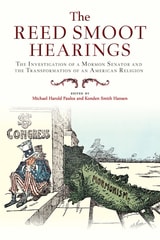
Reed Smoot Hearings
The Investigation of a Mormon Senator and the Transformation of an American ReligionMichael Harold Paulos
Utah State University Press, 2022
The work adds new insights into the role religion and the secular played in the shaping of US political institutions and national policies. Chapters also look at the history of anti-polygamy laws, the persistence of post-1890 plural marriage, the continuation of anti-Mormon sentiment, the intimacies and challenges of religious privatization, the dynamic of federal power on religious reform, and the more intimate role individuals played in effecting these institutional and national developments.
The Smoot hearings stand as an important case study that highlights the paradoxical history of religious liberty in America and the principles of exclusion and coercion that history is predicated on. Framed within a liberal Protestant sensibility, these principles of secular progress mapped out the relationship of religion and the nation-state for the new modern century. The Reed Smoot Hearings will be of significant interest to students and scholars of Mormon, western, American, and religious history.
Publication supported, in part, by Gonzaba Medical Group.
Contributors: Gary James Bergera, John Brumbaugh, Kenneth L. Cannon II, Byron W. Daynes, Kathryn M. Daynes, Kathryn Smoot Egan, D. Michael Quinn
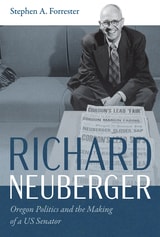
Richard Neuberger
Oregon Politics and the Making of a US SenatorStephen A. Forrester
Oregon State University Press, 2025
Richard L. Neuberger is a consequential but often forgotten figure in Oregon history, largely due to his early death at forty-seven, near the end of his only term in the United States Senate. But his life and legacy continue to inspire Oregonians and influence politicians.
In 1954, Neuberger was the first Democrat elected to the Senate from Oregon in forty years. His election moved Oregon from a solidly Republican state to one where liberal Democrats could control the legislature as well as statewide offices. He was an especially productive freshman, on both Oregon natural resource issues and national matters. Neuberger was also only the second Jewish person elected to the Senate following passage of the 17th Amendment, which required the direct election of senators.
Prior to entering politics, Neuberger was best known as a journalist. He was a prolific freelance writer, publishing 750 magazine articles and six books. In 1933, at the age of twenty-one, he visited Germany and penned the first firsthand account of Brownshirt violence written by an American; his editor at The Nation called it “an epoch-making article.”
Neuberger was ahead of his time in his advocacy of conservation, in his political partnership with his wife Maurine—who successfully ran for his Senate seat after his untimely death in 1960—and in his outspoken liberal advocacy at a time when Oregon was considerably more conservative than it is today. Tom McCall, later one of the most influential governors in the state’s history, considered Neuberger his role model as a conservationist.
In this definitive biography—more than forty years in the making—Stephen Forrester documents Neuberger’s extraordinary life and career, highlighting a legacy that includes shaping Oregon’s renowned conservation policies and developing the state’s modern Democratic party.
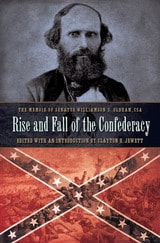
Rise and Fall of the Confederacy
The Memoir of Senator Williamson S. Oldham, CSAEdited & Intro by Clayton E. Jewett
University of Missouri Press, 2006
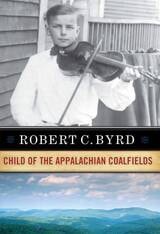
Robert C. Byrd
Child of the Appalachian CoalfieldsRobert C. Byrd
West Virginia University Press, 2010
This autobiography follows United States Senator Robert C. Byrd’s experiences from his boyhood in the early 1920s to his election in 2000, which won him an unprecedented eighth term in the Senate. Along the way, Senator Byrd offers commentary on national and international events that occurred throughout his long life in public service. Senator Byrd’s journey from the hardscrabble coalfields to the marbled halls of Congress has inspired generations of people in West Virginia and throughout the nation. From reading the stories of the Founding Fathers as a young boy by the light of a kerosene lamp to the swearing of an oath for more than a half-century to guard the United States Constitution, Senator Byrd’s life is legendary. Byrd always stands by his principles, earning the affection of the people of his home state and the respect of Americans from all walks of life. With his beloved Erma ever by his side, Robert C. Byrd has never forgotten his roots, harkening back to those early lessons that he learned as a child of the Appalachian coalfields.
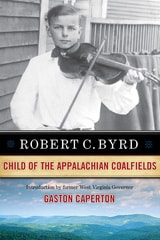
Robert C. Byrd
Child of the Appalachian CoalfieldsROBERT C. BYRD
West Virginia University Press, 2015
This autobiography follows West Virginia senator Robert C. Byrd’s experiences from his boyhood in the early 1920s to his election in 2000, which won him an unprecedented eighth term in the Senate. Within these pages, Senator Byrd offers commentary on national and international events that occurred throughout his long life in public service.
His journey from the hardscrabble coalfields to the marbled halls of Congress has inspired generations of people in West Virginia and throughout the nation. From reading the stories of the Founding Fathers as a young boy by the light of a kerosene lamp to the swearing of an oath for more than a half-century to guard the US Constitution, Senator Byrd’s life is legendary.
Until his death on June 28, 2010, Byrd stood by his principles, earning the affection of the people of his home state and the respect of Americans from all walks of life. With his beloved Erma ever by his side, Robert C. Byrd never forgot his roots, harkening back to those early lessons that he learned as a child of the Appalachian coalfields.
This new paperback edition includes a foreword by Gaston Caperton, governor of West Virginia from 1989–1997.
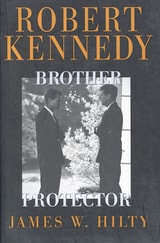
Robert Kennedy
Brother ProtectorJames Hilty
Temple University Press, 2000
The centerpiece of the book is the remarkable political partnership that formed between Robert and John. As the manager of John's political campaigns Robert proved himself "hard as nails" (in his father's admiring words), relentless in securing his brother's victory and unforgiving in overseeing his brother's presidency. Hilty marshals a great deal of evidence to show that while they did not always see eye to eye -- Lyndon Johnson's selection as John's running mate being a notable disagreement -- Robert and John discussed virtually every issue, gauging the likely political effects of every position. Robert was so close to the President that insiders called him "number one and a-half"; their consultations were so intimate that they spoke in a kind of code, barely intelligible to those around them. In Hilty's evocative but unsentimental recounting of the political crises of the Kennedy Administration, Robert and John prove to have been more calculating and astute leaders than today's pundits allow. Theirs was a partnership that was unprecedented and, thanks to an act signed into law by Lyndon Johnson, is never to be equaled.
The Kennedy family's story seems to have been lived in the public eye and Americans apparently never tire of the photographs and familiar anecdotes. Most of the written accounts, however, either highlight the multiple tragedies and scandals, preserve the latter-day Camelot myth, or follow the elusive traces of some conspiracy.
In contrast, Hilty's concern is for historical perspective -- for accuracy, plausibility, and thoroughness. With facts and reasoned conclusions, he challenges the stories about the Kennedys in relation to Marilyn Monroe, J. Edgar Hoover, and Martin Luther King, Jr. that have passed into American folklore. He develops a portrait of Robert Kennedy as a complex public figure, a man of centrist political allegiances and firm moral convictions who easily adapted to the crusader's role in working for Joseph McCarthy or pursuing James Hoffa for racketeering. Hilty's great care in sifting through the evidence and weighing competing theories gives us a sense of Kennedy as a public servant whose dedication to social justice intensified after he was in office and further deepened after his brother's assassination.
Even as he took charge of family matters and supported Jacqueline during the long ordeal of the state funeral, Robert's own crushing pain was evident to the world. It was then that "Bobby" ceased being a disparaging term and became a mark of respect and affection.