Results by title
1445 books match the query 'Life Sciences' and 25 start with r
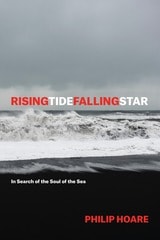
RISINGTIDEFALLINGSTAR
In Search of the Soul of the SeaPhilip Hoare
University of Chicago Press, 2018
Many of us visit the sea. Admire it. Even profess to love it. But very few of us live it. Philip Hoare does. He swims in the sea every day, either off the coast of his native Southampton or his adopted Cape Cod. He watches its daily and seasonal changes. He collects and communes with the wrack—both dead and never living—that it throws up on the shingle. He thinks with, at, through the sea.
All of which should prepare readers: RISINGTIDEFALLINGSTAR is no ordinary book. It mounts no straight-ahead argument. It hews to no single genre. Instead, like the sea itself, it moves, flows, absorbs, transforms. In its pages we find passages of beautiful nature and travel writing, lyrical memoir, seams of American and English history and much more. We find Thoreau and Melville, Bowie and Byron, John Waters and Virginia Woolf, all linked through a certain refusal to be contained, to be strictly defined—an openness to discovery and change. Running throughout is an air of elegy, a reminder that the sea is an ending, a repository of lost ships, lost people, lost ways of being. It is where we came from; for Hoare, it is where he is going.
“Every swim is a little death,” Hoare writes, “but it is also a reminder that you are alive.” Few books have ever made that knife’s edge so palpable. Read RISINGTIDEFALLINGSTAR. Let it settle into the seabed of your soul. You’ll never forget it.
Rabbits with Horns and Other Astounding Viruses
Carl Zimmer
University of Chicago Press, 2011
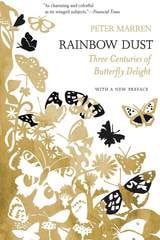
Rainbow Dust
Three Centuries of Butterfly DelightPeter Marren
University of Chicago Press, 2016
At the age of five, Marren had his “Nabokov Moment,” catching his first butterfly and feeling the dust of its colored scales between his fingers. It was a moment that would launch a lifetime’s fascination rivaling that of the famed novelist—a fascination that put both in good company. From the butterfly collecting and rearing craze that consumed North America and Europe for more than two hundred years (a hobby that in some cases bordered on madness), to the potent allure of butterfly iconography in contemporary advertisements and their use in spearheading calls to conserve and restore habitats (even though butterflies are essentially economically worthless), Marren unveils the many ways in which butterflies inspire us as objects of beauty and as symbols both transient and transcendent.
Floating around the globe and through the whole gamut of human thought, from art and literature to religion and science, Rainbow Dust is a cultural history rather than merely a natural one, a tribute to butterflies’ power to surprise, entertain, and obsess us. With a sway that far surpasses their fragile anatomy and gentle beat, butterfly wings draw us into the prismatic wonders of the natural world—and, in the words of Marren, these wonders take flight.
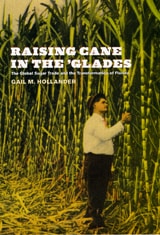
Raising Cane in the 'Glades
The Global Sugar Trade and the Transformation of FloridaGail M. Hollander
University of Chicago Press, 2008
Using, among other sources, interviews, government and corporate documents, and recently declassified U.S. State Department memoranda, Gail M. Hollander demonstrates that the development of Florida’s sugar region was the outcome of pitched battles reaching the highest political offices in the U.S. and in countries around the world, especially Cuba—which emerges in her narrative as a model, a competitor, and the regional “other” to Florida’s “self.” Spanning the period from the age of empire to the era of globalization, the book shows how the “sugar question”—a label nineteenth-century economists coined for intense international debates on sugar production and trade—emerges repeatedly in new guises. Hollander uses the sugar question as a thread to stitch together past and present, local and global, in explaining Everglades transformation.
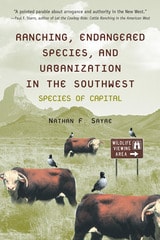
Ranching, Endangered Species, and Urbanization in the Southwest
Species of CapitalNathan F. Sayre
University of Arizona Press, 2002
Nathan Sayre now takes a close look at how the ranching ideal has come into play in the conversion of a large tract of Arizona rangeland from private ranch to National Wildlife Refuge. He tells how the Buenos Aires Ranch, a working operation for a hundred years, became not only a rallying point for multiple agendas in the "rangeland conflict" after its conversion to a wildlife refuge but also an expression of the larger shift from agricultural to urban economies in the Southwest since World War II.
The U.S. Fish and Wildlife Service bought the Buenos Aires Ranch in 1985, removed all livestock, and attempted to restore the land to its "original" grassland in order to protect an endangered species, the masked bobwhite quail. Sayre examines the history of the ranch and the bobwhite together, exploring the interplay of social, economic, and ecological issues to show how ranchers and their cattle altered the land—for better or worse—during a century of ranching and how the masked bobwhite became a symbol for environmentalists who believe that the removal of cattle benefits rangelands and wildlife.
Sayre evaluates both sides of the Buenos Aires controversy—from ranching's impact on the environment to environmentalism's sometimes misguided efforts at restoration—to address the complex and contradictory roles of ranching, endangered species conservation, and urbanization in the social and environmental transformation of the West. He focuses on three dimensions of the Buenos Aires story: the land and its inhabitants, both human and animal; the role of government agencies in shaping range and wildlife management; and the various species of capital—economic, symbolic, and bureaucratic—that have structured the activities of ranchers, environmentalists, and government officials.
The creation of the Buenos Aires National Wildlife Refuge has been a symbolic victory for environmentalists, but it comes at the cost of implicitly legitimizing the ongoing fragmentation and suburbanization of Arizona's still-wild rangelands. Sayre reveals how the polarized politics of "the rangeland conflict" have bound the Fish and Wildlife Service to a narrow, ineffectual management strategy on the Buenos Aires, with greater attention paid to increasing tourism from birdwatchers than to the complex challenge of restoring the masked bobwhite and its habitat. His findings show that the urban boom of the late twentieth century echoed the cattle boom of a century before—capitalizing on land rather than grass, humans rather than cattle—in a book that will serve as a model for restoration efforts in any environment.
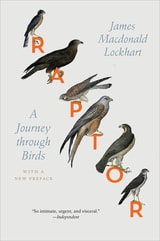
Raptor
A Journey through BirdsJames Macdonald Lockhart
University of Chicago Press, 2017
Taking as his guide the nineteenth-century Scottish naturalist and artist William MacGillivray, Lockhart loosely follows the historical trail forged by MacGillivray as he ventured from Aberdeen to London filling his pockets with plants and writing and illustrating the canonical A History of British Birds. Linking his journey to that of his muse, Lockhart shares his own encounters with raptors ranging from the scarce osprey to the successfully reintroduced red kite, a species once protected by medieval royal statute, revealing with poetic immediacy the extraordinary behaviors of these birds and the extreme environments they call home.
Creatures both worshipped and reviled, raptors have a talon-hold on the human heart and imagination. With his book, Lockhart unravels these complicated ties in a work by turns reverent and euphoric—an interweaving of history, travel, and nature writing at its best. A hymn to wanderers, to the land and to the sky, and especially to the birds, Raptor soars.

Reading Darwin in Arabic, 1860-1950
Marwa Elshakry
University of Chicago Press, 2013
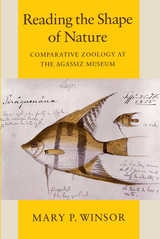
Reading the Shape of Nature
Comparative Zoology at the Agassiz MuseumMary P. Winsor
University of Chicago Press, 1991
In 1859, Louis Agassiz established the Museum of Comparative Zoology to house research on the ideal types that he believed were embodied in all living forms. Agassiz's vision arose from his insistence that the order inherent in the diversity of life reflected divine creation, not organic evolution. But the mortar of the new museum had scarcely dried when Darwin's Origin was published. By Louis Agassiz's death in 1873, even his former students, including his son Alexander, had defected to the evolutionist camp. Alexander, a self-made millionaire, succeeded his father as director and introduced a significantly different agenda for the museum.
To trace Louis and Alexander's arguments and the style of science they established at the museum, Winsor uses many fascinating examples that even zoologists may find unfamiliar. The locus of all this activity, the museum building itself, tells its own story through a wonderful series of archival photographs.
Recent Developments in Fisheries Economics
Special Issue of Land Economics 83:1 (February 2007)Ussif Rashid Sumaila
University of Wisconsin Press, 2007
Articles cover a wide variety of recent topical issues in fisheries economics and the latest developments in the field, including marine protected areas, individual transferable quotas, fisheries subsidies, habitat values, data fouling, and rotational management of sedentary fishery resources. Seven of the articles were presented at the 2005 North American Association of Fisheries Economics Forum at the University of British Columbia in Vancouver, Canada.
Recent Mammals of Alaska
Stephen O. MacDonald and Joseph A. Cook
University of Alaska Press, 2009
From the polar bear and the gray wolf to the walrus and river otter, there are 115 species of mammals in Alaska that have never been fully catalogued until now. Biologists Joseph A. Cook and Stephen O. MacDonald have compiled here the first comprehensive guide to all of Alaska’s mammals, big and small, endearing and ferocious.
Through extensive fieldwork and research the authors have produced a unique and authoritative reference. Detailed entries for each species include distribution and taxonomic information, status, habitat, and fossil history. Appendices include quick reference listings of mammal distribution by region, specimen locations, conservation status, and the incidence of Pleistocene mammals. The guide is generously illustrated with line drawings by Alaskan artist W. D. Berry and includes several maps indicating populations and locations of species.
Mammals of Alaska will be an accessible, easy to use source for scholars and hobbyists alike.
Relentless Evolution
John N. Thompson
University of Chicago Press, 2013
Remarkable Plants That Shape Our World
Helen Bynum and William Bynum
University of Chicago Press, 2014
Remarkable Plants celebrates the wonder and utility of the green kingdom, taking a detailed look at how plants have shaped our world. It focuses on eighty key species and richly explores their history, highlighting their importance and bringing to light surprising stories. Organized thematically into eight sections, the book starts with “Transformers” (including rice, beans, olives) and moves through sections such as “Heal and Harm” (poppy, aloe, strychnos) and “Revered and Adored” (lotus, frankincense, rose). Each species is introduced with its common and scientific names and followed by an exploration of its cultural, historical, botanical, and symbolic associations. Hundreds of botanical illustrations show full plants as well as highlight distinctive leaves, blooms, and fruits.
Rooted in one of the world’s most important and renowned temples of greenery, the Royal Botanic Gardens, Kew, Remarkable Plants is a symbiotic balance of science and art that will open readers’ eyes to the deep influence of the natural world on our modern one.

Remarkable Trees
Christina Harrison and Tony Kirkham
University of Chicago Press, 2019
Remarkable Trees tells the unique story of more than sixty species, each selected for its resonance and connection with people. In portraits that combine vivid cultural and historical narrative with a firm scientific grounding, Christina Harrison and Tony Kirkham reveal fascinating details of trees from the world’s major environmental zones and habitats. Some are obvious superstars such as oaks, redwoods and coconut, while others are more surprising: we learn of the monkey puzzle, a tree native to Chile that “can grow for 1,000 years,” and of the manchineel, a tree that contains sap so toxic to human skin that it’s a risk to stand beneath it on a rainy day. In these pages are trees that are healers and killers, trees that serve as foundations of great buildings and grand feasts, and trees that leave us with a sense of wonder and of worry for their survival.
In a tribute to the artists and botanists who have been inspired by trees for centuries, this book is filled with 240 delightful illustrations. The varied and beautiful images come from the unrivalled archive at the Royal Botanic Gardens, Kew, and they bring this enlightening and enchanting volume to life.
While trees have supported us for millennia, we have recently lost that direct, deep connection with them. Harrison and Kirkham remind us that we do not have to look far to reestablish that relationship and that we can still cherish the splendor and significance of these quiet giants.
Renaissance Man of Cannery Row
The Life and Letters of Edward F. RickettsEdward F. Ricketts, edited by Katharine A. Rodger
University of Alabama Press, 2002
This portrait of one of John Steinbeck's closest friends illuminates the life and work of a figure central to the development of scientific and literary thought in the 20th century.
Marine biologist Edward F. Ricketts is perhaps best known as the inspiration for John Steinbeck's most empathic literary characters Doc in Cannery Row, Slim in Of Mice and Men, Jim Casy in The Grapes of Wrath, and Lee in East of Eden. The correspondence of this accomplished scientist, writer, and philosopher reveals the influential exchange of ideas he shared with such prominent thinkers and artists as Henry Miller, Joseph Campbell, Ellwood Graham, and James Fitzgerald, in addition to Steinbeck, all of whom were drawn to Ricketts's Monterey Bay laboratory, a haven of intellectual discourse and Bohemian culture in the 1930s and 1940s.
The 125 previously unpublished letters of this collection, housed at the Stanford University Library, document the broad range of Ricketts's interests and accomplishments during the last 12 and most productive years of his life. His handbook on Pacific marine life, Between Pacific Tides, is still in print, now in its fifth edition. The biologist's devotion to ecological conservation and his evolving philosophy of science as a cross-disciplinary, holistic pursuit led to the publication of The Sea of Cortez. Many of Ricketts's letters discuss his studies of the Pacific littoral and his theories of “phalanx” and transcendence. Epistles to family members, often tender and humorous, add dimension and depth to Steinbeck's mythologized depictions of Ricketts. Katharine A. Rodger has enriched the correspondence with an introductory biographical essay and a list of works cited.
Rendering Life Molecular
Models, Modelers, and Excitable MatterNatasha Myers
Duke University Press, 2015

Reproductive Success
Studies of Individual Variation in Contrasting Breeding SystemsEdited by T. H. Clutton-Brock
University of Chicago Press, 1988
"A must read for anyone interested in evolution, mating/social systems, and population ecology."—John L. Koprowski, IJournal of Insect Behavior
Rereading the Fossil Record
The Growth of Paleobiology as an Evolutionary DisciplineDavid Sepkoski
University of Chicago Press, 2012
Rereading the Fossil Record presents the first-ever historical account of the origin, rise, and importance of paleobiology, from the mid-nineteenth century to the late 1980s. Drawing on a wealth of archival material, David Sepkoski shows how the movement was conceived and promoted by a small but influential group of paleontologists and examines the intellectual, disciplinary, and political dynamics involved in the ascendency of paleobiology. By tracing the role of computer technology, large databases, and quantitative analytical methods in the emergence of paleobiology, this book also offers insight into the growing prominence and centrality of data-driven approaches in recent science.
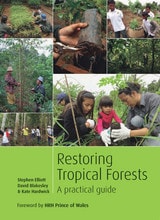
Restoring Tropical Forests
A Practical GuideStephen Elliott, David Blakesley, and Kate Hardwick
Royal Botanic Gardens, Kew, 2013
The book is based on the innovative techniques developed at Chiang Mai University’s Forest Restoration Research Unit, Thailand. It takes a threepart approach, first looking at effective general concepts of tropical forest dynamics and regeneration, then at specific proven restoration techniques, and finally at how to use research methods to refine and adapt the techniques to local ecological and socioeconomic conditions. In addition, illustrations and case studies of successful applications help to make this a global, user-friendly guide. Whether for developing new techniques or improving old ones, Restoring Tropical Forests is a valuable tool for effective, ecologically sound change.
Restoring Tropical Forests
A Practical Guide (French Edition)Stephen Elliott, David Blakesley, and Kate Hardwick
Royal Botanic Gardens, Kew, 2014
The book is based on the innovative techniques developed at Chiang Mai University’s Forest Restoration Research Unit, Thailand. It takes a threepart approach, first looking at effective general concepts of tropical forest dynamics and regeneration, then at specific proven restoration techniques, and finally at how to use research methods to refine and adapt the techniques to local ecological and socioeconomic conditions. In addition, illustrations and case studies of successful applications help to make this a global, user-friendly guide. Whether for developing new techniques or improving old ones, Restoring Tropical Forests is a valuable tool for effective, ecologically sound change.
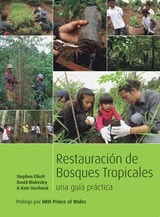
Restoring Tropical Forests
A Practical Guide (Spanish Edition)Stephen Elliott, David Blakesley, and Kate Hardwick
Royal Botanic Gardens, Kew, 2014
The book is based on the innovative techniques developed at Chiang Mai University’s Forest Restoration Research Unit, Thailand. It takes a threepart approach, first looking at effective general concepts of tropical forest dynamics and regeneration, then at specific proven restoration techniques, and finally at how to use research methods to refine and adapt the techniques to local ecological and socioeconomic conditions. In addition, illustrations and case studies of successful applications help to make this a global, user-friendly guide. Whether for developing new techniques or improving old ones, Restoring Tropical Forests is a valuable tool for effective, ecologically sound change.
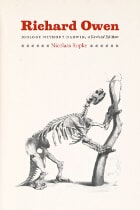
Richard Owen
Biology without DarwinNicolaas A. Rupke
University of Chicago Press, 2009
In the mid-1850s, no scientist in the British Empire was more visible than Richard Owen. Mentioned in the same breath as Isaac Newton and championed as Britain’s answer to France’s Georges Cuvier and Germany’s Alexander von Humboldt, Owen was, as the Times declared in 1856, the most “distinguished man of science in the country.” But, a century and a half later, Owen remains largely obscured by the shadow of the most famous Victorian naturalist of all, Charles Darwin. Publicly marginalized by his contemporaries for his critique of natural selection, Owen suffered personal attacks that undermined his credibility long after his name faded from history.
With this innovative biography, Nicolaas A. Rupke resuscitates Owen’s reputation. Arguing that Owen should no longer be judged by the evolution dispute that figured in only a minor part of his work, Rupke stresses context, emphasizing the importance of places and practices in the production and reception of scientific knowledge. Dovetailing with the recent resurgence of interest in Owen’s life and work, Rupke’s book brings the forgotten naturalist back into the canon of the history of science and demonstrates how much biology existed with, and without, Darwin
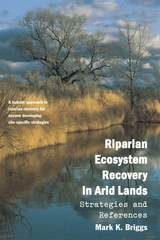
Riparian Ecosystem Recovery in Arid Lands
Strategies and ReferencesMark K. Briggs
University of Arizona Press, 1996
The book opens with a review of watershed characteristics and an examination of drainage systems, then proceeds to determining the causes of riparian decline. It introduces five factors that have a significant effect on the results of riparian rehabilitation--natural regeneration, water availability, channel stability, direct impacts such as livestock grazing and recreational activities, and soil salinity--and offers case studies that demonstrate how revegetation has been used both effectively and ineffectively.
It also discusses strategies other than revegetation that may be effective in improving the ecological condition of a site. Many of the strategies presented are also relevant to nonarid climates and to urban areas. By emphasizing evaluation of riparian ecosystems, so that the causes of degradation can be understood, and by offering general approaches that can be tailored to specific situations, Riparian Ecosystem Recovery in Arid Lands takes a holistic approach to riparian recovery that will enable users to better judge whether recovery expenditures are likely to produce desired results. An unprecedented work, it will substantially add to efforts across the Southwest and elsewhere to restore these unique and priceless ecosystems.
CONTENTS
1 An Overview: Background on Riparian Ecosystems / Lessons Learned from Past Riparian Recovery Efforts / An Evaluation Strategy / Defining Some Important Terms
2 Considering the Damaged Riparian Area from a Watershed Perspective: Case Study 1: Rincon Creek / Taking Advantage of Available Information / Getting to Know the Watershed / Getting to Know the Stream
3 Impacts within the Riparian Zone: Livestock / Case Study 2: Sheepshead Spring / Recreation / Competition from Nonnative Species / Wildlife
4 Natural Recovery in Riparian Ecosystems: Case Study 3: Aravaipa Creek / Factors Influencing Natural Recovery / Case Study 4: McEuen Seep / Autoecology of Selected Southwestern Riparian Tree Species / Case Study 5: Boulder Creek
5 Water Availability: Case Study 6: Box Bar / How Groundwater Decline Occurs / Evaluating Groundwater Conditions / Revegetating Riparian Ecosystems Characterized by Groundwater Decline
6 The Drainageway: Channel Instability and Riparian Ecosystems / Case Study 7: Babocomari River / Channel Dynamics / Strategies for Evaluating Channel Stability / Developing Recovery Projects along Unstable Alluvial Stream Channels
7 Soil Salinity and Riparian Ecosystems: Effects of Soil Salinity on Plant Growth / The Soil Survey / Soil Salinity and Revegetation
8 Developing the Recovery Plan: Developing Project Objectives / Selecting the Best Site / Local, State, and Federal Permit Requirements / Identifying Model Areas / Critical Components of the Recovery Plan / Community Involvement / Demonstration Sites / Postproject Evaluation and Monitoring
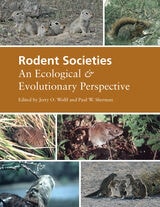
Rodent Societies
An Ecological and Evolutionary PerspectiveEdited by Jerry O. Wolff and Paul W. Sherman
University of Chicago Press, 2007
Rodent Societies synthesizes and integrates the current state of knowledge about the social behavior of rodents, providing ecological and evolutionary contexts for understanding their societies and highlighting emerging conservation and management strategies to preserve them. It begins with a summary of the evolution, phylogeny, and biogeography of social and nonsocial rodents, providing a historical basis for comparative analyses. Subsequent sections focus on group-living rodents and characterize their reproductive behaviors, life histories and population ecology, genetics, neuroendocrine mechanisms, behavioral development, cognitive processes, communication mechanisms, cooperative and uncooperative behaviors, antipredator strategies, comparative socioecology, diseases, and conservation. Using the highly diverse and well-studied Rodentia as model systems to integrate a variety of research approaches and evolutionary theory into a unifying framework, Rodent Societies will appeal to a wide range of disciplines, both as a compendium of current research and as a stimulus for future collaborative and interdisciplinary investigations.
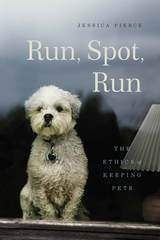
Run, Spot, Run
The Ethics of Keeping PetsJessica Pierce
University of Chicago Press, 2016
That’s the question that animates Jessica Pierce’s powerful Run, Spot, Run. A lover of pets herself (including, over the years, dogs, cats, fish, rats, hermit crabs, and more), Pierce understands the joys that pets bring us. But she also refuses to deny the ambiguous ethics at the heart of the relationship, and through a mix of personal stories, philosophical reflections, and scientifically informed analyses of animal behavior and natural history, she puts pet-keeping to the test. Is it ethical to keep pets at all? Are some species more suited to the relationship than others? Are there species one should never attempt to own? And are there ways that we can improve our pets’ lives, so that we can be confident that we are giving them as much as they give us?
Deeply empathetic, yet rigorous and unflinching in her thinking, Pierce has written a book that is sure to help any pet owner, unsettling assumptions but also giving them the knowledge to build deeper, better relationships with the animals with whom they’ve chosen to share their lives.
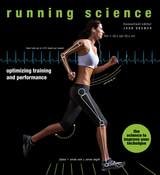
Running Science
Optimizing Training and PerformanceJohn Brewer
University of Chicago Press, 2017
As a sports scientist and Running Fitness columnist, John Brewer has reviewed hundreds of scientific studies, and he offers runners the benefit of their findings in Running Science. Each chapter explores a different aspect of the sport through a series of questions. Many of the questions address practical matters: Do you really need to stretch? Which running shoes best suit your form and foot strike? Does carbo-loading lore stand up to scientific scrutiny—could a big bowl of spaghetti be the difference between a PR and a DNF? Other questions enhance appreciation for the incredible feats of the sport’s great athletes. (What would it take to run a two-hour marathon? Perfect weather, a straight, flat course, competition, and a lot of luck!) The answer to each question is presented in a straightforward, accessible manner, with accompanying infographics.
Whether you’re a beginner or a seasoned runner with many miles and medals behind you, Running Science is a must-have for anyone interested in the fascinating science behind the sport.