Results by title
273 books match the query 'Memoir' and 10 start with r
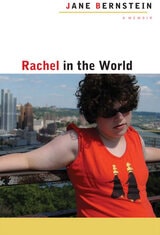
Rachel in the World
A MemoirJane Bernstein
University of Illinois Press, 2010
What happens when love is no longer enough? Jane Bernstein thought that learning to accept her daughter’s disabilities meant her struggles were over. But as Rachel grew up and needed more than a parent’s devotion, both mother and daughter were confronted with formidable obstacles. Rachel in the World, which begins in Rachel’s fifth year and ends when she turns twenty-two, tells of their barriers and successes with the same honesty and humor that made Loving Rachel, Bernstein’s first memoir, a classic in its field. The linked accounts in part 1 center on family issues, social services, experiences with caregivers, and Rachel herself--difficult, charming, hard to fathom, eager for her own independence. The second part of the book chronicles Bernstein’s attempt to find Rachel housing at a time when over 200,000 Americans with mental retardation were on waiting lists for residential services. As Rachel prepares to leave her mother’s constant protection, Bernstein invites the reader to share the frustrations and unexpected pleasures of finding a place for her daughter, first in her family, and then in the world.
Raw Edges
A MemoirPhyllis Barber
University of Nevada Press, 2012
When Phyllis Barber’s thirty-three-year marriage ended, she had to redefine herself as a woman, a mother, and an artist. Raw Edges is her moving account of the “lean years” that followed her divorce. It is interwoven with a narrative of the marriage of two gifted people that begins with “sealing” in a Mormon temple, endures through the birth of four sons and the development of two careers, and founders when the couple’s personal needs no longer match their aspirations or the rigid strictures of Mormon life. Raw Edges reflects the predicament that many women experience as their marriages disintegrate and they fail to achieve their own expectations as well as those set by their society and their faith. It is also a story of hope, of how a woman overcome by grief and confusion eventually finds a new approach to life.
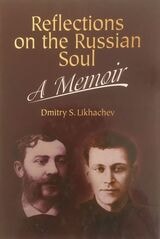
Reflections on the Russian Soul
A MemoirDmitry S. Likhachev
Central European University Press, 2000
This compelling and often traumatic book is the memoir of one of the most important figures in modern Russian history, Dmitry S. Likhachev, revered as ‘a guardian of national culture’. Reflections on the Russian Soul is an incredible account of an intellectual’s turbulent journey through twentieth century Russia. Likhachev re-counts the fortunes of people with whom he came into contact and reproduces the air of passed years in Russia.
Likhachev vividly portrays his childhood years in St. Petersburg and continues into his student life at Leningrad University that led to an agonizing period of imprisonment and near death. He describes how a harmless prank caught the attention of the Secret Police, resulting in his exile and confinement within the infamous prison island of Solovki. He describes his first-hand experience of brutality in prison during the early Stalin years and the incident that not only saved him but also haunted him for the rest of his life.
He reflects on the years after his release from prison and the events leading up to the Second World War. His powerful recollection of the blockade of Leningrad provides the reader with a horrific insight into the harsh effects of war, hunger and survival. Lichachev goes on to describe post-war Russia and how his own livelihood developed from literary editor to a return to Leningrad University as Professor of History. This compelling autobiography finishes with Likhachev’s poignant return to Solovki as a free man.
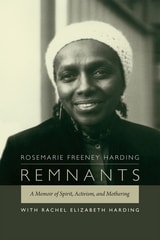
Remnants
A Memoir of Spirit, Activism, and MotheringRosemarie Freeney Harding with Rachel Elizabeth Harding
Duke University Press, 2015
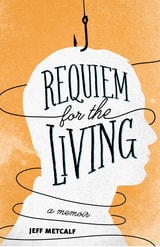
Requiem for the Living
A MemoirMetcalf
University of Utah Press, 2014
Recipient of the Mayor's Award in Literary Arts at the Utah Arts Festival in 2015.
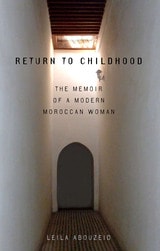
Return to Childhood
The Memoir of a Modern Moroccan WomanBy Leila Abouzeid
University of Texas Press, 1998
Leila Abouzeid, whose novel Year of the Elephant has gone through six reprintings, has now translated her childhood memoir into English. Published in Rabat in 1993 to critical acclaim, the work brings to life the interlocking dramas of family ties and political conflict.
Against a background of Morocco's struggle for independence from French colonial rule, Abouzeid charts the development of personal relationships, between generations as well as between husbands and wives. Abouzeid's father is a central figure; as a strong advocate of Moroccan nationalism, he was frequently imprisoned by the French and his family forced to flee the capital. Si Hmed was a public hero, but the young daughter's memories of her famous father and of the family's plight because of his political activities are not so idyllic.
The memoir utilizes multiple voices, especially those of women, in a manner reminiscent of the narrative strategies of the oral tradition in Moroccan culture. Return to Childhood may also be classified as an autobiography, a form only now gaining respect as a valid literary genre in the Middle East. Abouzeid's own introduction and Elizabeth Fernea's foreword discuss this new development in Arabic literature.
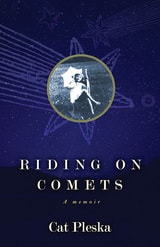
Riding on Comets
A MemoirCat Pleska
West Virginia University Press, 2015
Riding on Comets is the true story of an only child growing up in a working-class family during the 1950s and ‘60s.
As the family storyteller, Cat Pleska whispers and shouts about her life growing up around savvy, strong women and hard-working, hard-drinking men. Unlike many family stories set within Appalachia, this story provides an uncommon glimpse into this region: not coal, but an aluminum plant; not hollers, but small-town America; not hillbillies, but a hard-working family with traditional values.
From the dinner table, to the back porch, to the sprawling countryside, Cat Pleska reveals the sometimes tender, sometimes frightening education of a child who listens at the knees of these giants. She mimics and learns every nuance, every rhythm—how they laugh, smoke, cuss, fight, love, and tell stories—as she unwittingly prepares to carry their tales forward, their words and actions forever etched in her mind. And finally, she discovers a life story of her own.

Right Back Where I Started
A Memoir in MusicDavid Itkin
University of North Texas Press, 2025
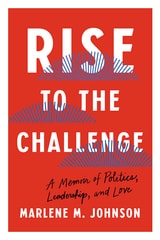
Rise to the Challenge
A Memoir of Politics, Leadership, and LoveJohnson
University of Minnesota Press, 2024
The inspiring life story of Minnesota’s first woman lieutenant governor: breaking political ground, navigating patriarchal tradition, and persevering through great personal loss
Marking a milestone for women in state government, Marlene M. Johnson became Minnesota’s first woman lieutenant governor under Rudy Perpich’s gubernatorial administration in January 1983. That same year, she met her husband, Peter, and their deeply loving relationship profoundly sustained her for twenty-seven years. Rise to the Challenge weaves these personal and professional stories together in a courageous portrait of dedication and leadership.
Growing up in rural Minnesota, Johnson began organizing and advocating for change early, beginning with a campaign to introduce foreign languages into her high school curriculum. Pursuing a deeply felt commitment to improving the lives of others, she continued to sharpen her leadership skills throughout her life, participating in activist work in college, cofounding organizations to support women entrepreneurs and politicians, and eventually running an international education nonprofit.
A stalwart supporter, her husband gave Marlene strength and encouragement to face the challenges of the political landscape and its gender biases. Then, in 2010, he suffered a traumatic brain injury that would change both of their lives. Learning how to be a medical advocate and, eventually, facing the sorrow of Peter’s death, Marlene relied on the hard-fought resilience and belief in herself that Peter had helped her to develop.
A story of learning and leadership in politics, business, and public service, Rise to the Challenge is a moving portrayal of spirit, perseverance, and grace in the face of daunting personal challenges, supported by unwavering faith in the public good.
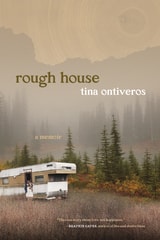
rough house
a memoirTina Ontiveros
Oregon State University Press, 2020
Tina Ontiveros was born into timber on both sides of the family. Her mother spent summers driving logging trucks for her family’s operation, and her father was the son of an itinerant logger, raised in a variety of lumber towns, as Tina herself would be.
A story of growing up in turmoil, rough house recounts a childhood divided between a charming, mercurial, abusive father in the forests of the Pacific Northwest and a mother struggling with small-town poverty. It is also a story of generational trauma, especially for the women—a story of violent men and societal restrictions, of children not always chosen and frequently raised alone.
Ontiveros’s father, Loyd, looms large. Reflecting on his death and long absence from her life, she writes, “I had this ridiculous hope that I would get to enjoy a functional relationship with my father, on my own terms, now that I was an adult.” In searingly honest, straightforward prose, rough house is her attempt to carve out this relationship, to understand her father and her family from an adult perspective.
While some elements of Ontiveros’s story are universal, others are indelibly grounded in the logging camps of the Pacific Northwest at the end of the twentieth century, as the lumber industry shifted and contracted. Tracing her childhood through the working-class towns and forests of Washington and Oregon, Ontiveros explores themes of love and loss, parents and children, and her own journey to a different kind of adulthood.