Results by title
479 books match the query 'Methodology' and 25 start with r
Race, Rhetoric, and Research Methods
Alexandria Lockett
University Press of Colorado, 2021
Re/Orienting Writing Studies
Queer Methods, Queer ProjectsWilliam P. Banks
Utah State University Press, 2018
While the humanities have engaged queer theory extensively, research methods have often been hermeneutic or interpretive. At the same time, social science approaches in composition research have foregrounded inquiry on human participants but have often struggled to understand where lesbian, gay, bisexual, transgender, and queer people fit into empirical research projects. Re/Orienting Writing Studies works at the intersections of humanities and social science methodologies to offer new insight into using queer methods for data collection and queer practices for framing research.
Contributors: Chanon Adsanatham, Jean Bessette, Nicole I. Caswell, Michael J. Faris, Hillery Glasby, Deborah Kuzawa, Maria Novotny, G Patterson, Stacey Waite, Stephanie West-Puckett
Reading Randomised Controlled Trials
Opening the BookRobert Savage, Amy Fox, Anneka Dawson, Helen Gray, and Clare Huxley
University College London, 2025
Reading Randomised Controlled Trials presents an illuminating exploration of how large-scale educational trials unfold in real-world settings, displaying the often-overlooked human decisions that shape their outcomes. Using the Flexible Phonics trial—an ambitious study involving nearly 3,000 children in 118 schools across England—as a case study, the authors examine the practical and ethical problems with conducting randomized controlled trials (RCTs) in education. Unlike pharmaceutical trials, educational RCTs operate in dynamic environments where factors such as teacher decision-making and school culture play a crucial role.
This book depicts the inner workings of education research and also underlines its broader significance, particularly in the wake of school closures during the COVID-19 pandemic. By focusing on early childhood literacy and the long-term impact of evidence-based interventions, Reading Randomised Controlled Trials provides important insights for educators and researchers seeking to bridge the gap between rigorous research and meaningful classroom practice. A must-read for those invested in improving educational outcomes, this book contests assumptions about what works in education—and why.

Reading, Research, And Writing
Teaching InformationMary Snyder Broussard
Assoc of College & Research Libraries, 2017
Readings in Evaluation Research, 2ed
Francis G. Caro
Russell Sage Foundation, 1977
Reason in Law, Tenth Edition
Lief H. Carter, Thomas F. Burke and Jessica Silbey
University of Chicago Press, 2026
An indispensable introduction to legal reasoning, updated for today’s political and legal environment.
Since it was first published nearly five decades ago, Reason in Law has become the starting point for understanding legal reasoning, a critical component of the rule of law. The editors show how judges can integrate all the elements of a case to persuasively explain their rulings—and, even more importantly, why they sometimes fail to do so. Drawing on cases old and new, Reason in Law enables readers to become sophisticated “judges of judging.”
Now in its tenth edition, Reason in Law includes a new chapter on the increasingly contentious and politically consequential field of administrative law and addresses recent developments in the American legal landscape, including growing conservatism in the federal judiciary and the flood of lawsuits brought against the second Trump administration. It also analyzes new cases on the First Amendment rights of high schoolers, transgender civil rights, the responsibilities universities have for student safety, Donald Trump’s sweeping claims of executive power, and historic Supreme Court decisions expanding the rights of gun owners and allowing states to criminalize abortion. As always, Reason in Law connects legal theory with empirical research on the American judicial system, showing how trustworthy legal reasoning helps preserve social peace and the rule of law.
Reason in Law
Ninth EditionLief H. Carter and Thomas F. Burke
University of Chicago Press, 2016
Reclaiming Indigenous Research in Higher Education
Minthorn, Robin Starr
Rutgers University Press, 2018
Recently, Native scholars have started to reclaim research through the development of their own research methodologies and paradigms that are based in tribal knowledge systems and values, and that allow inherent Indigenous knowledge and lived experiences to strengthen the research. Reclaiming Indigenous Research in Higher Education highlights the current scholarship emerging from these scholars of higher education. From understanding how Native American students make their way through school, to tracking tribal college and university transfer students, this book allows Native scholars to take center stage, and shines the light squarely on those least represented among us.
Reconstructing Prehistory
Scientific Method in ArchaeologyJames Bell
Temple University Press, 1994
Reevaluating the method of scientific investigation, James A. Bell provides a bold philosophical framework for developing and assessing archaeologists' theories of the past. More informed and judicious decisions, the author asserts, are made when archaeologists explore questions such as:
•How can theories be formulated so that they increase understanding and provide insight, and are theories still useful when they do not?
•
How can theories be adjusted when anomalies are revealed?
•
How can theories be assessed against competing theories?
•
When should theories be abandoned, and when should they be pursued further?
With numerous examples from archaeology as well as comparative examples from the physical and biological sciences, Bell illustrates how exploring the answers to these and related inquiries will lead to improved formulation and testing of theories.
Redefining Geek
Bias and the Five Hidden Habits of Tech-Savvy TeensCassidy Puckett
University of Chicago Press, 2022
A surprising and deeply researched look at how everyone can develop tech fluency by focusing on five easily developed learning habits.
Picture a typical computer geek. Likely white, male, and someone you’d say has a “natural instinct” for technology. Yet, after six years teaching technology classes to first-generation, low-income middle school students in Oakland, California, Cassidy Puckett has seen firsthand that being good with technology is not something people are born with—it’s something they learn. In Redefining Geek, she overturns the stereotypes around the digitally savvy and identifies the habits that can help everyone cultivate their inner geek.
Drawing on observations and interviews with a diverse group of students around the country, Puckett zeroes in on five technology learning habits that enable tech-savvy teens to learn new technologies: a willingness to try and fail, management of frustration and boredom, use of models, and the abilities to use design logic and identify efficiencies. In Redefining Geek, she shows how to measure and build these habits, and she demonstrates how many teens historically marginalized in STEM are already using these habits and would benefit from recognition for their talent, access to further learning opportunities, and support in career pathways. She argues that if we can develop, recognize, and reward these technological learning habits in all kids—especially girls and historically marginalized racial and ethnic groups—we can address many educational inequities and disparities in STEM.
Revealing how being good with technology is not about natural ability but habit and persistence, Redefining Geek speaks to the ongoing conversation on equity in technology education and argues for a more inclusive technology learning experience for all students.
Redesigning Social Inquiry
Fuzzy Sets and BeyondCharles C. Ragin
University of Chicago Press, 2008
Redesigning Social Inquiry provides a substantive critique of the standard approach to social research—namely, assessing the relative importance of causal variables drawn from competing theories. Instead, Ragin proposes the use of set-theoretic methods to find a middle path between quantitative and qualitative research. Through a series of contrasts between fuzzy-set analysis and conventional quantitative research, Ragin demonstrates the capacity for set-theoretic methods to strengthen connections between qualitative researchers’ deep knowledge of their cases and quantitative researchers’ elaboration of cross-case patterns. Packed with useful examples, Redesigning Social Inquiry will be indispensable to experienced professionals and to budding scholars about to embark on their first project.

Reflective Teaching, Effective Learning
Instructional Literacy for Library EducatorsChar Booth
American Library Association, 2011
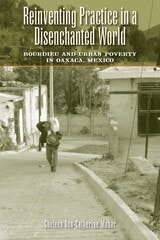
Reinventing Practice in a Disenchanted World
Bourdieu and Urban Poverty in Oaxaca, MexicoBy Cheleen Ann-Catherine Mahar
University of Texas Press, 2010
Colonia Hermosa, now considered a suburb of Oaxaca, began as a squatter settlement in the 1950s. The original residents came in search of transformation from migrants to urban citizens, struggling from rural poverty for the chance to be part of the global economy in Oaxaca.
Cheleen Ann-Catherine Mahar charts the lives of a group of residents in Colonia Hermosa over a period of thirty years, as Mexico became more closely tied into the structures of global capital, and the residents of Colonia Hermosa struggled to survive. Residents shape their discussions within a larger narrative, and their talk is the language of the heroic individual, so necessary to the ideology and the functioning of capital. However, this logic only tenuously connects to the actual material circumstances of their lives.
Mahar applies the theories of French sociologist Pierre Bourdieu to her data from Mexico in order to examine the class trajectories of migrant families over more than three decades. Through this investigation, Mahar adds an important intergenerational study to the existing body of literature on Oaxaca, particularly concerning the factors that have reshaped the lives of urban working poor families and have created a working-class fraction of globalized citizenship.

Relations
An Anthropological AccountMarilyn Strathern
Duke University Press, 2020
Remembering the Dead in the Ancient Near East
Recent Contributions from Bioarchaeology and Mortuary ArchaeologyBenjamin W. Porter
University Press of Colorado, 2016
Remembering the Dead in the Ancient Near East is among the first comprehensive treatments to present the diverse ways in which ancient Near Eastern civilizations memorialized and honored their dead, using mortuary rituals, human skeletal remains, and embodied identities as a window into the memory work of past societies.
In six case studies teams of researchers with different skillsets—osteological analysis, faunal analysis, culture history and the analysis of written texts, and artifact analysis—integrate mortuary analysis with bioarchaeological techniques. Drawing upon different kinds of data, including human remains, ceramics, jewelry, spatial analysis, and faunal remains found in burial sites from across the region’s societies, the authors paint a robust and complex picture of death in the ancient Near East.
Demonstrating the still underexplored potential of bioarchaeological analysis in ancient societies, Remembering the Dead in the Ancient Near East serves as a model for using multiple lines of evidence to reconstruct commemoration practices. It will be of great interest to students and scholars of ancient Near Eastern and Egyptian societies, the archaeology of death and burial, bioarchaeology, and human skeletal biology.
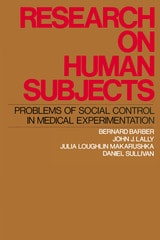
Research on Human Subjects
Problems of Social Control in Medical ExperimentationBernard Barber
Russell Sage Foundation, 1973

Researching American Culture
A Guide for Student AnthropologistsConrad Phillip Kottak, Editor
University of Michigan Press, 1982
Conducting original fieldwork is a science and an art. Anthropology students can easily get an A in Aborigines without ever understanding their own tribal behavior. American culture, like all others, has its share of ritual and myths, ranging from singles bars to sports events. This volume guides undergraduate students to correct scientific methods and successful personal approaches in their work.
Researching American Culture covers the universe of ethnography: the researcher’s role, interviewing, questionnaire construction, ethics, coping with the limitations of time and space. Guides for researchers, original research papers by undergraduates, and essays by professional anthropologists are all included. By applying anthropological techniques to today’’s behavior, students learn to be objective about their own culture and skeptical about practices rarely questioned.
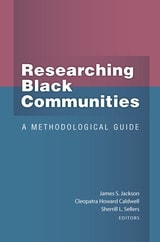
Researching Black Communities
A Methodological GuideJames S. Jackson, Cleopatra Howard Caldwell, Sherrill L. Sellers, editors
University of Michigan Press, 2014

Resonance
Beyond the WordsUnni Wikan
University of Chicago Press, 2012
Rewired
Research-Writing Partnerships Within TheRandall McClure
Assoc of College & Research Libraries, 2016
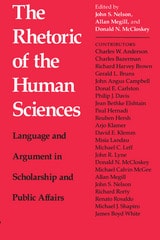
Rhetoric Of The Human Sciences
Language And Argument In Scholarship And Public AffairsJohn S. Nelson
University of Wisconsin Press, 1990
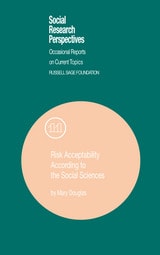
Risk Acceptability According to the Social Sciences
Mary Douglas
Russell Sage Foundation, 1985
Romance Reader's Advisory
The Librarian's Guide to Love in the StacksAmerican Library Association, 2000
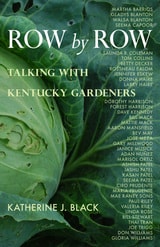
Row by Row
Talking with Kentucky GardenersKatherine J. Black
Ohio University Press, 2015
For two and a half years, Katherine J. Black crisscrossed Kentucky, interviewing home vegetable gardeners from a rich variety of backgrounds. Row by Row: Talking with Kentucky Gardeners is the result, a powerful compilation of testimonies on the connections between land, people, culture, and home.
The people profiled here share a Kentucky backdrop, but their life stories, as well as their gardens, have as many colors, shapes, and tastes as heirloom tomatoes do. Black interviewed those who grow in city backyards, who carve out gardens from farmland, and who have sprawling plots in creek bottoms and former pastures. Many of the gardeners in Row by Row speak eloquently about our industrialized food system’s injuries to the land, water, and health of people. But more often they talk about what they are doing in their gardens to reverse this course.
Row by Row is as sure to appeal to historians, food studies scholars, and sustainability advocates as it is to gardeners and local food enthusiasts. These eloquent portraits, drawn from oral histories and supplemented by Deirdre Scaggs’ color photographs, form a meditation on how gardeners make sense of their lives through what they grow and how they grow it.
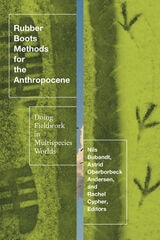
Rubber Boots Methods for the Anthropocene
Doing Fieldwork in Multispecies WorldsAstrid Oberborbeck Andersen
University of Minnesota Press, 2023
A methodological follow-up to Arts of Living on a Damaged Planet
The environmental and climatic crises of our time are fundamentally multispecies crises. And the Anthropocene, a time of “human-made” disruptions on a planetary scale, is a disruption of the fabric of life as a whole. The contributors to Rubber Boots Methods for the Anthropocene argue that understanding the multispecies nature of these disruptions requires multispecies methods.
Answering methodological challenges posed by the Anthropocene, Rubber Boots Methods for the Anthropocene retools the empirical study of the socioecological chaos of the contemporary moment across the arts, human science, and natural science. Based on critical landscape history, multispecies curiosity, and collaboration across disciplines and knowledge systems, the volume presents thirteen transdisciplinary accounts of practical methodological experimentation, highlighting diverse settings ranging from the High Arctic to the deserts of southern Africa and from the pampas of Argentina to the coral reefs of the Western Pacific, always insisting on the importance of firsthand, “rubber boots” immersion in the field.
The methodological companion to Arts of Living on a Damaged Planet: Ghosts and Monsters of the Anthropocene (Minnesota, 2017), this collection puts forth empirical studies of the multispecies messiness of contemporary life that investigate some of the critical questions of our time.
Contributors: Filippo Bertoni, Museum für Naturkunde, Berlin; Harshavardhan Bhat, U of Westminster; Nathalia Brichet, U of Copenhagen; Janne Flora, Aarhus U, Denmark; Natalie Forssman, U of British Columbia; Peter Funch, Aarhus U; Kirsten Hastrup, U of Copenhagen; Colin Hoag, Smith College; Joseph Klein, U of California, Santa Cruz; Andrew S. Mathews, U of California, Santa Cruz; Daniel Münster, U of Oslo; Ursula Münster, U of Oslo; Jon Rasmus Nyquist, U of Oslo; Katy Overstreet, U of Copenhagen; Pierre du Plessis, U of Oslo; Meredith Root-Bernstein; Heather Anne Swanson, Aarhus U; Anna Lowenhaupt Tsing, U of California,
Santa Cruz; Stine Vestbo.