Results by title
193 books match the query 'Modernism (Literature)' and 7 start with r
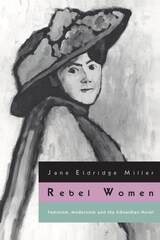
Rebel Women
Feminism, Modernism and the Edwardian NovelJane Eldridge Miller
University of Chicago Press, 1996
"Miller's is the best account we have, not only of Edwardian women novelists, but of early 20th-century women novelists; the measure of her achievement is that the distinction no longer seems workable." —David Trotter, The London Review of Books
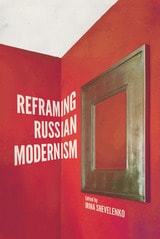
Reframing Russian Modernism
Edited by Irina Shevelenko
University of Wisconsin Press, 2018
Expanding upon prior studies that focus more specifically on literary manifestations of the movement, Reframing Russian Modernism features original research that ranges broadly, from political aesthetics to Darwinism to yoga. These unique complementary perspectives counter reductionism of any kind, integrating the study of Russian modernism into the larger body of humanistic scholarship devoted to modernity.
Representing Modernist Texts
Editing as InterpretationGeorge Bornstein, Editor
University of Michigan Press, 1991
In Representing Modernist Texts, thirteen internationally known scholars provide major explorations of the topic in the work of particular writers. The issues they raise include the construction of a writer’s canon and the effect of newly available “uncanonical” manuscript materials on existing works and orderings; the replacement of the older idea of a fixed, stable text by a more contemporary notion of the text as process; and the interrogation by advanced textual theory of many of the same notions of “author,” “intention,” and “stability of the text” questioned by advanced literary theory.
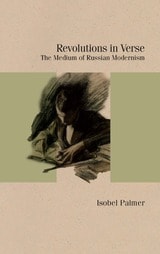
Revolutions in Verse
The Medium of Russian ModernismIsobel Palmer
Northwestern University Press, 2025
How modernist interartistic experimentation and the proliferation of new media technologies inspired fresh insights into poetry
Isobel Palmer spotlights Russian modernist poets’ and formalist theorists’ conscious engagement with formal convention, showing how their efforts were tied up with broader attempts in the early Soviet era to understand and articulate the nature of poetry and its most characteristic devices. Returning to critical debates around poetic encounters with three key aesthetic categories—rhythm, image, and voice—Palmer unpacks the period’s deeper interest in the material bases of poetic speech itself. Through fresh, incisive readings of canonical poets and theorists, from Andrei Bely and Vladimir Mayakovsky to Yury Tynianov and Viktor Shklovsky, Revolutions in Verse: The Medium of Russian Modernism explores the proliferation of interartistic experiments and the emergence of new media technologies that made poetry visible as a medium in its own right.
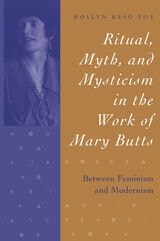
Ritual, Myth, and Mysticism in the Work of Mary Butts
Between Feminism and ModernismFOY ROSLYN
University of Arkansas Press, 2000
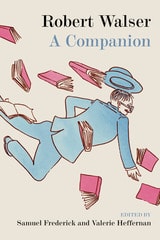
Robert Walser
A CompanionEdited by Samuel Frederick and Valerie Heffernan
Northwestern University Press, 2018
The Swiss writer Robert Walser (1878-1956) is now recognized as one of the most important European authors of the modernist period, having garnered high praise from such prominent voices as Susan Sontag, W. G. Sebald, and J. M. Coetzee. Robert Walser: A Companion is the first comprehensive guide to Walser’s work in English. The twelve essays in this collection examine Walser’s literary output, historical milieu, and idiosyncratic writing process, addressing aspects of his biography; discussing the various genres in which he wrote (the novel, short prose, drama, lyric poetry, and letters); and analyzing his best-known novels and short stories alongside lesser-known but no less fascinating poems, plays, and prose pieces.
An essential addition to the scholarship about this eccentric, prolific, and influential writer’s work, Robert Walser: A Companion will be of interest both to established scholars and to those coming to Walser for the first time.
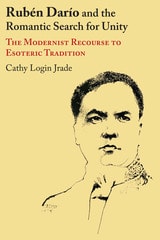
Rubén Darío and the Romantic Search for Unity
The Modernist Recourse to Esoteric TraditionBy Cathy Login Jrade
University of Texas Press, 1983
Modernism was the major Spanish American literary movement of the late nineteenth and early twentieth centuries. Leader of that influential movement was Rubén Darío, the Nicaraguan now recognized as one of the most important Hispanic poets of all time.
Like the Romantics in England and the Symbolists on the Continent, Darío and other Modernists were strongly influenced by occultist thought. But, as the poet Octavio Paz has written, "academic criticism has ... preferred to close its eyes to the stream of occultism that runs throughout Darío's work. This silence damages our comprehension of his poetry."
Cathy Login Jrade's groundbreaking study corrects this critical oversight. Her work clearly demonstrates that esoteric tradition is central to Modernism and that an understanding of this centrality clarifies both the nature of the movement and its relationship to earlier European literature.
After placing Modernism in a broad historical and literary perspective, Jrade examines the impact of esoteric beliefs upon Darío's view of the world and the role of poetry in it. Through detailed and insightful analyses of key poems, she explores the poet's quest for solutions to the nineteenth-century crisis of belief.
The movement that Ruben Darío headed brought Hispanic poetry into the mainstream of the "modern tradition," with its sense of fragmentation and alienation and its hope for integration and reconciliation with nature. Rubén Darío and the Romantic Search for Unity enriches our understanding of that movement and the work of its leading poet.