Results by title
970 books match the query 'Movements' and 28 start with r
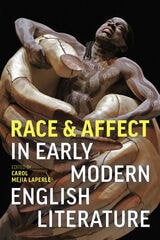
Race and Affect in Early Modern English Literature
Carole Mejia LaPerle
Arizona Center for Medieval and Renaissance Studies, 2021
Race and Affect in Early Modern English Literature puts the fields of critical race studies and affect theory into dialogue. Doing so opens a new set of questions: What are the emotional experiences of racial formation and racist ideologies? How do feelings—through the physical senses, emotional passions, or sexual encounters—come to signify race? What is the affective register of anti-blackness that pervades canonical literature? How can these visceral forms of racism be resisted in discourse and in practice? By investigating how race feels, this book offers new ways of reading and interpreting literary traditions, religious differences, gendered experiences, class hierarchies, sexuality, and social identities. So far scholars have shaped the discussion of race in the early modern period by focusing on topics such as genealogy, language, economics, religion, skin color, and ethnicity. This book, however, offers something new: it considers racializing processes as visceral, affective experiences.
Rational Animals
The Teleological Roots of IntentionalityMark Okrent
Ohio University Press, 2007
Rational Animals: The Teleological Roots of Intentionality offers an original account of the intentionality of human mental states, such as beliefs and desires.
The account of intentionality in Rational Animals is broadly biological in its basis, emphasizing the continuity between human intentionality and the levels of intentionality that should be attributed to animal actions and states.
Establishing the goal-directed character of animal behavior, Mark Okrent argues that instrumentally rational action is a species of goal-directed behavior that is idiosyncratic to individual agents and is distinguished by its novelty and flexibility. He also argues that some nonlinguistic animals are capable of instrumental rationality and that in the first instance, the contents of beliefs and desires are individuated by the explanatory role of those states in rationxadally accounting for such instrumentally rational behavior.
The account of instrumental rationality offered in Rational Animals allows for understanding the practical rationality of linguistically competent human beings as a distinctive capacity of social animals capable of undertaking roles governed by socially sanctioned norms.
Rational Animals will be of interest to cognitive scientists, philosophers of mind, philosophers of biology, philosophers of action, ethologists, and those interested in the debates concerning animal intelligence.
Reading with the Transcendentalists
Ten Works that Made a MovementPhilip F. Gura
University of Massachusetts Press, 2026
Exploring the books and reading practices behind the creation of Transcendentalist philosophy and community
Transcendentalism emerged in early 19th century New England as a uniquely American philosophical, spiritual, and literary movement. Its first generation of thinkers—including Ralph Waldo Emerson, Theodore Parker, and Margaret Fuller—created a worldview that stressed the inherent goodness of the “self-reliant” individual and the presence of the divine in nature. These intellectuals gathered in informal symposia devoted to what Emerson called “creative reading,” a practice that stresses the transformative potential of the written word that was central to the movement’s emergence, growth, and spread. But what were these thinkers reading and how did it influence the development of Transcendentalism?
In Reading with the Transcendentalists, renowned literary scholar Philip F. Gura focuses on 10 American, British, and European books that were essential to the movement’s thoughts, writings, and activities. Many of the authors of these books—James Marsh, Madame de Staël, Samson Reed, George Ripley, Thomas Carlyle, Albert Brisbane, and George Sand—stood outside of Transcendentalism yet profoundly influenced it. Others such as Emerson, Parker, and Fuller were the movement’s central architects, whose writings in turn inspired the next generation, including Henry David Thoreau and Caroline Healey Dall. Each of these books challenged prevailing religious, philosophical, and social conventions in ways that resonated deeply with burgeoning Transcendentalist ideals.
Blending intellectual biography with book history, Gura crafts a captivating cultural history that reconstructs the dynamic social networks of the early Transcendentalists, in which ideas from the written word circulated, evolved, and acquired new meanings. The result is an rich portrait of reading as a creative and communal act, and an exploration of how books ignite curiosity, sustain friendship, and catalyze intellectual transformation. Through a carefully developed narrative structure that is filled not only with books and reading but with headline-worthy scandals, disputes, and falling outs and realignments, Gura traces the historical arc of a transnational intellectual movement that helped lay the foundation for the idea of “America.”
Reason after Its Eclipse
On Late Critical TheoryMartin Jay
University of Wisconsin Press, 2017
After surveying Western ideas of reason from the ancient Greeks through Kant, Hegel, and Marx, Jay engages at length with the ways leading theorists of the Frankfurt School—Horkheimer, Marcuse, Adorno, and most extensively Habermas—sought to salvage a viable concept of reason after its apparent eclipse. They despaired, in particular, over the decay in the modern world of reason into mere instrumental rationality. When reason becomes a technical tool of calculation separated from the values and norms central to daily life, then choices become grounded not in careful thought but in emotion and will—a mode of thinking embraced by fascist movements in the twentieth century.
Is there a more robust idea of reason that can be defended as at once a philosophical concept, a ground of critique, and a norm for human emancipation? Jay explores at length the ommunicative rationality advocated by Habermas and considers the range of arguments, both pro and con, that have greeted his work.
Reason and Evidence in Husserl's Phenomenology
David Michael Kleinberg-Levin
Northwestern University Press, 1970
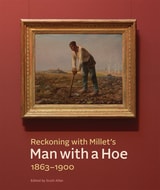
Reckoning with Millet's "Man with a Hoe," 1863–1900
Scott Allan
J. Paul Getty Trust, The, 2023
A monumentalizing portrayal of a peasant bowed over by brutal toil, Man with a Hoe (1860–62) by Jean-François Millet (1814–1875) is arguably the most art historically significant painting in the J. Paul Getty Museum’s collection of nineteenth-century European art. This volume situates the work in the arc of Millet’s career and traces its fascinating and contentious reception, from its scandalous debut at the 1863 Paris Salon to the years following its acquisition by American collectors in the 1890s. The essays examine the painting’s tumultuous public life, beginning in France, where critics attacked it on aesthetic and political grounds as a radical realist provocation; through its transformative movement in the art market during the remaining years of the artist’s life and following his death; to its highly publicized arrival in California as a celebrated masterpiece. In the United States it was enlisted to serve philanthropic interests, became the subject of a popular poem, and once again became embroiled in controversy, in this case one that was strongly inflected by American racial politics. This is the first publication dedicated to the work since its acquisition by the Getty Museum in 1985.
This volume is published to accompany an exhibition on view at the J. Paul Getty Museum at the Getty Center from September 12 to December 10, 2023.
Redreaming the Renaissance
Essays on History and Literature in Honor of Guido RuggieroMary Lindemann
University of Delaware Press, 2024
Reduction and Givenness
Investigations of Husserl, Heidegger, and PhenomenologyJean-Luc Marion
Northwestern University Press, 1997
Reflections on Frege's Philosophy
Reinhardt Grossmann
Northwestern University Press, 1969
Religion After the Gods
Edwin H. Wilson and the American Humanist AssociationJohn S. Haller Jr.
University of Illinois Press, 2026
Sometimes called America’s fourth religion, religious humanism emerged in the Midwest as a product of Enlightenment rationality, the Social Gospel, and the philosophy of pragmatism. John S. Haller Jr. examines religious humanism’s first fifty years alongside Edwin H. Wilson’s pivotal role in the American Humanist Association (AHA).
Started by a group of Unitarian faculty and students, religious humanism applied the rituals of the theocentric universe of Judeo-Christianity to the non-theistic, anthropocentric universe of agnostics, altruists, humanitarians, and meliorists. Their beliefs found expression in the AHA, founded in 1941 with Wilson as the secretary and editor of its magazine. Wilson’s actions in these and other roles weighed heavily on the organization’s reputation, influence, successes, and failures. At the same time, his multifaceted work reflected the relationship between power and the possibilities inherent in the pluralistic and democratic heritage he pursued.
Rigorous and astute, Religion After the Gods reveals how the tensions between individual aspirations and bureaucratic constraints culminated in hopeful humanist practices.
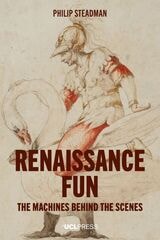
Renaissance Fun
The Machines behind the ScenesPhilip Steadman
University College London, 2021
Renaissance Fun is about the technology of entertainment in the forms of stage machinery, theatrical special effects, gardens, fountains, automata, and self-playing musical instruments from the Renaissance. How did the machines behind these shows work? How exactly were chariots filled with singers let down onto the stage? How were flaming dragons made to fly across the sky? How were seas created on stage? How did mechanical birds imitate real birdsong? What was “artificial music,” three centuries before Edison and the phonograph? How could pipe organs be driven and made to play themselves by waterpower alone? And who were the architects, engineers, and craftsmen who created these wonders? While this book is offered as entertainment in itself, it also offers a more serious scholarly argument centered on the enormous influence of Vitruvius and Hero, two ancient writers who composed on the subject.
Renaissance Invention
Stradanus's Nova RepertaEdited by Lia Markey
Northwestern University Press, 2020
Renaissance Invention: Stradanus’s “Nova Reperta” seeks to understand why certain inventions or novelties were represented in the series and how that presentation reflected and fostered their adoption in the sixteenth century. What can Stradanus’s prints tell us about invention and cross-cultural encounter in the Renaissance? What was considered “new” in the era? Who created change and technological innovation?
Through images of group activities and interactions in workshops, Stradanus’s prints emphasize the importance of collaboration in the creation of new things, dispelling traditional notions of individual genius. The series also dismisses the assumption that the revival of the wonders of the ancient world in Italy was the catalyst for transformation. In fact, the Latin captions on the prints explain how contemporary inventions surpass those of the ancients. Together, word and image foreground the global nature of invention and change in the early modern period even as they promote specifically Florentine interests and activities.
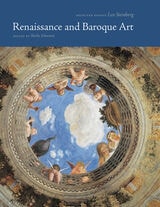
Renaissance and Baroque Art
Selected EssaysLeo Steinberg
University of Chicago Press, 2020
This volume begins and ends with thematic essays on two fundamental precepts of Steinberg’s art history: how dependence on textual authority mutes the visual truths of images and why artists routinely copy or adapt earlier artworks. In between are fourteen chapters on masterpieces of renaissance and baroque art, with bold and enlightening interpretations of works by Mantegna, Filippo Lippi, Pontormo, El Greco, Caravaggio, Steen and, finally, Velázquez. Four chapters are devoted to some of Velázquez’s best-known paintings, ending with the famously enigmatic Las Meninas.
Renaissance and Baroque Art is the third volume in a series that presents Steinberg’s writings, selected and edited by his longtime associate Sheila Schwartz.
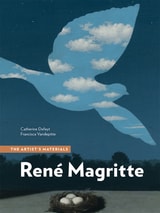
René Magritte
The Artist’s MaterialsCatherine Defeyt
J. Paul Getty Trust, The, 0
René Magritte (1898–1967) is the most famous Belgian artist of the twentieth century and a celebrated representative of the Surrealist movement. Much has been written about his practices, artistic community, and significance within the history of modernism, but little has been documented regarding his process.
This volume examines fifty oil paintings made by Magritte between 1921 and 1967, now held at the Royal Museums of Fine Arts of Belgium. This technical study of his works using noninvasive scientific imaging and chemical analysis reveals the artist’s painting materials, his habit of overpainting previous compositions, and the origins and mechanisms of surface and pigment degradation. Of interest to conservators, scientists, curators, and enthusiasts of twentieth-century art, this book expands our understanding of Magritte the artist and provides new and useful findings that will inform strategies for the future care of his works.
Repeating Žižek
Agon Hamza, ed.
Duke University Press, 2015
Contributors. Henrik Jøker Bjerre, Bruno Bosteels, Agon Hamza, Brian Benjamin Hansen, Adrian Johnston, Katja Kolšek, Adam Kotsko, Catherine Malabou, Benjamin Noys, Geoff Pfeifer, Frank Ruda, Oxana Timofeeva, Samo Tomšic, Gabriel Tupinambá, Fabio Vighi, Gavin Walker, Sead Zimeri, Slavoj Žižek
Rescuing the Enlightenment from the Europeans
Critical Theories of DecolonizationNikita Dhawan
Duke University Press, 2026
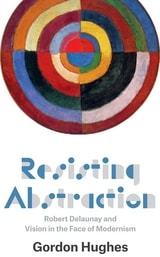
Resisting Abstraction
Robert Delaunay and Vision in the Face of ModernismGordon Hughes
University of Chicago Press, 2014
With Resisting Abstraction, the first English-language study of Delaunay in more than thirty years, Gordon Hughes mounts a powerful argument that Delaunay was not only one of the earliest artists to tackle abstraction, but the only artist to present his abstraction as a response to new scientific theories of vision. The colorful, optically driven canvases that Delaunay produced, Hughes shows, set him apart from the more ethereal abstraction of contemporaries like Kandinsky, Mondrian, Kazimir Malevich, and František Kupka. In fact, Delaunay emphatically rejected the spiritual motivations and idealism of that group, rooting his work instead in contemporary science and optics. Thus he set the stage not only for the modern artists who would follow, but for the critics who celebrated them as well.
Ressentiment
Reflections on Mimetic Desire and SocietyStefano Tomelleri
Michigan State University Press, 2015
Restructuring Architectural Theory
Edited by Marco Diani and Catherine Ingraham
Northwestern University Press, 1989
Retracing the Platonic Text
John Russon and John Sallis
Northwestern University Press, 1999
Return to the Kingdom of Childhood
Re-envisioning the Legacy and Philosophical Relevance of NegritudeCheikh Thiam
The Ohio State University Press, 2014
Thiam contends that Senghor’s conception of race entails an innovative Afri-centered epistemology and ontology. For Senghor, races are the effects of particular groups’ relations to the world. The so-called “Negroes,” for example, are determined by their epistemology based on their fluid understanding of the ontological manifestations of being. The examination of this ontology and its ensuing epistemology, which is constitutive of the foundation of Senghor’s entire oeuvre, indicates that Negritude is a postcolonial philosophy that stands on its own.
The hermeneutics of Senghor’s race theory show that the Senegalese thinker’s pioneering postcolonial philosophy remains relevant in the postcolonial era. In fact, it questions and expands the works of major contemporary African-descended scholars such as Paul Gilroy, Edouard Glissant, and Molefi Asante. Thiam’s approach is thoroughly interdisciplinary, combining perspectives from philosophy, literary analysis, anthropology, and postcolonial, African, and cultural studies.
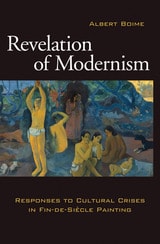
Revelation of Modernism
Response to Cultural Crises in Fin-de-Siécle PaintingAlbert Boime
University of Missouri Press, 2008
Among postimpressionist painters, Van Gogh, Seurat, Cézanne, and Gauguin produced a remarkable body of work that responded to a cultural and spiritual crisis in the avant-garde world—influences that pushed them toward an increasing reliance on science, literature, and occultism. In Revelation of Modernism, renowned art historian Albert Boime reappraises specific works by these masters from a perspective more appreciative of the individuals’ inner conflicts, offering the art world a new understanding of a period fraught with apocalyptic fears and existential anxieties.
Building on the seminal observations of Sven Lövgren from a half-century ago, Boime rejects popular notions of “art for art’s sake” and rethinks an entire movement to suggest that history, rather than expressive urge, is the driving force that shapes art. He reconsiders familiar masterpieces from a fresh perspective, situating the art in the contexts of history both real and speculative, of contemporary philosophy, and of science to depict modernism as a development that ultimately failed.
Boime expands on what we think we know about these figures and produces startling new revelations about their work. From the political history of Seurat’s Parade de cirque to the astronomical foundations of Van Gogh’s Starry Night, he draws analogies between literary sources and social, personal, and political strategies that have eluded most art historians. He offers a richer and more complex vision of Cézanne, considering the artist as an Old Testament figure in search of the Promised Landscape. And he provides a particularly detailed look at Gauguin—on whom Boime has never previously published—that takes a closer look at the artist’s The Vision after the Sermon and its allusions to Eliphas Lévi’s writings, sheds light on the sources for From whence do we come? and offers new thoughts about Gauguin’s various self-portraits.
Boime’s latest contribution further testifies to his status as one of our most important living art historians. As entertaining as it is eloquent, Revelation of Modernism is a bold and groundbreaking work that should be required reading for all who wish to understand the contradictory origins and development of modernism and its role in history.
Revolutions of Capitalism
The Politics of the EventMaurizio Lazzarato. Translated by Brian Whitener and Geo Maher.
Duke University Press, 2026
Rewriting the Word "God"
In the Arc of Converging Lines between Innovative Theory, Theology, and PoetryRomana Huk
University of Alabama Press, 2025
Innovative poetry, philosophy, theology and new sciences converge in the project of rewriting the word “God”
In Rewriting the Word “God,” Romana Huk examines the substantive connections between innovative poetry of the last century and contemporary theology and philosophy. Along the way, we encounter ten poets who have, without abandoning their inherited or chosen faith traditions, radically rethought conceptualizations of divinity, human ontology, and the real.
From the startlingly proto-phenomenological encounters with nature by Gerard Manley Hopkins to the post-deconstructive pursuit of “oracular” speech in Fanny Howe, these poets have found inspiration in a wide range of sources, from ancient religious texts to modern philosophical movements. But what unites them is their willingness to continually change, experiment and challenge the status quo, both in their religious beliefs and their poetic practice.
Huk shows how these poets have used their work to explore ultimate questions of life and death, meaning and purpose, and the relationship between humans and materiality, humans and other humans, which for these poets sheds light on humanity’s relationship with the divine. She also highlights the ways in which they have engaged with social and political issues in their poetry to speak out against injustice and oppression.
Rewriting the Word “God” is a thought-provoking and inspiring work that will challenge current perceptions of both religion and poetry from new positions at the intersection of faith, art, philosophy, science, literary theory, and culture.
Rhetoric as Philosophy
The Humanist TraditionErnesto Grassi. Foreword by Timothy W. Crusius
Southern Illinois University Press, 2001
Originally published in English in 1980, Rhetoric as Philosophy has been out of print for some time. The reviews of that English edition attest to the importance of Ernesto Grassi’s work.
By going back to the Italian humanist tradition and aspects of earlier Greek and Latin thought, Ernesto Grassi develops a conception of rhetoric as the basis of philosophy. Grassi explores the sense in which the first principles of rational thought come from the metaphorical power of the word. He finds the basis for his conception in the last great thinker of the Italian humanist tradition, Giambattista Vico (1668–1744). He concentrates on Vico’s understanding of imagination and the sense of human ingenuity contained in metaphor. For Grassi, rhetorical activity is the essence and inner life of thought when connected to the metaphorical power of the word.
Rhetoric as a Posthuman Practice
Casey Boyle
The Ohio State University Press, 2018
Through case studies of the media art of glitch, urban explorers’ use of social media, and DIY digital networks, this book then reconsiders how practice/exercise functions when the once essential bodies of the individual and a society—the two primary categories authorized by a humanist paradigm—become less reliable categories from which we might orient rhetorical action. In sum, the book argues that rhetorical practice is irreducible to the traditions and categories of humanism and must now exercise its posthuman capacities.
Rome Measured and Imagined
Early Modern Maps of the Eternal CityJessica Maier
University of Chicago Press, 2015
In Rome Measured and Imagined, Jessica Maier explores the history of this genre—which merged the accuracy of scientific endeavor with the imaginative aspects of art—during the rise of Renaissance print culture. Through an exploration of works dating from the fifteenth to the eighteenth centuries, her book interweaves the story of the city portrait with that of Rome itself.
Highly interdisciplinary and beautifully illustrated with nearly one hundred city portraits, Rome Measured and Imagined advances the scholarship on Renaissance Rome and print culture in fascinating ways.
Rubens in Repeat
The Logic of the Copy in Colonial Latin AmericaAaron M. Hyman
J. Paul Getty Trust, The, 2021
Winner of the Latin American Studies Association's 2022 Best Book in Colonial Latin American Studies.
This book examines the reception in Latin America of prints designed by the Flemish artist Peter Paul Rubens, showing how colonial artists used such designs to create all manner of artworks and, in the process, forged new frameworks for artistic creativity.
Peter Paul Rubens (1577–1640) never crossed the Atlantic himself, but his impact in colonial Latin America was profound. Prints made after the Flemish artist’s designs were routinely sent from Europe to the Spanish Americas, where artists used them to make all manner of objects.
Rubens in Repeat is the first comprehensive study of this transatlantic phenomenon, despite broad recognition that it was one of the most important forces to shape the artistic landscapes of the region. Copying, particularly in colonial contexts, has traditionally held negative implications that have discouraged its serious exploration. Yet analyzing the interpretation of printed sources and recontextualizing the resulting works within period discourse and their original spaces of display allow a new critical reassessment of this broad category of art produced in colonial Latin America—art that has all too easily been dismissed as derivative and thus unworthy of sustained interest and investigation. This book takes a new approach to the paradigms of artistic authorship that emerged alongside these complex creative responses, focusing on the viceroyalties of New Spain and Peru in the seventeenth and eighteenth centuries. It argues that the use of European prints was an essential component of the very framework in which colonial artists forged ideas about what it meant to be a creator.