Results by title
208 books match the query 'Nation' and 11 start with r
Race and Displacement
Nation, Migration, and Identity in the Twenty-First CenturyEdited by Maha Marouan and Merinda Simmons
University of Alabama Press, 2013
Race and Nation in Puerto Rican Folklore
Franz Boas and John Alden Mason in Porto RicoRafael Ocasio
Rutgers University Press, 2020

Race, Nation, and Cultural Memory, Volume 2004
Eliza Jane Reilly and David Serlin, eds.
Duke University Press, 0
Contributors. Adina Back, Eliza Jane Reilly, Jarod H. Roll, Gary Wilder, Lewis Siegelbaum, R. J. Lambrose
Race, Nation, and Market
Economic Culture in Porfirian MexicoRichard Weiner
University of Arizona Press, 2004
Reclaiming Basque
Language, Nation, and Cultural ActivismJacqueline Urla
University of Nevada Press, 2015

Reclaiming the Nation
The Return of the National Question in Africa, Asia and Latin AmericaEdited by Sam Moyo and Paris Yeros
Pluto Press, 2011
This book compares the trajectories of states and societies in Africa, Asia and Latin America under neoliberalism, a time marked by serial economic crises, escalating social conflicts, the re-militarisation of North-South relations and the radicalisation of social and nationalist forces.
Sam Moyo and Paris Yeros bring together researchers and activists from the three continents to assess the state of national sovereignty and the challenges faced by popular movements today. They show that global integration has widened social and regional inequalities within countries, exacerbated ethnic, caste, and racial conflicts, and generally reduced the bureaucratic capacities of states to intervene in a defensive way. Moreover, inequalities between the countries of the South have also widened. These structural tensions have all contributed to several distinct political trajectories among states: from fracture and foreign occupation, to radicalisation and uncertain re-stabilisation.
This book re-draws the debate on the political economy of the contemporary South and provides students of international studies with an important collection of readings.

Remodeling the Nation
The Architecture of American Identity, 1776-1858University of New Hampshire Press, 2009

Rescued from the Nation
Anagarika Dharmapala and the Buddhist WorldSteven Kemper
University of Chicago Press, 2014
Drawing on huge stores of source materials—nearly one hundred diaries and notebooks—Kemper reconfigures Dharmapala as a world-renouncer first and a political activist second. Following Dharmapala on his travels between East Asia, South Asia, Europe, and the United States, he traces his lifelong project of creating a unified Buddhist world, recovering the place of the Buddha’s Enlightenment, and imitating the Buddha’s life course. The result is a needed corrective to Dharmapala’s embattled legacy, one that resituates Sri Lanka’s political awakening within the religious one that was Dharmapala’s life project.
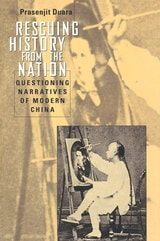
Rescuing History from the Nation
Questioning Narratives of Modern ChinaPrasenjit Duara
University of Chicago Press, 1995
The backlash against such histories has resulted in a tendency to view the past as largely constructed, imagined, or invented. In this book, Duara offers a way out of the impasse between constructionism and the evolving nation; he redefines history as a series of multiple, often conflicting narratives produced simultaneously at national, local, and transnational levels. In a series of closely linked case studies, he considers such examples as the very different histories produced by Chinese nationalist reformers and partisans of popular religions, the conflicting narratives of statist nationalists and of advocates of federalism in early twentieth-century China. He demonstrates the necessity of incorporating contestation, appropriation, repression, and the return of the repressed subject into any account of the past that will be meaningful to the present. Duara demonstrates how to write histories that resist being pressed into the service of the national subject in its progress—or stalled progress—toward modernity.
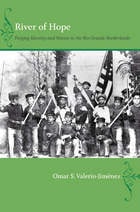
River of Hope
Forging Identity and Nation in the Rio Grande BorderlandsOmar S. Valerio-Jiménez
Duke University Press, 2012
Diverse influences transformed the borderlands as Spain, Mexico, and the United States competed for control of the region. Indian slaves joined Spanish society; Mexicans allied with Indians to defend river communities; Anglo Americans and Mexicans intermarried and collaborated; and women sued to confront spousal abuse and to secure divorces. Drawn into multiple conflicts along the border, Mexican nationals and Mexican Texans (tejanos) took advantage of their transnational social relations and ambiguous citizenship to escape criminal prosecution, secure political refuge, and obtain economic opportunities. To confront the racialization of their cultural practices and their increasing criminalization, tejanos claimed citizenship rights within the United States and, in the process, created a new identity.
Published in cooperation with the William P. Clements Center for Southwest Studies, Southern Methodist University.

Rousing the Nation
Radical Culture in Depression AmericaLaura Browder
University of Massachusetts Press, 0