Results by title
78 books match the query 'National security' and 3 start with r
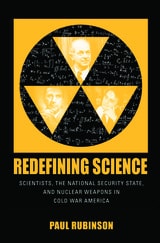
Redefining Science
Scientists, the National Security State, and Nuclear Weapons in Cold War AmericaPaul Rubinson
University of Massachusetts Press, 2016
The Cold War forced scientists to reconcile their values of internationalism and objectivity with the increasingly militaristic uses of scientific knowledge. For decades, antinuclear scientists pursued nuclear disarmament in a variety of ways, from grassroots activism to transnational diplomacy and government science advising. The U.S. government ultimately withstood these efforts, redefining science as a strictly technical endeavor that enhanced national security and deeming science that challenged nuclear weapons on moral grounds “emotional” and patently unscientific. In response, many activist scientists restricted themselves to purely technical arguments for arms control. When antinuclear protest erupted in the 1980s, grassroots activists had moved beyond scientific and technical arguments for disarmament. Grounding their stance in the idea that nuclear weapons were immoral, they used the “emotional” arguments that most scientists had abandoned.
Redefining Science shows that the government achieved its Cold War “consensus” only by active opposition to powerful dissenters and helps explain the current and uneasy relationship between scientists, the public, and government in debates over issues such as security, energy, and climate change.
Refiguring Race and Risk
Counternarratives of Care in the US Security StateRoberta Wolfson
The Ohio State University Press, 2024
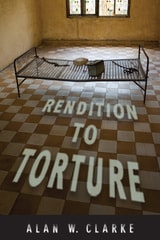
Rendition to Torture
Clarke, Alan W
Rutgers University Press, 2012
In Rendition to Torture, Alan W. Clarke explains how the United States adopted torture as a matter of official policy; how and why it turned to extraordinary rendition as a way to outsource more extreme, mutilating forms of torture; and outlines the steps the United States took to hide its abuses. Many adverse consequences attended American use of torture. False information gleaned from torture was used to justify the Iraq war, adding potency to the charge that the war was illegal under international law. Moreover, European nations and Canada aided, abetted, and became thoroughly enmeshed in U.S.-led torture and renditions, thereby spreading both the problem and the blame for this practice. Clarke offers an extended critique of these activities, placing them in historical and legal context as well as in transnational and comparative perspective.