Results by title
2817 books match the query 'Nature' and 107 start with r

R. F. D.
Charles Allen SmartCharles Allen Smart
Ohio University Press, 1998
“This book,” the author tells us in his preface, “is intended to be a picture of life on a farm in Southern Ohio in the 1930s.” It is a faithful portrait of farm life as thousands of men and women experienced it from one end of the country to the other and from pioneering times to the present century.
Originally published in 1938 to enthusiastic reviews and commercial success, RFD is the story of one couple’s trials with leaving the comforts of city life for a chance to get back to the land.
From his farm near Chillicothe, Ohio, Charles Allen Smart gives a realistic rendering of what it meant to farm in the 1930s. It is part of the book’s intrinsic honesty that it could not be as good as Walden. Thoreau had worked out a philosophy that suited him and that he was ready to recommend to others. Mr. Smart had no prescription for the general ailments, beyond a belief that creating things is important and that owning, buying, and selling things are unimportant.
What he tells us throughout this unusual book is that for him life on this particular farm, in this particular house, with this particular set-up of friends, neighbors, dogs, sheep, hens, cattle, trees, corn, vegetables, grass, and weather, costs less in human values than life in New York City—or in Chillicothe.
Ohio University Press is especially pleased to reissue this midwestern classic with a new foreword by noted farm writer Gene Logsdon.
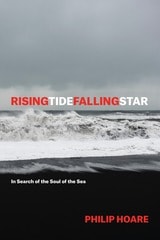
RISINGTIDEFALLINGSTAR
In Search of the Soul of the SeaPhilip Hoare
University of Chicago Press, 2018
Many of us visit the sea. Admire it. Even profess to love it. But very few of us live it. Philip Hoare does. He swims in the sea every day, either off the coast of his native Southampton or his adopted Cape Cod. He watches its daily and seasonal changes. He collects and communes with the wrack—both dead and never living—that it throws up on the shingle. He thinks with, at, through the sea.
All of which should prepare readers: RISINGTIDEFALLINGSTAR is no ordinary book. It mounts no straight-ahead argument. It hews to no single genre. Instead, like the sea itself, it moves, flows, absorbs, transforms. In its pages we find passages of beautiful nature and travel writing, lyrical memoir, seams of American and English history and much more. We find Thoreau and Melville, Bowie and Byron, John Waters and Virginia Woolf, all linked through a certain refusal to be contained, to be strictly defined—an openness to discovery and change. Running throughout is an air of elegy, a reminder that the sea is an ending, a repository of lost ships, lost people, lost ways of being. It is where we came from; for Hoare, it is where he is going.
“Every swim is a little death,” Hoare writes, “but it is also a reminder that you are alive.” Few books have ever made that knife’s edge so palpable. Read RISINGTIDEFALLINGSTAR. Let it settle into the seabed of your soul. You’ll never forget it.

Race, Nature and Culture
An Anthropological PerspectivePeter Wade
Pluto Press, 2002
Wade is critical of contemporary theoretical studies of race formulated within the contexts of colonial history, sociology and cultural studies. Instead he argues for a new direction; one which anthropology is well placed to explore. Taking the study of race beyond Western notions of the individual, Wade argues for new paradigms in social science, in particular in the development of connections between race, sex and gender. An understanding of these issues within an anthropological context, he contends, is vital for defining personhood and identity.
Race is often defined by its reference to biology, 'blood,' genes, nature or essence. Yet these concepts are often left unexamined. Integrating material from the history of science, science studies, and anthropological studies of kinship and new reproductive technologies, as well as from studies of race, Peter Wade explores the meaning of such terms and interrogates the relationship between nature and culture in ideas about race.
Race, Nature, and the Politics of Difference
Donald S. Moore, Jake Kosek, and Anand Pandian, eds.
Duke University Press, 2003
Synthesizing a number of fields—anthropology, cultural studies, and critical race, feminist, and postcolonial theory—this collection analyzes diverse historical, cultural, and spatial locations. Contributors draw on thinkers such as Fanon, Foucault, and Gramsci to investigate themes ranging from exclusionary notions of whiteness and wilderness in North America to linguistic purity in Germany. Some essayists focus on the racialized violence of imperial rule and evolutionary science and the biopolitics of race and class in the Guatemalan civil war. Others examine how race and nature are fused in biogenetic discourse—in the emergence of “racial diseases” such as sickle cell anemia, in a case of mistaken in vitro fertilization in which a white couple gave birth to a black child, and even in the world of North American dog breeding. Several essays tackle the politics of representation surrounding environmental justice movements, transnational sex tourism, and indigenous struggles for land and resource rights in Indonesia and Brazil.
Contributors. Bruce Braun, Giovanna Di Chiro, Paul Gilroy, Steven Gregory, Donna Haraway, Jake Kosek, Tania Murray Li, Uli Linke, Zine Magubane, Donald S. Moore, Diane Nelson, Anand Pandian, Alcida Rita Ramos, Keith Wailoo, Robyn Wiegman
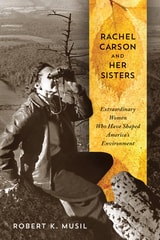
Rachel Carson and Her Sisters
Extraordinary Women Who Have Shaped America's EnvironmentRobert K. Musil
Rutgers University Press, 2015
On the fiftieth anniversary of her death, this book helps underscore Carson’s enduring environmental legacy and brings to life the achievements of women writers and advocates, such as Ellen Swallow Richards, Dr. Alice Hamilton, Terry Tempest Williams, Sandra Steingraber, Devra Davis, and Theo Colborn, all of whom overcame obstacles to build and lead the modern American environmental movement.
Radical Science
Plants, Agency, and Nineteenth-Century British NarrativeMary Bowden
The Ohio State University Press, 2026

Radioactive Ghosts
Gabriele Schwab
University of Minnesota Press, 2020
A pioneering examination of nuclear trauma, the continuing and new nuclear peril, and the subjectivities they generate
Amid resurgent calls for widespread nuclear energy and “limited nuclear war,” the populations that must live with the consequences of these decisions are increasingly insecure. The nuclear peril combined with the looming threat of climate change means that we are seeing the formation of a new kind of subjectivity: humans who are in a position of perpetual ontological insecurity. In Radioactive Ghosts, Gabriele Schwab articulates a vision of these “nuclear subjectivities” that we all live with.
Focusing on the legacies of the Manhattan Project, Hiroshima, and nuclear energy politics, Radioactive Ghosts takes us on a tour of the little-seen sides of our nuclear world. Examining devastating uranium mining on Native lands, nuclear sacrifice zones, the catastrophic accidents at Chernobyl and Fukushima, and the formation of a new transspecies ethics, Schwab shows how individuals threatened with extinction are creating new adaptations, defenses, and communal spaces. Ranging from personal accounts of experiences with radiation to in-depth readings of literature, film, art, and scholarly works, Schwab gives us a complex, idiosyncratic, and personal analysis of one of the most overlooked issues of our time.
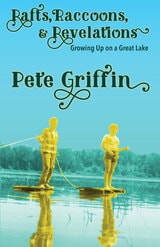
Rafts, Raccons, & Revelations
Growing Up on a Great LakePete Griffin
Parkhurst Brothers, Inc., 2021
Rain Without Thunder
The Ideology of the Animal Rights MovementGary L. Francione
Temple University Press, 1996
Are "animal welfare" supporters indistinguishable from the animal exploiters they oppose? Do reformist measures reaffirm the underlying principles that make animal exploitation possible in the first place? In this provocative book, Gary L. Francione argues that the modern animal rights movement has become indistinguishable from a century-old concern with the welfare of animals that in no way prevents them from being exploited.
Francione maintains that advocating humane treatment of animals retains a sense of them as instrumental to human ends. When they are considered dispensable property, he says, they are left fundamentally without "rights." Until the seventies, Francione claims, this was the paradigm within which the Animal Rights Movement operated, as demonstrated by laws such as the Federal Humane Slaughter Act of 1958.
In this wide-ranging book, Francione takes the reader through the philosophical and intellectual debates surrounding animal welfare to make clear the difference between animal rights and animal welfare. Through case studies such as campaigns against animal shelters, animal laboratories, and the wearing of fur, Francione demonstrates the selectiveness and confusion inherent in reformist programs that target fur, for example, but leave wool and leather alone.
The solution to this dilemma, Francione argues, is not in a liberal position that espouses the humane treatment of animals, but in a more radical acceptance of the fundamental inalienability of animal rights.
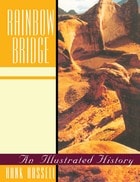
Rainbow Bridge
Hank Hassell
Utah State University Press, 1999
On the morning of August 14, 1909, a small, diverse group including Professor Byron Cummings of the University of Utah, Government Land Office surveyor William Douglass, pioneer archaeologist and trader John Weatherill, and Paiute guide Nasja Begay gazed at the largest structure of its kind in the world-Rainbow Bridge. Their presence marked the official discovery of the magnificent natural bridge, which spans 275 feet and towers 291 feet above the stream bed below it. Of the discovery party, only Nasja Begay had seen the stone arch before; he was one of a probably small number of Paiutes and Navajos, the true modern discoverers, who had visited it. In 1910, an executive order issued under the still fresh Antiquities Act created Rainbow Bridge National Monument, one of the first.
This was only the beginning of the Rainbow Bridge historical record. Its fame was soon widespread, but for many years its visitors would be few, their numbers restricted by the long arduous trail around Navajo Mountain to the site. Those few and the tour guides and businesses that emerged to serve them, especially at Rainbow Lodge, were an interesting mix though. The bridge's story included such western figures as trader Louisa Weatherill, wife of John and a Navajo speaker who was the first Anglo to hear of the bridge; Barry Goldwater, who for a time owned and operated Rainbow Lodge; Zane Grey, who wrote about the bridge; and David Brower, the Sierra Club leader who got wrapped up in the intersection of the Rainbow Bridge story with that of Glen Canyon Dam. Its construction and the filling of Lake Powell behind it made Rainbow Bridge a battleground, key territory in the larger war over water and conservation in the West. The remote, hard to reach national monument was supposed to define a limit to Colorado River reclamation but instead was inundated by Lake Powell and the tide of visitors who then could reach the foot of the bridge by boat. Though Rainbow is now easily and frequently visited and National Park Service amenities are in place, access to Rainbow Bridge is still an evolving and controversial issue.
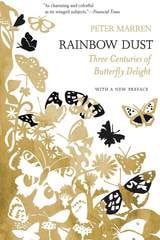
Rainbow Dust
Three Centuries of Butterfly DelightPeter Marren
University of Chicago Press, 2016
At the age of five, Marren had his “Nabokov Moment,” catching his first butterfly and feeling the dust of its colored scales between his fingers. It was a moment that would launch a lifetime’s fascination rivaling that of the famed novelist—a fascination that put both in good company. From the butterfly collecting and rearing craze that consumed North America and Europe for more than two hundred years (a hobby that in some cases bordered on madness), to the potent allure of butterfly iconography in contemporary advertisements and their use in spearheading calls to conserve and restore habitats (even though butterflies are essentially economically worthless), Marren unveils the many ways in which butterflies inspire us as objects of beauty and as symbols both transient and transcendent.
Floating around the globe and through the whole gamut of human thought, from art and literature to religion and science, Rainbow Dust is a cultural history rather than merely a natural one, a tribute to butterflies’ power to surprise, entertain, and obsess us. With a sway that far surpasses their fragile anatomy and gentle beat, butterfly wings draw us into the prismatic wonders of the natural world—and, in the words of Marren, these wonders take flight.
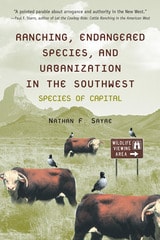
Ranching, Endangered Species, and Urbanization in the Southwest
Species of CapitalNathan F. Sayre
University of Arizona Press, 2002
Nathan Sayre now takes a close look at how the ranching ideal has come into play in the conversion of a large tract of Arizona rangeland from private ranch to National Wildlife Refuge. He tells how the Buenos Aires Ranch, a working operation for a hundred years, became not only a rallying point for multiple agendas in the "rangeland conflict" after its conversion to a wildlife refuge but also an expression of the larger shift from agricultural to urban economies in the Southwest since World War II.
The U.S. Fish and Wildlife Service bought the Buenos Aires Ranch in 1985, removed all livestock, and attempted to restore the land to its "original" grassland in order to protect an endangered species, the masked bobwhite quail. Sayre examines the history of the ranch and the bobwhite together, exploring the interplay of social, economic, and ecological issues to show how ranchers and their cattle altered the land—for better or worse—during a century of ranching and how the masked bobwhite became a symbol for environmentalists who believe that the removal of cattle benefits rangelands and wildlife.
Sayre evaluates both sides of the Buenos Aires controversy—from ranching's impact on the environment to environmentalism's sometimes misguided efforts at restoration—to address the complex and contradictory roles of ranching, endangered species conservation, and urbanization in the social and environmental transformation of the West. He focuses on three dimensions of the Buenos Aires story: the land and its inhabitants, both human and animal; the role of government agencies in shaping range and wildlife management; and the various species of capital—economic, symbolic, and bureaucratic—that have structured the activities of ranchers, environmentalists, and government officials.
The creation of the Buenos Aires National Wildlife Refuge has been a symbolic victory for environmentalists, but it comes at the cost of implicitly legitimizing the ongoing fragmentation and suburbanization of Arizona's still-wild rangelands. Sayre reveals how the polarized politics of "the rangeland conflict" have bound the Fish and Wildlife Service to a narrow, ineffectual management strategy on the Buenos Aires, with greater attention paid to increasing tourism from birdwatchers than to the complex challenge of restoring the masked bobwhite and its habitat. His findings show that the urban boom of the late twentieth century echoed the cattle boom of a century before—capitalizing on land rather than grass, humans rather than cattle—in a book that will serve as a model for restoration efforts in any environment.
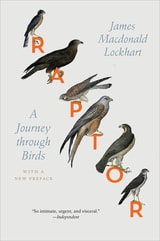
Raptor
A Journey through BirdsJames Macdonald Lockhart
University of Chicago Press, 2017
Taking as his guide the nineteenth-century Scottish naturalist and artist William MacGillivray, Lockhart loosely follows the historical trail forged by MacGillivray as he ventured from Aberdeen to London filling his pockets with plants and writing and illustrating the canonical A History of British Birds. Linking his journey to that of his muse, Lockhart shares his own encounters with raptors ranging from the scarce osprey to the successfully reintroduced red kite, a species once protected by medieval royal statute, revealing with poetic immediacy the extraordinary behaviors of these birds and the extreme environments they call home.
Creatures both worshipped and reviled, raptors have a talon-hold on the human heart and imagination. With his book, Lockhart unravels these complicated ties in a work by turns reverent and euphoric—an interweaving of history, travel, and nature writing at its best. A hymn to wanderers, to the land and to the sky, and especially to the birds, Raptor soars.
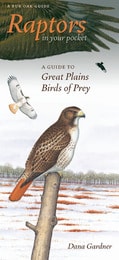
Raptors in Your Pocket
A Guide to Great Plains Birds of PreyDana Gardner
University of Iowa Press, 2006
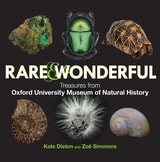
Rare and Wonderful
Treasures from the Oxford University Museum of Natural HistoryKate Diston and Zoë Simmons
Bodleian Library Publishing, 2018
This lavishly illustrated book features highlights from the collections, ranging from David Livingstone’s tsetse fly specimens to Mary Anning’s ichthyosaur, and from crabs collected by Darwin during his voyage on the Beagle to the iconic Dodo, the only soft tissue specimen of the species in existence. Also featured are the first described dinosaur bones, found in a small Oxfordshire village, the Red Lady of Paviland (who was in fact a man who lived 29,000 years ago), and a meteorite from the planet Mars.
Each item tells a unique story about natural history, the history of science, collecting, or the museum itself. Rare & Wonderful offers unique insight into the extraordinary wealth of information and fascinating tales that can be gleaned from these collections.
Rarities
Conservation Science in a Time of Unintended ConsequencesZoe Nyssa
University of Chicago Press, 2026
A sweeping study that reveals how conservation science does more than simply protect by inadvertently making nature valuable in new ways.
Climate change and other environmental transformations are causing species to go extinct at accelerating rates. What, then, should a science of saving nature look like? In Rarities, Zoe Nyssa traces how conservation emerged as a distinct scientific endeavor in the United States over the twentieth century and how this history has shaped environmental research practices and policy today. Drawing on archival and ethnographic research with leading conservation labs and programs, Nyssa explores how conservation science appears to generate contradictory, even counterintuitive, results as scientists, policymakers, and the public all take up, respond to, and repurpose scientists’ ideas about rarity, vulnerability, and endangerment. The designation of new nature reserves can lead to increased poaching and habitat destruction. The listing of a species as endangered fuels their black-market consumption as pets, food, or luxury items. Protection of natural resources can push resource extraction into unprotected areas. Other effects are less simple to calculate; persuading the public to care about one species might siphon support for another, and paying for one kind of conservation behavior can discourage other forms of conservation activity.
The science of saving nature spans a century of work by ecologists and others to develop a scientific basis for conservation. Yet Nyssa shows how their efforts to understand the natural world in terms of endangerment and extinction unleashed new ways for nonscientists to experience and understand nature as well. The scientific values that emerge, she argues, can transform the complex interconnections between human and nonhuman life. Rarities offers a framework for understanding these surprising socio-ecological dynamics and why they matter, both for contemporary science and for the planet.
Rattlesnakes
By J. Frank Dobie
University of Texas Press, 1982
Here are observations and speculations, legends and yarns, even gossip about the habits and dispositions of these extraordinary creatures—rattlesnakes—their reported size, deadliness, and power to charm their natural enemies. Here are descriptions of actual fights to the death between rattlesnakes and other animals and accounts of the strange experiences human beings have had with them, as well as tips on where to find them and how to act when you see one.
Dobie began systematically collecting lore about the rattlesnake world many years ago, using some of it in such regional publications as Southwest Review and incorporating much of it into essays—with the intention of eventually putting together a book about rattlesnakes. Now, in this collection of twenty-two articles, his wish is posthumously fulfilled.
Only Frank Dobie could tell of this fascinating and frightening creature with such wisdom and humor, thereby tempering "the age-old feud between the snake and man." And the rattlesnake—who once aroused fear among even the boldest men in the Old West—can at last be regarded with tolerance, respect, and even affection.
Re-envisioning the Anthropocene Ocean
Edited by Robin Kundis Craig and Jeffrey Mathes McCarthy
University of Utah Press, 2022
The world is at a critical moment, when humans must grapple with thinking about the planet’s oceans from ecological, physical, social, and legal perspectives. Warming ocean temperatures, changing currents, cultural displacement, Indigenous resilience, melting polar ice, habitat loss, are but a few of the global issues reflected in the planetary ocean as a front line in the unfolding drama of climate change. Re-envisioning the Anthropocene Ocean brings together leading scientists, lawyers, humanists, and Indigenous voices to tell of the ocean’s precarious position in the twenty-first century. The contributors affirm that the planetary ocean is crucial to our well-being and overdue for a positive change in public action to enhance the world’s resilience to climate change, ocean acidification, and other stressors. These essays engage that important work of positively re-imagining the ocean in the Anthropocene.
This volume brings diverse perspectives to the planet’s ocean future. New essays are contextualized with narratives woven by earlier ocean writers, showing readers how past perceptions of the ocean have led us to where we are today in terms of both problems and potential new visions. In this one volume, readers experience both the history of humanity’s multi- and interdisciplinary interactions with the ocean, find new perspectives on that history, and discover ideas for looking forward.
Reader Of The Purple Sage
Essays On Western Writers And Environmental LiteratureAnn Ronald
University of Nevada Press, 2003
Literary scholar Ann Ronald gathers her most notable published essays about Nevada, environmental writing, and Western American literature in one volume. These essays reflect Ronald’s wide-ranging interests. Here are deeply informed, critical essays on writers as diverse as Zane Gray, Edward Abbey, Wallace Stegner, and Terry Tempest Williams, as well as the Tonopah Ladies—a group of literary women who found their voices in the unlikely setting of a mining boomtown—and on such varied topics as the image of Reno in nineteenth- and twentieth-century fiction. Included are several recent essays in which Ronald thoughtfully discusses the burgeoning field of environmental writing, some of its principal themes and concerns, and its best-known practitioners.
Reading Nature
The Evolution of American Nature WritingJohn Seibert Farnsworth
Michigan State University Press, 2025
Reading The Trail
Exploring The Literature And Natural History Of The California CrestCorey Lee Lewis
University of Nevada Press, 2005
A provocative new way to read and interpret the classic works of John Muir, Mary Austin, and Gary Snyder, and to bring their ideas into the discussion of ecological values and the current environmental crisis. Lewis combines a perceptive discussion of their work and ideas with an engaging account of his own trail experiences as hiker/backpacker and volunteer trail builder, proposing that such a field-based, interdisciplinary approach to literary study and outdoors experience can enrich our appreciation for the work of nature writers.
Reading the Book of Nature
How Eight Best Sellers Reconnected Christianity and the Sciences on the Eve of the Victorian AgeJonathan R. Topham
University of Chicago Press, 2022
When Charles Darwin returned to Britain from the Beagle voyage in 1836, the most talked-about scientific books of the day were the Bridgewater Treatises. This series of eight works was funded by a bequest of the last Earl of Bridgewater and written by leading men of science appointed by the president of the Royal Society to explore "the Power, Wisdom, and Goodness of God, as manifested in the Creation." Securing public attention beyond all expectations, the series offered Darwin’s generation a range of approaches to one of the great questions of the age: how to incorporate the newly emerging disciplinary sciences into Britain’s overwhelmingly Christian culture.
Drawing on a wealth of archival and published sources, including many unexplored by historians, Jonathan R. Topham examines how and to what extent the series contributed to a sense of congruence between Christianity and the sciences in the generation before the fabled Victorian conflict between science and religion. Building on the distinctive insights of book history and paying close attention to the production, circulation, and use of the books, Topham offers new perspectives on early Victorian science and the subject of science and religion as a whole.
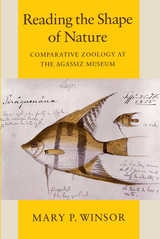
Reading the Shape of Nature
Comparative Zoology at the Agassiz MuseumMary P. Winsor
University of Chicago Press, 1991
In 1859, Louis Agassiz established the Museum of Comparative Zoology to house research on the ideal types that he believed were embodied in all living forms. Agassiz's vision arose from his insistence that the order inherent in the diversity of life reflected divine creation, not organic evolution. But the mortar of the new museum had scarcely dried when Darwin's Origin was published. By Louis Agassiz's death in 1873, even his former students, including his son Alexander, had defected to the evolutionist camp. Alexander, a self-made millionaire, succeeded his father as director and introduced a significantly different agenda for the museum.
To trace Louis and Alexander's arguments and the style of science they established at the museum, Winsor uses many fascinating examples that even zoologists may find unfamiliar. The locus of all this activity, the museum building itself, tells its own story through a wonderful series of archival photographs.
Rebuilding Community after Katrina
Transformative Education in the New Orleans Planning InitiativeKen Reardon
Temple University Press, 2015
Rebuilding Community after Katrina chronicles the innovative and ambitious partnership between Cornell University’s City and Regional Planning department and ACORN Housing, an affiliate of what was the nation’s largest low-income community organization. These unlikely allies came together to begin to rebuild devastated neighborhoods in New Orleans after Hurricane Katrina.
The editors and contributors to this volume allow participants’ voices to show how this partnership integrated careful, technical analysis with aggressive community outreach and organizing. With essays by activists, organizers, community members, and academics on the ground, Rebuilding Community after Katrina presents insights on the challenges involved in changing the way politicians and analysts imagined the future of New Orleans’ Ninth Ward.
What emerges from this complex drama are lessons about community planning, organizational relationships, and team building across multi-cultural lines. The accounts presented in Rebuilding Community after Katrina raise important and sensitive questions about the appropriate roles of outsiders in community-based planning processes.
Recent Mammals of Alaska
Stephen O. MacDonald and Joseph A. Cook
University of Alaska Press, 2009
From the polar bear and the gray wolf to the walrus and river otter, there are 115 species of mammals in Alaska that have never been fully catalogued until now. Biologists Joseph A. Cook and Stephen O. MacDonald have compiled here the first comprehensive guide to all of Alaska’s mammals, big and small, endearing and ferocious.
Through extensive fieldwork and research the authors have produced a unique and authoritative reference. Detailed entries for each species include distribution and taxonomic information, status, habitat, and fossil history. Appendices include quick reference listings of mammal distribution by region, specimen locations, conservation status, and the incidence of Pleistocene mammals. The guide is generously illustrated with line drawings by Alaskan artist W. D. Berry and includes several maps indicating populations and locations of species.
Mammals of Alaska will be an accessible, easy to use source for scholars and hobbyists alike.
Recent Vertebrate Carcasses and Their Paleobiological Implications
Johannes Weigelt
University of Chicago Press, 1989
Weigelt spent sixteen months on the Gulf Coast in the mid-1920s, gathering evidence from the carcasses of cattle and other animals in the early stages of preservation. This book reports his observations. He discusses death and decomposition; classifies various modes of death (drowning, cold, dehydration, fire, mud, quicksand, oil slicks, etc.); documents and analyzes the positions of carcasses; presents detailed data on carcass assemblages at the Smither's Lake site in Texas; and, in a final chapter, makes comparisons to carcass assemblages from the geologic past. He raises questions about whether much of the fossil record is a product of unusual events and, if so, what the implications are for paleoecological studies.
The English edition of Recent Vertebrate Carcasses includes a foreword and a translator's note that comment on Weigelt's life and the significance of his work. The original bibliography has been brought up to date, and, where necessary, updated scientific and place names have been added to the text in brackets. An index of names, places, and subjects is included, and Weigelt's own photographs of carcasses and drawings of skeletons illustrate the text.
Reckoning at Eagle Creek
The Secret Legacy of Coal in the HeartlandJeff Biggers
Southern Illinois University Press, 2010
Set in the ruins of his family’s strip-mined homestead in the Shawnee National Forest in southern Illinois, award-winning journalist and historian Jeff Biggers delivers a deeply personal portrait of the overlooked human and environmental costs of our nation’s dirty energy policy. Beginning with the policies of Thomas Jefferson and Andrew Jackson, chronicling the removal of Native Americans and the hidden story of legally sanctioned black slavery in the land of Lincoln, Reckoning at Eagle Creek vividly describes the mining wars for union recognition and workplace safety, and the devastating consequences of industrial strip-mining. At the heart of our national debate over climate change and the crucial transition toward clean energy, Biggers exposes the fallacy of “clean coal” and shatters the marketing myth that southern Illinois represents the “Saudi Arabia of coal.”
Reckoning at Eagle Creek is ultimately an exposé of “historicide,” one that traces coal’s harrowing legacy through the great American family saga of sacrifice and resiliency and the extraordinary process of recovering our nation’s memory.
Reckoning with Harm
The Toxic Relations of Oil in AmazoniaAmelia Fiske
University of Texas Press, 2023
2025 Margaret Mead Award, Society for Applied Anthropology (SfAA) and the American Anthropological Association (AAA)
An ethnography of the Ecuadorian Amazon that demonstrates the need for a relational, place-based, contingent understanding of harm and toxicity.
Reckoning with Harm is a striking ethnographic analysis of the harm resulting from oil extraction. Covering fifty years of settler colonization and industrial transformation of the Ecuadorian Amazon, Amelia Fiske interrogates the relations of harm. She moves between forest-courtrooms and oily waste pits, farms and toxic tours, to explore both the ways in which harm from oil is entangled with daily life and the tensions surrounding efforts to verify and redress it in practice. Attempts to address harm from the oil industry in Ecuador have been consistently confounded by narrow, technocratic understandings of evidence, toxicity, and responsibility. Building on collaborators’ work to contest state and oil company insistence that harm is controlled and principally chemical in nature, Fiske shows that it is necessary to refigure harm as relational in order to reckon with unremediated contamination of the past while pushing for broad forms of accountability in the present. She theorizes that harm is both a relationship and an animating feature of relationships in this place, a contingent understanding that is needed to contemplate what comes next when living in a toxic world.
Reclaiming American Cities
The Struggle for People, Place, and Nature since 1900Rutherford H. Platt
University of Massachusetts Press, 2014
For most of the past century, urban America was dominated by top-down policies serving the white business and cultural elite, the suburbs, and the automobile. At times these approaches were fiercely challenged by reformers such as Jane Addams and Jane Jacobs. Yet by the 1980s, mainstream policies had resulted in a nation of ravaged central cities, sprawling suburbs, social and economic polarization, and incalculable environmental damage.
In the 1990s, this entrenched model finally yielded to change as local citizens, neighborhood groups, and other stakeholders, empowered by a spate of new laws and policies, began asserting their own needs and priorities. Though hampered by fiscal crises and internal disagreements, these popular initiatives launched what the author terms a new era of “humane urbanism” marked by a determination to make cities and suburbs greener, healthier, safer, more equitable, more efficient, and generally more people-friendly. In the process, the mayors, architects, engineers, and bureaucrats who had previously dominated urban policy found themselves relegated to supporting roles.
As Rutherford H. Platt points out, humane urbanism can take many forms, from affordable housing and networks of bike paths to refurbished waterfronts and urban farms. Often spontaneous, low-tech, and self-sustaining programs, their shared goal is to connect people to one another and to bring nature back into the city. Reclaiming American Cities examines both sides of this historic transformation: the long struggle against patricians and technocrats of earlier decades and the recent sprouting of grassroots efforts to make metropolitan America more humane and sustainable.
Reconceiving Nature
Ecofeminism in Late Victorian Women's PoetryPatricia Murphy
University of Missouri Press, 2019
Reconciliation in a Michigan Watershed
Restoring Ken-O-ShaGail Gunst Heffner
Michigan State University Press, 2024
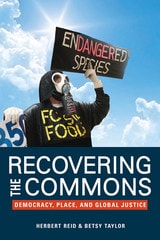
Recovering the Commons
Democracy, Place, and Global JusticeHerbert Reid and Betsy Taylor
University of Illinois Press, 2010
This penetrating work culls key concepts from grassroots activism to hold critical social theory accountable to the needs, ideas, and organizational practices of the global justice movement. The resulting critique of neoliberalism hinges on place-based struggles of groups marginalized by globalization and represents a brave rethinking of politics, economy, culture, and professionalism.
Providing new practical and conceptual tools for responding to human and environmental crises in Appalachia and beyond, Recovering the Commons radically revises the framework of critical social thought regarding our stewardship of the civic and ecological commons. Herbert Reid and Betsy Taylor ally social theory, field sciences, and local knowledge in search of healthy connections among body, place, and commons that form a basis for solidarity as well as a vital infrastructure for a reliable, durable world. Drawing particularly on the work of philosophers Maurice Merleau-Ponty, John Dewey, and Hannah Arendt, the authors reconfigure social theory by ridding it of the aspects that reduce place and community to sets of interchangeable components. Instead, they reconcile complementary pairs such as mind/body and society/nature in the reclamation of public space.
With its analysis embedded in philosophical and material contexts, this penetrating work culls key concepts from grassroots activism to hold critical social theory accountable to the needs, ideas, and organizational practices of the global justice movement. The resulting critique of neoliberalism hinges on place-based struggles of groups marginalized by globalization and represents a brave rethinking of politics, economy, culture, and professionalism.
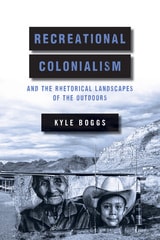
Recreational Colonialism and the Rhetorical Landscapes of the Outdoors
Kyle Boggs
The Ohio State University Press, 2025
In Recreational Colonialism and the Rhetorical Landscapes of the Outdoors, Kyle Boggs chronicles the struggle between Indigenous peoples who have rooted religious and cultural ties to outdoor sites across the US and elsewhere and the settlers who claim the right to freely recreate in those same places. Synthesizing theories of rhetoric, environmental studies, and settler colonialism, Boggs confronts the ways that settler colonial experiences and expectations have been narrated through rhetorical practices on these so-called public lands. Fusing journalism and personal narrative with scholarly research, Boggs’s argument comes to bear on his central case study of a northern Arizona ski development on a mountain held sacred by at least thirteen Indigenous tribes. In illuminating the striking ways that settler imaginaries are accommodated, performed, and sustained in the everyday, Boggs offers a powerful reminder that even during leisure activities (in this case, sports such as ultrarunning, rock climbing, and skiing), complex webs of power control who can access resources and land and who has the right to protect histories and cultures.
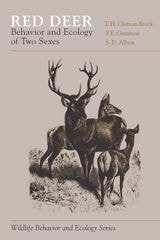
Red Deer
Behavior and Ecology of Two SexesT. H. Clutton-Brock, F. E. Guinness, and S. D. Albon
University of Chicago Press, 1982
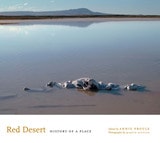
Red Desert
History of a PlaceEdited by Annie Proulx
University of Texas Press, 2008
Finalist, ForeWord Magazine Book of the Year Awards, Environment Category, 2008
A vast expanse of rock formations, sand dunes, and sagebrush in central and southwest Wyoming, the little-known Red Desert is one of the last undeveloped landscapes in the United States, as well as one of the most endangered. It is a last refuge for many species of wildlife. Sitting atop one of North America's largest untapped reservoirs of natural gas, the Red Desert is a magnet for energy producers who are damaging its complex and fragile ecosystem in a headlong race to open a new domestic source of energy and reap the profits.
To capture and preserve what makes the Red Desert both valuable and scientifically and historically interesting, writer Annie Proulx and photographer Martin Stupich enlisted a team of scientists and scholars to join them in exploring the Red Desert through many disciplines—geology, hydrology, paleontology, ornithology, zoology, entomology, botany, climatology, anthropology, archaeology, sociology, and history. Their essays reveal many fascinating, often previously unknown facts about the Red Desert—everything from the rich pocket habitats that support an amazing diversity of life to engrossing stories of the transcontinental migrations that began in prehistory and continue today on I-80, which bisects the Red Desert.
Complemented by Martin Stupich's photo-essay, which portrays both the beauty and the devastation that characterize the region today, Red Desert bears eloquent witness to a unique landscape in its final years as a wild place.
Red Leviathan
The Secret History of Soviet WhalingRyan Tucker Jones
University of Chicago Press, 2022
The Soviet Union killed over six hundred thousand whales in the twentieth century, many of them illegally and secretly. That catch helped bring many whale species to near extinction by the 1970s, and the impacts of this loss of life still ripple through today’s oceans. In this new account, based on formerly secret Soviet archives and interviews with ex-whalers, environmental historian Ryan Tucker Jones offers a complete history of the role the Soviet Union played in the whales’ destruction. As other countries—especially the United States, Great Britain, Japan, and Norway—expanded their pursuit of whales to all corners of the globe, Stalin determined that the Soviet Union needed to join the hunt. What followed was a spectacularly prodigious, and often wasteful, destruction of humpback, fin, sei, right, and sperm whales in the Antarctic and the North Pacific, done in knowing violation of the International Whaling Commission’s rules. Cold War intrigue encouraged this destruction, but, as Jones shows, there is a more complex history behind this tragic Soviet experiment. Jones compellingly describes the ultimate scientific irony: today’s cetacean studies benefited from Soviet whaling, as Russian scientists on whaling vessels made key breakthroughs in understanding whale natural history and behavior. And in a final twist, Red Leviathan reveals how the Soviet public began turning against their own country’s whaling industry, working in parallel with Western environmental organizations like Greenpeace to help end industrial whaling—not long before the world’s whales might have disappeared altogether.

Red-winged Blackbirds
Decision-making and Reproductive SuccessLes D. Beletsky and Gordon H. Orians
University of Chicago Press, 1996
Using analyses of observational data combined with field experiments and game-theoretical models, the authors provide new insights into the complex patterns of reproductive decision-making and breeding behavior in redwings. This book will be of interest to all who study social animals, including behavioral ecologists, evolutionary biologists, and ornithologists.
Rediscovering National Parks in the Spirit of John Muir
Michael Frome
University of Utah Press, 2015
As a journalist, advocate, and professor, Michael Frome has spent decades engaged with conservation topics and has taken particular interest in America’s national parks. He draws on this experience and knowledge to address what remains to be done in order to truly value and preserve these special places. Part memoir, part history, and part broadside against those who would diminish this heritage, Rediscovering National Parks in the Spirit of John Muir, through thoughtful reflections and ruminations, bears witness to the grandeur of our parks and to the need for a renewed sense of appreciation and individual responsibility for their care.
In recollections of his encounters and conversations with key people in national park history, Frome discusses park politics, conflicts between use and preservation, and impacts of commercialization. He proposes a dedicated return to the true spirit in which the parks were established, in the manner of John Muir. He advocates maintaining these lands as wild sanctuaries, places where we can find inspiration, solitude, silence, balance, and simplicity, reminding us why we must preserve our national treasures and why we need to connect with the deeper values they hold.
Reef Fishes of the Sea of Cortez
The Rocky-Shore Fishes of the Gulf of California, Revised EditionBy Donald A. Thomson, Lloyd T. Findley, and Alex N. Kerstitch
University of Texas Press, 2000
First published in 1979, this guide has become the standard resource for scientists, divers, and spearfishers interested in the fishes of the tropical Pacific Coast. The authors have revised and updated this edition to include the most current taxonomic information, additional species descriptions, and new illustrations.
Refugia
PoemsKyce Bello
University of Nevada Press, 2019
Winner of the inaugural Interim 2018 Test Site Poetry Series Prize
Refugia is a bright and hopeful voice in the current conversation about climate change. Kyce Bello’s stunning debut ponders what it means to inhabit a particular place at a time of enormous disruption, witnessing a beloved landscape as it gives way to, as Bello writes, “something other and unknown, growing beyond us.” Ultimately an exploration of resilience, Refugia brings to life the author’s home ground in Northern New Mexico and carefully observes the seasons in parallel with personal cycles of renewal and loss. These vivid poems touch upon history, inheritance, drought, and most of all, trees—be they Western conifers succumbing to warming temperatures, ramshackle orchards along the Rio Grande, or family trees reaching simultaneously into the past and future.
Like any wilderness, Refugia creates a terrain that is grounded in image and yet many-layered and complex. These poems write us back into an ecological language of place crucial to our survival in this time of environmental crisis.
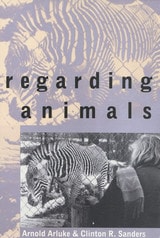
Regarding Animals
Arnold Arluke and Clinton R. Sanders
Temple University Press, 1996
What is it about Western society, ask the authors, that makes it possible for people to express great affection for animals as sentient creatures and simultaneously turn a blind eye to the most callous behavior toward them? Animals are sold as expensive commodities, used as food and clothing, killed as vermin, and hunted for sport. But they also are treated as members of the family, used as the cause célèbre of social movements, and made the subject of art, film, and poetry. Such contradictions motivate these unique ethnographers to venture into social worlds most people know about only in passing, such as veterinary clinics where companion animals are cared for, animal shelters where dogs and cats are "mercifully" euthanized, and primate labs where monkeys are kept for animal experimentation.
Arluke and Sanders are not distanced ethnographers. They worked in the clinics, shelters, and laboratories, cleaning cages, assisting in surgery, and participating in "sacrificing" animals for science or helping to provide them with an "easy death." In this book, the people who work with these animals and live through them talk to the authors about the strategies they adopt to cope with the stress of the job.
This fascinating book combines sociological analysis with ethnographic description to give us insight into the history and practice of how we as human beings construct animals, and by extrapolation, how we construct ourselves and others in relation to them.
In the series Animals, Culture, and Society, edited by Arnold Arluke and Clinton R. Sanders.
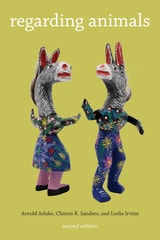
Regarding Animals
Arnold Arluke, Clinton R. Sanders, and Leslie Irvine
Temple University Press, 2022
Winner of the Charles Horton Cooley Award, Society for the Study of Symbolic Interaction, 1997
The first edition of Regarding Animals provided insight into the history and practice of how human beings construct animals, and how we construct ourselves and others in relation to them. Considerable progress in how society regards animals has occurred since that time. However, shelters continue to euthanize companion animals, extinction rates climb, and wildlife “management” pits human interests against those of animals.
This revised and updated edition of Regarding Animals includes four new chapters, examining how relationships with pets help homeless people to construct positive personal identities; how adolescents who engage in or witness animal abuse understand their acts; how veterinary technicians experience both satisfaction and contamination in their jobs; and how animals are represented in mass media—both traditional editorial media and social media platforms.
The authors illustrate how modern society makes it possible for people to shower animals with affection and yet also to abuse or kill them. Although no culture or subculture provides solutions for resolving all moral contradictions, Regarding Animals illuminates how people find ways to live with inconsistent behavior.
Regreening the National Parks
Michael Frome
University of Arizona Press, 1992
Overcrowding and commercialization are commonplace, and with the increase in visitation has come not only congestion but crime. Yet visitor enjoyment seems to be a higher priority of those who manage the parks than the protection and perpetuation of natural systems. How could this have happened? Michael Frome, one of the most outspoken and highly regarded observers of our national parks, here shows how the original mission of the National Park Service has been undermined by politicization and bureaucratization.
Regreening the National Parks tells how the Park Service has been transformed from a professional to a political agency and in the process has betrayed its own values by emphasizing recreation and "short-order wilderness served like fast food" rather than the preservation of the nation's natural heritage. Frome has drawn on both official documents and personal interviews to examine the policies--and personalities--behind the scenes at the National Park Service. He cites instances of personnel being forbidden to criticize public policy in which they found a conflict with conservation principles, and contends that, as the Park Service has become more bureaucratic, those for whom the environment deeply matters scarcely rise within its ranks. In considering the environmental abuse rampant today, Frome sees national parks as models of respect for nature and concludes his book with a ten-point program toward realizing that ideal.
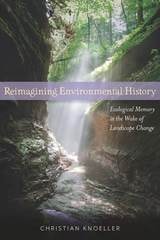
Reimagining Environmental History
Ecological Memory in the Wake of Landscape ChangeChristian Knoeller
University of Nevada Press, 2017
Reading across centuries and genres, Knoeller gives us a vibrant new appraisal of Midwestern/North American interior literary traditions and makes clear how vital environmental writing is to this region. To date, no one has written such an eloquent and comprehensive cross-genre analysis of Midwestern environmental literature.
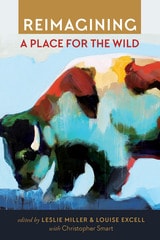
Reimagining a Place for the Wild
Leslie Miller, Louise Excell, and Christopher Smart
University of Utah Press, 2018
Reimagining a Place for the Wild contains a diverse collection of personal stories that describe encounters with the remaining wild creatures of the American West and critical essays that reveal wildlife’s essential place in western landscapes. Gleaned from historians, journalists, biologists, ranchers, artists, philosophers, teachers, and conservationists, these narratives expose the complex challenges faced by wild animals and those devoted to understanding them. Whether discussing keystone species like grizzly bears and gray wolves or microfauna swimming the thermal depths of geysers, these accounts reflect the authors’ expertise as well as their wonder and respect for wild nature. The writers do more than inform our sensibilities; their narratives examine both humanity’s conduct and its capacity for empathy toward other life. A selection of photos and paintings punctuates the volume.
This collection sprang from the Reimagine Western Landscapes Symposium held at the University of Utah’s Taft-Nicholson Environmental Humanities Education Center in Centennial Valley, Montana. These testaments join a chorus of voices seeking improved relations with the western wild in the twenty-first century.
Relics
Travels in Nature's Time MachinePiotr Naskrecki
University of Chicago Press, 2011
On any night in early June, if you stand on the right beaches of America’s East Coast, you can travel back in time all the way to the Jurassic. For as you watch, thousands of horseshoe crabs will emerge from the foam and scuttle up the beach to their spawning grounds, as they’ve done, nearly unchanged, for more than 440 million years.
Horseshoe crabs are far from the only contemporary manifestation of Earth’s distant past, and in Relics, world-renowned zoologist and photographer Piotr Naskrecki leads readers on an unbelievable journey through those lingering traces of a lost world. With camera in hand, he travels the globe to create a words-and-pictures portrait of our planet like no other, a time-lapse tour that renders Earth’s colossal age comprehensible, visible in creatures and habitats that have persisted, nearly untouched, for hundreds of millions of years.
Naskrecki begins by defining the concept of a relic—a creature or habitat that, while acted upon by evolution, remains remarkably similar to its earliest manifestations in the fossil record. Then he pulls back the Cambrian curtain to reveal relic after eye-popping relic: katydids, ancient reptiles, horsetail ferns, majestic magnolias, and more, all depicted through stunning photographs and first-person accounts of Naskrecki’s time studying them and watching their interactions in their natural habitats. Then he turns to the habitats themselves, traveling to such remote locations as the Atewa Plateau of Africa, the highlands of Papua New Guinea, and the lush forests of the Guyana Shield of South America—a group of relatively untrammeled ecosystems that are the current end point of staggeringly long, uninterrupted histories that have made them our best entryway to understanding what the prehuman world looked, felt, sounded, and even smelled like.
The stories and images of Earth’s past assembled in Relics are beautiful, breathtaking, and unmooring, plunging the reader into the hitherto incomprehensible reaches of deep time. We emerge changed, astonished by the unbroken skein of life on Earth and attentive to the hidden heritage of our planet’s past that surrounds us.
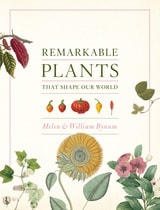
Remarkable Plants That Shape Our World
Helen Bynum and William Bynum
University of Chicago Press, 2014
Remarkable Plants celebrates the wonder and utility of the green kingdom, taking a detailed look at how plants have shaped our world. It focuses on eighty key species and richly explores their history, highlighting their importance and bringing to light surprising stories. Organized thematically into eight sections, the book starts with “Transformers” (including rice, beans, olives) and moves through sections such as “Heal and Harm” (poppy, aloe, strychnos) and “Revered and Adored” (lotus, frankincense, rose). Each species is introduced with its common and scientific names and followed by an exploration of its cultural, historical, botanical, and symbolic associations. Hundreds of botanical illustrations show full plants as well as highlight distinctive leaves, blooms, and fruits.
Rooted in one of the world’s most important and renowned temples of greenery, the Royal Botanic Gardens, Kew, Remarkable Plants is a symbiotic balance of science and art that will open readers’ eyes to the deep influence of the natural world on our modern one.
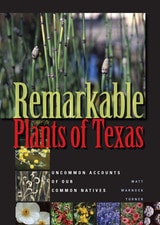
Remarkable Plants of Texas
Uncommon Accounts of Our Common NativesBy Matt Warnock Turner
University of Texas Press, 2009
With some 6,000 species of plants, Texas has extraordinary botanical wealth and diversity. Learning to identify plants is the first step in understanding their vital role in nature, and many field guides have been published for that purpose. But to fully appreciate how Texas's native plants have sustained people and animals from prehistoric times to the present, you need Remarkable Plants of Texas.
In this intriguing book, Matt Warnock Turner explores the little-known facts—be they archaeological, historical, material, medicinal, culinary, or cultural—behind our familiar botanical landscape. In sixty-five entries that cover over eighty of our most common native plants from trees, shrubs, and wildflowers to grasses, cacti, vines, and aquatics, he traces our vast array of connections with plants. Turner looks at how people have used plants for food, shelter, medicine, and economic subsistence; how plants have figured in the historical record and in Texas folklore; how plants nourish wildlife; and how some plants have unusual ecological or biological characteristics. Illustrated with over one hundred color photos and organized for easy reference, Remarkable Plants of Texas can function as a guide to individual species as well as an enjoyable natural history of our most fascinating native plants.

Remarkable Trees
Christina Harrison and Tony Kirkham
University of Chicago Press, 2019
Remarkable Trees tells the unique story of more than sixty species, each selected for its resonance and connection with people. In portraits that combine vivid cultural and historical narrative with a firm scientific grounding, Christina Harrison and Tony Kirkham reveal fascinating details of trees from the world’s major environmental zones and habitats. Some are obvious superstars such as oaks, redwoods and coconut, while others are more surprising: we learn of the monkey puzzle, a tree native to Chile that “can grow for 1,000 years,” and of the manchineel, a tree that contains sap so toxic to human skin that it’s a risk to stand beneath it on a rainy day. In these pages are trees that are healers and killers, trees that serve as foundations of great buildings and grand feasts, and trees that leave us with a sense of wonder and of worry for their survival.
In a tribute to the artists and botanists who have been inspired by trees for centuries, this book is filled with 240 delightful illustrations. The varied and beautiful images come from the unrivalled archive at the Royal Botanic Gardens, Kew, and they bring this enlightening and enchanting volume to life.
While trees have supported us for millennia, we have recently lost that direct, deep connection with them. Harrison and Kirkham remind us that we do not have to look far to reestablish that relationship and that we can still cherish the splendor and significance of these quiet giants.
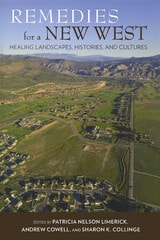
Remedies for a New West
Healing Landscapes, Histories, and CulturesEdited by Patricia Nelson Limerick, Andrew Cowell, and Sharon K. Collinge
University of Arizona Press, 2009
The signs of illness and trauma can seem omnipresent in today’s West: land and soil disrupted from mining, overgrazing, logging, and farming; wildlife habitat reduced and fragmented; native societies disturbed and threatened; open space diminished by cities and suburbs; wilderness destroyed by roads and recreation-seekers. But as these essays suggest, the “treatment program” for healing the West has many healthful side effects. Engaging in the kinds of projects suggested by contributors is therapeutic not only for the environment but for participants as well. Restoration, repair, and recovery can counter symptoms of despair with concentrated doses of promise and possibility.
The more “lesions” the West has, this book suggests, the more opportunities there are for westerners to revive and ultimately cure the ailing patient they have helped to create. The very idea of restoring the West to health, contributors and editors contend, unleashes our imaginations, sharpens our minds, and gives meaning to the ways we choose to live our lives. At the same time, acknowledging the profound difficulties of the work that lies ahead immunizes us against our own arrogance as we set about the task of healing the West.