Results by title
121 books match the query 'Neoliberalism' and 4 start with r

Reclaiming the Nation
The Return of the National Question in Africa, Asia and Latin AmericaEdited by Sam Moyo and Paris Yeros
Pluto Press, 2011
This book compares the trajectories of states and societies in Africa, Asia and Latin America under neoliberalism, a time marked by serial economic crises, escalating social conflicts, the re-militarisation of North-South relations and the radicalisation of social and nationalist forces.
Sam Moyo and Paris Yeros bring together researchers and activists from the three continents to assess the state of national sovereignty and the challenges faced by popular movements today. They show that global integration has widened social and regional inequalities within countries, exacerbated ethnic, caste, and racial conflicts, and generally reduced the bureaucratic capacities of states to intervene in a defensive way. Moreover, inequalities between the countries of the South have also widened. These structural tensions have all contributed to several distinct political trajectories among states: from fracture and foreign occupation, to radicalisation and uncertain re-stabilisation.
This book re-draws the debate on the political economy of the contemporary South and provides students of international studies with an important collection of readings.

Reproductive Labor and Innovation
Against the Tech Fix in an Era of HypeJennifer Denbow
Duke University Press, 2024
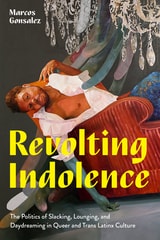
Revolting Indolence
The Politics of Slacking, Lounging, and Daydreaming in Queer and Trans Latinx CultureMarcos Gonsalez
University of Texas Press, 2024
2026 Bronze Medal for the Best LGBTQ+ Themed Book, Conference on Latin American History (CLAH)
2025 Honorable Mention, John Leo & Dana Heller Award for Best Single Work, Anthology, Multi-Authored, or Edited Book in LGBTQ Studies, Popular Culture Association (PCA)
2025 Honorable Mention, Alan Bray Memorial Book Prize, GL/Q Caucus of the Modern Language Association and the Q/T Caucus of the American Studies Association
How indolent practices in Latinx LGBTQ culture challenge capitalist imperatives to be productive.
Revolting Indolence makes a case for laziness as an aesthetic-political strategy for countering the oppressive logics of cisheteronormative racial capitalism. Focusing on ways in which queer and trans Latinx people demonstrate the unwillingness of their participation in “productivist” ethics and allied respectability politics, Marcos Gonsalez argues that slacking off, lounging, daydreaming, and partying are liberatory practices—revolts that in turn are treated as revolting.
Gonsalez explores how queer and trans Latinx artists refute discourses in which work is a moral good. In Paris Is Burning, RuPaul's Drag Race, documentary photography of queer and trans Latinx life in Los Angeles, and other sources, Gonsalez identifies two lazy styles: first, flagrant refusals of work that critique capitalist reason; and second, the invention of alternative aesthetic worlds beyond racial capitalism and violence targeting queer and trans people, whose rejection of the cisgender nuclear family paradigm is rightly seen as threatening the stability of a functioning capitalist system. Reclaiming laziness as a resource for radical imagining, Revolting Indolence asks us to do that which we want most and which capitalist exploitation can least tolerate: to slow down.

Rotten States?
Corruption, Post-Communism, and NeoliberalismLeslie Holmes
Duke University Press, 2006
Drawing on data including surveys commissioned especially for this study, Holmes examines the causes and consequences of official corruption as well as ways of combating it. He focuses particular attention on the timing of the recent increase in reports of corruption, the relationship between post-communism and corruption, and the interplay between corruption and the delegitimation and weakening of the state. Holmes argues that the global turn toward neoliberalism—with its focus on ends over means, flexibility, and a reduced role for the state—has generated much of the corruption in post-communist states. At the same time, he points out that neoliberalism is perhaps the single most powerful tool for overcoming the communist legacy, which is an even more significant cause of corruption. Among the conclusions that Holmes draws is that a strong democratic state is needed in the early stages of the transition from communism in order to prevent corruption from taking hold.