Results by title
60 books match the query 'Physical' and 3 start with r
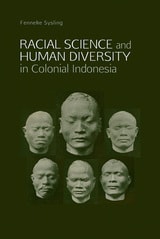
Racial Science and Human Diversity in Colonial Indonesia
Fenneke Sysling
National University of Singapore Press, 2016
Indonesia is home to diverse peoples who differ from one another in terms of physical appearance as well as social and cultural practices. The way such matters are understood is partly rooted in ideas developed by racial scientists working in the Netherlands Indies beginning in the late nineteenth century, who tried to develop systematic ways to define and identify distinctive races. Their work helped spread the idea that race had a scientific basis in anthropometry and craniology, and was central to people’s identity, but their encounters in the archipelago also challenged their ideas about race.
In this new monograph, Fenneke Sysling draws on published works and private papers to describe the way Dutch racial scientists tried to make sense of the human diversity in the Indonesian archipelago. The making of racial knowledge, it contends, cannot be explained solely in terms of internal European intellectual developments. It was ‘on the ground’ that ideas about race were made and unmade with a set of knowledge strategies that did not always combine well. Sysling describes how skulls were assembled through the colonial infrastructure, how measuring sessions were resisted, what role photography and plaster casting played in racial science and shows how these aspects of science in practice were entangled with the Dutch colonial Empire.
In this new monograph, Fenneke Sysling draws on published works and private papers to describe the way Dutch racial scientists tried to make sense of the human diversity in the Indonesian archipelago. The making of racial knowledge, it contends, cannot be explained solely in terms of internal European intellectual developments. It was ‘on the ground’ that ideas about race were made and unmade with a set of knowledge strategies that did not always combine well. Sysling describes how skulls were assembled through the colonial infrastructure, how measuring sessions were resisted, what role photography and plaster casting played in racial science and shows how these aspects of science in practice were entangled with the Dutch colonial Empire.
[more]
Reinventing the Good Life
An Empirical Contribution to the Philosophy of CareJeannette Pols
University College London, 2023
An analytical exploration of what it means to live a good life.
Ever since Adam Smith’s musings on “the invisible hand” became more famous than his work on moral sentiments, social theorists started to pay less attention to everyday ethics and aesthetics. Smith’s metaphor of the invisible hand posits that social outcomes emerge by dint of the behaviors of individuals rather than their intentions or virtues.
Modernist and scientific approaches to determining the common good or good forms of governance have increasingly relied on techniques of generalization, rationalization, and universalization. Everyday ethics and aesthetics—and recently also matters of truth—came to be regarded as individual matters of taste. This shift, however, has meant that we no longer comprehend why and how people display a deep concern with everyday life values in their social practices. People continue to enact these values and live by them while academics lack the vocabulary and methods to grasp them.
By reconstructing the history of ideas about everyday-life values, and by analyzing the role of such values in contemporary care practices for patients with chronic disease in the Netherlands, Reinventing the Good Life seeks to explore new ways to study the values of everyday life, particularly in situations where the achievement of a clear-cut or uniform good is unlikely. The book presents a practice-based epistemology and methodology for studying everyday care practices and supporting their goodness. This analytical approach ultimately aims to generate ideas that will allow us to relate in more imaginative ways to the many pressing concerns that we are forced to live with today.
[more]
Risky Cities
The Physical and Fiscal Nature of Disaster CapitalismAlbert S. Fu
Rutgers University Press, 2022
Over half the world’s population lives in urban regions, and increasingly disasters are of great concern to city dwellers, policymakers, and builders. However, disaster risk is also of great interest to corporations, financiers, and investors. Risky Cities is a critical examination of global urban development, capitalism, and its relationship with environmental hazards. It is about how cities live and profit from the threat of sinkholes, garbage, and fire. Risky Cities is not simply about post-catastrophe profiteering. This book focuses on the way in which disaster capitalism has figured out ways to commodify environmental bads and manage risks. Notably, capitalist city-building results in the physical transformation of nature. This necessitates risk management strategies –such as insurance, environmental assessments, and technocratic mitigation plans. As such capitalists redistribute risk relying on short-term fixes to disaster risk rather than address long-term vulnerabilities.
[more]