Results by title
187 books match the query 'Place' and 16 start with r
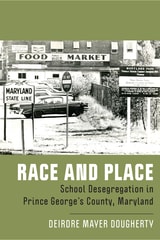
Race and Place
School Desegregation in Prince George's County, MarylandDeirdre Mayer Dougherty
Rutgers University Press, 2025
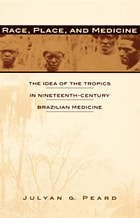
Race, Place, and Medicine
The Idea of the Tropics in Nineteenth-Century BrazilJulyan G. Peard
Duke University Press, 1999
Peard shows how the Tropicalistas adapted Western medicine and challenged the Brazilian medical status quo in order to find new answers to the old question of whether the diseases of warm climates were distinct from those of temperate Europe. They carried out innovative research on parasitology, herpetology, and tropical disorders, providing evidence that countered European assumptions about Brazilian racial and cultural inferiority. In the face of European fatalism about health care in the tropics, the Tropicalistas forged a distinctive medicine based on their beliefs that public health would improve only if large social issues—such as slavery and abolition—were addressed and that the delivery of health care should encompass groups hitherto outside the doctors’ sphere, especially women. But the Tropicalistas’ agenda, which included biting social critiques and broad demands for the extension of health measures to all of Brazil’s people, was not sustained. Race, Place, and Medicine shows how imported models of tropical medicine—constructed by colonial nations for their own needs—downplayed the connection between socioeconomic factors and tropical disorders.
This study of a neglected episode in Latin American history will interest Brazilianists, as well as scholars of Latin American, medical, and scientific history.
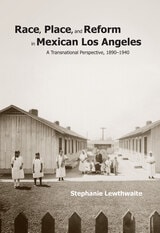
Race, Place, and Reform in Mexican Los Angeles
A Transnational Perspective, 1890-1940Stephanie Lewthwaite
University of Arizona Press, 2009
In Race, Place, and Reform in Mexican Los Angeles, Stephanie Lewthwaite presents evidence from a myriad of sources that these varied agendas of reform consistently supported the creation of racial, ethnic, and cultural differences across Los Angeles. Reformers simultaneously promoted acculturation and racialization, creating a “landscape of difference” that significantly shaped the place and status of Mexican immigrants and Mexican Americans from the Progressive era through the New Deal.
The book journeys across the urban, suburban, and rural spaces of Greater Los Angeles as it moves through time and examines the rural–urban migration of Mexicans on both a local and a transnational scale. Part 1 traverses the world of Progressive reform in urban Los Angeles, exploring the link between the region’s territorial and industrial expansion, early campaigns for social and housing reform, and the emergence of a first-generation Mexican immigrant population. Part 2 documents the shift from official Americanization and assimilation toward nativism and exclusion. Here Lewthwaite examines competing cultures of reform and the challenges to assimilation from Mexican nationalists and American nativists. Part 3 analyzes reform during the New Deal, which spawned the active resistance of second-generation Mexican Americans.
Race, Place, and Reform in Mexican Los Angeles achieves a full, broad, and nuanced account of the various—and often contradictory—efforts to reform the Mexican population of Los Angeles. With a transnational approach grounded in historical context, this book will appeal to students of history, cultural studies, and literary studies
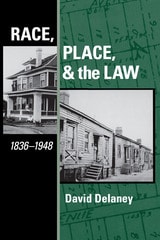
Race, Place, and the Law, 1836-1948
By David Delaney
University of Texas Press, 1998
Black and white Americans have occupied separate spaces since the days of "the big house" and "the quarters." But the segregation and racialization of American society was not a natural phenomenon that "just happened." The decisions, enacted into laws, that kept the races apart and restricted blacks to less desirable places sprang from legal reasoning which argued that segregated spaces were right, reasonable, and preferable to other arrangements.
In this book, David Delaney explores the historical intersections of race, place, and the law. Drawing on court cases spanning more than a century, he examines the moves and countermoves of attorneys and judges who participated in the geopolitics of slavery and emancipation; in the development of Jim Crow segregation, which effectively created apartheid laws in many cities; and in debates over the "doctrine of changed conditions," which challenged the legality of restrictive covenants and private contracts designed to exclude people of color from white neighborhoods. This historical investigation yields new insights into the patterns of segregation that persist in American society today.
Radical Vernacular
Lorine Niedecker and the Poetics of PlaceElizabeth Willis
University of Iowa Press, 2008
Aesthetically linked with the New York Objectivist poets, Niedecker remained committed to her community in rural Wisconsin despite the grinding poverty that dogged her throughout her life. Largely self-taught, Niedecker formed attachments through her voracious reading and correspondence, but she also delighted in the disruptive richness of vernacular usage and in the homegrown, improvisational aesthetics that thrived within her immediate world. Niedecker wrote from a highly attenuated concern with biological, cultural, and political sustainability and, in her stridently modernist poems, anticipated many of the most urgent concerns in twenty-first-century poetics. In Radical Vernacular, Elizabeth Willis collects essays by leading poets and scholars that make a major contribution to the study of an important but long overlooked American poet.
This pathbreaking volume contains essays by seventeen leading scholars: Rae Armantrout, Glenna Breslin, Michael Davidson, Rachel Blau DuPlessis, Ruth Jennison, Peter Middleton, Jenny Penberthy, Mary Pinard, Patrick Pritchett, Peter Quartermain, Lisa Robertson, Elizabeth Robinson, Eleni Sikelianos, Jonathan Skinner, Anne Waldman, Eliot Weinberger, and Elizabeth Willis.
Reckoning Day
Race, Place, and the Atom Bomb in Postwar AmericaJacqueline Foertsch
Vanderbilt University Press, 2013
Foertsch also examines the location of African American characters in novels, science fiction, and survivalist nonfiction such as government-sponsored forecasts regarding post-nuclear survival. In these, black characters are often displaced or absented entirely: in doomsday narratives they are excluded from executive decision-making and the stories' often triumphant conclusions; in the nonfiction, they are rarely envisioned amongst the "typical American" survivors charged with rebuilding US society. Throughout Reckoning Day, issues of placement and positioning provide the conceptual framework: abandoned at "ground zero" (America's inner cities) during the height of the atomic threat, African Americans were figured in white-authored survival fiction as compliant servants aiding white victory over atomic adversity, while as historical figures they were often perceived as "elsewhere" (indifferent) to the atomic threat. In fact, African Americans' "position" on the bomb was rarely one of silence or indifference. Ranging from appreciation to disdain to vigorous opposition, atomic-era African Americans developed diverse and meaningful positions on the bomb and made essential contributions to a remarkably American dialogue.
Reclaiming American Cities
The Struggle for People, Place, and Nature since 1900Rutherford H. Platt
University of Massachusetts Press, 2014
For most of the past century, urban America was dominated by top-down policies serving the white business and cultural elite, the suburbs, and the automobile. At times these approaches were fiercely challenged by reformers such as Jane Addams and Jane Jacobs. Yet by the 1980s, mainstream policies had resulted in a nation of ravaged central cities, sprawling suburbs, social and economic polarization, and incalculable environmental damage.
In the 1990s, this entrenched model finally yielded to change as local citizens, neighborhood groups, and other stakeholders, empowered by a spate of new laws and policies, began asserting their own needs and priorities. Though hampered by fiscal crises and internal disagreements, these popular initiatives launched what the author terms a new era of “humane urbanism” marked by a determination to make cities and suburbs greener, healthier, safer, more equitable, more efficient, and generally more people-friendly. In the process, the mayors, architects, engineers, and bureaucrats who had previously dominated urban policy found themselves relegated to supporting roles.
As Rutherford H. Platt points out, humane urbanism can take many forms, from affordable housing and networks of bike paths to refurbished waterfronts and urban farms. Often spontaneous, low-tech, and self-sustaining programs, their shared goal is to connect people to one another and to bring nature back into the city. Reclaiming American Cities examines both sides of this historic transformation: the long struggle against patricians and technocrats of earlier decades and the recent sprouting of grassroots efforts to make metropolitan America more humane and sustainable.
Recovering the Commons
Democracy, Place, and Global JusticeHerbert Reid and Betsy Taylor
University of Illinois Press, 2010
This penetrating work culls key concepts from grassroots activism to hold critical social theory accountable to the needs, ideas, and organizational practices of the global justice movement. The resulting critique of neoliberalism hinges on place-based struggles of groups marginalized by globalization and represents a brave rethinking of politics, economy, culture, and professionalism.
Providing new practical and conceptual tools for responding to human and environmental crises in Appalachia and beyond, Recovering the Commons radically revises the framework of critical social thought regarding our stewardship of the civic and ecological commons. Herbert Reid and Betsy Taylor ally social theory, field sciences, and local knowledge in search of healthy connections among body, place, and commons that form a basis for solidarity as well as a vital infrastructure for a reliable, durable world. Drawing particularly on the work of philosophers Maurice Merleau-Ponty, John Dewey, and Hannah Arendt, the authors reconfigure social theory by ridding it of the aspects that reduce place and community to sets of interchangeable components. Instead, they reconcile complementary pairs such as mind/body and society/nature in the reclamation of public space.
With its analysis embedded in philosophical and material contexts, this penetrating work culls key concepts from grassroots activism to hold critical social theory accountable to the needs, ideas, and organizational practices of the global justice movement. The resulting critique of neoliberalism hinges on place-based struggles of groups marginalized by globalization and represents a brave rethinking of politics, economy, culture, and professionalism.
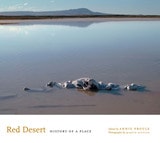
Red Desert
History of a PlaceEdited by Annie Proulx
University of Texas Press, 2008
Finalist, ForeWord Magazine Book of the Year Awards, Environment Category, 2008
A vast expanse of rock formations, sand dunes, and sagebrush in central and southwest Wyoming, the little-known Red Desert is one of the last undeveloped landscapes in the United States, as well as one of the most endangered. It is a last refuge for many species of wildlife. Sitting atop one of North America's largest untapped reservoirs of natural gas, the Red Desert is a magnet for energy producers who are damaging its complex and fragile ecosystem in a headlong race to open a new domestic source of energy and reap the profits.
To capture and preserve what makes the Red Desert both valuable and scientifically and historically interesting, writer Annie Proulx and photographer Martin Stupich enlisted a team of scientists and scholars to join them in exploring the Red Desert through many disciplines—geology, hydrology, paleontology, ornithology, zoology, entomology, botany, climatology, anthropology, archaeology, sociology, and history. Their essays reveal many fascinating, often previously unknown facts about the Red Desert—everything from the rich pocket habitats that support an amazing diversity of life to engrossing stories of the transcontinental migrations that began in prehistory and continue today on I-80, which bisects the Red Desert.
Complemented by Martin Stupich's photo-essay, which portrays both the beauty and the devastation that characterize the region today, Red Desert bears eloquent witness to a unique landscape in its final years as a wild place.
Reflections in Place
Connected Lives of Navajo WomenDonna Deyhle
University of Arizona Press, 2009
As a recognized authority on the subject, qualified by multiple degrees in racial and American Indian studies, Deyhle is able to chronicle the lives and “survivance” of three Navajo women in a way that is simultaneously ethnographic and moving. Her critique of the U.S. education system’s underlying yet very real tendency toward structural discrimination takes shape in elegant prose that moves freely into and out of time and place. The combination of substantive sources and touching personal experience forms a profound and enduring narrative of critical and current importance.
While this book stands as a powerful contribution to American Indian studies, its compelling human elements will extend its appeal to anyone concerned with the ongoing plight of American Indians in the education system.
Religion, History, and Place in the Origin of Settled Life
Ian Hodder
University Press of Colorado, 2018
Contributors argue that the long-term social relationships characteristic of delayed-return agricultural systems must be based on historical ties to place and to ancestors. They define different forms of history-making, including nondiscursive routinized practices as well as commemorative memorialization. They consider the timing in the Neolithic of an emerging concern with history-making in place in relation to the adoption of farming and settled life in regional sequences. They explore whether such correlations indicate the causal processes in which history-making, ritual practices, agricultural intensification, population increase, and social competition all played a role.
Religion, History, and Place in the Origin of Settled Life takes a major step forward in understanding the adoption of farming and a settled way of life in the Middle East by foregrounding the roles of history-making and religious ritual. This work is relevant to students and scholars of Near Eastern archaeology, as well as those interested in the origins of agriculture and social complexity or the social role of religion in the past.
Contributors: Kurt W. Alt, Mark R. Anspach, Marion Benz, Lee Clare, Anna Belfer-Cohen, Morris Cohen, Oliver Dietrich, Güneş Duru, Yilmaz S. Erdal, Nigel Goring-Morris, Ian Hodder, Rosemary A. Joyce, Nicola Lercari, Wendy Matthews, Jens Notroff, Vecihi Özkaya, Feridun S. Şahin, F. Leron Shults, Devrim Sönmez, Christina Tsoraki, Wesley Wildman
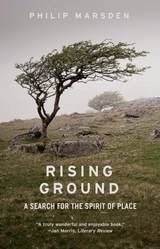
Rising Ground
A Search for the Spirit of PlacePhilip Marsden
University of Chicago Press, 2016
Rising Ground is a record of that journey, but it is also so much more: a beautifully written meditation on place, nature, and human life that encompasses history, archaeology, geography, and the love of place that suffuses us when we finally find home. Firmly in a storied tradition of English nature writing that stretches from Gilbert White to Helen MacDonald, Rising Ground reveals the ways that places and peoples have interacted over time, from standing stones to footpaths, ancient habitations to modern highways. What does it mean to truly live in a place, and what does it take to understand, and honor, those who lived and died there long before we arrived?
Like the best travel and nature writing, Rising Ground is written with the pace of a contemplative walk, and is rich with insight and a powerful sense of the long skein of years that links us to our ancestors. Marsden’s close, loving look at the small patch of earth around him is sure to help you see your own place—and your own home—anew.
Rites of Place
Public Commemoration in Russia and Eastern EuropeJulie Buckler and Emily D Johnson
Northwestern University Press, 2013
Ranging widely across time and geography, Rites of Place is to date the most comprehensive and diverse example of memory studies in the field of Russian and East European studies. Leading scholars consider how public rituals and the commemoration of historically significant sites facilitate a sense of community, shape cultural identity, and promote political ideologies. The aims of this volume take on unique importance in the context of the tumultuous events that have marked Eastern European history—especially the revolutions of 1905 and 1917, World War II, and the collapse of the Soviet Union. With essays on topics such as the founding of St. Petersburg, the battle of Borodino, the Katyn massacre, and the Lenin cult, this volume offers a rich discussion of the uses and abuses of memory in cultures where national identity has repeatedly undergone dramatic shifts and remains riven by internal contradictions.
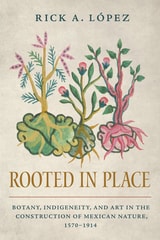
Rooted in Place
Botany, Indigeneity, and Art in the Construction of Mexican Nature, 1570–1914Rick A. López
University of Arizona Press, 2025
Prize for Best Book in Environmental Studies, Latin American Studies Association
Honorable mention for Best Book Prize in Visual Culture, Latin American Studies Association
Honorable mention for Best Book on Mexico, Latin American Studies Association
Since the first moment of conquest, colonizers and the colonized alike in Mexico confronted questions about what it meant to be from this place, what natural resources it offered, and who had the right to control those resources and on what basis.
Focusing on the ways people, environment, and policies have been affected by political boundaries, historian Rick A. López explores the historical connections between political identities and the natural world. López analyzes how scientific intellectuals laid claim to nature within Mexico, first on behalf of the Spanish Empire and then in the name of the republic, during three transformative moments: the Hernández expedition of the late sixteenth century; the Royal Botanical Expedition of the late eighteenth century; and the heyday of scientific societies such as the Sociedad Mexicana de Historia Natural of the late nineteenth century.
This work traces how scientific intellectuals studied and debated what it meant to know and claim the flora that sprang from Mexican soil—ranging from individual plants to forests and vegetated landscapes—and the importance they placed on indigeneity. It also points to the short- and long-term consequences of these efforts. López draws on archival and published sources produced from the sixteenth century through the start of the twentieth century and gives special attention to the use of visual images such as scientific illustrations and landscape art. López employs the term “visualization” in recognition of the degree to which officials, botanists, and draftsmen produced imagery and also how they and others viewed nature.
Rooted in Place reveals how scientific endeavors were not just about cataloging flora but were deeply intertwined with the construction of identity and the political landscape at three pivotal moments in Mexican history.
Rooted in Place
Family and Belongings in a Southern Black CommunityFalk, William W
Rutgers University Press, 2004
Throughout the twentieth century, millions of African Americans, many from impoverished, historically black counties, left the South to pursue what they thought would be a better life in the North. But not everyone moved away during what scholars have termed the Great Migration. What has life been like for those who stayed? Why would they remain in a place that many outsiders would see as grim, depressed, economically marginal, and where racial prejudice continues to place them at a disadvantage?
Through oral history William Falk tells the story of an extended family in the Georgia-South Carolina lowcountry. Family members talk about schooling, relatives, work, religion, race, and their love of the place where they have lived for generations. This “conversational ethnography” argues that an interconnection between race and place in the area helps explain African Americans’ loyalty to it. In Colonial County, blacks historically enjoyed a numerical majority as well as deep cultural roots and longstanding webs of social connections that, Falk finds, more than outweigh the racism they face and the economic disadvantages they suffer.
Rooted
Seven Midwest Writers of PlaceDavid R. Pichaske
University of Iowa Press, 2006