Results by title
99 books match the query 'Politics and culture' and 9 start with r
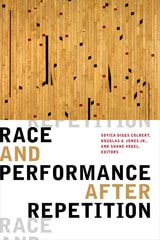
Race and Performance after Repetition
Soyica Diggs Colbert, Douglas A. Jones Jr., and Shane Vogel, editors
Duke University Press, 2020
Contributors. Joshua Chambers-Letson, Soyica Diggs Colbert, Nicholas Fesette, Patricia Herrera, Jasmine Elizabeth Johnson, Douglas A. Jones Jr., Mario LaMothe, Daphne P. Lei, Jisha Menon, Tavia Nyong’o, Tina Post, Elizabeth W. Son, Shane Vogel, Catherine M. Young, Katherine Zien

Reading North by South
On Latin American Literature, Culture, and PoliticsNeil Larsen
University of Minnesota Press, 1995
Reading North by South was first published in 1995. Minnesota Archive Editions uses digital technology to make long-unavailable books once again accessible, and are published unaltered from the original University of Minnesota Press editions.
Neil Larsen is concerned with misleading interpretations of literature and culture that dominate Latin American studies in North America. In Reading North by South he attempts to correct the distorted views that have prevailed by proposing the need for a freshly conceived historical materialist approach to Latin American texts and cultural practices.
Reading North by South opens with reflections on how North America has read Latin America since the advent of popular fiction from authors like Cortázar and García Márquez. Larsen argues that the North American academy tends to interpret Latin American texts through a postmodern lens of cultural politics that ignores historical realism, and he contends that more attention needs to be paid to historical and class issues. He provides insightful commentaries on political discourses, cultural events, films, and literary texts, and maintains that the canonization of the modernist aesthetic in the United States has resulted in a marginalization of writers and writing that reflect the historical realities of Latin American politics.
As it analyzes important points of debate within and outside of Latin American studies, Reading North by South draws upon a wide diversity of texts written in Portuguese, Spanish and English. Of particular interest is Larsen's discussion of writings from the Caribbean, an area that is not frequently included in Latin American studies. Reading North by South will lead readers to question the expectations and preconceptions that inform their readings of Latin American literature.
Neil Larsen is associate professor of Spanish and Latin American literature at Northeastern University. He is the author of Modernism and Hegemony: A Materialist Critique of Aesthetic Agencies (Minnesota, 1990), and editor of The Discourse of Power: Culture, Hegemony, and the Authoritarian State in Latin America (1983).
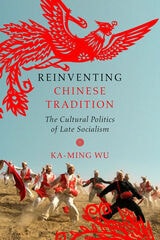
Reinventing Chinese Tradition
The Cultural Politics of Late SocialismKa-ming Wu
University of Illinois Press, 2015
Ka-ming Wu's ethnographic account of contemporary Yan'an documents how people have reworked the revival of three rural practices--paper-cutting, folk storytelling, and spirit cults--within (and beyond) the socialist legacy. Moving beyond dominant views of Yan'an folk culture as a tool of revolution or object of market reform, Wu reveals how cultural traditions become battlegrounds where conflicts among the state, market forces, and intellectuals in search of an authentic China play out. At the same time, she shows these emerging new dynamics in the light of the ways rural residents make sense of rapid social change.
Alive with details, Reinventing Chinese Tradition is an in-depth, eye-opening study of an evolving culture and society within contemporary China.
Repression, Exile, and Democracy
Uruguayan CultureSaul Sosnowski and Louise B. Popkin, eds.
Duke University Press, 1992
The first section provides a context for the volume, with its analyses of the historical, political, and social aspects of the Uruguayan experience. The following chapters explore various aspects of cultural production, including personal experiences of exile and imprisonment, popular music, censorship, literary criticism, return from exile, and the role that culture plays in redemocratization.
This book's appeal extends well beyond the study of Uruguay to scholars and students of the history and culture of other Latin American nations, as well as to fields of comparative literature and politics in general.
Contributors. Hugo Achugar, Alvarro Barros-Lémez, Lisa Block de Behar, Amanda Berenguer, Hiber Conteris, José Pedro Díaz, Eduardo Galeano, Edy Kaufman, Leo Masliah, Carina Perelli, Teresa Porzecanski, Juan Rial, Mauricio Rosencof, Jorge Ruffinelli, Saúl Sosonowski, Martin Weinstein, Ruben Yáñez
Revolution and Its Narratives
China's Socialist Literary and Cultural Imaginaries, 1949-1966Cai Xiang
Duke University Press, 2016
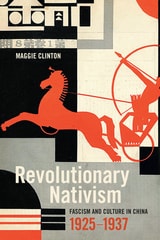
Revolutionary Nativism
Fascism and Culture in China, 1925-1937Maggie Clinton
Duke University Press, 2017
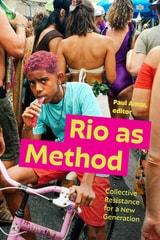
Rio as Method
Collective Resistance for a New GenerationPaul Amar, editor
Duke University Press, 2024
Contributors. Rosiane Rodrigues de Almeida, José Claudio Souza Alves, Tamires Maria Alves, Paul Amar, Marcelo Caetano Andreoli, Beatriz Bissio, Thaddeus Gregory Blanchette, Fernando Brancoli, Thayane Brêtas, Victoria Broadus, Fatima Cecchetto, Leonard Cortana, Marcos Coutinho, Monica Cunha, Luiz Henrique Eloy Amado, Marielle Franco, Cristiane Gomes Julião, Benjamin Lessing, Roberto Kant de Lima, Amanda De Lisio, Bryan McCann, Flávia Medeiros, Ana Paula Mendes de Miranda, Sean T. Mitchell, Rodrigo Monteiro, Vitória Moreira, Jacqueline de Oliveira Muniz, Laura Rebecca Murray, Cesar Pinheiro Teixeira, Osmundo Pinho, Paulo Pinto, María Victoria Pita, João Gabriel Rabello Sodré, Luciane Rocha, Marcos Alexandre dos Santos Albuquerque, Ana Paula da Silva, Denise Ferreira da Silva, Soraya Simões, Indianare Siqueira, Antonio Carlos de Souza Lima, Leonardo Vieira Silva
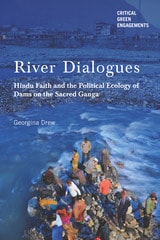
River Dialogues
Hindu Faith and the Political Ecology of Dams on the Sacred GangaGeorgina Drew
University of Arizona Press, 2017
India’s sacred Ganga River is arguably one of the most iconic sites for worship, with a continuity of rituals for the living and the dead that span over two millennia. Along the river, from high in the Himalaya to the vast plains below, people gather daily to worship the Ganga through prayer and song. But large government-sponsored dams threaten to upend these practices.
In River Dialogues, Georgina Drew offers a detailed ethnographic engagement with the social movements contesting hydroelectric development on the Ganga. The book examines the complexity of the cultural politics that, on the one hand, succeeded in influencing an unprecedented reversal of government plans for three contested hydroelectric projects, and how, on the other hand, this decision sparked ripples of discontent after being paired with the declaration of a conservation zone where the projects were situated.
The book follows the work of women who were initially involved in efforts to stop the disputed projects. After looking to their discourses and actions, Drew argues for the use of a political ecology analysis that incorporates the everyday practice and everyday religious connections that animated the cultural politics of development. Drew offers a nuanced understanding of the struggles that communities enact to assert their ways of knowing and caring for resources that serves as an example for others critically engaging with the growing global advocacy of the “green economy” model for environmental stewardship.
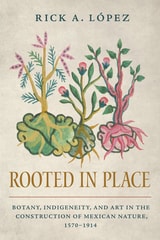
Rooted in Place
Botany, Indigeneity, and Art in the Construction of Mexican Nature, 1570–1914Rick A. López
University of Arizona Press, 2025
Prize for Best Book in Environmental Studies, Latin American Studies Association
Honorable mention for Best Book Prize in Visual Culture, Latin American Studies Association
Honorable mention for Best Book on Mexico, Latin American Studies Association
Since the first moment of conquest, colonizers and the colonized alike in Mexico confronted questions about what it meant to be from this place, what natural resources it offered, and who had the right to control those resources and on what basis.
Focusing on the ways people, environment, and policies have been affected by political boundaries, historian Rick A. López explores the historical connections between political identities and the natural world. López analyzes how scientific intellectuals laid claim to nature within Mexico, first on behalf of the Spanish Empire and then in the name of the republic, during three transformative moments: the Hernández expedition of the late sixteenth century; the Royal Botanical Expedition of the late eighteenth century; and the heyday of scientific societies such as the Sociedad Mexicana de Historia Natural of the late nineteenth century.
This work traces how scientific intellectuals studied and debated what it meant to know and claim the flora that sprang from Mexican soil—ranging from individual plants to forests and vegetated landscapes—and the importance they placed on indigeneity. It also points to the short- and long-term consequences of these efforts. López draws on archival and published sources produced from the sixteenth century through the start of the twentieth century and gives special attention to the use of visual images such as scientific illustrations and landscape art. López employs the term “visualization” in recognition of the degree to which officials, botanists, and draftsmen produced imagery and also how they and others viewed nature.
Rooted in Place reveals how scientific endeavors were not just about cataloging flora but were deeply intertwined with the construction of identity and the political landscape at three pivotal moments in Mexican history.