Results by title
160 books match the query 'Poverty & Homelessness' and 20 start with r
RSF
The Russell Sage Foundation Journal of the Social Sciences: Administrative Burden and Inequality in Policy implementationPamela Herd
Russell Sage Foundation, 2023
Administrative burdens are the learning, compliance, and psychological costs that individuals incur during encounters with public services. While some burdens are created unintentionally, others are deliberately constructed as barriers to limit claims to programs and services. Often, burdens fall most heavily on marginalized groups, preventing them from resources they need. In this double issue of RSF public administration scholar Pamela Herd, economist Hilary Hoynes, political scientists Jamila Michener and Donald Moynihan, and an interdisciplinary group of contributors explore how administrative burdens shape inequality.
Issue 1 examines how administrative burdens impact Medicaid and health inequality, student loan repayment programs, and immigration to the U.S. Emily Rauscher and Ailish Burns find that combinations of reforms to reduce administrative burdens in the late 1980s increased Medicaid enrollment and improved infant health nearly as much as Medicaid expansion. Adam Goldstein and colleagues show that administrative burdens in enrolling in income-driven repayment student loan programs causes borrowers with lower socioeconomic status to be disproportionately excluded from these programs. Lilly Yu finds that dramatic changes to immigration law and policy during the Trump Administration led immigration lawyers to inadvertently exacerbate inequality among undocumented and vulnerable immigrants’ access to legal representation.
Issue 2 looks at the role of administrative burdens in experiences with child and family support programs, the child welfare system, disaster and housing relief programs, and housing support programs. Carolyn Barnes and colleagues find that mothers’ perceptions of the costs and benefits of participation in the Special Supplemental Nutrition Assistance Program for Women, Infants, and Children (WIC) vary over time and influence whether they choose to enroll or continue participating in the program. Ethan J. Raker and Tyler M. Woods find applications from poor communities of color for Federal Emergency Management Agency (FEMA) housing aid after Hurricanes Katrina and Rita were disproportionately denied or delayed due to burdensome program requirements and implementation. Stephanie Casey Pierce and Stephanie Moulton reveal that reforms to reduce administrative burden in foreclosure programs are associated with a significant increase in the rate of benefit receipt and decrease in the foreclosure rate. Frank Edwards and colleagues show child welfare system-involved parents must navigate considerable administrative burdens in order to retain custody of their children.
This volume of RSF sheds light on the origins, experiences, and consequences of administrative burdens.
RSF
The Russell Sage Foundation Journal of the Social Sciences: Administrative Burden and Inequality in Policy implementationPamela Herd
Russell Sage Foundation, 2023
Administrative burdens are the learning, compliance, and psychological costs that individuals incur during encounters with public services. While some burdens are created unintentionally, others are deliberately constructed as barriers to limit claims to programs and services. Often, burdens fall most heavily on marginalized groups, preventing them from resources they need. In this double issue of RSF public administration scholar Pamela Herd, economist Hilary Hoynes, political scientists Jamila Michener and Donald Moynihan, and an interdisciplinary group of contributors explore how administrative burdens shape inequality.
Issue 1 examines how administrative burdens impact Medicaid and health inequality, student loan repayment programs, and immigration to the U.S. Emily Rauscher and Ailish Burns find that combinations of reforms to reduce administrative burdens in the late 1980s increased Medicaid enrollment and improved infant health nearly as much as Medicaid expansion. Adam Goldstein and colleagues show that administrative burdens in enrolling in income-driven repayment student loan programs causes borrowers with lower socioeconomic status to be disproportionately excluded from these programs. Lilly Yu finds that dramatic changes to immigration law and policy during the Trump Administration led immigration lawyers to inadvertently exacerbate inequality among undocumented and vulnerable immigrants’ access to legal representation.
Issue 2 looks at the role of administrative burdens in experiences with child and family support programs, the child welfare system, disaster and housing relief programs, and housing support programs. Carolyn Barnes and colleagues find that mothers’ perceptions of the costs and benefits of participation in the Special Supplemental Nutrition Assistance Program for Women, Infants, and Children (WIC) vary over time and influence whether they choose to enroll or continue participating in the program. Ethan J. Raker and Tyler M. Woods find applications from poor communities of color for Federal Emergency Management Agency (FEMA) housing aid after Hurricanes Katrina and Rita were disproportionately denied or delayed due to burdensome program requirements and implementation. Stephanie Casey Pierce and Stephanie Moulton reveal that reforms to reduce administrative burden in foreclosure programs are associated with a significant increase in the rate of benefit receipt and decrease in the foreclosure rate. Frank Edwards and colleagues show child welfare system-involved parents must navigate considerable administrative burdens in order to retain custody of their children.
This volume of RSF sheds light on the origins, experiences, and consequences of administrative burdens.
RSF
The Russell Sage Foundation Journal of the Social Sciences: Anti-poverty Policy Initiatives for the United StatesLawrence M. Berger
Russell Sage Foundation, 2018
Over 40 million Americans live in poverty with limited opportunities for upward mobility. With an economy characterized by large numbers of unstable and low-wage jobs, a fraying social safety net, and stagnant wages, what public policy reforms might increase the number of low-income families and individuals escaping poverty? This special double issue of RSF, edited by poverty researchers Lawrence M. Berger, Maria Cancian, and Katherine A. Magnuson, includes many innovative, evidence-based anti-poverty policy proposals crafted by leading social science researchers and policy analysts.
The first issue highlights initiatives that restructure tax and transfer programs to extend greater support to low-income families, regardless of work status. H. Luke Shaefer and colleagues would replace the current child tax credit and child tax exemption in the federal income tax with an unconditional universal child allowance. They estimate that this would reduce child poverty by about 40 percent. Maria Cancian and Daniel Meyer propose a new child support initiative that institutes a guaranteed minimum monthly support payment for every child living with a single parent, using public funds to bridge the gap when that amount exceeds what the noncustodial parent can reasonably pay. Sara Kimberlin and colleagues propose a renter’s tax credit in the federal income tax for poor households facing increasing rental costs that would benefit 70 percent of renters struggling with high rents.
The second issue analyzes policies that would reduce the extent of low-wage work by boosting education, training, and access to better jobs. Teresa Eckrich Sommer and colleagues propose expanding the Head Start program to combine parental education, job training, and employment opportunities along with existing early childhood education programs to better serve the needs of both parents and children. Mark Paul and colleagues propose a federal jobs guarantee of full-time employment, at a living wage and with benefits, for all adults seeking work. Diana Strumbos and colleagues propose a national community college program, based on a successful model used by the City University of New York, to provide disadvantaged students who enroll full-time with advising, academic, career, and financial supports.
Together, the policies proposed in this double issue provide an evidence-based blueprint for anti-poverty reforms that would benefit millions of people in need.

RSF
The Russell Sage Foundation Journal of the Social Sciences: Building an Open Qualitative Social ScienceKathryn Edin
Russell Sage Foundation, 2024
In recent decades, the social sciences have struggled to predict, monitor, and understand ongoing social crises. This is due in part to a lack of infrastructure to adequately do so. The American Voices Project (AVP), an experimental public-use platform for collecting qualitative data, was designed to expand the capacity of social science research by complementing existing research methods examining the everyday lives of Americans. The AVP was fielded in 2019-2022 as the country’s first nationally-representative, large-scale, multiple-domain qualitative data collection effort. In this double issue of RSF, sociologists Kathryn J. Edin, Corey D. Fields, David B. Grusky, Marybeth J. Mattingly, Kristen Olson, and Charles Varner, computer scientist Jure Leskovec, and an interdisciplinary group of contributors utilize data from the AVP to determine whether the platform can provide insight into the lives of Americans and address social science’s current shortcomings.
Issue 1 examines Americans’ experiences during the COVID-19 pandemic, identifies and explores emerging crises in the U.S., and includes the first set of classical interpretive studies based on a public-use dataset. Kyle Fee and colleagues find that job loss during the pandemic was associated with declines in financial and mental wellbeing, that expanded safety net programs did not disincentivize work, and that existing survey-based monitoring is missing important pockets of deprivation. Katherine Cramer and colleagues discover a more thoroughgoing “disaffection crisis” than has been appreciated to date, a crisis in which low- and middle-income earners often feel profoundly disconnected from politics and have little confidence in their ability to meaningfully effect change. Josephina Flores Morales shows that healthcare costs – even after recent and ongoing reforms in healthcare – remain insurmountable for many Latinx Americans, who must then rely on family for unexpected medical costs. Brandon A. Jackson finds that higher income gig workers hold surprisingly positive views of platform work as a way to explore their community, while lower income gig workers are less keen and focus on the financial benefits of gig work.
Issue 2 illustrates how the AVP can be used to uncover hidden populations and to explore how some types of crises, mindsets, or sensibilities can have cascading effects that impact multiple areas of people’s lives. Corey M. Abramson and colleagues use the AVP to uncover the population of Americans experiencing physical pain, showing that while pain is very prevalent, it has larger negative effects on the life trajectories of women and those without a college degree than on other groups. James Hiebert and colleagues uncover the large population of individuals who left the labor market due to a health condition and describe their strategies for reducing stigma when explaining why they are no longer working. Shira Zilberstein and colleagues discover that when individuals discuss their lives they feature “agentic moments” in which they can claim agency despite facing constraints that could be seen as limiting choice and agency.
This volume of RSF provides compelling insights into the lives of Americans and convincingly makes the case for building a permanent public-use platform for qualitative research.
RSF
The Russell Sage Foundation Journal of the Social Sciences: Climate Hazards and Their Social, Political, and Economic Consequences in the United StatesMax Besbris
Russell Sage Foundation, 2026
As climate change intensifies, weather becomes more extreme and climate hazards like wildfires and hurricanes become more frequent and more destructive. While climate change affects the entire global population, the risk and consequences of experiencing climate hazards are not shared equally. In the U.S. lower socioeconomic status groups and people of color are disproportionately more at risk for experiencing climate hazards and face more difficulty recovering from them. In this issue of RSF, sociologists Max Besbris, Manuel Pastor, and Anna Rhodes, economist Wolfram Schlenker, political scientist Pamela Winston, and an interdisciplinary group of contributors examine the impact of climate change on inequality in the U.S.
The 11 articles in this issue investigate the consequences of climate hazards for inequality, examining impacts on housing, neighborhoods, and employment; the ways inequality emerges in recovery from climate-related disasters; and how politicians and other actors respond to climate change. As flood risk increases in communities across the U.S., local authorities are partnering with federal agencies to implement buyout programs as a tool for managed retreat. James R. Elliott and colleagues find that in majority-White communities, where most buyouts take place, homeowners more commonly opt to sell their homes on the private market instead, which creates a revolving door of risk rather than eliminating it. Property insurance is essential for mediating losses and facilitating hurricane recovery, yet timely and fair claims are not guaranteed. Bad faith claims handling can put residents’ housing stability and financial wellbeing at risk, leading many to file lawsuits to dispute the outcome of their claims. Hannah K. Friedrich and colleagues find that litigation against insurers is more likely in areas that have a higher percentage of Black residents and that case duration is longer for residents in these areas, reflecting that systemic procedural inequalities can amplify disparities in disaster recovery. Cadence Willse finds that in the wake of major climate-related disasters, Democrats are more likely to increase their support for environmental policy issues, while Republicans are less likely to vote in favor of environmental policies.Megan Mullin investigates whether support for managed retreat programs by local governments differ if residents are viewed as wealthy or low-income. She finds that local elected officials are more likely to support buyout programs for low-income homeowners.
This timely issue of RSF expertly enhances our understanding of the intersection of climate disasters and inequality.
RSF
The Russell Sage Foundation Journal of the Social Sciences: Disparate Effects of Disruptive Events on ChildrenJennie E. Brand
Russell Sage Foundation, 2023
Drawing on accumulated insights of empirical work from several social science disciplines, including sociology, psychology, and economics, the editors provide a nuanced consideration of theoretical approaches and methodological challenges in identifying unequal impacts. They argue that variation in the effects of disruptive events depends on different, and sometimes offsetting, mechanisms. For example, Martha Bailey and colleagues find that more disadvantaged male youth were less negatively impacted by the macroeconomic shock of the Great Depression than more advantaged youth. Black youth, however, were more negatively impacted. Anna Baranowska-Rataj and colleagues find little evidence that parental job loss leads to worse birth outcomes or that effects vary across regions with different unemployment levels in Sweden, a nation with a relatively generous safety net and universal health care. Regarding the household disruption of parental incarceration, Kristin Turney and colleagues find that some children seamlessly step into new responsibilities, while others, especially older children who had witnessed their fathers’ frequent entanglements with the criminal legal system, consciously step away from these responsibilities. Stefanie DeLuca and colleagues argue that as youth grow accustomed to disruptive events, these exposures become less remarkable and impactful on their life outcomes. Looking at the disruption to education caused by the COVID-19 pandemic, Douglas Harris and colleagues find that \high school graduation has remained remarkably steady since the onset of the pandemic, but entry into two-year colleges was hard hit, especially for colleges serving more people of color and those from low-income families. Finally, considering environmental disruptions, Nazar Khalid and colleagues show that severe floods in India have a stronger impact on the educational outcomes of children from marginalized communities.
Through its systematic examination of the variation in the consequences of disruption, especially in early life, this volume of RSF provides an insightful and practical resource for both researchers and policymakers.
RSF
The Russell Sage Foundation Journal of the Social Sciences: Growing Up Rural: Education, Health, Family, and Economic OutcomesShelley Clark
Russell Sage Foundation, 2022
Nearly 46 million Americans live in rural counties – areas with small populations that are often located far from large cities. Yet we know relatively little about how living in a rural area influences child and adolescent life trajectories and adult outcomes when compared to their urban counterparts. In this special double issue of RSF, sociologist Shelley Clark, epidemiologist Sam Harper, and agricultural economist Bruce Weber, and an interdisciplinary group of contributors provide a comprehensive look at the impact that growing up rural has across the lifespan, examining both the challenges and advantages of growing up in rural America.
The 15 articles in this double issue explore the effects of rural life on family, educational attainment, economic security, and health. Issue 1 looks at the impact of rural families and schools on children’s and adolescents’ educational aspirations and wellbeing. Contributors Jennifer Sherman and Kai A. Schafft find that while rural gentrification brings needed resources to struggling communities, it can also exacerbate educational inequality. Jessica C. Drescher and colleagues reveal that only modest differences in educational outcomes exist between rural and non-rural students overall and that socioeconomic status is less predictive of academic achievement in rural areas compared to non-rural areas. Ryan Parsons shows that rural students with college aspirations, particularly students of color, incur social and emotional costs in pursuing upward mobility not experienced by their urban counterparts, such as having to permanently relocate to more advantaged areas.
Issue 2 examines transitions to adulthood in rural areas and the longer-term influences of growing up in rural areas on adults’ health and economic attainment. Emily Miller and Kathryn Edin find that low-income rural young adults have children and marry earlier than their peers, but achieve other markers of adulthood, such as leaving the parental home, more slowly and often only tentatively. Robert D. Francis shows that rural, working-class men will employ various strategies to improve their employment opportunities in ways that support their identities as rural, working-class men. For example, they pursue additional education and training in fields that will allow them to continue to hold traditionally masculine, working-class jobs, such as obtaining credentials to be truck drivers or mechanics. Evan Roberts and colleagues find that growing up on or moving to a farm were associated with better health outcomes. Emily Parker and colleagues find that rural residents who live in counties that receive a higher amount of federal funding and moved from their home county in adulthood were more likely to achieve higher educational attainment and earnings than those in counties that received less funding.
This volume of RSF provides a more nuanced understanding of the advantages and disadvantage of growing up in rural areas and how it shapes the life trajectories of rural Americans.
RSF
The Russell Sage Foundation Journal of the Social Sciences: Growing Up Rural: Education, Health, Family, and Economic OutcomesShelley Clark
Russell Sage Foundation, 2022
Nearly 46 million Americans live in rural counties – areas with small populations that are often located far from large cities. Yet we know relatively little about how living in a rural area influences child and adolescent life trajectories and adult outcomes when compared to their urban counterparts. In this special double issue of RSF, sociologist Shelley Clark, epidemiologist Sam Harper, and agricultural economist Bruce Weber, and an interdisciplinary group of contributors provide a comprehensive look at the impact that growing up rural has across the lifespan, examining both the challenges and advantages of growing up in rural America.
The 15 articles in this double issue explore the effects of rural life on family, educational attainment, economic security, and health. Issue 1 looks at the impact of rural families and schools on children’s and adolescents’ educational aspirations and wellbeing. Contributors Jennifer Sherman and Kai A. Schafft find that while rural gentrification brings needed resources to struggling communities, it can also exacerbate educational inequality. Jessica C. Drescher and colleagues reveal that only modest differences in educational outcomes exist between rural and non-rural students overall and that socioeconomic status is less predictive of academic achievement in rural areas compared to non-rural areas. Ryan Parsons shows that rural students with college aspirations, particularly students of color, incur social and emotional costs in pursuing upward mobility not experienced by their urban counterparts, such as having to permanently relocate to more advantaged areas.
Issue 2 examines transitions to adulthood in rural areas and the longer-term influences of growing up in rural areas on adults’ health and economic attainment. Emily Miller and Kathryn Edin find that low-income rural young adults have children and marry earlier than their peers, but achieve other markers of adulthood, such as leaving the parental home, more slowly and often only tentatively. Robert D. Francis shows that rural, working-class men will employ various strategies to improve their employment opportunities in ways that support their identities as rural, working-class men. For example, they pursue additional education and training in fields that will allow them to continue to hold traditionally masculine, working-class jobs, such as obtaining credentials to be truck drivers or mechanics. Evan Roberts and colleagues find that growing up on or moving to a farm were associated with better health outcomes. Emily Parker and colleagues find that rural residents who live in counties that receive a higher amount of federal funding and moved from their home county in adulthood were more likely to achieve higher educational attainment and earnings than those in counties that received less funding.
This volume of RSF provides a more nuanced understanding of the advantages and disadvantage of growing up in rural areas and how it shapes the life trajectories of rural Americans.
RSF
The Russell Sage Foundation Journal of the Social Sciences: Low-Income Families in the Twenty-first Century: Effective Public Policy ResponsesMarcy Carlson
Russell Sage Foundation, 2021
The nine articles in this issue examine various aspects of contemporary work and family life for low-income families, the challenges they face, and whether current policies help to mitigate these challenges. Sigird Luhr and colleagues find that unpredictable work schedules were associated with increased difficulty arranging childcare, work-life conflict, and missed work for working mothers. Elizabeth O. Ananat and colleagues show that Emeryville, California's Fair Workweek Ordinance decreased working parents' schedule unpredictability, and improved their well-being without reducing worker hours. Pamela Joshi and colleagues find that less than a quarter of low-income, full-time working families earn enough to cover a basic family budget, compared to two-thirds of all full-time working families. Katherine M. Michelmore and Natasha V. Pilkauskas reveal that nearly 60% of children in lower-income families reside in households with a complex family structure that may result in difficulty filing for important tax credits like the Earned Income Tax Credit (EITC) that can help increase their incomes. Jennifer Randles shows that income and public aid are insufficient for many mothers to cover the cost of one of children’s basic needs - diapers - and suggests policies to help bridge this gap in the face of widespread economic insecurity.
This volume of RSF illuminates the many obstacles faced by lower-income families due to changes in the labor market and family patterns as well as the ways in which public policy can better respond to alleviate these obstacles.
RSF
The Russell Sage Foundation Journal of the Social Sciences: Severe Deprivation in AmericaMatthew Desmond is associate professor of sociology and social sciences at Harvard University and codirector of the Justice and Poverty Project.
Russell Sage Foundation, 2015
Widening inequality has received much attention recently, but most of the focus has been on the top one percent or the middle class. The problems of those at the very bottom of society remain largely invisible. Along with the Great Recession, factors such as rising housing costs, welfare reform, mass incarceration, suppressed wages, and pervasive joblessness have contributed to deepening poverty in America. In this inaugural double issue of RSF: The Russell Sage Foundation Journal of the Social Sciences, a distinguished roster of poverty scholars from multiple disciplines focuses on families experiencing “severe deprivation”: acute, compounded, and persistent economic hardship.
Over twenty million families in America live in deep poverty, on incomes below half the federal poverty threshold, yet Liana Fox and colleagues find that government taxes and transfers lift millions of families out of deep poverty each year. Searching even further below the poverty line, Luke Shaefer, Kathryn Edin, and Elizabeth Talbert find that the number of children in households experiencing chronic extreme poverty—living on $2 or less per day—increased by over 240 percent between 1996 and 2012. Focusing on the elderly, Helen Levy shows that failing health exacerbates low-income seniors’ hardship by driving up their out-of-pocket medical spending. Other contributors examine the relationship between violence and severe deprivation.
Through longitudinal interviews with former prisoners in Boston, Bruce Western reveals the ubiquity of violence in the life course of disadvantaged young men. And Laurence Ralph draws on years of ethnography in Chicago to document how families and communities cope with the trauma of gun violence. Other studies in this
issue show that mass incarceration has changed the nature of poverty in recent decades, with consequences ranging from increased levels of deprivation among children of incarcerated parents to housing insecurity among parolees, which increases their risk for recidivism. Finally, several papers devise novel methods and concepts relevant to the study of severe deprivation. Kristin Perkin and Robert Sampson develop an innovative measure of “compounded disadvantage” that groups individual and ecological hardship, while Megan Comfort and colleagues pioneer a new approach to ethnographic fieldwork that combines embedded social work with participant observation.
This issue provides in-depth analyses of the causes and human costs of extreme disadvantage in one of the richest countries in the world and offers a new paradigm for understanding the changing face of poverty in America. In an age of economic extremes, understanding how and why severe deprivation persists will be vital for policymakers and practitioners attempting to deliver relief to the nation’s most marginalized families.
RSF
The Russell Sage Foundation Journal of the Social Sciences: Severe Deprivation in AmericaMatthew Desmond is associate professor of sociology and social sciences at Harvard University and codirector of the Justice and Poverty Project.
Russell Sage Foundation, 2015
Widening inequality has received much attention recently, but most of the focus has been on the top one percent or the middle class. The problems of those at the very bottom of society remain largely invisible. Along with the Great Recession, factors such as rising housing costs, welfare reform, mass incarceration, suppressed wages, and pervasive joblessness have contributed to deepening poverty in America. In this inaugural double issue of RSF: The Russell Sage Foundation Journal of the Social Sciences, a distinguished roster of poverty scholars from multiple disciplines focuses on families experiencing “severe deprivation”: acute, compounded, and persistent economic hardship.
Over twenty million families in America live in deep poverty, on incomes below half the federal poverty threshold, yet Liana Fox and colleagues find that government taxes and transfers lift millions of families out of deep poverty each year. Searching even further below the poverty line, Luke Shaefer, Kathryn Edin, and Elizabeth Talbert find that the number of children in households experiencing chronic extreme poverty—living on $2 or less per day—increased by over 240 percent between 1996 and 2012. Focusing on the elderly, Helen Levy shows that failing health exacerbates low-income seniors’ hardship by driving up their out-of-pocket medical spending. Other contributors examine the relationship between violence and severe deprivation.
Through longitudinal interviews with former prisoners in Boston, Bruce Western reveals the ubiquity of violence in the life course of disadvantaged young men. And Laurence Ralph draws on years of ethnography in Chicago to document how families and communities cope with the trauma of gun violence. Other studies in this
issue show that mass incarceration has changed the nature of poverty in recent decades, with consequences ranging from increased levels of deprivation among children of incarcerated parents to housing insecurity among parolees, which increases their risk for recidivism. Finally, several papers devise novel methods and concepts relevant to the study of severe deprivation. Kristin Perkin and Robert Sampson develop an innovative measure of “compounded disadvantage” that groups individual and ecological hardship, while Megan Comfort and colleagues pioneer a new approach to ethnographic fieldwork that combines embedded social work with participant observation.
This issue provides in-depth analyses of the causes and human costs of extreme disadvantage in one of the richest countries in the world and offers a new paradigm for understanding the changing face of poverty in America. In an age of economic extremes, understanding how and why severe deprivation persists will be vital for policymakers and practitioners attempting to deliver relief to the nation’s most marginalized families.
RSF
The Russell Sage Foundation Journal of the Social Sciences: Suburban InequalityL'Heureux Lewis-McCoy
Russell Sage Foundation, 2023
Suburbs are home to almost half of all Americans and have undergone dramatic demographic shifts over the past 20 years. Yet, suburbs remain understudied, and we know little about the changes taking place in these communities. In this special double issue of RSF, sociologists R. L’Heureux Lewis-McCoy, Natasha Warikoo, Stephen A. Matthews, education scholar Nadirah Farah Foley, and an interdisciplinary group of contributors examine how suburbs have evolved and growing suburban inequality.
Issue 1 looks at the diversification of suburbs as well as inequality in suburban housing. Daniel T. Litcher and colleagues find that a majority of residents living in metropolitan areas now live in suburbs and this change has been driven by a migration of ethnic and racial minorities to suburban areas. Devin Q. Rutan and colleagues reveal that the number of suburban evictions has steadily risen over time, even as urban evictions have remained stable. Jennifer Girouard finds that while the state of Massachusetts passed Chapter 40B in 1969, a law that ensures affordable housing is built in the suburbs, local residents and leaders use tactics such as creating narratives of the town being victimized by predatory developers to resist the law and the development of affordable housing.
Issue 2 examines suburban schools, how community institutions function in suburban areas, and suburban politics. Shruti Bathia and colleagues find that between 2000 and 2015 Latino children attending elementary school in the suburbs had more exposure to White peers than their counterparts attending urban schools. However, suburban Latino children’s exposure to White students declined during that same time period. Scott W. Allard and Elizabeth Pelletier reveal that the nonprofit safety net is less responsive in suburban areas than urban centers and that nonprofit services are less robust in high poverty suburban areas and suburban areas with larger Black populations. Brenden Beck shows that suburbs with large Black populations rely the most on fine-and-fee revenue and that municipalities that rely more on monetary sanctions have more police killings. Kiara Wyndham Douds finds that incorporated suburbs are Whiter and less racially diverse than unincorporated suburbs, suggesting that incorporation has been an effective strategy for racial exclusion.
This volume of RSF investigates the underexamined and pressing issue of inequality in suburbs and explores how it develops within and between suburban communities.
RSF
The Russell Sage Foundation Journal of the Social Sciences: Suburban InequalityL'Heureux Lewis-McCoy
Russell Sage Foundation, 2023
Suburbs are home to almost half of all Americans and have undergone dramatic demographic shifts over the past 20 years. Yet, suburbs remain understudied, and we know little about the changes taking place in these communities. In this special double issue of RSF, sociologists R. L’Heureux Lewis-McCoy, Natasha Warikoo, Stephen A. Matthews, education scholar Nadirah Farah Foley, and an interdisciplinary group of contributors examine how suburbs have evolved and growing suburban inequality.
Issue 1 looks at the diversification of suburbs as well as inequality in suburban housing. Daniel T. Litcher and colleagues find that a majority of residents living in metropolitan areas now live in suburbs and this change has been driven by a migration of ethnic and racial minorities to suburban areas. Devin Q. Rutan and colleagues reveal that the number of suburban evictions has steadily risen over time, even as urban evictions have remained stable. Jennifer Girouard finds that while the state of Massachusetts passed Chapter 40B in 1969, a law that ensures affordable housing is built in the suburbs, local residents and leaders use tactics such as creating narratives of the town being victimized by predatory developers to resist the law and the development of affordable housing.
Issue 2 examines suburban schools, how community institutions function in suburban areas, and suburban politics. Shruti Bathia and colleagues find that between 2000 and 2015 Latino children attending elementary school in the suburbs had more exposure to White peers than their counterparts attending urban schools. However, suburban Latino children’s exposure to White students declined during that same time period. Scott W. Allard and Elizabeth Pelletier reveal that the nonprofit safety net is less responsive in suburban areas than urban centers and that nonprofit services are less robust in high poverty suburban areas and suburban areas with larger Black populations. Brenden Beck shows that suburbs with large Black populations rely the most on fine-and-fee revenue and that municipalities that rely more on monetary sanctions have more police killings. Kiara Wyndham Douds finds that incorporated suburbs are Whiter and less racially diverse than unincorporated suburbs, suggesting that incorporation has been an effective strategy for racial exclusion.
This volume of RSF investigates the underexamined and pressing issue of inequality in suburbs and explores how it develops within and between suburban communities.
RSF
The Russell Sage Foundation Journal of the Social Sciences: Wealth Inequality and Child Development: Implications for Policy and PracticeChristina Gibson-Davis
Russell Sage Foundation, 2021
Contributors Fabian Pfeffer and Nora Waitkus find that child wealth inequality is far worse in the U.S. than in other industrialized countries. Editors Gibson-Davis and Hill show that a relatively small group of American parents—mostly White—control the lion’s share of wealth, with Black and Hispanic parents having only pennies on the dollar for every dollar of White parental wealth. Nina Bandelj and Angelina Grigoryeva show how White parents with above median wealth are more likely than other parents to practice “financially intensive parenting,” saving and borrowing in ways that promote child achievement. After controlling for other measures of family resources and socioeconomic status, Portia Miller and colleagues demonstrate that family wealth is uniquely related to both academic and behavioral development throughout childhood and adolescence and that wealth helps buffer the negative effects of low family income. Jordan Conwell and Leafia Zi Ye find equalizing wealth is not sufficient to eliminate race- and ethnic-based gaps in academic achievement: even among families with the same levels of wealth Black and Hispanic children often have significantly worse scores than Whites.
High levels of childhood wealth inequality are not inevitable; they are the consequence of laws and practices that favor wealth accumulation among few, primarily White, families. Jin Huang and coauthors look at one of the few policy models for increasing savings in low-income child households, Child Development Accounts, which have been shown to increase educational savings and improve maternal mental health, but they have yet to be adopted nationwide. Two studies in this issue, by Margot Jackson and colleagues and by Katherine Michelmore and Leonard Lopoo, find that large-scale income-support programs, the EITC and Medicaid, have positive spillovers onto asset accumulation, but policies designed to fundamentally alter the distribution of wealth among families with children will require more expansive changes to the tax code and program asset caps.
This issue of RSF expands our understanding of wealth inequality and its effects on children, and provides important insights into policies and practices that either directly or indirectly boost wealth acquisition among child households.
RSF
The Russell Sage Foundation Journal of the Social Sciences: Wealth Inequality: Economic and Social DimensionsFabian T. Pfeffer
Russell Sage Foundation, 2016
Several contributors investigate the growing chasm in wealth between the rich and the middle class. Edward Wolff attributes much of the recent wealth loss among the middle class to the housing market crash, as housing accounts for a much greater share of their total wealth than it does for the rich. Jonathan Fisher and coauthors show that wealth inequality is far higher than inequality in income and consumption, and argue that because wealth acts as a buffer to income changes, it is perhaps the most relevant measure of economic inequality. Others explore the persistent racial wealth gap. Alexandra Killewald and Brielle Bryan show that the average wealth return on home ownership for African Americans is only a quarter of the return for whites. Bryan Sykes and Michelle Maroto find that the incarceration of a family member is associated with reduced family wealth, exacerbating the racial wealth gap because of racial disparities in incarceration.
Other articles focus on the effects of wealth inequality on families and relationships. Emily Rauscher finds that that parents’ financial support for their children’s education, which has positive effects on children’s educational attainment, is increasingly connected to parental wealth, tightening the link between wealth inequality and inequality of opportunity. And Alicia Eads and Laura Tach find that while greater family wealth is associated with more stable marriages, lack of wealth—particularly in the form of unsecured debt—is associated with marital instability.
As wealth inequality has increased, it is increasingly important to understand its origins and manifold social and economic consequences for current and future generations.
Reproducing Inequities
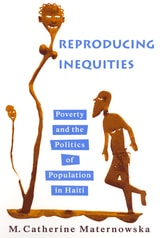
Poverty and the Politics of Population in HaitiMaternowska, M. Catherine
Rutgers University Press, 2006
Residents of Haiti-one of the poorest and most unstable countries in the world-face a grim reality of starvation, violence, lack of economic opportunity, and minimal health care. For years, aid organizations have sought to alleviate the problems by creating health and family planning clinics, including one modern (and, by local standards, luxurious) center in the heart of Cit Soleil. During its height of service in the 1980s and 1990s, the clinic boasted nineteen staff members, an array of modern contraceptives, an accessible location, and convenient hours-but very few clients.
Why did this initiative fail so spectacularly despite surveys finding that residents would like to have fewer children? Why don't poor women heed the message of family planning, when smaller families seem to be in their best interest? In Reproducing Inequities, M. Catherine Maternowska argues that we too easily overlook the political dynamics that shape choices about family planning. Through a detailed study of the attempt to provide modern contraception in the community of Cit Soleil, Maternowska demonstrates the complex interplay between local and global politics that so often thwarts well-intended policy initiatives.
Medical anthropologists, she argues, have an important role to play in developing new action plans for better policy implementation. Ethnographic studies in desperate, dangerous locations provide essential data that can point the way to solutions for the dilemmas of contraception in poor communities worldwide.

Resist the Punitive State
Grassroots Struggles Across Welfare, Housing, Education and PrisonsEmily Luise Hart
Pluto Press, 2019

Resist the Punitive State
Grassroots Struggles Across Welfare, Housing, Education and PrisonsEmily Luise Hart
Pluto Press, 2019
Roofless
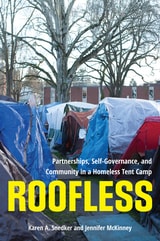
Partnerships, Self-Governance, and Community in a Homeless Tent CampKaren A. Snedker
Rutgers University Press, 2027
Roofless critically examines homelessness and responses to it in the United States through the growing practice of forming tent camps. Karen A. Snedker and Jennifer McKinney position Seattle's "Tent City 3," (the US city with the third-largest homeless population), as an organizational model for other local governments to consider implementing in addressing their homelessness crises. Snedker and McKinney document this tent city's development through a census they conducted from 2019 to 2020, though the efforts behind Tent City 3 have a history dating back two decades. Through such an examination, the authors reveal surprising points of view and outcomes, including grassroots partnerships between city agencies, nonprofits, religious organizations, and educational institutions. In the context of rising homelessness in the US, understanding and having insight into the residents' experience of sanctioned unsheltered homelessness, compared to instances of unsanctioned encampments, allows readers to acquire a complete, nuanced picture of tent-based homelessness. As such, Roofless provides valuable insight to audiences ranging from scholars of sociology and social work, policymakers, homelessness advocates, and politicians.