88 books match the query 'Prisoners' and 3 start with r
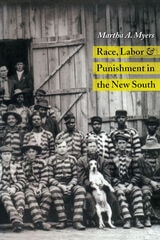
cover of RACE LABOR PUNISHMENT IN NEW SOUTH

RACE LABOR PUNISHMENT IN NEW SOUTH

MARTHA A. MYERS

The Ohio State University Press, 1998
[more]
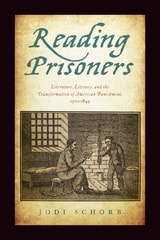
cover of Reading Prisoners: Literature, Literacy, and the Transformation of American Punishment, 1700–1845

Reading Prisoners

Literature, Literacy, and the Transformation of American Punishment, 1700–1845

Schorb, Jodi

Rutgers University Press, 2014
Shining new light on early American prison literature—from its origins in last words, dying warnings, and gallows literature to its later works of autobiography, exposé, and imaginative literature—Reading Prisoners weaves together insights about the rise of the early American penitentiary, the history of early American literacy instruction, and the transformation of crime writing in the “long” eighteenth century. 

Looking first at colonial America—an era often said to devalue jailhouse literacy—Jodi Schorb reveals that in fact this era launched the literate prisoner into public prominence. Criminal confessions published between 1700 and 1740, she shows, were crucial “literacy events” that sparked widespread public fascination with the reading habits of the condemned, consistent with the evangelical revivalism that culminated in the first Great Awakening. By century’s end, narratives by condemned criminals helped an audience of new writers navigate the perils and promises of expanded literacy.

Schorb takes us off the scaffold and inside the private world of the first penitentiaries—such as Philadelphia’s Walnut Street Prison and New York’s Newgate, Auburn, and Sing Sing. She unveils the long and contentious struggle over the value of prisoner education that ultimately led to sporadic efforts to supply prisoners with books and education. Indeed, a new philosophy emerged, one that argued that prisoners were best served by silence and hard labor, not by reading and writing—a stance that a new generation of convict authors vociferously protested.

The staggering rise of mass incarceration in America since the 1970s has brought the issue of prisoner rehabilitation once again to the fore. Reading Prisoners offers vital background to the ongoing, crucial debates over the benefits of prisoner education.
[more]
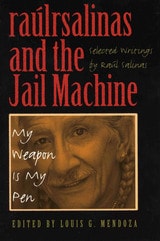
cover of raúlrsalinas and the Jail Machine: My Weapon Is My Pen

raúlrsalinas and the Jail Machine

My Weapon Is My Pen

Selected writings by Raúl R. Salinas

University of Texas Press, 2006

Raúl R. Salinas is regarded as one of today's most important Chicano poets and human rights activists, but his passage to this place of distinction took him through four of the most brutal prisons in the country. His singular journey from individual alienation to rage to political resistance reflected the social movements occurring inside and outside of prison, making his story both personal and universal.

This groundbreaking collection of Salinas' journalism and personal correspondence from his years of incarceration and following his release provides a unique perspective into his spiritual, intellectual, and political metamorphosis. The book also offers an insider's view of the prison rebellion movement and its relation to the civil rights and anti-war movements of the 1960s and 1970s. The numerous letters between Salinas and his family, friends, and potential allies illustrate his burgeoning political awareness of the cause and conditions of his and his comrades' incarceration and their link to the larger political and historical web of social relations between dominant and subaltern groups. These collected pieces, as well as two interviews with Salinas—one conducted upon his release from prison in 1972, the second more than two decades later—reveal to readers the transformation of Salinas from a street hipster to a man seeking to be a part of something larger than himself. Louis Mendoza has painstakingly compiled a body of work that is autobiographical, politically insurgent, and representative.

[more]