70 books match the query 'Prisons' and 3 start with r
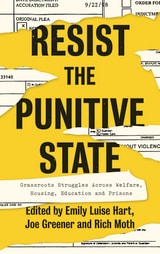
cover of Resist the Punitive State: Grassroots Struggles Across Welfare, Housing, Education and Prisons

Resist the Punitive State

Grassroots Struggles Across Welfare, Housing, Education and Prisons

Emily Luise Hart

Pluto Press, 2019

To examine government policy and state practice on housing, welfare, mental health, disability, prisons or immigration is to come face-to-face with the harsh realities of the 'punitive state'. But state violence and corporate harm always meet with resistance. With contributions from a wide range of activists and scholars, Resist the Punitive State highlights and theorises the front line of resistance movements actively opposing the state-corporate nexus. The chapters engage with different strategies of resistance in a variety of movements and campaigns. In doing so the book considers what we can learn from involvement in grassroots struggles, and contributes to contemporary debates around the role and significance of subversive knowledge and engaged scholarship in activism. Aimed at activists and campaigners plus students, researchers and educators in criminology, social policy, sociology, social work and the social sciences more broadly, Resist the Punitive State not only presents critiques of a range of harmful state-corporate policy agendas but situates these in the context of social movement struggles fighting for political transformation and alternative futures.
[more]
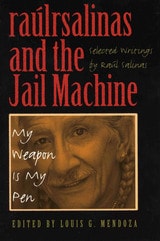
cover of raúlrsalinas and the Jail Machine: My Weapon Is My Pen

raúlrsalinas and the Jail Machine

My Weapon Is My Pen

Selected writings by Raúl R. Salinas

University of Texas Press, 2006

Raúl R. Salinas is regarded as one of today's most important Chicano poets and human rights activists, but his passage to this place of distinction took him through four of the most brutal prisons in the country. His singular journey from individual alienation to rage to political resistance reflected the social movements occurring inside and outside of prison, making his story both personal and universal.

This groundbreaking collection of Salinas' journalism and personal correspondence from his years of incarceration and following his release provides a unique perspective into his spiritual, intellectual, and political metamorphosis. The book also offers an insider's view of the prison rebellion movement and its relation to the civil rights and anti-war movements of the 1960s and 1970s. The numerous letters between Salinas and his family, friends, and potential allies illustrate his burgeoning political awareness of the cause and conditions of his and his comrades' incarceration and their link to the larger political and historical web of social relations between dominant and subaltern groups. These collected pieces, as well as two interviews with Salinas—one conducted upon his release from prison in 1972, the second more than two decades later—reveal to readers the transformation of Salinas from a street hipster to a man seeking to be a part of something larger than himself. Louis Mendoza has painstakingly compiled a body of work that is autobiographical, politically insurgent, and representative.

[more]