Results by title
117 books match the query 'Production and direction' and 5 start with r
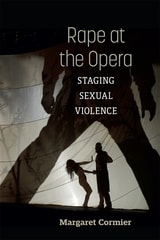
Rape at the Opera
Staging Sexual ViolenceMargaret Cormier
University of Michigan Press, 2024
Drawing on archival footage as well as attendance at live events, Cormier analyzes productions of canonic operas from German, Italian, and French traditions from the eighteenth to the early twentieth century, including Die Entführung aus dem Serail, Don Giovanni, La forza del destino, Un ballo in maschera, Salome, and Turandot. In doing so, Cormier highlights the dynamism of twenty-first-century opera performance practice with regard to sexual violence, establishes methods to evaluate representations of sexual violence on the opera stage, and reframes the primary responsibility of opera critics and creators as being not to opera composers and librettists but to the public.

Recording Memories from Political Violence
A Film-maker's JourneyCahal McLaughlin
Intellect Books, 2010
Based on work the author has carried out with survivor groups in Northern Ireland and South Africa, Recording Memories from Political Violence draws on written and audiovisual texts to describe and analyze the use of documentary filmmaking in recording experiences of political conflict. A variety of issues relevant to the genre are addressed at length, including the importance of ethics in the collaboration between the filmmaker and the participant and the effect of location on the accounts of participants. Cahal McLaughlin draws on the diverse fields of film and cultural studies, as well as nearly twenty years of production experience, in this informed and instructive contribution to documentary filmmaking and post-conflict studies.
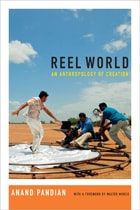
Reel World
An Anthropology of CreationAnand Pandian
Duke University Press, 2015
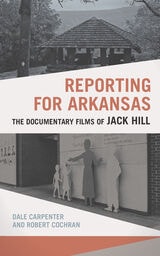
Reporting for Arkansas
The Documentary Films of Jack HillDale Carpenter
University of Arkansas Press, 2022
Jack Hill was a pioneering Arkansas documentary filmmaker dedicated to sharing his state’s history with a wider public. Following a decade as an award-winning investigative journalist and news anchor at KAIT in Jonesboro, Hill was pushed out by new management for his controversial reporting on corruption in a local sheriff’s office. What seemed like a major career setback turned out to be an opportunity: he founded the production company TeleVision for Arkansas, through which he produced dozens of original films. Although Hill brought an abiding interest in education and public health to this work from the beginning, he found his true calling in topics based in Arkansas history. Convinced that a greater acquaintance with the state’s most significant historical events would nurture a greater sense of homegrown pride, Hill tirelessly crisscrossed the state to capture the voices of hundreds of Arkansans recalling significant chapters in the state’s history, such as the oil boom in El Dorado and Smackover, the crucial contributions of the Arkansas Ordnance Plant in Jacksonville during World War II, and the role of Rosenwald Schools in expanding educational opportunities.
In Reporting for Arkansas, Dale Carpenter and Robert Cochran present a biography of Hill alongside an annotated selected filmography designed to accompany sixteen of his best films on subjects related to Arkansas history—all newly hosted online by the Center for Arkansas and Regional Studies at the University of Arkansas.
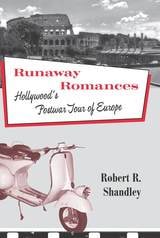
Runaway Romances
Hollywood's Postwar Tour of EuropeRobert R. Shandley
Temple University Press, 2009
In the 1950s and early 1960s, America imagined itself young and in love in Europe. And Hollywood films of the era reflected this romantic allure. From a young and naïve Audrey Hepburn falling in love with Gregory Peck inRoman Holiday to David Lean’s Summertime, featuring Katherine Hepburn’s sexual adventure in Venice, these glossy travelogue romances were shot on location, and established an exciting new genre for Hollywood.
As Robert Shandley shows in Runaway Romances, these films were not only indicative of the ideology of the American-dominated postwar world order, but they also represented a shift in Hollywood production values. Eager to capture new audiences during a period of economic crisis, Hollywood’s European output utilized the widescreen process to enhance cinematic experience. The films—To Catch a Thief, Three Coins in the Fountain, and Funny Face among them—enticed viewers to visit faraway places for romantic escapades. In the process, these runaway romances captured American fantasies for a brief, but intense, period that ended as audiences grew tired of old World splendors, and entered into a new era of sexual awakening.