Results by title
391 books match the query 'Public opinion' and 21 start with r
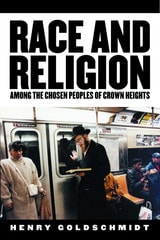
Race and Religion Among the Chosen People of Crown Heights
Goldschmidt, Henry
Rutgers University Press, 2006
In August of 1991, the Brooklyn neighborhood of Crown Heights was engulfed in violence following the deaths of Gavin Cato and Yankel Rosenbaum—a West Indian boy struck by a car in the motorcade of a Hasidic spiritual leader and an orthodox Jew stabbed by a Black teenager. The ensuing unrest thrust the tensions between the Lubavitch Hasidic community and their Afro-Caribbean and African American neighbors into the media spotlight, spurring local and national debates on diversity and multiculturalism. Crown Heights became a symbol of racial and religious division. Yet few have paused to examine the nature of Black-Jewish difference in Crown Heights, or to question the flawed assumptions about race and religion that shape the politics—and perceptions—of conflict in the community.
In Race and Religion among the Chosen Peoples of Crown Heights, Henry Goldschmidt explores the everyday realities of difference in Crown Heights. Drawing on two years of fieldwork and interviews, he argues that identity formation is particularly complex in Crown Heights because the neighborhood’s communities envision the conflict in remarkably diverse ways. Lubavitch Hasidic Jews tend to describe it as a religious difference between Jews and Gentiles, while their Afro-Caribbean and African American neighbors usually define it as a racial difference between Blacks and Whites. These tangled definitions are further complicated by government agencies who address the issue as a matter of culture, and by the Lubavitch Hasidic belief—a belief shared with a surprising number of their neighbors—that they are a “chosen people” whose identity transcends the constraints of the social world.
The efforts of the Lubavitch Hasidic community to live as a divinely chosen people in a diverse Brooklyn neighborhood where collective identities are generally defined in terms of race illuminate the limits of American multiculturalism—a concept that claims to celebrate diversity, yet only accommodates variations of certain kinds. Taking the history of conflict in Crown Heights as an invitation to reimagine our shared social world, Goldschmidt interrogates the boundaries of race and religion and works to create space in American society for radical forms of cultural difference.

Race at the Top
Asian Americans and Whites in Pursuit of the American Dream in Suburban SchoolsNatasha Warikoo
University of Chicago Press, 2022
The American suburb conjures an image of picturesque privilege: manicured lawns, quiet streets, and—most important to parents—high-quality schools. These elite enclaves are also historically white, allowing many white Americans to safeguard their privileges by using public schools to help their children enter top colleges. That’s changing, however, as Asian American professionals increasingly move into wealthy suburban areas to give their kids that same leg up for their college applications and future careers.
As Natasha Warikoo shows in Race at the Top, white and Asian parents alike will do anything to help their children get to the top of the achievement pile. She takes us into the affluent suburban East Coast school she calls “Woodcrest High,” with a student body about one-half white and one-third Asian American. As increasing numbers of Woodcrest’s Asian American students earn star-pupil status, many whites feel displaced from the top of the academic hierarchy, and their frustrations grow. To maintain their children’s edge, some white parents complain to the school that schoolwork has become too rigorous. They also emphasize excellence in extracurriculars like sports and theater, which maintains their children’s advantage.
Warikoo reveals how, even when they are bested, white families in Woodcrest work to change the rules in their favor so they can remain the winners of the meritocracy game. Along the way, Warikoo explores urgent issues of racial and economic inequality that play out in affluent suburban American high schools. Caught in a race for power and privilege at the very top of society, what families in towns like Woodcrest fail to see is that everyone in their race is getting a medal—the children who actually lose are those living beyond their town’s boundaries.
Race, Republicans, and the Return of the Party of Lincoln
Tasha S. Philpot
University of Michigan Press, 2007
Whether their slogan is “compassionate conservatism” or “hawkish liberalism,” political parties have always sought to expand their electoral coalitions by making minor adjustments to their public image. How do voters respond to these, often short-term, campaign appeals? Race, Republicans, and the Return of the Party of Lincoln is Tasha Philpot’s insightful study of how parties use racial images to shape and reshape the way citizens perceive them.
“Philpot has produced a timely, provocative, and nuanced analysis of political party image change, using the Republican Party’s attempts to recast itself as a party sensitive to issues of race with its 2000, and later 2004, national conventions as case examples. Using a mixture of experiments, focus groups, national surveys, and analyses of major national and black newspaper articles, Philpot finds that if race-related issues are important to individuals, such as blacks, the ability of the party to change its image without changing its political positions is far more difficult than it is among individuals who do not consider race-related issues important, e.g., whites. This book makes a major contribution
to our understanding of party image in general, and political parties’ use of race in particular. Bravo!”
—Paula D. McClain, Duke University
“This book does an excellent job of illuminating the linkages between racial images and partisan support. By highlighting Republican efforts to ‘play against type’ Philpot emphasizes the limits of successfully altering partisan images. That she accomplishes this in the controversial, yet salient, domain of race is no small feat. In short, by focusing on a topical issue, and by adopting a novel theoretical approach, Philpot is poised to make a significant contribution to the literatures on race and party images.”
—Vincent Hutchings, University of Michigan
Tasha S. Philpot is Assistant Professor of Government and African and African American Studies at the University of Texas at Austin.
Racialized Politics
The Debate about Racism in AmericaEdited by David O. Sears, James Sidanius, and Lawrence Bobo
University of Chicago Press, 1999
In Racialized Politics, political scientists, sociologists, and psychologists explore the current debate surrounding the sources of racism in America. Published here for the first time, the essays represent three major approaches to the topic. The social psychological approach maintains that prejudice socialized early in life feeds racial stereotypes, while the social structural viewpoint argues that behavior is shaped by whites' fear of losing their privileged status. The third perspective looks to non-racially inspired ideology, including attitudes about the size and role of government, as the reason for opposition to policies such as affirmative action. Timely and important, this collection provides a state-of-the-field assessment of the current issues and findings on the role of racism in mass politics and public opinion.
Contributors are Lawrence Bobo, Gretchen C. Crosby, Michael C. Dawson, Christopher Federico, P. J. Henry, John J. Hetts, Jennifer L. Hochschild, William G. Howell, Michael Hughes, Donald R. Kinder, Rick Kosterman, Tali Mendelberg, Thomas F. Pettigrew, Howard Schuman, David O. Sears, James Sidanius, Pam Singh, Paul M. Sniderman, Marylee C. Taylor, and Steven A. Tuch.
Racist Love
Asian Abstraction and the Pleasures of FantasyLeslie Bow
Duke University Press, 2022

Rape in Chicago
Race, Myth, and the CourtsDawn Rae Flood
University of Illinois Press, 2018
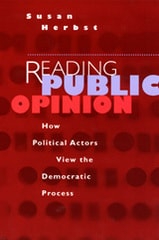
Reading Public Opinion
How Political Actors View the Democratic ProcessSusan Herbst
University of Chicago Press, 1998
Herbst draws on ideas from political science, sociology, and psychology to explore how three sets of political participants—legislative staffers, political activists, and journalists—actually evaluate and assess public opinion. She concludes that many political actors reject "the voice of the people" as uninformed and nebulous, relying instead on interest groups and the media for representations of public opinion. Her important and original book forces us to rethink our assumptions about the meaning and place of public opinion in the realm of contemporary democratic politics.
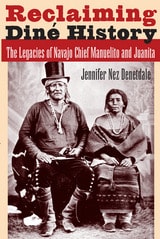
Reclaiming Diné History
The Legacies of Navajo Chief Manuelito and JuanitaJennifer Nez Denetdale
University of Arizona Press, 2007
Here she presents a thought-provoking examination of the construction of the history of the Navajo people (Diné, in the Navajo language) that underlines the dichotomy between Navajo and non-Navajo perspectives on the Diné past. Reclaiming Diné History has two primary objectives. First, Denetdale interrogates histories that privilege Manuelito and marginalize Juanita in order to demonstrate some of the ways that writing about the Diné has been biased by non-Navajo views of assimilation and gender. Second, she reveals how Navajo narratives, including oral histories and stories kept by matrilineal clans, serve as vehicles to convey Navajo beliefs and values.
By scrutinizing stories about Juanita, she both underscores the centrality of women’s roles in Navajo society and illustrates how oral tradition has been used to organize social units, connect Navajos to the land, and interpret the past. She argues that these same stories, read with an awareness of Navajo creation narratives, reveal previously unrecognized Navajo perspectives on the past. And she contends that a similarly culture-sensitive re-viewing of the Diné can lead to the production of a Navajo-centered history.
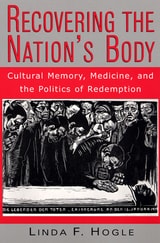
Recovering the Nation's Body
Cultural Memory, Medicine, and the Politics of RedemptionLinda F Hogle
Rutgers University Press, 1999
The body is both a site for medical practice and a source of therapeutic and scientific tools. As such, there are a variety of meanings ascribed to the body which both affect and are affected by cultural, economic, political and legal complexities. In order to access and use body parts, Linda F. Hogle states, transformative scientific and cultural processes are brought into play. Nowhere is this more evident than present-day Germany, where the spectre of Nazi medical experimentation still plays a large role in national policies governing the use of body parts and the way these policies are put into practice. In their efforts to be perceived as not repeating atrocities of the past, German medical practitioners and policy-makers reformulate ideas of bodily violation. To further confuse the issue, the reunification of East and West Germany has engendered new questions about the relationship between individuals’ bodies, science, and the state.
Hogle shows how “universal” medicine is reinterpreted through the lens of national and transnational politics and history, using comparative examples from her research in the United. States. Recovering the Nation’s Body is the first book to analyze the actual practices involved in procuring human tissue, and the first to examine how the German past and the unique present-day situation within the European Union are key in understanding the form that medical practices take within various contexts.
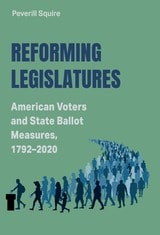
Reforming Legislatures
American Voters and State Ballot Measures, 1792-2020Peverill Squire
University of Missouri Press, 2024
Legislatures are ubiquitous in the American political experience. First created in Virginia in 1619, they have existed continuously ever since. Indeed, they were established in even the most unlikely of places, notably in sparsely populated frontier settlements, and functioned as the focal point of every governing system devised.
Despite the ubiquity of state legislatures, we know remarkably little about how Americans have viewed them as organizations, in terms of their structures, rules, and procedures. But with the rise of modern public opinion surveys in the twentieth century, we now have extensive data on how Americans have gauged legislative performance throughout the many years. That said, the responses to the questions pollsters typically pose reflect partisanship, policy, and personality. Generally, respondents respond favorably to legislatures controlled by their own political party and those in power during good economic times. Incumbent lawmakers get ratings boosts from having personalities, “home styles” that mesh with those of their constituents. These relationships are important indicators of people’s thoughts regarding the current performance of their legislatures and legislators, but they tell us nothing about attitudes toward the institution and its organizational characteristics.
This study offers a unique perspective on what American voters have historically thought about legislatures as organizations and legislators as representatives. Rather than focusing on responses to surveys that ask respondents how they rate the current performance of lawmakers and legislatures, this study leverages the most significant difference between national and state politics: the existence of ballot propositions in the latter. At the national level Americans have never had any say over Congress’s structure, rules, or procedures. In contrast, at the state level they have had ample opportunities over the course of more than two centuries to shape their state legislatures. The data examined here look at how people have voted on more than 1,500 state ballot propositions targeting a wide array of legislative organizational and parliamentary features. By linking the votes on these measures with the public debates preceding them, this study documents not only how American viewed various aspects of their legislatures, but also whether their opinions held constant or shifted over time. The findings reported paint a more nuanced picture of Americans’ attitudes toward legislatures than the prevailing one derived from survey research. When presented with legislative reform measures on which concrete choices were offered and decisions on them had to be made, the analyses presented here reveal that, counter to the conventional wisdom that people loved their representatives but hated the legislature, voters usually took charitable positions toward the institution while harboring skeptical attitudes about lawmakers’ motives and behaviors.
Refugee Talk
Propositions on Ethics and AestheticsEva
Pluto Press, 2022
An innovative approach to the refugee crisis through a focus on language use, discourse and representation
'A wide-ranging, erudite and multi-faceted analyses of the fundamental problem of who gets to be counted as human' - Kate Evans
What does it mean to be a refugee? What political questions do they raise? Through what political rhetoric is their experiences parsed? The ongoing refugee crisis has sparked all these questions and more.
Refugee Talk uses conversation as a research method and ethical practice to approach the representation of and the discourse about and by the refugee. Though refugees who cross borders are routinely registered, filed, and detained, the individual stories they carry are just as routinely overlooked or ignored. When language itself becomes another border that excludes refugees, the need for a new vocabulary that decriminalizes and re-humanizes the refugee experience asserts itself.
The authors engage theoretically with thinkers from Hannah Arendt to Paolo Freire and Kwame A. Appiah and structure the book around conversations with academics, activists, journalists, and refugee artists and writers. The result is a comprehensive humanities approach that places ethics and aesthetics at its core.
Reimagining the American Pacific
From South Pacific to Bamboo Ridge and BeyondRob Wilson
Duke University Press, 2000
Wilson begins by tracing the arrival of American commerce and culture in the Pacific through missionary and imperial forces in the nineteenth century and the parallel development of Asia/Pacific as an idea. Using an impressive range of texts—from works by Herman Melville, James Michener, Maori and Western Samoan novelists, and Bamboo Ridge poets to Baywatch, films and musicals such as South Pacific and Blue Hawaii, and native Hawaiian shark god poetry—Wilson illustrates what it means for a space to be “regionalized.” Claiming that such places become more open to transnational flows of information, labor, finance, media, and global commodities, he explains how they then become isolated, their borders simultaneously crossed and fixed. In the case of Hawai’i, Wilson argues that culturally innovative, risky forms of symbol making and a broader—more global—vision of local plight are needed to counterbalance the racism and increasing imbalance of cultural capital and goods in the emerging postplantation and tourist-centered economy.
Reimagining the American Pacific leaves the reader with a new understanding of the complex interactions of global and local economies and cultures in a region that, since the 1970s, has been a leading trading partner of the United States. It is an engaging and provocative contribution to the fields of Asian and American studies, as well as those of cultural studies and theory, literary criticism, and popular culture.

Rejecting Climate Doomism
Diana Stuart
University of Michigan Press, 2026
Drawing from climate science, sociology, psychology, and philosophy, Rejecting Climate Doomism outlines the reasons to instead choose action grounded in active hope. It examines how global warming could be effectively limited through specific policy proposals. Despite the many obstacles to achieving some of the policies discussed in this book, they are still possible and worth pursuing. By outlining a positive vision of the far-reaching changes that can be used to minimize warming, the book encourages readers to advocate for the social and economic changes necessary to forge the best path for people and the planet.
Religious Intolerance, America, and the World
A History of Forgetting and RememberingJohn Corrigan
University of Chicago Press, 2020
Religious Intolerance, America, and the World spans from Christian colonists’ intolerance of Native Americans and the role of religion in the new republic’s foreign-policy crises to Cold War witch hunts and the persecution complexes that entangle Christians and Muslims today. Corrigan reveals how US churches and institutions have continuously campaigned against intolerance overseas even as they’ve abetted or performed it at home. This selective condemnation of intolerance, he shows, created a legacy of foreign policy interventions promoting religious freedom and human rights that was not reflected within America’s own borders. This timely, captivating book forces America to confront its claims of exceptionalism based on religious liberty—and perhaps begin to break the grotesque cycle of projection and oppression.
Remembering the Forgotten War
The Enduring Legacies of the U.S.-Mexican WarMichael Scott Van Wagenen
University of Massachusetts Press, 2012
On February 2, 1848, representatives of the United States and Mexico signed the Treaty of Guadalupe Hidalgo, officially ending hostilities between the two countries and ceding over one-half million square miles of land to the northern victors. In Mexico, this defeat has gradually moved from the periphery of dishonor to the forefront of national consciousness. In the United States, the war has taken an opposite trajectory, falling from its once-celebrated prominence into the shadowy margins of forgetfulness and denial.
Why is the U.S.–Mexican War so clearly etched in the minds of Mexicans and so easily overlooked by Americans? This book investigates that issue through a transnational, comparative analysis of how the tools of collective memory—books, popular culture, historic sites, heritage groups, commemorations, and museums—have shaped the war's multifaceted meaning in the 160 years since it ended. Michael Van Wagenen explores how regional, ethnic, and religious differences influence Americans and Mexicans in their choices of what to remember and what to forget. He further documents what happens when competing memories clash in a quest for dominance and control.
In the end, Remembering the Forgotten War addresses the deeper question of how remembrance of the U.S.–Mexican War has influenced the complex relationship between these former enemies now turned friends. It thus provides a new lens through which to view today's cross-border rivalries, resentments, and diplomatic pitfalls.
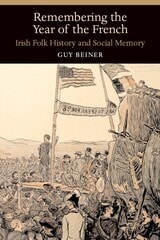
Remembering the Year of the French
Irish Folk History and Social MemoryGuy Beiner
University of Wisconsin Press, 2007
Beiner analyzes hundreds of hitherto unstudied historical, literary, and ethnographic sources. Though his focus is on 1798, his work is also a comprehensive study of Irish folk history and grass-roots social memory in Ireland. Investigating how communities in the West of Ireland remembered, well into the mid-twentieth century, an episode in the late eighteenth century, this is a “history from below” that gives serious attention to the perspectives of those who have been previously ignored or discounted. Beiner brilliantly captures the stories, ceremonies, and other popular traditions through which local communities narrated, remembered, and commemorated the past. Demonstrating the unique value of folklore as a historical source, Remembering the Year of the French offers a fresh perspective on collective memory and modern Irish history.
Winner, Wayland Hand Competition for outstanding publication in folklore and history, American Folklore Society
Finalist, award for the best book published about or growing out of public history, National Council on Public History
Winner, Michaelis-Jena Ratcliff Prize for the best study of folklore or folk life in Great Britain and Ireland
“An important and beautifully produced work. Guy Beiner here shows himself to be a historian of unusual talent.”—Marianne Elliott, Times Literary Supplement
“Thoroughly researched and scholarly. . . . Beiner’s work is full of empathy and sympathy for the human remains, memorials, and commemorations of past lives and the multiple ways in which they actually continue to live.”—Stiofán Ó Cadhla, Journal of British Studies
“A major contribution to Irish historiography.”—Maureen Murphy, Irish Literary Supplement
"A remarkable piece of scholarship . . . . Accessible, full of intriguing detail, and eminently teachable.”?—Ray Casman, New Hibernia Review
“The most important monograph on Irish history of the nineteenth and twentieth centuries to be published in recent years.”—Matthew Kelly, English Historical Review
“A strikingly ambitious work . . . . Elegantly constructed, lucidly written and inspired, and displaying an inexhaustible capacity for research”—Ciarán Brady, History IRELAND
“A closely argued, meticulously detailed and rich analysis . . . . providing such innovative treatment of a wide array of sources, his work will resonate with the concerns of many cultural and historical geographers working on social memory in quite different geographical settings and historical contexts.”—Yvonne Whelan, Journal of Historical Geography

Representing the French Revolution
Literature, Historiography, and ArtEdited by James A. W. Heffernan
Brandeis University Press, 1992
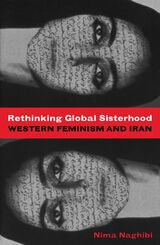
Rethinking Global Sisterhood
Western Feminism and IranNima Naghibi
University of Minnesota Press, 2007
Western women’s involvement in Persia dates from the mid-nineteenth century, when female adventurers and missionaries first encountered their veiled Muslim “sisters.” Twentieth-century Western and state-sponsored Iranian feminists continued to use the image of the veiled woman as the embodiment of backwardness. Yet, following the 1979 revolution, indigenous Iranian feminists became more vocal in their resistance to this characterization.
In Rethinking Global Sisterhood, Nima Naghibi makes powerful connections among feminism, imperialism, and the discourses of global sisterhood. Naghibi investigates topics including the state-sponsored Women’s Organization of Iran and the involvement of feminists such as Betty Friedan and Gloria Steinem in the Iranian feminism movement before and during the 1979 revolution. With a potent analysis of cinema, she examines the veiled woman in the films of Tahmineh Milani, Ziba Mir-Hosseini and Kim Longinotto, and Mahnaz Afzali.
At a time when Western relations with the Muslim world are in crisis, Rethinking Global Sisterhood provides much-needed insights and explores the limitations and possibilities of cross-cultural feminist social and political interventions.
Nima Naghibi is assistant professor of English at Ryerson University in Toronto.
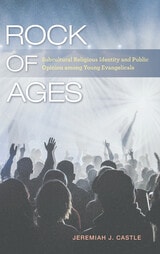
Rock of Ages
Subcultural Religious Identity and Public Opinion among Young EvangelicalsJeremiah J. Castle
Temple University Press, 2019
Evangelicals and Republicans have been powerful—and active—allies in American politics since the 1970s. But as public opinions have changed, are young evangelicals’ political identities and attitudes on key issues changing too? And if so, why? In Rock of Ages, Jeremiah Castle answers these questions to understand their important implications for American politics and society.
Castle develops his own theory of public opinion among young evangelicals to predict and explain their political attitudes and voting behavior. Relying on both survey data and his own interviews with evangelical college students, he shows that while some young evangelicals may be more liberal in their attitudes on some issues, most are just as firmly Republican, conservative, and pro-life on abortion as the previous generation.
Rock of Ages considers not only what makes young evangelicals different from the previous generation, but also what that means for both the church and American politics.
Routine Crisis
An Ethnography of DisillusionSarah Muir
University of Chicago Press, 2021
Anthropologist Sarah Muir offers a cogent meditation on the limits of critique at this historical moment, drawing on deep experience in Argentina but reflecting on a truly global condition. If we feel things are being upended in a manner that is ongoing, tumultuous, and harmful, what would we need to do—and what would we need to give up—to usher in a revitalized critique for today's world? Routine Crisis is an original provocation and a challenge to think beyond the limits of exhaustion and reimagine a form of criticism for the twenty-first century.
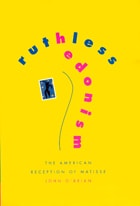
Ruthless Hedonism
The American Reception of MatisseJohn O'Brian
University of Chicago Press, 1999
In this ambitious study, John O'Brian argues that Matisse's sober presentations of himself were calculated to fit with the social constraints and ideological demands of the times. Matisse's strategy included cooperating with museums, cultivating private collectors, playing off dealers one against another, and reassuring the media that, whatever his reputation as an avant-gardist, the conduct of his life was solidly bourgeois.
Moving from the late 1920s, when Matisse's output was shedding its outlaw reputation, to the early 1950s, when his work was canonized, O'Brian shows how the way Matisse's work was viewed changed as attention shifted away from the seductiveness of his subject matter to the seductiveness of his paint. The art's resolute rejection of political concerns, its deployment of decorative design for visual satisfaction, and its representations of pleasure encouraged American audiences, who in the 1930s deemed the art disreputable, to celebrate its gratifications by the early years of the Cold War.
This intriguing, wide-ranging investigation of Matisse's self-promotion, America's uneasy embrace of modernism, and America's consumer culture and politics provides a rich context to Clement Greenberg's words published in the Nation in 1947: "Matisse's cold hedonism and ruthless exclusion of everything but the concrete, immediate sensation will in the future, once we are away from the present Zeitgeist, be better understood as the most profound mood of the first half of the twentieth century."