Results by title
322 books match the query 'Regional' and 11 start with r
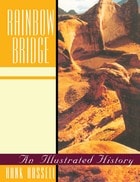
Rainbow Bridge
Hank Hassell
Utah State University Press, 1999
On the morning of August 14, 1909, a small, diverse group including Professor Byron Cummings of the University of Utah, Government Land Office surveyor William Douglass, pioneer archaeologist and trader John Weatherill, and Paiute guide Nasja Begay gazed at the largest structure of its kind in the world-Rainbow Bridge. Their presence marked the official discovery of the magnificent natural bridge, which spans 275 feet and towers 291 feet above the stream bed below it. Of the discovery party, only Nasja Begay had seen the stone arch before; he was one of a probably small number of Paiutes and Navajos, the true modern discoverers, who had visited it. In 1910, an executive order issued under the still fresh Antiquities Act created Rainbow Bridge National Monument, one of the first.
This was only the beginning of the Rainbow Bridge historical record. Its fame was soon widespread, but for many years its visitors would be few, their numbers restricted by the long arduous trail around Navajo Mountain to the site. Those few and the tour guides and businesses that emerged to serve them, especially at Rainbow Lodge, were an interesting mix though. The bridge's story included such western figures as trader Louisa Weatherill, wife of John and a Navajo speaker who was the first Anglo to hear of the bridge; Barry Goldwater, who for a time owned and operated Rainbow Lodge; Zane Grey, who wrote about the bridge; and David Brower, the Sierra Club leader who got wrapped up in the intersection of the Rainbow Bridge story with that of Glen Canyon Dam. Its construction and the filling of Lake Powell behind it made Rainbow Bridge a battleground, key territory in the larger war over water and conservation in the West. The remote, hard to reach national monument was supposed to define a limit to Colorado River reclamation but instead was inundated by Lake Powell and the tide of visitors who then could reach the foot of the bridge by boat. Though Rainbow is now easily and frequently visited and National Park Service amenities are in place, access to Rainbow Bridge is still an evolving and controversial issue.

Rationality Without Reason
Architecture and Calculation in Germany After 1968Daniela Fabricius
University of Minnesota Press, 2027
A critical examination of the rational turn in postwar West German architecture
Postwar West German architecture experienced a “rational turn” characterized by a dramatic push toward ideals of optimization, economy, and accuracy based in calculation. Analyzing how architects reckoned with the political and cultural legacy of fascism and were driven by the desire to quantify and manage unpredictability in the human environment, Rationality Without Reason shows how they translated their design and production methods into numbers through protodigital technology and computational processes.
Daniela Fabricius examines architectural practices within the wider context of the shifting intellectual and cultural landscape as rationalism devolved between the student movements of 1968 and the reign of postmodernism in the 1980s. Showing how rationalism’s limitations and contradictions became increasingly apparent, she demonstrates how the intensity of these approaches ultimately led to a form of rationalism devoid of reason. Fabricius explores how the development of increasingly autonomous systems and formalist methods strayed from important economic, social, and ethical concerns and impeded the potential for developing more liberatory forms of architecture.
Using case studies involving the Ulm School for Design and the research-based work of Frei Otto and Oswald Mathias Ungers, Rationality Without Reason traces how debates around scientific thinking evolved throughout the Cold War era and offers a critical look at the utopian promises associated with supposedly rational systems of knowledge. Through an interdisciplinary approach steeped in archival research, Fabricius highlights how the logic of quantification is bound to be unsustainable without serious ethical considerations.
Retail e-book files for this title are screen-reader friendly with images accompanied by short alt text and/or extended descriptions.
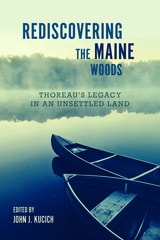
Rediscovering the Maine Woods
Thoreau's Legacy in an Unsettled LandJohn J. Kucich
University of Massachusetts Press, 2019
Inspired partly by this expedition, the accessible and engaging essays here offer valuable new perspectives on conservation, the cultural ties that connect Native communities to the land, and the profound influence the geography of the Maine Woods had on Thoreau and writers and activists who followed in his wake. Together, these essays offer a rich and multifaceted look at this special place and the ways in which Thoreau's Maine experiences continue to shape understandings of the environment a century and a half later.
Contributors include the volume editor, Kathryn Dolan, James S. Finley, James Francis, Richard W. Judd, Dale Potts, Melissa Sexton, Chris Sockalexis, Stan Tag, Robert M. Thorson, and Laura Dassow Walls.
Regional and Global Capital Flows
Macroeconomic Causes and ConsequencesEdited by Takatoshi Ito and Anne O. Krueger
University of Chicago Press, 2001
Regional and Metropolitan Growth and Decline in the US
William H. Frey
Russell Sage Foundation, 1988

Reimagining "To Kill a Mockingbird"
Family, Community, and the Possibility of Equal Justice under LawAustin Sarat
University of Massachusetts Press, 2013
The readings in this volume peel back the film's visual representation of the many-layered social world of Maycomb, Alabama, offering sometimes counterintuitive insights through the prism of a number of provocative contemporary theoretical and interpretive questions. What, they ask, is the relationship between the subversion of social norms and the doing of justice or injustice? Through what narrative and visual devices are some social hierarchies destabilized while others remain hegemonic? How should we understand the sacrifices characters make in the name of justice, and comprehend their failures in achieving it?
Asking such questions casts light on the film's eccentricities and internal contradictions and suggests the possibility of new interpretations of a culturally iconic text. The book examines the context that gave meaning to the film's representation of race and how debates about family, community, and race are played out and reframed in law.
Contributors include Colin Dayan, Thomas L. Dumm, Susan Sage Heinzelman, Linda Ross Meyer, Naomi Mezey, Imani Perry, and Ravit Reichman.
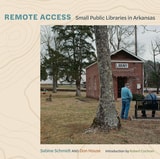
Remote Access
Small Public Libraries in ArkansasSabine Schmidt
University of Arkansas Press, 2021
Winner, 2024 Arkansiana Book Award, Arkansas Library Association
With their cameras and notebooks in hand, photographers Sabine Schmidt and Don House embarked on an ambitious project to document the libraries committed to serving Arkansas’s smallest communities. Remote Access is the culmination of this fascinating three-year effort, which took the artists to every region of their home state.
Schmidt’s carefully constructed color images of libraries and the communities they serve and House’s rich black-and-white portraits of library patrons and staff shine alongside the authors’ personal essays about their experiences. The pages here come alive with a deep connection to Arkansas’s history and culture as we accompany the authors on visits to a section of the Trail of Tears near Parkin, to the site of the tragic 1959 fire at the Arkansas Negro Boys Industrial School in Wrightsville, and to Maya Angelou’s childhood home in Stamps, among many other significant destinations.
Through this testament to the essential role of libraries in the twenty-first century, Schmidt and House have created a clear-eyed portrait of contemporary rural life, delving into issues of race, politics, gender, and isolation as they document the remarkable hard work and generosity put forth in community efforts to sustain local libraries.
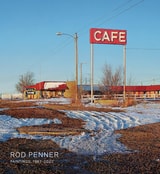
Rod Penner
Paintings, 1987–2022Rod Penner
The Artist Book Foundation, 2022
Rod Penner infuses his photorealistic paintings of the American southwest with a cinematic quality in the first major monograph on this contemporary realist artist.
The abandoned and forgotten landscapes of rural southwestern towns are the favored subjects of Rod Penner's paintings. His deft use of contrasts in his images—despondency and hope, isolation and nostalgia—evokes memories of The Last Picture Show and elicits complex responses from viewers. "I'm interested in the look of things and the quality of being there," he says. "A moment that is completely frozen with all the variety of textures; rust on poles, crumbling asphalt, light hitting the grass."
Penner's works are based on his photographs, digital video stills, and his experience of the rural landscapes of Texas and New Mexico. He depicts desolate, often deserted locations, the character of old houses and abandoned buildings, weather, and unique geography. His chosen scenes are infused with a cinematic quality that is the result of the exquisite light that he captures with his meticulous process. "The finished paintings should evoke contrasting responses of melancholy and warmth, desolation and serenity," he says.
Penner's hyperrealistic technique meticulously records both the iconic imagery and the beauty in the ashes of these once-prosperous streets and nighborhoods that still endure. The incredible poignant scenes evoke a universalism, a collective experience seen through the lens of Americana. "You won't find any hidden or overt socio-political meaning in my work and at the same time I hope that by utilizing what I find in the American landscape I'm able to connect to viewers on a deeper psychological level."
Rooted in the North
The Lives and Lore of Twenty Minnesota Nature WritersMark Neuzil
University of Minnesota Press, 2026
Discover unforgettable writers who taught Minnesota how to see its wild heart
In this engaging collection, environmental journalist Mark Neuzil revives the voices that showed generations how to appreciate Minnesota’s wild places. Comprising twenty vivid biographical essays, Rooted in the North traces the lives and lore of writers who shaped our understanding of this great state, from Minnesota’s northwoods to its tallgrass prairies to the storied landscape of the Boundary Waters Canoe Area Wilderness.
Readers will encounter towering figures of conservation such as Sigurd F. Olson, whose spiritual vision of wilderness helped define the modern environmental movement, alongside beloved chroniclers like Florence Page Jaques and Helen Hoover, whose intimate portraits of wildlife still resonate decades later. Neuzil also highlights writers Charles Eastman and Maude Kegg, who share insights into their Indigenous childhoods, and once-popular authors like Charles Hallock and George Leonard Herter, restoring them to their rightful place in the state’s literary heritage. Rooted in the North broadens our definition of “nature writer” to include novelists whose fiction grew from close observation of the land. Writers such as Martha Ostenso, Frederick Manfred, and Gary Paulsen appear here not just as storytellers but as keen interpreters of Minnesota’s natural world.
In what began as a popular series for the Minnesota Star Tribune, these essays explore the philosophy, science, adventure, faith, and everyday oddities that enlivened their subjects. The result is the only book of its kind—an illuminating portrait of the voices that helped us define and fall in love with Minnesota’s natural landscapes.
Retail e-book files for this title are screen-reader friendly with images accompanied by short alt text and/or extended descriptions.
Roshara Journal
Chronicling Four Seasons, Fifty Years, and 120 AcresJerry Apps
Wisconsin Historical Society Press, 2016
A photographic diary of a small Midwestern farm and the family who’ve made it their home
In Roshara Journal, father-and-son team Jerry and Steve Apps share the monthly happenings at their family’s farm in central Wisconsin. Featuring Steve’s stunning photos and fifty years of Jerry’s journal entries, Roshara Journal captures the changes—both from month to month and over the decades—on the landscape and farmstead.
The Apps family has owned Roshara since 1966. There they nurture a prairie restoration and pine plantation, maintain a large garden that feeds three generations, observe wildlife species by the dozens, and support a population of endangered butterflies. In documenting life on this piece of land, Jerry and Steve remind us how, despite the pace and challenges of modern life, the seasons continue to influence our lives in ways large and small. Jerry explains that his journal entries become much more than mere observations: "It seems that when I write about something—a bur oak tree, for example—that old tree becomes a part of me. . . . Writing takes me to a place that goes beyond observation and understanding, a place filled with feeling and meaning."
In the tradition of Bernd Heinrich in Maine, Barry Lopez in the Canadian Arctic, and Aldo Leopold just an hour down the road in Baraboo, Jerry and Steve Apps combine observation, experience, and reflection to tell a profound story about one place in the world.
Rude Pursuits and Rugged Peaks
Schoolcraft's Ozark Journal, 1818-1819H. Schoolcraft
University of Arkansas Press, 1996
The journal kept by Schoolcraft as he traveled ninety days in the rugged terrain of southern Missouri and northern Arkansas was originally published in 1821 and has become an essential record of Ozark territorial society and natural history documenting some of the earliest American settlers in the region, the power and beauty of many lost portions of the White River, the majesty of the open prairies, and the wealth of wildlife once found in the Ozarks.