Results by title
201 books match the query 'Regional Studies' and 11 start with r
RSF
The Russell Sage Foundation Journal of the Social Sciences: Growing Up Rural: Education, Health, Family, and Economic OutcomesShelley Clark
Russell Sage Foundation, 2022
Nearly 46 million Americans live in rural counties – areas with small populations that are often located far from large cities. Yet we know relatively little about how living in a rural area influences child and adolescent life trajectories and adult outcomes when compared to their urban counterparts. In this special double issue of RSF, sociologist Shelley Clark, epidemiologist Sam Harper, and agricultural economist Bruce Weber, and an interdisciplinary group of contributors provide a comprehensive look at the impact that growing up rural has across the lifespan, examining both the challenges and advantages of growing up in rural America.
The 15 articles in this double issue explore the effects of rural life on family, educational attainment, economic security, and health. Issue 1 looks at the impact of rural families and schools on children’s and adolescents’ educational aspirations and wellbeing. Contributors Jennifer Sherman and Kai A. Schafft find that while rural gentrification brings needed resources to struggling communities, it can also exacerbate educational inequality. Jessica C. Drescher and colleagues reveal that only modest differences in educational outcomes exist between rural and non-rural students overall and that socioeconomic status is less predictive of academic achievement in rural areas compared to non-rural areas. Ryan Parsons shows that rural students with college aspirations, particularly students of color, incur social and emotional costs in pursuing upward mobility not experienced by their urban counterparts, such as having to permanently relocate to more advantaged areas.
Issue 2 examines transitions to adulthood in rural areas and the longer-term influences of growing up in rural areas on adults’ health and economic attainment. Emily Miller and Kathryn Edin find that low-income rural young adults have children and marry earlier than their peers, but achieve other markers of adulthood, such as leaving the parental home, more slowly and often only tentatively. Robert D. Francis shows that rural, working-class men will employ various strategies to improve their employment opportunities in ways that support their identities as rural, working-class men. For example, they pursue additional education and training in fields that will allow them to continue to hold traditionally masculine, working-class jobs, such as obtaining credentials to be truck drivers or mechanics. Evan Roberts and colleagues find that growing up on or moving to a farm were associated with better health outcomes. Emily Parker and colleagues find that rural residents who live in counties that receive a higher amount of federal funding and moved from their home county in adulthood were more likely to achieve higher educational attainment and earnings than those in counties that received less funding.
This volume of RSF provides a more nuanced understanding of the advantages and disadvantage of growing up in rural areas and how it shapes the life trajectories of rural Americans.
RSF
The Russell Sage Foundation Journal of the Social Sciences: Growing Up Rural: Education, Health, Family, and Economic OutcomesShelley Clark
Russell Sage Foundation, 2022
Nearly 46 million Americans live in rural counties – areas with small populations that are often located far from large cities. Yet we know relatively little about how living in a rural area influences child and adolescent life trajectories and adult outcomes when compared to their urban counterparts. In this special double issue of RSF, sociologist Shelley Clark, epidemiologist Sam Harper, and agricultural economist Bruce Weber, and an interdisciplinary group of contributors provide a comprehensive look at the impact that growing up rural has across the lifespan, examining both the challenges and advantages of growing up in rural America.
The 15 articles in this double issue explore the effects of rural life on family, educational attainment, economic security, and health. Issue 1 looks at the impact of rural families and schools on children’s and adolescents’ educational aspirations and wellbeing. Contributors Jennifer Sherman and Kai A. Schafft find that while rural gentrification brings needed resources to struggling communities, it can also exacerbate educational inequality. Jessica C. Drescher and colleagues reveal that only modest differences in educational outcomes exist between rural and non-rural students overall and that socioeconomic status is less predictive of academic achievement in rural areas compared to non-rural areas. Ryan Parsons shows that rural students with college aspirations, particularly students of color, incur social and emotional costs in pursuing upward mobility not experienced by their urban counterparts, such as having to permanently relocate to more advantaged areas.
Issue 2 examines transitions to adulthood in rural areas and the longer-term influences of growing up in rural areas on adults’ health and economic attainment. Emily Miller and Kathryn Edin find that low-income rural young adults have children and marry earlier than their peers, but achieve other markers of adulthood, such as leaving the parental home, more slowly and often only tentatively. Robert D. Francis shows that rural, working-class men will employ various strategies to improve their employment opportunities in ways that support their identities as rural, working-class men. For example, they pursue additional education and training in fields that will allow them to continue to hold traditionally masculine, working-class jobs, such as obtaining credentials to be truck drivers or mechanics. Evan Roberts and colleagues find that growing up on or moving to a farm were associated with better health outcomes. Emily Parker and colleagues find that rural residents who live in counties that receive a higher amount of federal funding and moved from their home county in adulthood were more likely to achieve higher educational attainment and earnings than those in counties that received less funding.
This volume of RSF provides a more nuanced understanding of the advantages and disadvantage of growing up in rural areas and how it shapes the life trajectories of rural Americans.
RSF
The Russell Sage Foundation Journal of the Social Sciences: Suburban InequalityL'Heureux Lewis-McCoy
Russell Sage Foundation, 2023
Suburbs are home to almost half of all Americans and have undergone dramatic demographic shifts over the past 20 years. Yet, suburbs remain understudied, and we know little about the changes taking place in these communities. In this special double issue of RSF, sociologists R. L’Heureux Lewis-McCoy, Natasha Warikoo, Stephen A. Matthews, education scholar Nadirah Farah Foley, and an interdisciplinary group of contributors examine how suburbs have evolved and growing suburban inequality.
Issue 1 looks at the diversification of suburbs as well as inequality in suburban housing. Daniel T. Litcher and colleagues find that a majority of residents living in metropolitan areas now live in suburbs and this change has been driven by a migration of ethnic and racial minorities to suburban areas. Devin Q. Rutan and colleagues reveal that the number of suburban evictions has steadily risen over time, even as urban evictions have remained stable. Jennifer Girouard finds that while the state of Massachusetts passed Chapter 40B in 1969, a law that ensures affordable housing is built in the suburbs, local residents and leaders use tactics such as creating narratives of the town being victimized by predatory developers to resist the law and the development of affordable housing.
Issue 2 examines suburban schools, how community institutions function in suburban areas, and suburban politics. Shruti Bathia and colleagues find that between 2000 and 2015 Latino children attending elementary school in the suburbs had more exposure to White peers than their counterparts attending urban schools. However, suburban Latino children’s exposure to White students declined during that same time period. Scott W. Allard and Elizabeth Pelletier reveal that the nonprofit safety net is less responsive in suburban areas than urban centers and that nonprofit services are less robust in high poverty suburban areas and suburban areas with larger Black populations. Brenden Beck shows that suburbs with large Black populations rely the most on fine-and-fee revenue and that municipalities that rely more on monetary sanctions have more police killings. Kiara Wyndham Douds finds that incorporated suburbs are Whiter and less racially diverse than unincorporated suburbs, suggesting that incorporation has been an effective strategy for racial exclusion.
This volume of RSF investigates the underexamined and pressing issue of inequality in suburbs and explores how it develops within and between suburban communities.
RSF
The Russell Sage Foundation Journal of the Social Sciences: Suburban InequalityL'Heureux Lewis-McCoy
Russell Sage Foundation, 2023
Suburbs are home to almost half of all Americans and have undergone dramatic demographic shifts over the past 20 years. Yet, suburbs remain understudied, and we know little about the changes taking place in these communities. In this special double issue of RSF, sociologists R. L’Heureux Lewis-McCoy, Natasha Warikoo, Stephen A. Matthews, education scholar Nadirah Farah Foley, and an interdisciplinary group of contributors examine how suburbs have evolved and growing suburban inequality.
Issue 1 looks at the diversification of suburbs as well as inequality in suburban housing. Daniel T. Litcher and colleagues find that a majority of residents living in metropolitan areas now live in suburbs and this change has been driven by a migration of ethnic and racial minorities to suburban areas. Devin Q. Rutan and colleagues reveal that the number of suburban evictions has steadily risen over time, even as urban evictions have remained stable. Jennifer Girouard finds that while the state of Massachusetts passed Chapter 40B in 1969, a law that ensures affordable housing is built in the suburbs, local residents and leaders use tactics such as creating narratives of the town being victimized by predatory developers to resist the law and the development of affordable housing.
Issue 2 examines suburban schools, how community institutions function in suburban areas, and suburban politics. Shruti Bathia and colleagues find that between 2000 and 2015 Latino children attending elementary school in the suburbs had more exposure to White peers than their counterparts attending urban schools. However, suburban Latino children’s exposure to White students declined during that same time period. Scott W. Allard and Elizabeth Pelletier reveal that the nonprofit safety net is less responsive in suburban areas than urban centers and that nonprofit services are less robust in high poverty suburban areas and suburban areas with larger Black populations. Brenden Beck shows that suburbs with large Black populations rely the most on fine-and-fee revenue and that municipalities that rely more on monetary sanctions have more police killings. Kiara Wyndham Douds finds that incorporated suburbs are Whiter and less racially diverse than unincorporated suburbs, suggesting that incorporation has been an effective strategy for racial exclusion.
This volume of RSF investigates the underexamined and pressing issue of inequality in suburbs and explores how it develops within and between suburban communities.
Red, White, Black, and Blue
A Dual Memoir of Race and Class in AppalachiaWilliam M. Drennen Jr., Kojo (William T.) Jones Jr.
Ohio University Press, 2004
Reforming Philadelphia, 1682–2022
Richardson Dilworth
Temple University Press, 2023
Reforming Philadelphia examines the cyclical efforts of insurgents to change the city’s government over nearly 350 years. Political scientist Richardson Dilworth tracks reformers as they create a new purpose for the city or reshape the government to reflect emerging ideas. Some wish to thwart the “corrupt machine,” while others seek to gain control of the government via elections. These actors formed coalitions and organizations that disrupted the status quo in the hope of transforming the city (and perhaps also enriching themselves).
Dilworth addresses Philadelphia’s early development through the present day, including momentous changes from its new city charter in 1885 and the Republican machine that emerged around the same time to its transformation to a Democratic stronghold in the 1950s, when the city also experienced a racial transition. Focusing primarily on the twentieth and twenty-first centuries, Dilworth evaluates the terms of Mayors Frank Rizzo, Wilson Goode, and Ed Rendell, as well as John Street, Michael Nutter, and Jim Kenney to illustrate how power and resistance function, and how Philadelphia’s political history and reform cycles offer a conceptual model that can easily be applied to other cities.
Reforming Philadelphia provides a new framework for understanding the evolving relationship between national politics and local, city politics.
Regional and Metropolitan Growth and Decline in the US
William H. Frey
Russell Sage Foundation, 1988
Regionalism without Regions
Reconceptualizing Ukraine's HeterogeneityUlrich Schmid
Central European University Press, 2019
Remote Access
Small Public Libraries in ArkansasSabine Schmidt
University of Arkansas Press, 2021
Winner, 2024 Arkansiana Book Award, Arkansas Library Association
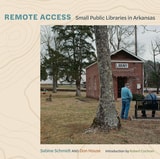
With their cameras and notebooks in hand, photographers Sabine Schmidt and Don House embarked on an ambitious project to document the libraries committed to serving Arkansas’s smallest communities. Remote Access is the culmination of this fascinating three-year effort, which took the artists to every region of their home state.
Schmidt’s carefully constructed color images of libraries and the communities they serve and House’s rich black-and-white portraits of library patrons and staff shine alongside the authors’ personal essays about their experiences. The pages here come alive with a deep connection to Arkansas’s history and culture as we accompany the authors on visits to a section of the Trail of Tears near Parkin, to the site of the tragic 1959 fire at the Arkansas Negro Boys Industrial School in Wrightsville, and to Maya Angelou’s childhood home in Stamps, among many other significant destinations.
Through this testament to the essential role of libraries in the twenty-first century, Schmidt and House have created a clear-eyed portrait of contemporary rural life, delving into issues of race, politics, gender, and isolation as they document the remarkable hard work and generosity put forth in community efforts to sustain local libraries.
Reporting for Arkansas
The Documentary Films of Jack HillDale Carpenter
University of Arkansas Press, 2022
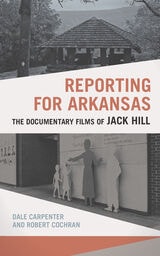
Jack Hill was a pioneering Arkansas documentary filmmaker dedicated to sharing his state’s history with a wider public. Following a decade as an award-winning investigative journalist and news anchor at KAIT in Jonesboro, Hill was pushed out by new management for his controversial reporting on corruption in a local sheriff’s office. What seemed like a major career setback turned out to be an opportunity: he founded the production company TeleVision for Arkansas, through which he produced dozens of original films. Although Hill brought an abiding interest in education and public health to this work from the beginning, he found his true calling in topics based in Arkansas history. Convinced that a greater acquaintance with the state’s most significant historical events would nurture a greater sense of homegrown pride, Hill tirelessly crisscrossed the state to capture the voices of hundreds of Arkansans recalling significant chapters in the state’s history, such as the oil boom in El Dorado and Smackover, the crucial contributions of the Arkansas Ordnance Plant in Jacksonville during World War II, and the role of Rosenwald Schools in expanding educational opportunities.
In Reporting for Arkansas, Dale Carpenter and Robert Cochran present a biography of Hill alongside an annotated selected filmography designed to accompany sixteen of his best films on subjects related to Arkansas history—all newly hosted online by the Center for Arkansas and Regional Studies at the University of Arkansas.

Russian Pendulum
Paradoxes, Practices and PatternsAlena Ledeneva
University College London, 2026
An unorthodox portrait of modern-day Russia, including its paradoxes, practices, and patterns.
Russian Pendulum takes readers on a compelling journey through Russia in which tradition, modernity, power, and informality collide. Linking local knowledge and insider expertise with global trends and international perspectives, the book reveals the patterns that have defined Russia’s destiny for centuries. At its core lies an intricate system of informal networks that are held together by cooptation, control, and camouflage practices.