Results by title
346 books match the query 'Relations' and 15 start with r

Race and Nation in Puerto Rican Folklore
Franz Boas and John Alden Mason in Porto RicoRafael Ocasio
Rutgers University Press, 2020
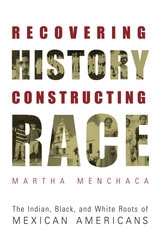
Recovering History, Constructing Race
The Indian, Black, and White Roots of Mexican AmericansBy Martha Menchaca
University of Texas Press, 2002
A CHOICE Outstanding Academic Book, 2002
The history of Mexican Americans is a history of the intermingling of races—Indian, White, and Black. This racial history underlies a legacy of racial discrimination against Mexican Americans and their Mexican ancestors that stretches from the Spanish conquest to current battles over ending affirmative action and other assistance programs for ethnic minorities. Asserting the centrality of race in Mexican American history, Martha Menchaca here offers the first interpretive racial history of Mexican Americans, focusing on racial foundations and race relations from prehispanic times to the present.
Menchaca uses the concept of racialization to describe the process through which Spanish, Mexican, and U.S. authorities constructed racial status hierarchies that marginalized Mexicans of color and restricted their rights of land ownership. She traces this process from the Spanish colonial period and the introduction of slavery through racial laws affecting Mexican Americans into the late twentieth-century. This re-viewing of familiar history through the lens of race recovers Blacks as important historical actors, links Indians and the mission system in the Southwest to the Mexican American present, and reveals the legal and illegal means by which Mexican Americans lost their land grants.
Regulating Difference
Religious Diversity and Nationhood in the Secular WestMarian Burchardt
Rutgers University Press, 2020
Transnational migration has contributed to the rise of religious diversity and has led to profound changes in the religious make-up of society across the Western world. As a result, societies and nation-states have faced the challenge of crafting ways to bring new religious communities into existing institutions and the legal frameworks. Regulating Difference explores how the state regulates religious diversity and examines the processes whereby religious diversity and expression becomes part of administrative landscapes of nation-states and people’s everyday lives. Arguing that concepts of nationhood are key to understanding the governance of religious diversity, Regulating Difference employs a transatlantic comparison of the Spanish region of Catalonia and the Canadian province of Quebec to show how processes of nation-building, religious heritage-making and the mobilization of divergent interpretations of secularism are co-implicated in shaping religious diversity. It argues that religious diversity has become central for governing national and urban spaces.
This book is also freely available online as an open access digital edition.

Relations
An Anthropological AccountMarilyn Strathern
Duke University Press, 2020
Religion, Conflict, and Peacemaking
An Interdisciplinary ConversationMuriel Schmid
University of Utah Press, 2017
Contributors from varied backgrounds share perspectives and insights gleaned from history, theory, practice, and case studies. While the authors acknowledge the role of religion in generating conflict, they emphasize the part religion can play in conflict resolution. Addressing the centrality of conflict to the human condition, they recognize the consequent difficulty in teasing out the exact role of religion. Overall, the authors assert the necessity of frank, knowledgeable dialogue to understanding sources of, finding grounds for resolving, and managing conflict. Many of the essayists offer creative solutions for building peace. Employing examples and viewpoints drawn from diverse faith traditions, academic traditions, and cultural backgrounds, contributors seek to foster respectful dialogue and debate by exploring the complex dynamic that interconnects religion, violence, and peace.

Religious Imaginations
How Narratives of Faith are Shaping Today’s WorldEdited by James Walters
Gingko, 2018

Remembering the Forgotten War
The Enduring Legacies of the U.S.-Mexican WarMichael Scott Van Wagenen
University of Massachusetts Press, 2012
On February 2, 1848, representatives of the United States and Mexico signed the Treaty of Guadalupe Hidalgo, officially ending hostilities between the two countries and ceding over one-half million square miles of land to the northern victors. In Mexico, this defeat has gradually moved from the periphery of dishonor to the forefront of national consciousness. In the United States, the war has taken an opposite trajectory, falling from its once-celebrated prominence into the shadowy margins of forgetfulness and denial.
Why is the U.S.–Mexican War so clearly etched in the minds of Mexicans and so easily overlooked by Americans? This book investigates that issue through a transnational, comparative analysis of how the tools of collective memory—books, popular culture, historic sites, heritage groups, commemorations, and museums—have shaped the war's multifaceted meaning in the 160 years since it ended. Michael Van Wagenen explores how regional, ethnic, and religious differences influence Americans and Mexicans in their choices of what to remember and what to forget. He further documents what happens when competing memories clash in a quest for dominance and control.
In the end, Remembering the Forgotten War addresses the deeper question of how remembrance of the U.S.–Mexican War has influenced the complex relationship between these former enemies now turned friends. It thus provides a new lens through which to view today's cross-border rivalries, resentments, and diplomatic pitfalls.
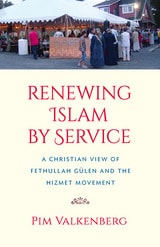
Renewing Islam by Service
Pim Valkenberg
Catholic University of America Press, 2015
Resisting Europe
Practices of Contestation in the Mediterranean Middle EastEdited by Raffaella A. Del Sarto and Simone Tholens
University of Michigan Press, 2020
Resisting Reagan
The U.S. Central America Peace MovementChristian Smith
University of Chicago Press, 1996
Focusing on the movement's three most important national campaigns—Witness for Peace, Sanctuary, and the Pledge of Resistance—this book demonstrates the centrality of morality as a political motivator, highlights the importance of political opportunities in movement outcomes, and examines the social structuring of insurgent consciousness. Based on extensive surveys, interviews, and research, Resisting Reagan makes significant contributions to our understanding of the formation of individual activist identities, of national movement dynamics, and of religious resources for political activism.
Rethinking India's Oral and Classical Epics
Draupadi among Rajputs, Muslims, and DalitsAlf Hiltebeitel
University of Chicago Press, 1999
Using his own fieldwork as a starting point, Alf Hiltebeitel analyzes how the oral tradition of the south Indian cult of the goddess Draupadi and five regional martial oral epics compare with one another and tie in with the Sanskrit epics. Drawing on literary theory and cultural studies, he reveals the shared subtexts of the Draupadi cult Mahabharata and the five oral epics, and shows how the traditional plots are twisted and classical characters reshaped to reflect local history and religion. In doing so, Hiltebeitel sheds new light on the intertwining oral traditions of medieval Rajput military culture, Dalits ("former Untouchables"), and Muslims.
Breathtaking in scope, this work is indispensable for those seeking a deeper understanding of South Asia's Hindu and Muslim traditions.
This work is the third volume in Hiltebeitel's study of the Draupadi cult. Other volumes include Mythologies: From Gingee to Kuruksetra (Volume One), On Hindu Ritual and the Goddess (Volume Two), and Rethinking the Mahabharata (Volume Four).
Rural Revolt in Mexico
U.S. Intervention and the Domain of Subaltern PoliticsDaniel Nugent, ed.
Duke University Press, 1998
Through their studies of social movements and popular mobilization in the Mexican countryside, the contributors argue for understanding rural revolts in terms of the specific historical contexts of particular regions and peoples, as well as the broader context of unequal cultural, political, and economic relations between Mexico and the United States. Exploring the connections between external and internal factors in social movements, these essays reveal the wide range of organized efforts through which peasants and Indians have struggled to shape their own destiny while confronted by the influence of U.S. capital and military might. Originally published as a limited edition in 1988 by the Center for U. S.–Mexican Studies, this volume presents a pioneering effort by Latin Americanist scholars to sympathetically embrace and enrich work begun in Subaltern Studies between 1982 and 1987 by projecting it onto a different region of historical experience. This revised and expanded edition includes a new introduction by Daniel Nugent and an extensive essay by Adolfo Gilly on the recent Chiapas uprising.
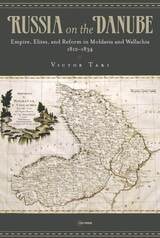
Russia on the Danube
Empire, Elites, and Reform in Moldavia and Wallachia, 1812–1834Victor Taki
Central European University Press, 2021
One of the goals of Russia’s Eastern policy was to turn Moldavia and Wallachia, the two Romanian principalities north of the Danube, from Ottoman vassals into a controllable buffer zone and a springboard for future military operations against Constantinople. Russia on the Danube describes the divergent interests and uneasy cooperation between the Russian officials and the Moldavian and Wallachian nobility in a key period between 1812 and 1834. Victor Taki’s meticulous examination of the plans and memoranda composed by Russian administrators and the Romanian elite underlines the crucial consequences of this encounter. The Moldavian and Wallachian nobility used the Russian-Ottoman rivalry in order to preserve and expand their traditional autonomy. The comprehensive institutional reforms born out of their interaction with the tsar’s officials consolidated territorial statehood on the lower Danube, providing the building blocks of a nation state.
The main conclusion of the book is that although Russian policy was driven by self-interest, and despite the Russophobia among a great part of the Romanian intellectuals, this turbulent period significantly contributed to the emergence, several decades later, of modern Romania.
Russian-American Dialogue on Cultural Relations, 1776-1914
Edited by Norman E. Saul & Richard D. McKinzie
University of Missouri Press, 1996
Russian-American Dialogue on Cultural Relations, 1776-1914, the third volume in the Russian-American Dialogues series, provides English translations of the best Russian scholarship on cultural relations. Each essay originally appeared as an article in the former Soviet Union. Five issues are discussed: the contributions that each country made to the cultural life of the other; the correspondence and interactions between scientists, writers, and others from the two nations; the development of public perceptions and how these changed over time; the "American focus" in Russian periodicals during the nineteenth century; and the significant roles of Russians and the Russian presence in American history. The Russian articles on each of these subjects are followed by comments from American historians.
The articles by the Russian scholars make extensive use of and liberally cite material from Russian archives and publications. As a result, they provide American readers with new scientific exchanges, personalities, and points of view. The result is a plethora of new material for Western historians of Russia as well as of the United States. The book provides an opportunity for scholars to examine more thoroughly the relevant issues of Russian-American cultural relations.
An important scholarly contribution, Russian-American Dialogue on Cultural Relations, 1776-1914 brings a new dimension to the relationship between the United States and Russia before 1914. It will be of interest not only to historians of this period but to all historians and students of international cultural relations.

Rutgers Meets Japan
A Trans-Pacific Network of the Late Nineteenth CenturyHaruko Wakabayashi
Rutgers University Press, 2026
Griffis and Kusakabe were only a small piece of a vast transnational network of leading modernizers of Japan in the 1860s and 70s. The Japanese students in New Brunswick were young and innovative men of samurai and aristocratic lineage, who were sent by reform-minded leaders of Japan, which was undergoing a dramatic transformation. They came to New Brunswick seeking Western knowledge that was much needed for the modernization of a newly forming nation. New Brunswick became the hub of a network of Japanese nationals that extended to the major cities of New York, Philadelphia, and Boston, and from there to the smaller towns of New England. Once in New Brunswick, these Japanese students were embraced by Protestant ministers, educators, and missionaries—both men and women—whose network encompassed Rutgers College and the neighboring New Brunswick Theological Seminary, and which stretched to Dutch Reformed parishes throughout the Eastern seaboard, and westward as far as the Dutch enclave of Holland, Michigan. Meanwhile, the American teachers and missionaries who left for Japan became part of a network of reformist leaders and Japanese returnees that extended to schools, colleges, and missions in Japan, and formed the foundations of Japan’s modern educational system. Through contributions from scholars and archivists in the U.S., Canada, and Japan, Rutgers Meets Japan aims to reconstruct the early Rutgers-Japan connections and examine the role and impact of this transnational network on Japan and the U.S. in the late nineteenth century.