Results by title
56 books match the query 'Religions' and 5 start with r
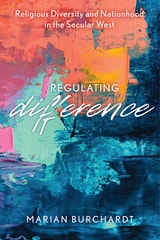
Regulating Difference
Religious Diversity and Nationhood in the Secular WestMarian Burchardt
Rutgers University Press, 2020
Transnational migration has contributed to the rise of religious diversity and has led to profound changes in the religious make-up of society across the Western world. As a result, societies and nation-states have faced the challenge of crafting ways to bring new religious communities into existing institutions and the legal frameworks. Regulating Difference explores how the state regulates religious diversity and examines the processes whereby religious diversity and expression becomes part of administrative landscapes of nation-states and people’s everyday lives. Arguing that concepts of nationhood are key to understanding the governance of religious diversity, Regulating Difference employs a transatlantic comparison of the Spanish region of Catalonia and the Canadian province of Quebec to show how processes of nation-building, religious heritage-making and the mobilization of divergent interpretations of secularism are co-implicated in shaping religious diversity. It argues that religious diversity has become central for governing national and urban spaces.
This book is also freely available online as an open access digital edition.
Religion and Its Other
Secular and Sacral Concepts and Practices in InteractionEdited by Heike Bock, Jörg Feuchter, and Michi Knecht
Campus Verlag, 2008
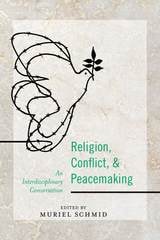
Religion, Conflict, and Peacemaking
An Interdisciplinary ConversationMuriel Schmid
University of Utah Press, 2017
Contributors from varied backgrounds share perspectives and insights gleaned from history, theory, practice, and case studies. While the authors acknowledge the role of religion in generating conflict, they emphasize the part religion can play in conflict resolution. Addressing the centrality of conflict to the human condition, they recognize the consequent difficulty in teasing out the exact role of religion. Overall, the authors assert the necessity of frank, knowledgeable dialogue to understanding sources of, finding grounds for resolving, and managing conflict. Many of the essayists offer creative solutions for building peace. Employing examples and viewpoints drawn from diverse faith traditions, academic traditions, and cultural backgrounds, contributors seek to foster respectful dialogue and debate by exploring the complex dynamic that interconnects religion, violence, and peace.

Religious Imaginations
How Narratives of Faith are Shaping Today’s WorldEdited by James Walters
Gingko, 2018
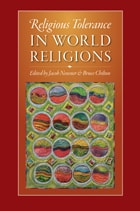
Religious Tolerance in World Religions
Jacob Neusner
Templeton Press, 2008
Today, and historically, religions often seem to be intolerant, narrow-minded, and zealous. But the record is not so one-sided. In Religious Tolerance in World Religions, numerous scholars offer perspectives on the "what" and "why" traditions of tolerance in world religions, beginning with the pre-Christian West, Greco-Roman paganism, and ancient Israelite Monotheism and moving into modern religions such as Christianity, Judaism, Islam, Buddhism, and Hinduism. By tolerance the authors mean "the capacity to live with religious difference, and by toleration, the theory that permits a majority religion to accommodate the presence of a minority religion."
The volume is introduced with a summary of a recent survey that sought to identify the capacity of religions to tolerate one another in theory and in practice. Eleven religious communities in seven nations were polled on questions that ranged from equality of religious practitioners to consequences of disobedience. The essays frame the provocative analysis of how a religious system in its political statement produces categories of tolerance that can be explained in that system’s logical context. Past and present beliefs, practices, and definitions of social order are examined in terms of how they support tolerance for other religious groups as a matter of public policy.
Religious Tolerance in World Religions focuses attention on the attitude "that the ’infidel’ or non-believer may be accorded an honorable position within the social order defined by Islam or Christianity or Judaism or Buddhism or Hinduism, and so on." It is a timely reference for colleges and universities and for makers of public policy.