51 books match the query 'Reptiles & Amphibians' and 2 start with r
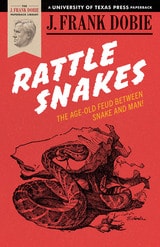
cover of Rattlesnakes

Rattlesnakes

By J. Frank Dobie

University of Texas Press, 1982

Here are observations and speculations, legends and yarns, even gossip about the habits and dispositions of these extraordinary creatures—rattlesnakes—their reported size, deadliness, and power to charm their natural enemies. Here are descriptions of actual fights to the death between rattlesnakes and other animals and accounts of the strange experiences human beings have had with them, as well as tips on where to find them and how to act when you see one.

Dobie began systematically collecting lore about the rattlesnake world many years ago, using some of it in such regional publications as Southwest Review and incorporating much of it into essays—with the intention of eventually putting together a book about rattlesnakes. Now, in this collection of twenty-two articles, his wish is posthumously fulfilled.

Only Frank Dobie could tell of this fascinating and frightening creature with such wisdom and humor, thereby tempering "the age-old feud between the snake and man." And the rattlesnake—who once aroused fear among even the boldest men in the Old West—can at last be regarded with tolerance, respect, and even affection.
[more]
cover of Reptiles and Amphibians of Minnesota

Reptiles and Amphibians of Minnesota

W.J. Breckenridge

University of Minnesota Press, 1944

Reptiles and Amphibians of Minnesota was first published in 1944.Both amateur and professional naturalists will find this a useful and authoritative handbook for the study of reptiles and amphibians in Minnesota and the surrounding regions. Dr. Breckenridge was for many years the director of the Minnesota Museum of Natural History and familiar with the needs and interests of those studying the wildlife of the area. In this book he provides a comprehensive yet clearly and simply written text, illustrated with excellent photographs, drawings, and maps.As an introduction to his subject, Dr. Breckenridge tells something of the history of Minnesota herpetology and recounts some of the takes and folklore about snakes, lizards, turtles, frogs, toads, and salamanders. He then describes the distribution of species in Minnesota and outlines methods of field study. He tells how to preserve specimens, how to care for reptiles or amphibians in captivity, and what to do to avoid or treat snake bites.Preceding the detailed descriptions of the species, there is an explanation, especially helpful to the beginner, of the general scientific method of classification and the use of keys. Keys for use in identifying specimens likely to be found in the region are provided.The descriptions themselves include data on the range, habits, habitat, food, and breeding of 45 different species. Most of these species are illustrated with photographs or drawings, and there are a number of drawings that show structural details. Maps show the range of each species booth in Minnesota and on the North American continent. A glossary explains the meaning of terms used in the keys and descriptions.
[more]