Results by title
165 books match the query 'Resistance' and 26 start with r
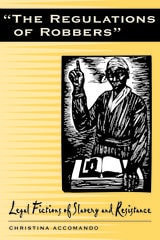
REGULATIONS OF ROBBERS
LEGAL FICTIONS OF SLAVERY AND RESISTANCEChristina Accomando
The Ohio State University Press, 2001
Race and the Rhetoric of Resistance
Jeffrey B. Ferguson
Rutgers University Press, 2021

Race, Resistance, and the Boy Scout Movement in British Colonial Africa
In British Colonial AfricaTimothy H. Parsons
Ohio University Press, 2004
Conceived by General Sir Robert Baden-Powell as a way to reduce class tensions in Edwardian Britain, scouting evolved into an international youth movement. It offered a vision of romantic outdoor life as a cure for disruption caused by industrialization and urbanization. Scouting’s global spread was due to its success in attaching itself to institutions of authority. As a result, scouting has become embroiled in controversies in the civil rights struggle in the American South, in nationalist resistance movements in India, and in the contemporary American debate over gay rights.
In Race, Resistance, and the Boy Scout Movement in British Colonial Africa, Timothy Parsons uses scouting as an analytical tool to explore the tensions in colonial society. Introduced by British officials to strengthen their rule, the movement targeted the students, juvenile delinquents, and urban migrants who threatened the social stability of the regime. Yet Africans themselves used scouting to claim the rights of full imperial citizenship. They invoked the Fourth Scout Law, which declared that a scout was a brother to every other scout, to challenge racial discrimination.
Parsons shows that African scouting was both an instrument of colonial authority and a subversive challenge to the legitimacy of the British Empire. His study of African scouting demonstrates the implications and far-reaching consequences of colonial authority in all its guises.

Ramparts of Resistance
Why Workers Lost Their Power, and How to Get It BackSheila Cohen
Pluto Press, 2006
Reclaiming Queer
Activist and Academic Rhetorics of ResistanceErin J. Rand
University of Alabama Press, 2014
An examination of the rhetorical linkage of queer theory in the academy with street-level queer activism in the 1980s and early 1990s
The late 1980s and early 1990s were a defining historical moment for both queer activism and queer theory in the United States. LGBTQ communities, confronted with the fatal indifference and homophobia of the AIDS crisis, often responded with angry, militant forms of activism designed not merely to promote acceptance or tolerance, but to forge identity and strength from victimization and assert loudly and forcefully their rights to safety and humanity. The activist reclamation of the word “queer” is one marker of this shift in ideology and practice, and it was mirrored in academic circles by the concurrent emergence of the new field of “queer theory.” That is, as queer activists were mobilizing in the streets, queer theorists were producing a similar foment in the halls and publications of academia, questioning regulatory categories of gender and sexuality, and attempting to illuminate the heteronormative foundations of Western thought. Notably, the narrative of queer theory’s development often describes it as arising from or being inspired by queer activism.
In Reclaiming Queer, Erin J. Rand examines both queer activist and academic practices during this period, taking as her primary object the rhetorical linkage of queer theory in the academy with street-level queer activism. Through this strategic conjuncture of activism and academia, Rand grapples with the specific conditions for and constraints on rhetorical agency in each context. She examines the early texts that inaugurated the field of queer theory, Queer Nation’s infamous “Queers Read This” manifesto, Larry Kramer’s polemic speeches and editorials, the Lesbian Avengers’ humorous and outrageous antics, the history of ACT UP, and the more recent appearance of Gay Shame activism. From these activist and academic discourses, Rand builds a theory of rhetorical agency that posits queerness as the very condition from which agency emerges.
Reclaiming Queer thus offers a critical look at the rhetoric of queer activism, engages the history of queer theory’s institutionalization and the politics of its proliferation, suggests a radically contextual understanding of rhetorical agency and form, and argues for the centrality of queerness to all rhetorical action.
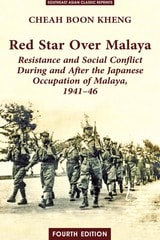
Red Star Over Malaya
Resistance and Social Conflict During and After the Japanese Occupation, 1941-1946Cheah Boon Kheng
National University of Singapore Press, 2012
As Japanese forces withdrew from the countryside, the Chinese guerrillas of the communist-led resistance movement, the Malayan People's Anti-Japanese Army (MPAJA), emerged from the jungle and took control of some 70 per cent of the country's smaller towns and villages, seriously alarming the Malay population. When the British Military Administration sought to regain control of these liberated areas, the ensuing conflict set the tone for future political conflicts and marked a crucial stage in the history of Malaya. Based on extensive archival research, Red Star Over Malaya provides a riveting account of the way the Japanese occupation reshaped colonial Malaya, and of the tension-filled months that followed Japan's surrender. This book is fundamental to an understanding of social and political developments in Malaysia during the second half of the 20th century.
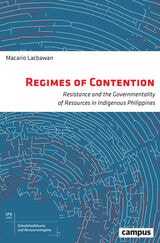
Regimes of Contention
Resistance and the Governmentality of Resources in Indigenous PhilippinesMacario Lacbawan
Campus Verlag, 2021
The notion of indigeneity in the Philippines is politically fraught. Most who live on the archipelago are descendants of aboriginal peoples, whether they claim tribal affiliation or not, and those who do enact traditional identities share little else in common. As a result, the term “indigenous” remains unstable and malleable seventy-five years after independence. Connecting insights from Tillian and Foucauldian social theory, Regimes illuminates how the ever-changing Philippine state, from the 1970s through today, constructs artificial subjectivities that Indigenous peoples must embody to access ancestral resources held by the federal government. What emerges is a lucid illustration of how governmentality is entangled with indigeneity in the Philippines.
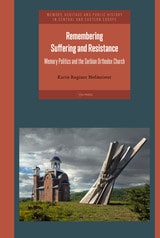
Remembering Suffering and Resistance
Memory Politics and the Serbian Orthodox ChurchKarin Roginer Hofmeister
Central European University Press, 2024
Assessing issues related to the Orthodox Church from an academic, secular point of view is a sensitive matter. However, by tracing and interpreting the engagement of the Serbian Church with the memory of Serbian heroic victimhood in World War II through a kind of “methodological agnosticism,” this volume has managed to tackle the subtle topic in a very delicate and value-neutral way. Arguing that the search for a collective memory is particularly urgent in the face of societal uncertainty and that religious institutions often use their memory potential to reaffirm their public relevance, the book examines the motivations, forms, strategies, and outcomes of a wide range of mnemonic activities the Serbian Orthodox Church engaged in following the upheavals caused by the collapse of Yugoslav socialism, the violent dissolution of the country, and the fall of the Milošević regime. These activities, taking place within the memory fields framed by the post-socialist, post-conflict, and post-secular horizons, took liturgical and non-liturgical forms, often involving a hybrid fusion of the two. As a result of this mnemonic endeavor, the author argues, the Church was successful in reasserting its power and legitimacy in the public sphere of post-2000 Serbia.
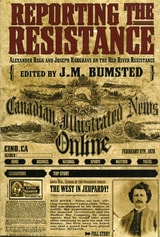
Reporting the Resistance
Alexander Begg and Joseph Hargrave on the Red River ResistanceAlexander Begg
University of Manitoba Press, 2003
Resistance To Theory
Paul De Man
University of Minnesota Press, 1986
Explores reasons why the theoretical enterprise is blind to, or “resists,” the radical nature of reading, in six essays that offer a new level of critical and cultural understanding in reference to the works of Jauss, Riffaterre, Benjamin, and Bakhtin.
In a brilliant collection of essays, de Man explores his views, that, the resistance to theory is inherent in the theoretical enterprise itself, and the real debate is with its own methodological assumptions and possibilities.
“Indispensable. . . . There is resistance to ‘theory’ and also confusion about its status with reference to both philosophy and criticism.” -Frank Kermode, Columbia University
Resistance and Abolition in the Borderlands
Confronting Trump's Reign of TerrorEdited by Arturo J. Aldama and Jessica Ordaz; Foreword by Leo R. Chavez; Afterword by Karma R. Chávez
University of Arizona Press, 2024
This volume provides a well-argued look at the Trump era. Insightful contributions delve into the impact of Donald Trump’s rhetoric and policies on migrants detained and returned, immigrant children separated from their parents and placed in detention centers, and migrant women subjected to sexual and reproductive abuses, among other timely topics. The chapter authors document a long list in what the book calls “Trump’s Reign of Terror.”
Organized thematically, the book has four sections: The first gathers histories about the Trump years’ roots in a longer history of anti-migration; the second includes essays on artistic and activist responses on the border during the Trump years; the third critiques the normalization of Trump’s rhetoric and actions in popular media and culture; and the fourth envisions the future.
Resistance and Abolition in the Borderlands is an essential reader for those wishing to understand the extent of the damage caused by the Trump era and its impact on Latinx people.
Contributors
Arturo J. Aldama
Rebecca Avalos
Cynthia Bejarano
Tria Blu Wakpa
Renata Carvalho Barreto
Karma R. Chávez
Leo R. Chavez
Jennifer Cullison
Jasmin Lilian Diab
Allison Glover
Jamila Hammami
Alexandria Herrera
Diana J. Lopez
Sergio A. Macías
Cinthya Martinez
Alexis N. Meza
Roberto A. Mónico
José Enrique Navarro
Jessica Ordaz
Eliseo Ortiz
Kiara Padilla
Leslie Quintanilla
J-M Rivera
Heidy Sarabia
Tina Shull
Nishant Upadhyay
Maria Vargas
Antonio Vásquez
Resistance and Obedience to God
David Ferris
QuakerPress, 2001
Resistance and Survival
Children’s Narrative from Central America and the CaribbeanAnn González
University of Arizona Press, 2009
Many of these stories are in some way lessons in resistance and survival in a world where “the toughest kid on the block,” often an outsider, demands that a group of children “play or pay,” on his terms. González demonstrates that where traditional strategies have proposed the model of the “trickster” or the “paradoxically astute fool,” to mock the pretensions of the would-be oppressor, new trends indicate that the region’s children—and those who write for them—show increasing interest in playing the game on their own terms, getting to know the Other, embracing difference, and redefining their identity and role within the new global culture.
Resistance and Survival emphasizes the hope underlying this contemporary children’s literature for a world in which all voices can be heard and valued—the hope of an authentic happy ending.
Resistance in the Era of Nationalisms
Performing Identities in Taiwan and Hong KongHsin-I Cheng
Michigan State University Press, 2023
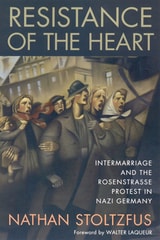
Resistance of the Heart
Intermarriage and the Rosenstrasse Protest in Nazi GermanyNathan Stoltzfus
Rutgers University Press, 2001
In February 1943 the Gestapo arrested approximately 10,000 Jews remaining in Berlin. Most died at Auschwitz. Two thousand of those Jews, however, had non-Jewish partners and were locked into a collection center on a street called Rosenstrasse. As news of the surprise arrest pulsed through the city, hundreds of Gentile spouses, mostly women, hurried to the Rosenstrasse in protest. A chant broke out: "Give us our husbands back."
Over the course of a week protesters vied with the Gestapo for control of the street. Now and again armed SS guards sent the women scrambling for cover with threats that they would shoot. After a week the Gestapo released these Jews, almost all of whom survived the war.
The Rosenstrasse Protest was the triumphant climax of ten years of resistance by intermarried couples to Nazi efforts to destroy their families. In fact, ninety-eight percent of German Jews who did not go into hiding and who survived Nazism lived in mixed marriages. Why did Hitler give in to the protesters? Using interviews with survivors and thousands of Nazi records never before examined in detail, Nathan Stoltzfus identifies the power of a special type of resistance--the determination to risk one's own life for the life of loved ones. A "resistance of the heart..."
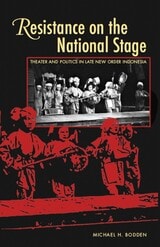
Resistance on the National Stage
Theater and Politics in Late New Order IndonesiaMichael H. Bodden
Ohio University Press, 2010
Resistance on the National Stage analyzes the ways in which, between 1985 and 1998, modern theater pracxadtitioners in Indonesia contributed to a rising movement of social protest against the long-governing New Order regime of President Suharto. It examines the work of an array of theater groups and networks from Jakarta, Bandung, and Yogyakarta that pioneered new forms of theater-making and new themes that were often presented more directly and critically than previous groups had dared to do.
Michael H. Bodden looks at a wide range of case studies to show how theater contributed to and helped build the opposition. He also looks at how specific combinations of social groups created tensions and gave modern theater a special role in bridging social gaps and creating social networks that expanded the reach of the prodemocracy movement. Theater workers constructed new social networks by involving peasants, Muslim youth, industrial workers, and lower-middle-class slum dwellers in theater productions about their own lives. Such networking and resistance established theater as one significant arena in which the groundwork for the ouster of Suharto in May 1998, and the succeeding Reform era, was laid.
Resistance on the National Stage will have broad appeal, not only for scholars of contemporary Indonesian culture and theater, but also for those interested in Indonesian history and politics, as well as scholars of postcolonial theater and culture.

Resistance to Innovation
Its Sources and ManifestationsShaul Oreg and Jacob Goldenberg
University of Chicago Press, 2015
Shaul Oreg and Jacob Goldenberg bring the insights of marketing and organizational behavior to bear on the attitudes and behaviors of the remaining 80 percent who resist innovation. The authors identify two competing definitions of resistance: In marketing, resistance denotes a reluctance to adopt a worthy new product, or one that offers a clear benefit and carries little or no risk. In the field of organizational behavior, employees are defined as resistant if they are unwilling to implement changes regardless of the reasons behind their reluctance. Seeking to clarify the act of rejecting a new product from the reasons—rational or not—consumers may have for doing so, Oreg and Goldenberg propose a more coherent definition of resistance less encumbered by subjective, context-specific factors and personality traits. The application of this tighter definition makes it possible to disentangle resistance from its sources and ultimately offers a richer understanding of consumers’ underlying motivations. This important research is made clear through the use of many real-life examples.
Resistance
The Essence of the Islamist RevolutionAlastair Crooke
Pluto Press, 2009
This book traces the essence of the Islamist Revolution from its origins in Egypt, through Najaf, Lebanon, Iran and the Iranian Revolution to today. Alastair Crooke presents a compelling account of the ideas and energy which are mobilising the Islamic world.
Crooke argues that the West faces a mass mobilisation against the US-led Western project. The roots of this conflict are described in terms of religious themes that extend back over 500 years. They represent clashing systems of thinking and values. Islamists have a vision for the future of their own societies which would entail radical change from Western norms. Resistance is presented as the means to force Western behaviour to change and to expose the essential differences between the two modes of thinking.
This is a rigourous account that traces the threads of revolution of various movements, including the influence of 'political Shi'ism' and the Iranian Revolution and its impact on Hezbollah and Hamas.
Retention and Resistance
Writing Instruction and Students Who LeavePegeen Reichert Powell
Utah State University Press, 2014
Retention is a vital issue for institutions, but as these students’ stories show, leaving college is often the result of complex and idiosyncratic individual situations that make institutional efforts difficult and ultimately ineffective. An adjustment of institutional and pedagogical objectives is needed to refocus on educating as many students as possible, including those who might leave before graduation.
Much of the pedagogy, curricula, and methodologies of composition studies assume students are preparing for further academic study. Retention and Resistance argues for a new kairotic pedagogy that moves toward an emphasis on the present classroom experience and takes students’ varied experiences into account. Infusing the discourse of retention with three individual student voices, Powell explores the obligation of faculty to participate in designing an institution that educates all students, no matter where they are in their educational journey or how far that journey will go.
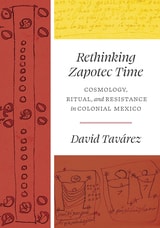
Rethinking Zapotec Time
Cosmology, Ritual, and Resistance in Colonial MexicoDavid Tavárez
University of Texas Press, 2022
2024 — Best Book in Colonial Latin American Studies — Colonial Section, Latin American Studies Association
2023 — Best Subsequent Book — Native American and Indigenous Studies Association
2023 — Honorable Mention, Best Book in the Social Sciences — Latin American Studies Association, Mexico Section
2022 — Marysa Navarro Best Book Prize — New England Council of Latin American Studies
As the first exhaustive translation and analysis of an extraordinary Zapotec calendar and ritual song corpus, seized in New Spain in 1704, this book expands our understanding of Mesoamerican history, cosmology, and culture.
In 1702, after the brutal suppression of a Zapotec revolt, the bishop of Oaxaca proclaimed an amnesty for idolatry in exchange for collective confessions. To evade conflict, Northern Zapotec communities denounced ritual specialists and surrendered sacred songs and 102 divinatory manuals, which preserve cosmological accounts, exchanges with divine beings, and protocols of pre-Columbian origin that strongly resemble sections of the Codex Borgia. These texts were sent to Spain as evidence of failed Dominican evangelization efforts, and there they remained, in oblivion, until the 1960s.
In this book, David Tavárez dives deep into this formidable archive of ritual and divinatory manuals, the largest calendar corpus in the colonial Americas, and emerges with a rich understanding of Indigenous social and cultural history, Mesoamerican theories of cosmos and time, and Zapotec ancestor worship. Drawing on his knowledge of Zapotec and Nahuatl, two decades of archival research, and a decade of fieldwork, Tavárez dissects Mesoamerican calendars as well as Native resistance and accommodation to the colonial conquest of time, while also addressing entangled transatlantic histories and shining new light on texts still connected to contemporary observances in Zapotec communities.
Rethinking the Political
Gender, Resistance, and the StateEdited by Barbara Laslett, Johanna Brenner, and Yesim Arat
University of Chicago Press, 1995
Section One, "Gender, Citizenship, and Collectivity," includes Nancy Frazer and Linda Gordon's critique of dependency and citizenship; Iris Young on women as a social collective; Ruth Bloch on the feminization of public virtue in revolutionary America; Trisha Franzen on feminism and lesbian community, and Sonia Kruks on de Beauvoir and contemporary feminism.
"Collective Action and Women's Resistance," Section Two, features Louis Tilly's "Paths of Proletarianization"; Temma Kaplan's "Female Consciousness and Collective Action"; and five assessments of women's collective action worldwide: Samira Haj on Palestine, Arlene McLeod on Egypt, Gay Seidman on South Africa, Nancy Sternbach et al. on Latin America, and Anne Walthall on Japan.
Concluding with a section on gender and the state, Rethinking the Political also features Bronwyn Winter on the law and cultural relativism; Sherene Razack on sexual violence; Wendy Luttrell on educational institutions; Patricia Stamp on ethnic conflict in postcolonial Kenya; Elizabeth Schmidt on patriarchy and capitalism in Zimbabwe; and Muriel Nazzari on the "woman question" in post-revolutionary Cuba.
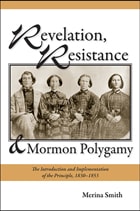
Revelation, Resistance, and Mormon Polygamy
The Introduction and Implementation of the Principle, 1830–1853Merina Smith
Utah State University Press, 2013
When Joseph Smith began to reveal and teach the doctrine of plural marriage in 1841, even stalwart members like Brigham Young were shocked and confused. In this thoughtful study, Smith argues that the secret introduction of plural marriage among the leadership coincided with an evolving public theology that provided a contextualizing religious narrative that persuaded believers to accept the principle.
This fresh interpretation draws from diaries, letters, newspapers, and other primary sources and is especially effective in its use of family narratives. It will be of great interest not only to scholars and the general public interested in Mormon history but in American history, religion, gender and sexuality, and the history of marriage and families.
Rhetoric and Resistance
The Literary Arts of Dissent in Nineteenth-Century BritainMaeve Adams
Ohio University Press, 2025
A fresh perspective on the enduring relationship between literature, democracy, and dissent
Rhetoric and Resistance explores the transformative role of nineteenth-century literature in shaping modern concepts and practices of democratic dissent. By examining the works of Romantic and Victorian novelists, poets, and journalists, Maeve Adams identifies origins of modern theories and practices of resistance in nineteenth-century literary forms. Offering a literary history of dissent, the book recovers the intertwined development of democracy and aesthetics, revealing how narrative form became a potent tool for challenging authority.
Tracing the lineage of dissent from the radical fiction and journalism of the 1800s to contemporary movements like #MeToo, Adams offers a genealogy that highlights how literary texts experimented with political power, granting new and consequential voices to working-class individuals, women, colonized peoples, and other marginalized groups.
Adams takes an interdisciplinary approach, weaving together close readings of works by Thomas De Quincey, Walter Scott, Elizabeth Gaskell, and H. G. Wells, as well as lesser-known journalists, with insights from modern moral and political philosophy. Drawing on theories of democratic ethics and justice from scholars such as Miranda Fricker, Sharon Krause, Martha Nussbaum, and Philip Pettit, the book bridges literary history and contemporary debates about political agency and expression.
Rhythms of Resistance
African Musical Heritage in BrazilPeter Fryer
Pluto Press, 2000
Acclaimed author Peter Fryer describes how slaves, mariners and merchants brought African music from Angola and the ports of East Africa to Latin America. In particular, they brought it to Brazil – today the country with the largest black population of any outside Africa. Fryer examines how the rhythms and beats of Africa were combined with European popular music to create a unique sound and dance tradition. Fryer focuses on the political nature of this musical crossover and the role of an African heritage in the cultural identity of Brazilian blacks today.
Rhythms of Resistance is an absorbing account of a theme in global music and is rich in fascinating historical detail.
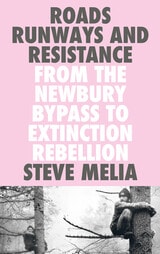
Roads, Runways and Resistance
From the Newbury Bypass to Extinction RebellionSteve Melia
Pluto Press, 2021
'As a movement for social change it is important that we understand our own history. This is a compelling read.'
From the anti-roads protests of the 1990s to HS2 and Extinction Rebellion, conflict and protest have shaped the politics of transport. In 1989, Margaret Thatcher's government announced 'the biggest road-building programme since the Romans.' This is the inside story of the thirty tumultuous years that have followed.
Roads, Runways and Resistance draws on over 50 interviews with government ministers, advisors and protestors - many of whom, including 'Swampy', speak here for the first time about the events they describe. It is a story of transport ministers undermined by their own Prime Ministers, protestors attacked or quietly supported by the police, and smartly-dressed protestors who found a way onto the roof of the Houses of Parliament.
Today, as a new wave of road building and airport expansion threatens to bust Britain's carbon budgets, climate change protestors find themselves on a collision course with the government. Melia asks, what difference did the protests of the past make? And what impacts might today's protest movements have on the transport of the future?
Roots of Resistance
A Story of Gender, Race, and Labor on the North Coast of HondurasSuyapa G. Portillo Villeda
University of Texas Press, 2021
Winner of the 2021 Sara A. Whaley Prize of the National Women’s Studies Association (NWSA)
A first-of-its-kind study of the working-class culture of resistance on the Honduran North Coast and the radical organizing that challenged US capital and foreign intervention at the onset of the Cold War, examining gender, race, and place.
On May 1, 1954, striking banana workers on the North Coast of Honduras brought the regional economy to a standstill, invigorating the Honduran labor movement and placing a series of demands on the US-controlled banana industry. Their actions ultimately galvanized a broader working-class struggle and reawakened long-suppressed leftist ideals. The first account of its kind in English, Roots of Resistance explores contemporary Honduran labor history through the story of the great banana strike of 1954 and centers the role of women in the narrative of the labor movement.
Drawing on extensive firsthand oral history and archival research, Suyapa G. Portillo Villeda examines the radical organizing that challenged US capital and foreign intervention in Honduras at the onset of the Cold War. She reveals the everyday acts of resistance that laid the groundwork for the 1954 strike and argues that these often-overlooked forms of resistance should inform analyses of present-day labor and community organizing. Roots of Resistance highlights the complexities of transnational company hierarchies, gender and race relations, and labor organizing that led to the banana workers' strike and how these dynamics continue to reverberate in Honduras today.