Results by title
63 books match the query 'Road' and 6 start with r
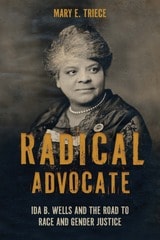
Radical Advocate
Ida B. Wells and the Road to Race and Gender JusticeMary E. Triece
University of Alabama Press, 2025
Pinpoints the persuasive strategies that typified Wells’s efforts to shape broader cultural conversations concerning the causes of racial, social, and gender inequity
Born into the brutal reality of slavery, Ida B. Wells rose to become an audacious journalist, teacher, and activist for racial and gender justice. In Radical Advocate, Mary E. Triece examines the rhetorical strategies employed by Wells to challenge deeply rooted systems of oppression, strategies that remain powerful and relevant today.
Triece introduces the concept of “radical embodied advocacy” to give an account of Wells’s unique position as a Black woman whose personal encounters with white violence were palpable, experienced physically and mentally. White men lynched Wells’s friends and threatened her own life, forcing her into exile after destroying the very press on which she wrote and edited. From this perspective, Wells understood lynching as linked to white economic and political control. Through a close analysis of Wells’s speeches, writings, and journalism, Triece reveals how Wells pioneered a form of “intersectional journalism” that centered the voices of those marginalized by race, gender, and class.
By examining Wells’s work through the lens of philosophy, rhetoric, and Black feminism, Triece underscores the epistemic challenges faced by marginalized advocates and the importance of their perspectives in shaping social change. Radical Advocate ultimately positions Wells as a prophetic figure whose insights into the systemic nature of racism remain profoundly relevant in today’s world.
Reclaiming the Road
Mobility Justice beyond Complete StreetsDavid L Prytherch
University of Minnesota Press, 2025
Imagining equitable streets for all
For the past century, our roadways have been engineered as pipes for cars, but they offer vast potential as public spaces. From New York and Boston to Portland and Los Angeles, cities are rethinking their streets, going beyond sidewalks and bike lanes to welcome nonmotorists to share the asphalt roadway. Reclaiming the Road traces the historical evolution of America’s streets and explores contemporary movements to retake them from cars—temporarily and permanently—for diverse forms of mobility and community life. To share the street raises important questions of equity, in transportation and beyond. David L. Prytherch proposes a bold, intersectional vision of a more just street.
Reclaiming the Road connects cutting-edge theory, policy analysis, and firsthand accounts from those leading the charge in transforming our streets to advocate for changing how we think about and design roads. Prytherch features case studies of nine major cities in the United States to show how experiments in reclaiming streets accelerated during the Covid-19 pandemic to become lasting changes. Through in-depth interviews, he shares stories of how planners, transportation advocates, and community leaders have implemented innovative programs for slowing neighborhood streets, opening roads for walking and biking, and reconstructing roadways with public parklets and street plazas as social spaces for curbside conversation.
Examining movements to transform streets through the lenses of equity and justice, Reclaiming the Road tackles the conceptual challenge of defining mobility justice and the practicalities of planning a more just public street, offering a compelling vision for the future of America’s public spaces.
Retail e-book files for this title are screen-reader friendly with images accompanied by short alt text and/or extended descriptions.
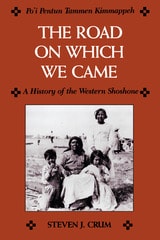
Road On Which We Came
A History of the Western ShoshoneSteven J. Crum
University of Utah Press, 1994
A hundred forty years ago, the Western Shoshone occupied a vast area of present-day Nevada—from Idaho in the north to Death Valley in the south. Today, the Newe hold a fraction of their former territory, still practicing native lifeways while accepting many aspect of American culture. Their story deserves telling.
The Road on Which We Came is the first comprehensive history of the Great Basin Shoshone. Written by historian Steven Crum, an enrolled tribal member, this book presents the Shoshone as an active force in their own history, effectively adapting to harsh physical environment, defending their territory in the nineteenth century, and working to modify or reject assimilationists policy in the present.
Noting that Native American history did not end with Wounded Knee, Crum gives substantial attention to twentieth-century events up to 1990 and emphasizes that in every period tribal actions can be characterized by a plurality of voices and opinions.
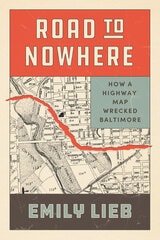
Road to Nowhere
How a Highway Map Wrecked BaltimoreEmily Lieb
University of Chicago Press, 2025
In the mid-1950s Baltimore’s Rosemont neighborhood was alive and vibrant with smart rowhouses, a sprawling park, corner grocery stores, and doctor’s offices. By 1957, a proposed expressway threatened to gut this Black, middle-class community from stem to stern.
That highway was never built, but it didn’t matter—even the failure to build it destroyed Rosemont economically, if not physically. In telling the history of the neighborhood and the notional East–West Expressway, Emily Lieb shows the interwoven tragedies caused by racism in education, housing, and transportation policy. Black families had been attracted to the neighborhood after Baltimore’s Board of School Commissioners converted several white schools into “colored” ones, which had also laid the groundwork for predatory real-estate agents who bought low from white sellers and sold high to determined Black buyers. Despite financial discrimination, Black homeowners built a thriving community before the city council formally voted to condemn some nine hundred homes in Rosemont for the expressway, leading to deflated home values and even more predatory real estate deals.
Drawing on land records, oral history, media coverage, and policy documents, Lieb demystifies blockbusting, redlining, and prejudicial lending, highlighting the national patterns at work in a single neighborhood. The result is an absorbing story about the deliberate decisions that produced racial inequalities in housing, jobs, health, and wealth—as well as a testament to the ingenuity of the residents who fought to stay in their homes, down to today.
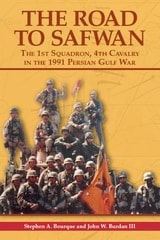
Road to Safwan
The 1st Squadron, 4th Cavalry in the 1991 Persian Gulf WarStephen A. Bourque
University of North Texas Press, 2007
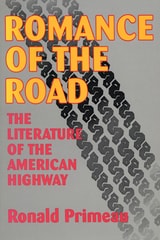
Romance Of The Road
Literature Of The American HighwayRonald Primeau
University of Wisconsin Press, 1996
Writers examined include Jack Kerouac, Jim Dodge, Ralph Waldo Emerson, William Least Heat Moon, Robert M. Pirsig, Henry Miller, Joan Didion, Mona Simpson, and Walt Whitman.