Results by title
67 books match the query 'Romance' and 7 start with r
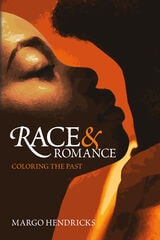
Race and Romance
Coloring the PastMargo Hendricks
Arizona Center for Medieval and Renaissance Studies, 2021
Race and Romance: Coloring the Past explores the literary and cultural genealogy of colorism, white passing, and white presenting in the romance genre. The scope of the study ranges from Heliodorus’ Aithiopika to the short novels of Aphra Behn, to the modern romance novel Forbidden by Beverly Jenkins. This analysis engages with the troublesome racecraft of “passing” and the instability of racial identity and its formation from the premodern to the present. The study also looks at the significance of white settler colonialism to early modern romance narratives. A bridge between studies of early modern romance and scholarship on twenty-first-century romance novels, this book is well-suited for those interested in the romance genre.
Rescue and Romance
Popular Novels Before World War IDiana Reep
University of Wisconsin Press, 1982
This study of the rescue motif in popular American novels before World War I focuses on the rescue convention as part of the romantic plot of the novels. The rescue as a structured convention that controls the movement of the romantic plot appears in all types of domestic novels, gothics, dime novels, historical romances, and westerns.
Romance Of The Road
Literature Of The American HighwayRonald Primeau
University of Wisconsin Press, 1996
Writers examined include Jack Kerouac, Jim Dodge, Ralph Waldo Emerson, William Least Heat Moon, Robert M. Pirsig, Henry Miller, Joan Didion, Mona Simpson, and Walt Whitman.
Romance and the Erotics of Property
Mass-Market Fiction for WomenJan Cohn
Duke University Press, 1988
Cohn argues that a full understanding of the contemporary romance requires an investigation of its literary and historical sources and analogues. Three principal sources are examined in the context of women's history in bourgeois society. Pride and Prejudice, Jane Erye, and Gone With the Wind demonstrate the development of romance fiction's themes, yet in all three the central love story is complicated by issues of property, the sign of male power. Jan Cohn further considers the development of the genre n the fictions of Harriet Lewis and May Agnes Fleming, prolific and popular American romance writers of the late nineteenth century who developed the role of the villain, thereby bringing into focus the sexual and economic struggles faced by the heroine.
Romance and the Erotics of Property sets romance fiction against a historic and literary background, arguing that contemporary romance disguises as tales of love the subversive fantasies of female appropriation and male property and power.
Romance in HPSG
Edited by Sergio Balari and Luca Dini
CSLI, 1997
Romance of Commerce and Culture
Capitalism, Modernism, and the Chicago-Aspen Crusade for Cultural Reform, Revised EditionJames Sloan Allen
University Press of Colorado, 2002
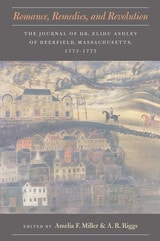
Romance, Remedies, and Revolution
The Journal of Dr. Elihu Ashley of Deerfield, Massachusetts, 1773-1775Edited by Amelia F. Miller and A. R. Riggs
University of Massachusetts Press, 2007
With flashes of humor and close attention to detail, Ashley describes a broad range of activities and experiences in the small village of Deerfield and the surrounding towns of the Connecticut River valley. Articulate as well as observant, this former schoolteacher conveys a sense of immediacy that brings even the most mundane daily events to life. He discusses medical theory and practice, revolutionary politics, farming, his family, his circle of friends, and amusements ranging from singing and dancing to sleigh riding and bouts of drunkenness. He also writes about his love life, including a dalliance with the older sister of his fiancee, Polly Williams, while the latter is away visiting relatives in the Berkshires.
For Ashley, personal relationships and politics were the prominent issues of 1773 and 1774, as events in Massachusetts drew the province toward rebellion. He discusses the gathering of angry mobs in response to the so-called Intolerable Acts, the stoppage of the courts in Hampshire County, the anarchy that ensued, and the persecution of loyalists, with or without the sanction of law. When the revolution breaks out in April 1775, he describes the departure of companies of minutemen as they set out for Boston to challenge the British Army.
Six months later, in November 1775, the journal abruptly ends. By then, however, Elihu Ashley had already bequeathed to posterity an extraordinary firsthand account of life in rural New England in the years immediately preceding the War of Independence.