Results by title
150 books match the query 'Rural' and 9 start with r
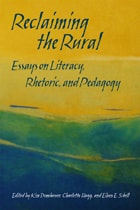
Reclaiming the Rural
Essays on Literacy, Rhetoric, and PedagogyEdited by Kim Donehower, Charlotte Hogg, and Eileen E. Schell
Southern Illinois University Press, 2012
In Reclaiming the Rural: Essays on Literacy, Rhetoric, and Pedagogy, editors Kim Donehower, Charlotte Hogg, and Eileen E. Schell bring together a diverse collection of essays that consider literacy, rhetoric, and pedagogy in the United States, Canada, and Mexico. The essays move beyond the typical arguments for preserving, abandoning, or modernizing by analyzing how rural communities sustain themselves through literate action. The contributors explore the rhetorics of water disputes in the western United States, the histories and influences of religious rhetorics in Mexico, agricultural and rural literacy curricula, the literacies of organizations such as 4-H and Academia de la Nueva Raza, and neoliberal rhetorics. Central to these examinations are the rural populations themselves, which include indigenous peoples in the rural United States, Canada, and Mexico, as well as those of European or other backgrounds.
The strength of the anthology lies in its multiple perspectives, various research sites, and the range of methodologies employed, including rhetorical analyses of economies and environments, media, and public spaces; classroom-based research; historical analysis and archival work; and qualitative research. The researchers engage the duality between the practices of everyday life in rural communities and the practices of reflecting on and making meaning.
Reclaiming the Rural reflects the continually changing, nuanced, context-dependent realities of rural life while acknowledging the complex histories, power struggles, and governmental actions that have affected and continue to affect the lives of rural citizens. This thought-provoking collection demonstrates the value in reclaiming the rural for scholarly and pedagogical analysis.
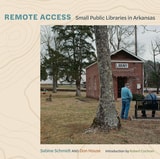
Remote Access
Small Public Libraries in ArkansasSabine Schmidt
University of Arkansas Press, 2021
Winner, 2024 Arkansiana Book Award, Arkansas Library Association
With their cameras and notebooks in hand, photographers Sabine Schmidt and Don House embarked on an ambitious project to document the libraries committed to serving Arkansas’s smallest communities. Remote Access is the culmination of this fascinating three-year effort, which took the artists to every region of their home state.
Schmidt’s carefully constructed color images of libraries and the communities they serve and House’s rich black-and-white portraits of library patrons and staff shine alongside the authors’ personal essays about their experiences. The pages here come alive with a deep connection to Arkansas’s history and culture as we accompany the authors on visits to a section of the Trail of Tears near Parkin, to the site of the tragic 1959 fire at the Arkansas Negro Boys Industrial School in Wrightsville, and to Maya Angelou’s childhood home in Stamps, among many other significant destinations.
Through this testament to the essential role of libraries in the twenty-first century, Schmidt and House have created a clear-eyed portrait of contemporary rural life, delving into issues of race, politics, gender, and isolation as they document the remarkable hard work and generosity put forth in community efforts to sustain local libraries.

Rethinking Pastoralism In Africa
Gender, Culture, and the Myth of the Patriarchal PastoralistDorothy L. Hodgson
Ohio University Press, 2001
The dominant trend in pastoralist studies has long assumed that pastoralism and pastoral gender relations are inherently patriarchal. The contributors to this collection, in contrast, use diverse analytic approaches to demonstrate that pastoralist gender relations are dynamic, relational, historical, and produced through complex local-translocal interactions. Combining theoretically sophisticated analysis with detailed case studies, this collection will appeal to those doing research and teaching in African studies, gender studies, anthropology, and history. Among the topics discussed are pastoralism, patriarchy, and history among Maasai in Tanganyika; women’s roles in peacemaking in Somali society; the fertility of houses and herds; gender, aging, and postchildbearing experience in a Tuareg community; and milk selling among Fulani women in Northern Burkina Faso.
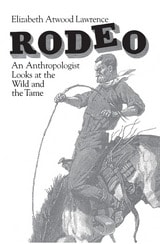
Rodeo
An Anthropologist Looks at the Wild and the TameElizabeth Atwood Lawrence
University of Chicago Press, 1984
Based on extensive field work and drawing on comparative materials from other stock-tending societies, Rodeo is a major contribution to an understanding of the role of performance in society, the culturally constructed view of man's place in nature, and the structure and meaning of social relationships and their representations.

Rural America in a Globalizing World
Problems and Prospects for the 2010'sConner Bailey
West Virginia University Press, 2014
This fourth Rural Sociological Society decennial volume provides advanced policy scholarship on rural North America during the 2010’s, closely reflecting upon the increasingly global nature of social, cultural, and economic forces and the impact of neoliberal ideology upon policy, politics, and power in rural areas.
The chapters in this volume represent the expertise of an influential group of scholars in rural sociology and related social sciences. Its five sections address the changing structure of North American agriculture, natural resources and the environment, demographics, diversity, and quality of life in rural communities.
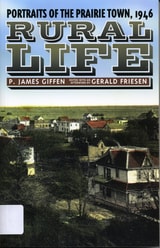
Rural Life
Portraits of the Prairie Town, 1946James P. Giffen
University of Manitoba Press, 2004
Rural Pain, Republican Gain
How the Republican Party Is Killing Rural America and Why Democrats Are BlamedMichael E. Shepherd
University of Chicago Press, 2026
An eye-opening look at how Republican policies have affected health outcomes in rural communities and why poor, rural white voters are turning to the Republican Party—not despite this harm, but because of it.
Over the last four decades, the health of rural Americans has been in free fall. Just as opioid and gun deaths have ripped apart rural communities, hospitals have closed at alarming rates, leaving millions desperately far from care. At the same time, voters in struggling rural communities have increasingly come to vote for the Republican Party.
In Rural Pain, Republican Gain, Michael E. Shepherd demonstrates that these two trends are closely connected. At both the federal and state levels, the Republican Party has increasingly enacted policies that worsen rural health. Rural voters are not indifferent to this development (quite the contrary), but they misassign blame, in part, because the Democratic Party is more commonly associated with health-related policy initiatives and has ownership of health as an issue area. Republican politicians can reap rewards from their own destructive policies by appealing to the shared grievances of rural people.
Shepherd draws on new, wide-ranging data, including in-depth studies of the opioid epidemic, hospital closures, and COVID-19. In so doing, he quantifies the harm of Republican policymaking and its disproportionate effect on rural communities, recasting how readers understand growing Republican support among less healthy, lower-income rural white Americans.
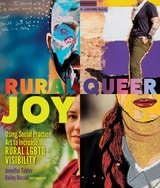
Rural Queer Joy
Using Social Practice Art to Increase Rural LGBTQ+ VisibilityJennifer Tabler
University of Wyoming Press, 2026
Blending social science, fine arts, and the humanities, Rural Queer Joy explores how the telling of rural LGBTQ+ stories affects young rural queer people today. The stories of well-known Wyoming LGBTQ+ people like Matthew Shepard, Sissy Goodwin, and Artemis Langford often center experiences of trauma and hardship, leaving little space for experiences of triumph or joy.
Author Jennifer Tabler and photographer Bailey Russel provided rural LGBTQ+ community members with an opportunity to represent their own experiences through participation in a social practice art project, asking what about being LGBTQ+ brings them joy. They then took the participants’ portraits and invited them to annotate these portraits with paint, markers, paper, or other media. This kind of social practice art provides an opportunity to engage in epistemic activism through the self-empowerment of marginalized voices and perspectives, while also centering visuals of rural queer people that counter existing stereotypes and add nuance to our understanding of rural LGBTQ+ people.
The dynamic artwork and quotes from young rural LGBTQ+ people displayed in this book highlight how their identities are sources of joy and opportunity rather than constraint and hardship. Rural and/or LGBTQ+ people, researchers, and teachers in the fields of community-engaged arts, gender studies, sociology of sexualities, and public humanities will find inspiration in Rural Queer Joy—inspiration to rethink what it means to be rural and LGBTQ+ as well as to use social practice art to increase the visibility of other underserved communities.
Rural and Small Town America
Glenn V. Fuguitt
Russell Sage Foundation, 1989